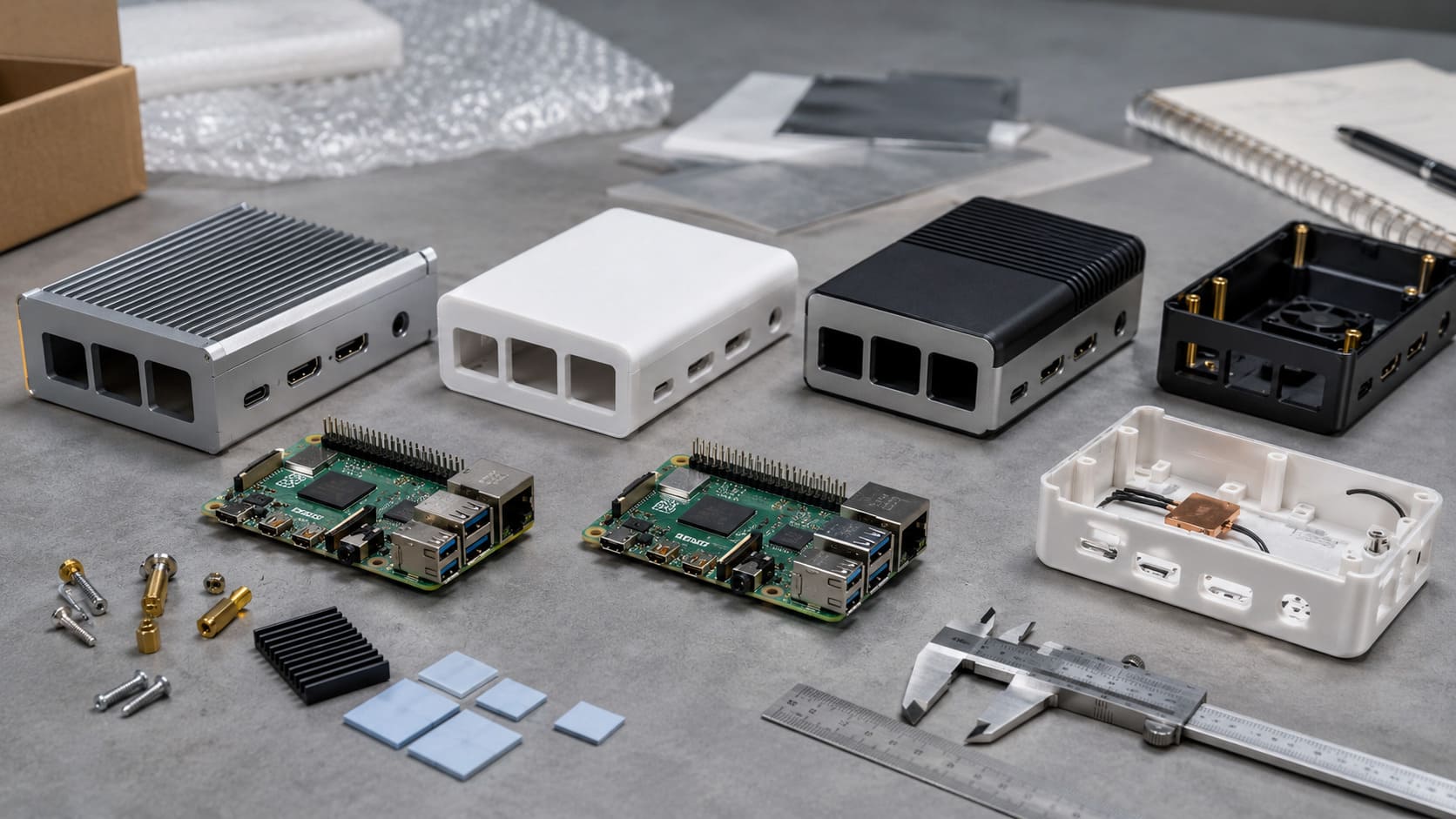
The day I first heard about Raspberry Pi. I was sitting in a coffee shop, watching a friend tinker with a tiny board that looked almost like a toy. He kept telling me how powerful and versatile it was, and how people were using it for projects that ranged from home automation to full-scale commercial applications. It sounded amazing. Over time, I saw more folks discover new ways to harness the Raspberry Pi’s capabilities, and that led me to customize cases for businesses around the world.
The Growing Popularity of Raspberry Pi
I’ve run into so many Raspberry Pi enthusiasts who are thrilled about its simplicity and power. It’s not just a fad. People in education, tech startups, and even big organizations depend on this little board to power real projects. And yet, even though this board itself is widely recognized, the Pi’s appearance is often overlooked. That’s where I realized a custom case could elevate not only how it looks, but also how it functions in different settings. From my perspective, a custom Raspberry Pi case is like giving a well-dressed star the perfect stage.
But I often ask myself: Is good styling enough?
Well, good styling alone doesn’t solve all problems, but it sure draws attention. Next, I want to share why customizing a Raspberry Pi case matters to me and the clients I’ve worked with.

Why Customizing a Raspberry Pi Case Matters
I’ve had customers—like Davide from Belgium—who wanted to stand out in a market flooded with generic enclosures. By putting his own brand on the case, he created a unique identity that customers remembered. So it’s not just about looking fancy. A custom case can protect the board better, simplify cable management, and even improve heat dissipation. Plus, I have found that businesses love adding their logos or color schemes to amplify brand recognition. When it comes to Raspberry Pi, I believe good marketing meets good engineering at the case level.
I want to dig deeper into the why behind customization. Let’s keep our momentum and move on to explore the core benefits of customizing a Raspberry Pi case.
Why Customize a Raspberry Pi Case

I’ve heard people ask, “Why bother investing in a custom case at all?” I used to ask that too. Then I saw how, for many businesses, the case is the first thing their customers see. It’s also what protects the Pi itself. A custom enclosure, in my view, is part style, part practicality, and all brand identity.
Enhanced Brand Identity
I’ve been in situations where a simple custom print transformed an ordinary product into something that felt like an extension of the company’s personality. Whether it’s a laser-engraved logo or a color that matches a brand’s palette, the case becomes a mini billboard. I think of it this way: the Pi inside might be standard, but the case is where a brand can truly speak its language. For Davide’s business, a clean logo and consistent color scheme gave him an edge on Amazon.
Improved Functionality and Protection
I once saw a project fail because the standard plastic case trapped too much heat. After that, I learned how design tweaks, like extra vents or built-in heat sinks, can stabilize performance. If there’s a chance of dust or debris, adding sealing features helps prolong the board’s life. A robust case is essential if we want reliability in harsh environments. It’s not just for show—sometimes, it’s for survival.
Competitive Edge in the Market
Time and again, I’ve observed that businesses offering unique designs and greater reliability can set themselves apart from competitors. Custom cases do the same. They grab attention, convey seriousness, and tell potential customers, “We care about every part of our product.” Jacky, a Belgian shop owner, once told me how his custom Pi cases sold faster on Amazon than standard off-the-shelf ones. It was a small change with a big impact.
If you’re still with me, I’m guessing you’re intrigued. Let’s move forward together and look at the key factors we need to evaluate before jumping into customization.
Key Considerations Before Customizing

I’ve learned the hard way that excitement alone doesn’t guarantee success. There are several elements I check off before starting any customization project. Otherwise, I risk wasting time and money.
Material Selection
I used to believe all plastic was the same. Then, I discovered the difference between ABS, acrylic, and polycarbonate. For example, ABS is sturdy and heat-resistant, but it can be pricier. Acrylic offers a clear finish, but it’s more fragile. Deciding which material to use depends on the client’s functional requirements. Let’s take a quick look at a simple table I often share with my own customers:
| Material | Pros | Cons |
|---|---|---|
| ABS | Durable, heat resistant | Slightly higher cost |
| Acrylic | Transparent, sleek look | Prone to cracking |
| Polycarbonate | Impact resistant | More expensive than acrylic |
Design Requirements
I always ask my clients: What do you need your case to do beyond holding the Pi? Do we need easy access to GPIO pins? Is there a requirement for additional brackets or mounting holes? Understanding every detail makes the difference between “just okay” and “perfect.”
Branding and Aesthetics
I like to think of the case as a canvas. Do we want bold colors or a minimalistic design? Engraved logos or printed ones? How about a private label branding on Raspberry Pi case? These questions matter because they set the overall look and feel. I once worked with a buyer who specifically wanted a camouflage pattern. It was unique and took a bit more design effort, but it grabbed a lot of attention.
Production Volume and Lead Time
Figuring out how many cases to produce can significantly influence the manufacturing method. Large volumes often justify injection molding, while smaller batches may be better suited for CNC or 3D printing. Time is also crucial. If a retailer needs to restock quickly, I recommend the fastest method—even if it costs a bit more—rather than risk losing sales.
Curious about turning these considerations into tangible steps? Let’s walk through the process of creating a custom Raspberry Pi case from concept to completion.
Steps to Custom Raspberry Pi Case

I follow a structured approach, even though I know every project has unique quirks. This helps me handle each job with clarity and consistency.
1. Conceptualize Your Design
Everything starts with an idea. I usually begin by sketching or using simple CAD software to map out the case. Sometimes, it’s a conversation with a client that sparks something new. For instance, a teacher I spoke with wanted extra ventilation holes shaped like puzzle pieces. That’s what I love—fresh ideas.
2. Choose the Right Manufacturing Method
I try to see how each method’s strengths and weaknesses align with the project. 3D printing is great for prototypes or low volume, while injection molding works wonders for big production runs. If you’re not sure, check out Raspberry Pi custom case options for a quick reference.
3. Create Prototypes and Test
I learned early on that prototypes are a chance to fail safely. They’re not the final version, so I can catch design flaws before the big run. Testing for fit, heat management, and durability helps me refine. I’ve done short drops, heat checks, and even color fade tests.
4. Finalize and Begin Production
After I fix any flaws, it’s time for the main event: production. This is where our factory at MaidaTech steps in with precision equipment. We finalize materials, confirm the injection molding (or CNC/3D printing) process, and set up the line. It’s both nerve-racking and exciting.
5. Perform Quality Control and Assurance
I’ve had moments where a small error in one batch cost days of rework. Now, I don’t skip quality checks at each stage. This includes dimension measurements, printing clarity, and surface finish inspections. It’s tedious, but essential.
6. Packaging and Labeling
Sometimes, clients ask me to add their logos on packaging or place a unique QR code for quick scanning. Packaging can also be protective. We can go as simple as a cardboard box or as fancy as a custom box with foam inserts. It’s the last step before shipping, so I believe it’s worth doing right.
I’ve found that well-organized steps save everyone time. But a project is only as strong as the methods and best practices behind it. Let’s uncover some tried-and-true approaches I rely on.
Best Practices for Raspberry Pi Case Customization

Over the years, I’ve compiled a set of practices that keep me from veering off course. They might seem simple, but they can change everything.
Collaborating with Suppliers and Designers
Working with external designers or suppliers can spark amazing ideas. However, mismatched communication can cause chaos. I learned that sharing clear, concise design files reduces headaches. I also organize regular check-ins. This helps me maintain a steady workflow.
Leveraging Feedback from Target Users
As a manufacturer, I might miss real-world nuances. That’s why I encourage clients to run small pilot programs. Let their users test the case. This step often uncovers hidden issues or new possibilities. Multiple angles of feedback create a well-rounded final product.
Ensuring Regulatory and Safety Compliance
I remember a time when a project got held at customs because it didn’t meet certain regulations for heat resistance. Ever since, I check local and international standards early in the process. It’s better to solve potential problems before they become full-blown crises.
But even the best practices need the right tools. Next, let’s explore the methods that bring these concepts to life.
Tools, Technologies, and Methods

Different projects need different approaches. I like to keep an open mind and adapt based on specific goals, budgets, and timelines.
3D Printing Techniques
For me, 3D printing is the best friend of small-batch orders and prototypes. It offers flexibility in design and fast iteration. Plus, it’s relatively low-cost when dealing with experimental shapes.
CNC Machining
When I want precision and durability, I go with CNC. It’s especially handy for metal enclosures or thick plastic. Though it might be pricier for large volumes, it can achieve a premium look and feel.
Injection Molding
This method shines for big orders. Once I create the mold, reproducing cases in bulk becomes cost-effective. But the initial mold investment is sometimes daunting. If your volumes are high, though, it pays off quickly. For more info, check out factors influencing injection molding cost.
Laser Cutting
Sometimes, clients want sleek acrylic or metal parts. Laser cutting is precise and can handle intricate shapes. I find it perfect for smaller runs or mixed material designs that highlight craftsmanship.
I realize that having good tools isn’t enough. The real trick is collaborating effectively with suppliers who can use these tools well. Let’s delve into that.
Collaboration with Suppliers

Having the right partner can boost a project’s success. I’ve met entrepreneurs who struggled to communicate, especially across time zones, but overcame those challenges with simple, consistent strategies.
Communication Strategies Across Time Zones
I’m in China, while many of my clients are in Europe or the US. I solve time-zone gaps by scheduling recurring calls at overlapping business hours. Email is great, but I rely on short messaging apps for quick answers. I keep everything documented so we don’t lose track.
Requesting Samples and Quality Inspections
I believe in “trust, but verify.” Requesting a sample is standard before committing to large orders. Some clients also hire third-party inspectors to check for consistent quality. I respect that because it gives everyone peace of mind.
Negotiating Price and Delivery Terms
Price can be a sensitive topic. I prefer an open discussion about the cost breakdown. For instance, I separate mold costs, material expenses, and labor. This helps both parties see where we can optimize. Negotiating timelines is also crucial. Rushed orders might mean higher costs, but they save you time if you’re tight on deadlines.
Now that we’ve discussed collaboration, let’s explore how to balance your budget without sacrificing quality.
Balancing Price and Quality

Price and quality often feel like they’re at odds. But I’ve learned you don’t have to compromise too much if you plan carefully.
Identifying Cost Drivers in Production
Sometimes, it’s not the base material but the finishing touches—like specialized coatings or advanced printing—that drive up costs. If you’re on a tight budget, you can simplify the design or reduce color complexity. Understanding these drivers can stop sticker shock in its tracks.
Working with a Reliable Supplier
A reliable supplier, in my view, knows how to troubleshoot and offer cost-saving alternatives. I’ve had suppliers suggest different plastics or a simpler logo placement that saved us both time and money. Reliability isn’t just about quality—it’s about mutual respect and efficiency.
Long-Term vs. Short-Term Investment
I often tell clients to look beyond the immediate price tag. Investing in a better mold can reduce your per-unit cost down the line. Or picking higher-grade materials can cut your return-rate. When I think about the bigger picture, I see that cheaper isn’t always the best choice. Sometimes, it’s only cheaper upfront.
We’ve covered ways to make a great custom case while staying on budget. But what if you’re looking for something beyond a standard enclosure? Let’s examine additional customization options.
Additional Custom Services

Sometimes, the little extras define a product. I’ve had clients who only needed a slight tweak to turn a plain enclosure into something memorable.
Logo Engraving or Printing
Options range from simple silk-screen printing to full-on laser engraving. Some businesses prefer a subtle etched look, while others want their logo in bright, eye-catching colors. I keep a portfolio of logo styles to spark inspiration. It’s surprising how much difference a well-placed logo can make.
Custom Packaging and Labeling
I once worked on a project that included custom packaging with foam inserts. It not only protected the product but also made unboxing feel special. Labeling can also boost brand presence, especially if you plan to private label branding on Raspberry Pi case. Every layer of packaging is a touchpoint with the customer.
Special Heat Dissipation or Mounting Options
For projects where heat is a concern, I propose built-in vents or a dedicated space for a fan. Some cases can also include mounting brackets for walls or industrial enclosures. When I think about usability, these add-ons can be the difference between a product that’s “nice to have” and one that’s crucial.
Now you might wonder, “Who’s the right manufacturing partner to do all this?” I’d like to share how I pick a good partner, from my own experience.
Choosing the Right Manufacturing Partner

It’s tempting to jump at the cheapest quote, but I’ve seen enough mishaps to know it’s not that simple. Whether you’re searching on Alibaba or meeting suppliers at trade shows, a thorough review is vital.
Evaluating Factory Experience and Capabilities
I’ve been running our factory at MaidaTech for nine years. Over time, I learned how to refine our processes. I believe the factory’s equipment, certifications, and track record matter more than flashy presentations. It’s about seeing if they’ve tackled similar projects before.
Assessing Production Lines and Equipment
If a factory has modern CNC machines or injection molding lines, they can handle larger orders and maintain better quality control. I check if they can produce in the volumes I need. Sometimes, smaller factories struggle with tight deadlines or complex requests.
Checking Logistics and After-Sales Support
I prefer a supplier who stands by their work. If something goes wrong during shipping, do they help fix it? Or if there’s a need for a quick reorder, how fast can they respond? Good after-sales support is like an insurance policy.
These factors are crucial, but seeing real-world applications is often the best way to grasp how everything fits together.
Real-World Use Cases

I have two types of clients I like to talk about. They highlight the diverse reasons behind customization and how each road can lead to success.
B2B Re-Brand Projects
Davide’s case is a classic example. He runs a wholesale and retail business on Amazon. He asked us for a custom Raspberry Pi case with his brand on it. He needed quick turnaround and consistent quality because he feared being out of stock. We managed to deliver on time, and his sales went up because the product stood out visually.
OEM and ODM Projects
Then, there are clients like lasle from Hungary. They need a complete redesign of the Raspberry Pi form factor, sometimes changing everything from the shape to the internal mounts. He has crazy ideas, and I love it. By working closely on CAD files and prototypes, we develop something truly unique that fits his project perfectly. It’s a longer process than re-branding, but it opens up more possibilities.
I’ve seen these projects transform businesses. Let’s wrap up with some key takeaways that might help you on your own customization journey.
Conclusion

Key Takeaways
I’ve found that customizing a Raspberry Pi case isn’t just a technical job. It’s a creative journey that can enhance brand identity, improve functionality, and set you apart in a crowded market. From picking materials to collaborating with suppliers, every step matters. My goal is always to make sure these cases do more than hold a circuit board—they hold a story.
Future Trends in Raspberry Pi Case Customization
I believe customization is evolving as new manufacturing methods become more accessible. With faster prototyping, advanced materials, and global collaboration, you can create cases that look and function exactly how you want. As technology grows, so do our possibilities to personalize. I’m excited to see how far we can push this—and I hope this guide has offered some insight for your own journey.