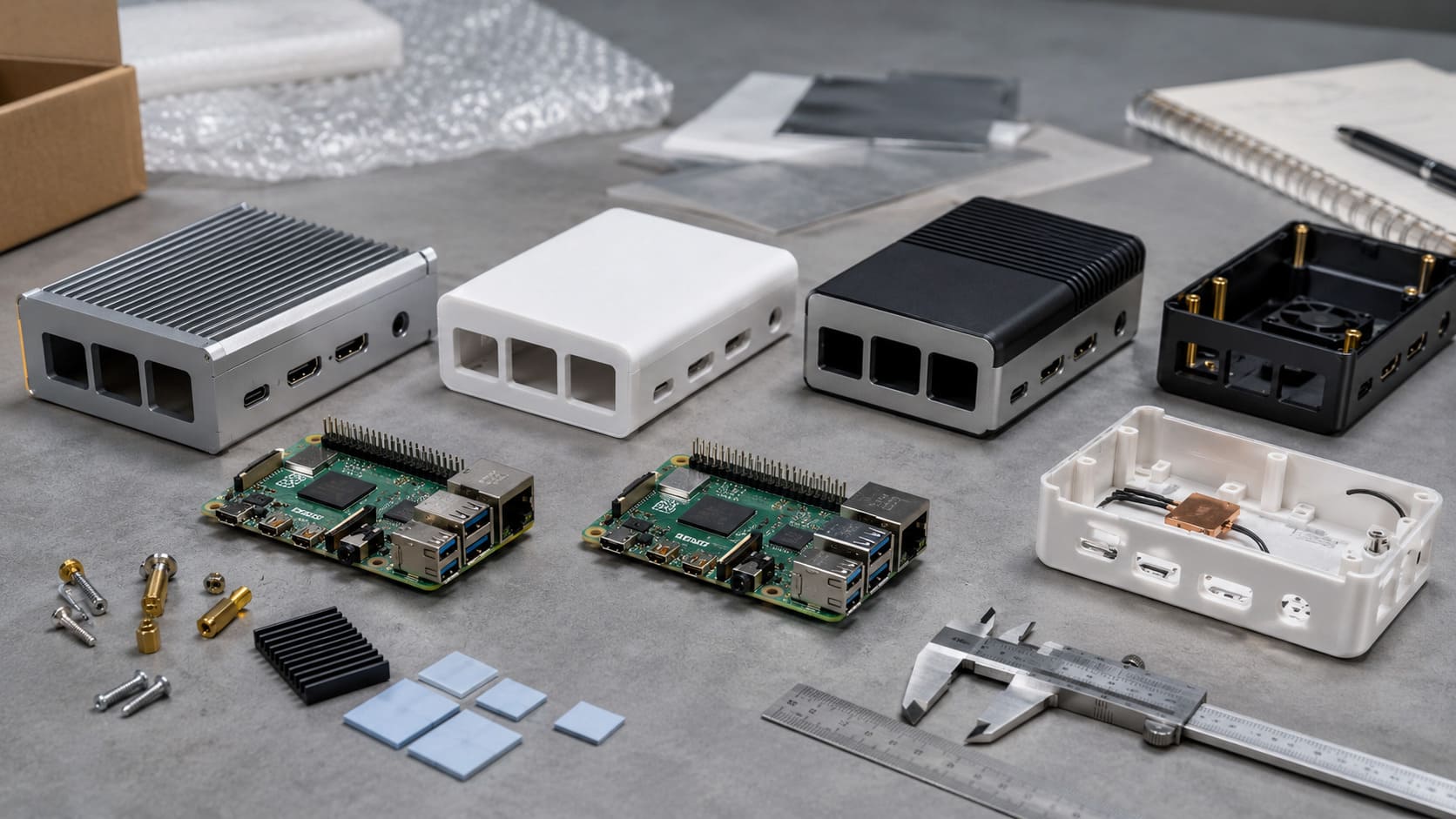
A metal Raspberry Pi case is easy to like.
It feels solid in the hand. It looks cleaner than a normal plastic box. It gives the buyer a nice feeling, like, “Yes, this product can sell at a better price.” I understand that feeling very well, because I have seen many re-brand customers react the same way when they touch an aluminum case sample for the first time.
For many Amazon sellers, local distributors, and Raspberry Pi accessory wholesalers, metal cases look like a simple premium upgrade. The product photo looks better. The surface looks more expensive. The weight feels more serious. And when the customer wants to build a private label product line, metal often sounds like a safer choice.
But in real wholesale projects, the story is not that simple.
A metal case may look clean on the table, but the project behind it can be messy. The buyer may first compare only the unit price. Then after sampling, production, surface finishing, packaging, shipping, and customer returns, the real cost starts to show its teeth.
The small cost is not always in the aluminum.
Sometimes, it is in the anodizing color.
Sometimes, it is in the screw bag.
Sometimes, it is in the foam packaging.
Sometimes, it is in the one tiny scratch that makes an Amazon customer leave a bad review.
And sometimes, the hidden cost is just slow communication between the buyer and the factory. One unclear drawing. One missed port position. One wrong assumption about cooling. The project gets delayed, and everybody starts checking emails at midnight.
When I evaluate a metal Raspberry Pi case project, I do not only ask, “How much is one piece?” I ask, “How many small problems will this design create before it reaches the buyer’s customer?”
That question is not fancy. But it saves money.
In this article, I want to talk about the hidden cost problem of metal Raspberry Pi cases in wholesale projects. I will not say metal cases are bad. That would be lazy thinking. Metal cases can be excellent when the design, quantity, packaging, and market position are right.
But if a buyer only sees the shiny surface and ignores the full project cost, the case may become expensive in a quiet and painful way.
Why Do Metal Raspberry Pi Cases Look Cheap at the Beginning?

The first quotation can be very charming.
A buyer sends a drawing. The supplier replies fast. The unit price looks acceptable. The buyer opens the Excel sheet and feels calm. Maybe this project will be smooth. Maybe the margin will be good.
Then the real work begins.
The case needs a special surface finish. The logo needs laser engraving. The packaging needs foam protection. The screw position needs adjustment. The customer wants a retail box. The shipping cost jumps because the case is heavier than expected.
Suddenly, the cheap quotation is not so cheap anymore.
I have learned to be careful when the first price looks too comfortable, because a low first quotation can sometimes hide the parts of the project that nobody wants to talk about early.
The low quotation trap in B2B sourcing
In B2B sourcing, many buyers compare suppliers with one simple method: unit price.
I understand why. It is fast. It is easy. It looks clear.
But with metal Raspberry Pi cases, unit price can be only the front door of the project. Behind that door, there may be many small rooms.
Comparing only the ex-factory price
The ex-factory price usually means the product price before shipping, tax, packaging upgrades, special inspection, and many other costs. It is useful, but it is not the full picture.
For example, two suppliers may quote like this:
| Item | Supplier A | Supplier B |
|---|---|---|
| Metal Raspberry Pi case unit price | $3.20 | $3.50 |
| Retail box included | No | Yes |
| Foam protection included | No | Yes |
| Logo engraving included | No | Partly included |
| Assembly included | Basic only | Full assembly |
| QC photo report | Extra cost | Included |
At first, Supplier A looks cheaper. But after the buyer adds packaging, logo, assembly, and checking, Supplier B may become the better option.
This is where many buyers get trapped. They compare the easiest number, not the real number.
Why some suppliers intentionally lower the first quotation
Some suppliers know that buyers love low first prices. So they quote the basic version first.
No special packaging.
No extra inspection.
No clear reject rate rule.
No detail about anodizing risk.
No warning about difficult machining.
The price looks sweet. But later, each missing detail becomes a new charge.
I do not think every supplier does this with bad intention. Sometimes the sales person also does not understand the full production risk. But for the buyer, the result is the same. The cost moves from “quotation stage” to “problem stage.”
And problem-stage cost is always more stressful.
Hidden service costs not shown in the quote
A Raspberry Pi case project is not only a product. It is also a service process.
The buyer may need:
- Drawing review
- Logo file adjustment
- Private label sticker service
- Sample modification
- Packing design support
- Accessory matching
- Product photo support
- Batch inspection
- Shipment coordination
These services take time.
If the supplier does not include them in the quotation, the buyer may pay later with money, time, or frustration.
Metal has a special power in the buyer’s mind.
It feels cooler. It sounds stronger. It looks more serious. When a buyer puts a metal case beside a plastic case, the metal one often wins the first impression.
But first impression is not the same as project profit.
Why aluminum cases feel more valuable to buyers
Aluminum feels valuable because it is hard, cold, and clean. Many buyers think it can help the product sell at a higher retail price.
This is true in many cases.
For Amazon sellers, a metal Raspberry Pi case can look better in product photos. For local distributors, it can help create a more professional product line. For ODM project buyers, it can make the final device feel more like an industrial product.
But there is a trade-off.
A material that looks premium also creates premium expectations. If the customer sees one scratch, the complaint becomes sharper. If the surface color is uneven, the buyer may feel the product is not “premium” anymore.
The role of visual appearance in Amazon and retail sales
In retail, photos sell first.
Before a customer touches the product, they judge the image. A black anodized aluminum Raspberry Pi case can look beautiful under good lighting. It can make the listing feel stronger.
But the same visual advantage creates another problem.
The product must arrive looking like the photo.
That means better packaging. Better surface control. Better handling. Better inspection. More cost.
A plastic case can sometimes survive a small mark because customers expect it to be practical. A metal case is judged like a small electronic gift. The eye becomes less forgiving.
How buyers associate metal with durability and quality
Many buyers connect metal with durability. This is not wrong, but it is incomplete.
Metal can protect better against impact. It can also help with heat when the design is right. But metal can still have problems:
- It can scratch.
- It can dent.
- It can have color difference.
- It can block wireless signals in some designs.
- It can cause short-circuit risk if the internal clearance is poor.
- It can trap heat if the airflow design is weak.
So the real question is not, “Is metal better?”
The better question is, “Is this metal design better for this project?”
Why many wholesale buyers underestimate total ownership cost
The cost of a wholesale project does not stop when the factory finishes production.
That is only the middle of the story.
The difference between prototype and mass production cost
A prototype can look perfect because the factory gives it more attention. One engineer checks it. One worker polishes it carefully. One sales person takes photos before shipping.
Mass production is different.
Now the factory needs to make 500, 1,000, or 5,000 pieces. The process must be stable. The color must stay close. The holes must align. The accessories must match. The packaging must protect every unit.
A beautiful sample does not always prove a smooth mass production.
I often tell buyers that a sample is like a first date. It can look nice, but it does not show how the person behaves after three months of real life.
Costs that appear only after shipment or assembly
Some costs appear late because nobody tests the full process early.
For example:
| Hidden Issue | When It Appears | Cost Impact |
|---|---|---|
| Screws are hard to install | During assembly | More labor time |
| Case scratches inside carton | After shipping | Returns or discount |
| Port hole is slightly tight | During end-user use | Complaints |
| Retail box is crushed | After FBA delivery | Bad reviews |
| Thermal pad is too thick | During usage | Poor contact or overheating |
These are not always big mistakes. But in wholesale quantity, small mistakes become heavy.
Why small defects become expensive in large quantities
One small defect in one sample is easy to fix.
One small defect in 2,000 pieces is a headache.
If 5% of the cases have scratches, that is 100 pieces in a 2,000-piece order. If each case needs rechecking, repacking, or replacing, the buyer loses time and margin.
And if the product is already in Amazon FBA, the problem becomes even more expensive. The seller cannot easily open every box and repair every case.
That is why hidden cost is dangerous. It often looks small until the quantity makes it loud.
A low price can open the door, but the real project is decided by the details behind it. This is where metal cases start showing their hidden cost one by one.
What Hidden Costs Usually Appear in Metal Raspberry Pi Case Projects?
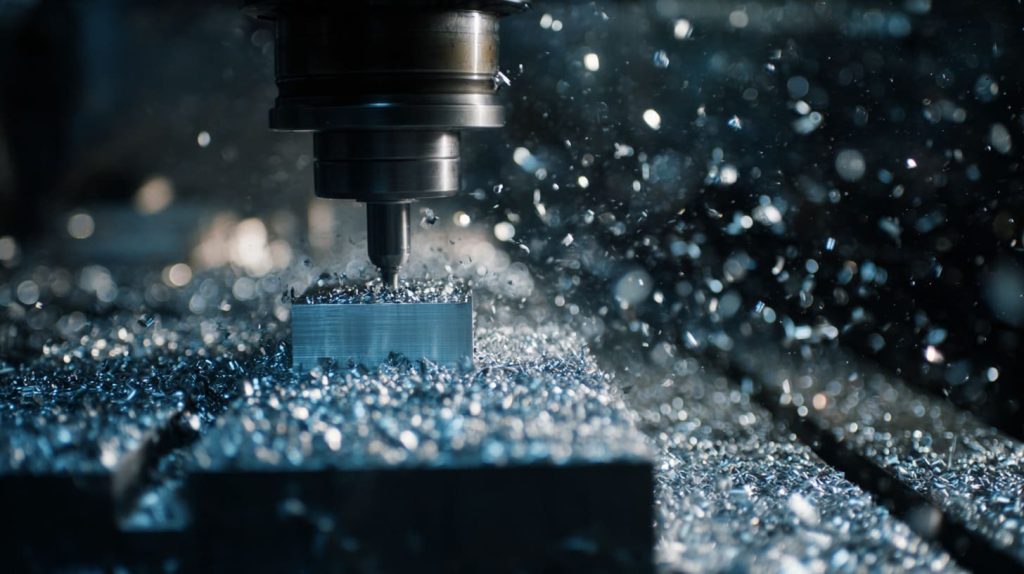
When buyers ask me why a metal Raspberry Pi case becomes more expensive than expected, I usually do not point to one big reason.
I point to five small ones.
Machining. Finishing. Assembly. Freight. Packaging.
Each one looks normal alone. But together, they can quietly change the whole project budget.
When I check a metal case quotation, I like to break the cost into steps, because the most dangerous cost is usually the one hidden inside a “simple” line item.
CNC machining costs increase faster than expected
Metal Raspberry Pi cases often need CNC machining. CNC is accurate, but it is not magic. The machine still needs time. The tool still wears out. The operator still needs to set up the part.
Why complex designs require longer machining time
A simple metal case may only need basic cutting and drilling. But many custom Raspberry Pi cases are not simple.
Buyers may want:
- More ventilation holes
- Special logo positions
- Camera cable openings
- GPIO access slots
- Wall-mount holes
- Internal posts
- Special heatsink contact areas
- Custom project board openings
Each feature adds machining time.
And machining time is money.
A case that looks only “a little more complex” on the drawing may take much longer to produce. This is why a supplier may quote a higher price after reviewing the 3D file carefully.
The cost impact of deep cuts and precise tolerances
Deep cuts are slow. Tight tolerances are risky.
If the buyer wants very accurate port alignment, the factory must control the machining more carefully. If the case has a thick aluminum body, the machine may need more passes. If the internal structure is narrow, the tool path becomes more difficult.
Here is a simple example:
| Design Feature | Cost Pressure | Why It Matters |
|---|---|---|
| Deep internal pocket | High | Longer machining time |
| Thin wall section | Medium to high | Easier to deform |
| Tight USB/HDMI opening | High | Higher reject risk |
| Many small holes | Medium | More tool changes |
| Decorative groove | Medium | Extra machining time |
A buyer may think, “It is only one groove.”
But the machine does not think like that. The machine counts time.
How redesign revisions increase tooling and setup costs
Redesign is common in ODM projects.
The first sample may need small changes. Maybe the port is too tight. Maybe the button position is not comfortable. Maybe the board layout changes. Maybe the customer adds a fan.
Each change may look small in email. But in production, it may require:
- New CNC program
- New fixture
- New sample
- New inspection
- New assembly test
This is why early design review is important. A factory with Raspberry Pi case experience can often notice risks before the buyer pays for too many sample rounds.
Surface finishing can become a major expense
Metal cases need surface finishing.
Without it, the case may look raw, rough, or easy to oxidize. Aluminum cases often use anodizing. Some designs use sandblasting, brushing, polishing, or powder coating.
Surface finishing is where many hidden costs live.
Anodizing cost variations by color and finish
Black anodizing is common. Silver is also common. But special colors can be harder to control.
Red, blue, gold, and other custom colors may look different between batches. The final result can depend on material, surface texture, anodizing time, and even batch conditions.
For a re-brand seller, this matters a lot. If the first batch is dark blue and the second batch is lighter blue, customers may notice. Product photos may no longer match the actual product.
| Finish Type | Cost Level | Main Risk |
|---|---|---|
| Natural silver anodizing | Medium | Surface marks still visible |
| Black anodizing | Medium | Scratches show clearly |
| Custom color anodizing | Higher | Color difference between batches |
| Sandblasting + anodizing | Higher | Cosmetic reject rate |
| Brushing + anodizing | Higher | Direction marks and defects |
The surface is not just decoration. It is part of the customer’s judgment.
Sandblasting, brushing, and polishing costs
Sandblasting makes the surface look matte and smooth. Brushing gives a directional texture. Polishing gives a brighter finish.
All of them need extra process control.
If the buyer wants a premium look, the factory must handle the surface before finishing. That means more labor and more reject risk.
A small scratch before anodizing may become more visible after anodizing. A small handling mark may become a complaint later.
The buyer sees a nice surface. The factory sees a risk zone.
Cosmetic reject rate is one of the most underestimated costs in metal case projects.
A part can be functional but still not acceptable for retail.
For example:
- The port alignment is good.
- The screw holes are good.
- The case closes well.
- The surface has a small scratch.
For an industrial internal project, it may pass. For an Amazon premium product, it may fail.
That difference matters.
Assembly costs are often ignored
Some buyers think a case is just a case. But Raspberry Pi cases often need many small parts.
Screws. Rubber feet. Thermal pads. Heatsinks. Acrylic covers. Fan brackets. Labels. Instruction sheets. Retail boxes.
Each part needs handling.
Additional screws, thermal pads, and accessories
A metal case usually needs more careful assembly than a simple plastic snap-fit case.
The buyer may need:
- M2.5 screws
- Allen key
- Thermal pad
- Silicone feet
- Fan screws
- Copper standoffs
- Aluminum heatsink
- Label sticker
- Manual
- Retail box
Each accessory adds cost. Each accessory also adds risk.
If one screw is missing, the product feels incomplete. If the thermal pad is wrong, cooling performance may suffer. If the rubber foot falls off, the customer may complain.
Labor costs for manual assembly
Manual assembly looks cheap until the quantity grows.
If one case takes 40 seconds to assemble, 3,000 cases take a lot of labor time. If the worker must place the logo sticker, insert screws, fold the box, add foam, and check the surface, the cost rises.
Here is a simple way to think about it:
| Assembly Step | Time Impact | Risk |
|---|---|---|
| Insert screws | Low to medium | Missing parts |
| Add thermal pad | Medium | Wrong placement |
| Apply label sticker | Medium | Crooked sticker |
| Add foam protection | Medium | Slow packing |
| Final visual check | High | Human fatigue |
Assembly cost is not only labor. It is also consistency.
Why packaging assembly slows production speed
Retail packaging can slow the whole line.
A plain bulk pack is fast. A custom retail box is slower. A box with foam insert, manual, screw bag, barcode label, and outer carton arrangement is slower again.
For Amazon sellers, retail packaging is important. I respect that. But buyers should calculate the cost from the beginning.
A nice box that is not included in the first quotation can become a surprise later.
Freight costs are higher than plastic cases
Metal is heavier.
That sounds too obvious, but many buyers still underestimate the cost.
Weight differences between aluminum and plastic
An aluminum case may weigh much more than a plastic case with the same size. If the buyer ships by air, the cost difference can be painful.
For small products, air shipping is often used when buyers need fast stock. But metal cases can make the shipping bill much heavier.
| Case Type | Typical Freight Pressure | Main Reason |
|---|---|---|
| Plastic case | Lower | Lightweight |
| Aluminum case | Higher | More weight |
| Steel case | Highest | Heavy material |
| Hybrid case | Medium | Mixed structure |
The product may be small, but the carton can still become heavy.
Air shipping versus sea shipping impact
Air shipping is fast and expensive. Sea shipping is slower and cheaper.
For metal cases, buyers often face a hard choice:
- Ship by air and protect sales timing.
- Ship by sea and protect margin.
This is especially painful for Amazon sellers. If stock is running out, the seller may choose air shipping. But if the product is heavy, the profit can disappear quickly.
How metal cases increase Amazon FBA costs
Amazon FBA cost is affected by size and weight. A metal case may push the product into a higher cost level, especially after retail packaging.
The buyer should not only calculate the factory price. The buyer should check:
- Product weight
- Box size
- Carton size
- FBA fee
- Storage cost
- Return handling cost
If the product looks premium but the fee is too high, the business may look good on the product page and bad in the bank account.
Hidden packaging costs for metal enclosures
Packaging is not a boring detail. It is often the guard at the gate.
Bad packaging lets damage enter the project.
Why metal products scratch easily during shipping
Metal cases can rub against each other. Edges can press into surfaces. Screws can move inside the box. A small movement during shipping can create marks.
This is why bulk packing metal cases without protection can be risky.
For plastic cases, small rubbing marks may be less visible. For anodized aluminum, especially black, scratches can stand out like a white line on a black shirt.
Foam, protective films, and custom packaging requirements
To protect metal cases, buyers may need:
- PE bag
- Protective film
- Foam insert
- EPE foam sheet
- Individual box
- Strong outer carton
- Corner protection
- Drop test checking
Each layer adds cost. But without these layers, the buyer may pay more later through returns and complaints.
Retail-ready packaging cost increases
Retail-ready packaging is a different level.
The product must not only survive shipping. It must also look good when the end customer opens it.
That means cleaner packing, better arrangement, and sometimes custom inserts.
For re-brand buyers, packaging is part of the brand. If the box looks cheap, the metal case inside loses some of its value.
The hidden costs of metal cases do not arrive with a big warning sign. They arrive as small extra lines in the quotation, and each line asks for a little more margin.
Why Do Metal Raspberry Pi Cases Create More Quality Control Problems?
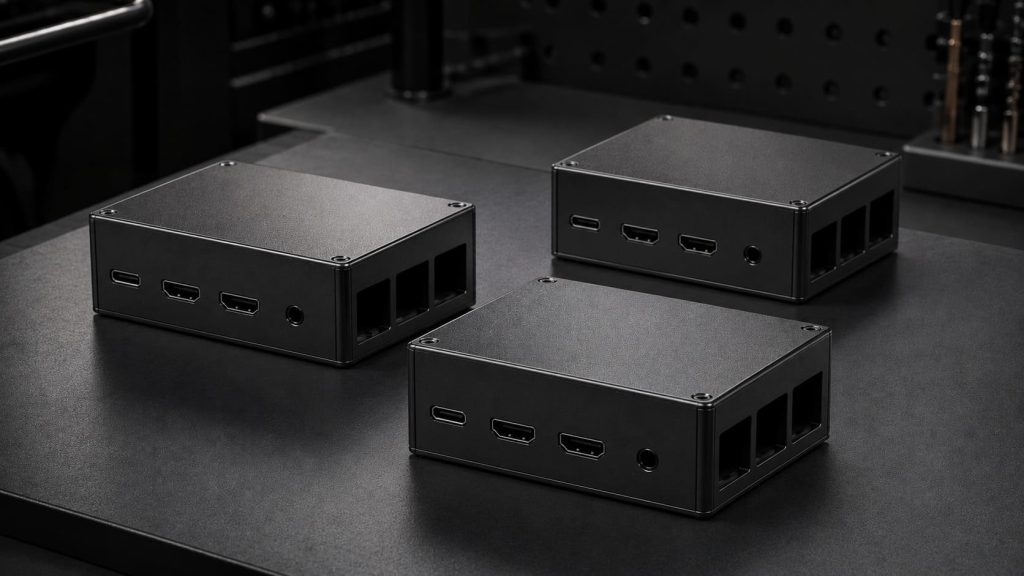
Quality control for metal Raspberry Pi cases is not only about whether the case can close.
It is also about how the case looks, how the board fits, how the heat moves, and how the final user feels when they open the package.
This is why metal cases can be more stressful than many buyers expect.
I pay special attention to the parts that customers touch or see first, because those small details often decide whether a product feels premium or feels careless.
Cosmetic defects are harder to control
Metal surfaces are honest. Sometimes too honest.
They show scratches. They show fingerprints. They show color difference. They show handling marks.
Fingerprints, scratches, and anodizing inconsistencies
A black anodized Raspberry Pi case can look beautiful. But it also shows dust and scratches easily.
During production, parts move from machining to cleaning, then to finishing, then to packing. Every step has handling risk.
Common cosmetic issues include:
- Small scratches near edges
- Uneven anodizing color
- Fingerprints before packing
- White marks on black surfaces
- Small dents from collision
- Surface stains after cleaning
A supplier may say, “This is normal.” A retail customer may say, “This is defective.”
That gap creates conflict.
Why customers judge metal cases more strictly
When customers buy a metal case, they expect a premium product. They may forgive a small mark on a low-cost plastic case. But they may not forgive the same mark on a metal case.
The buyer also has less room to explain.
Amazon customers do not care about anodizing difficulty. They do not care about machining process. They only see the product in their hand.
If it looks used, they may return it.
The problem of color inconsistency between batches
Batch color control is a real issue.
A buyer may order 1,000 pieces first. The product sells well. Then the buyer reorders 3,000 pieces. The second batch looks slightly different.
This can happen with anodizing. It can also happen when material batches change.
For a normal industrial project, small color difference may be acceptable. For a branded retail product, it may become a problem, especially when customers buy more than one unit.
Tolerance issues can create assembly problems
A Raspberry Pi board has fixed ports and mounting holes. The case must match them.
Small errors can cause big pain.
Misalignment between boards and ports
The USB, HDMI, Ethernet, power, and GPIO openings must align well. If one opening is too tight, the user may struggle to plug in the cable. If one opening is too large, the case may look rough.
Tolerance is not just a drawing number. It is the customer’s daily experience.
For example:
| Tolerance Problem | User Experience | Business Result |
|---|---|---|
| HDMI hole too tight | Cable hard to insert | Complaints |
| USB port not centered | Looks cheap | Bad reviews |
| Board mounting post off | Assembly difficult | Rework |
| Top cover not flat | Case feels poor | Returns |
| Fan hole mismatch | Noise or vibration | Support requests |
This is where “almost correct” is still wrong.
Why tiny deviations matter in Raspberry Pi projects
Raspberry Pi boards are not large. The case is compact. The space is tight.
A 0.3 mm deviation may not sound serious. But around ports and screws, it can matter. If the design includes a heatsink contact area, height tolerance also matters.
A thermal pad that is too thick may press the board. A thermal pad that is too thin may not touch well.
Small numbers become real problems.
The cost of rework during production
Rework is expensive because it breaks the normal production flow.
If the factory finds a hole problem after finishing, it is very hard to fix. If the part is already anodized, re-machining may damage the surface. If the case is already packed, the factory must open boxes and check again.
Rework cost includes:
- Labor
- Time
- Material loss
- Delay
- Extra inspection
- Possible surface damage
The worst rework is the one discovered after shipment. At that point, every solution is expensive.
Thermal design mistakes can increase return rates
Many buyers choose metal cases because of cooling.
That makes sense. Aluminum can help move heat. But only when the design is correct.
The myth that all metal cases cool well
A metal case does not automatically cool well.
The heat must move from the chip to the case body. That usually needs proper contact, correct thermal pad thickness, and enough surface area.
If the chip does not touch the metal well, the case may look like a heatsink but act like a decoration.
This is a quiet mistake. The case looks good. The product photo looks good. But the customer uses it under load, and the temperature rises.
Poor airflow versus passive cooling reality
Some metal cases are closed. They rely on passive cooling. Some have ventilation holes. Some use a fan.
Each design has a trade-off.
| Cooling Design | Advantage | Risk |
|---|---|---|
| Full passive metal body | Quiet, clean look | Needs good contact |
| Ventilation holes | Better airflow | More dust, more machining |
| Fan cooling | Stronger cooling | Noise and moving parts |
| Heatsink add-on | Flexible | Assembly accuracy matters |
The buyer should not copy a good-looking design without checking how the product will be used.
A Raspberry Pi used for light work is different from one used for heavy computing, AI, NAS, or industrial control.
Common overheating complaints from end users
End users may complain about:
- Case gets too hot to touch
- Raspberry Pi throttles under load
- Fan is noisy
- Thermal pad does not contact well
- Enclosure blocks airflow
- Wi-Fi signal becomes weaker
These complaints can damage the product listing.
And the painful part is this: many thermal problems could be caught during sample testing.
But if the buyer only checks appearance, the hidden problem stays hidden until customers start using the product.
Quality control problems are not always dramatic. Often, they are quiet, small, and boring. But boring problems are still expensive when they repeat 1,000 times.
How Do Hidden Costs Affect Amazon and Re-Brand Businesses?

For Amazon and re-brand sellers, hidden cost does not only hurt the purchase order.
It can hurt the listing.
That is more serious.
A factory problem may happen in China, but the review appears in Europe or North America. A small scratch in the warehouse becomes a public complaint on the product page. A delayed shipment becomes an out-of-stock problem. A missing screw becomes a return.
When I work with re-brand buyers, I try to think one step further than production, because their real battlefield is not the factory floor. It is the product page and the customer review section.
Return rates can quietly destroy profits
Returns are dangerous because they look small at first.
One return. Then five. Then twenty.
The seller may still have sales, but the margin starts leaking.
Cosmetic damage and customer complaints
Metal cases can receive complaints for small cosmetic problems:
- Scratches
- Dents
- Color marks
- Poor logo position
- Uneven surface
- Damaged box
For a low-cost product, customers may accept small issues. For a premium-looking metal case, they may not.
This is why packaging and inspection are not optional for re-brand projects. They are part of profit protection.
A premium product creates a promise.
The customer expects better touch, better finish, better packing, and better fit. If the product fails in any one of these areas, disappointment becomes stronger.
It is like buying a nice watch box and finding a scratch on the cover. The scratch may not stop the box from working. But emotionally, the product already feels wrong.
Metal Raspberry Pi cases can create the same feeling.
The impact of negative reviews on Amazon ranking
One bad review can hurt more than one return.
If customers mention scratches, poor fit, missing accessories, or overheating, future buyers may hesitate. The listing conversion rate may drop. The seller may need coupons or ads to recover sales.
That means the hidden cost becomes marketing cost too.
| Problem | Direct Cost | Hidden Business Cost |
|---|---|---|
| Product return | Refund and handling | Lower margin |
| Bad review | Lost trust | Lower conversion |
| Out of stock | Lost sales | Ranking drop |
| Cosmetic complaint | Replacement | Brand damage |
| Missing accessory | Support time | Customer frustration |
This is why I never see quality as only a factory issue. For re-brand sellers, quality is also traffic protection.
Inventory pressure becomes more dangerous
Metal cases usually need more careful planning.
The quantity is often bigger. The lead time is often longer. The cost per unit is higher. So inventory pressure becomes heavier.
Higher MOQ requirements for custom metal cases
Custom metal cases may need higher MOQ because of machining setup, finishing batch, and packaging preparation.
For a buyer, higher MOQ means more money locked in inventory.
If the product sells well, that is fine. If the design needs adjustment, the buyer may be stuck with old stock.
Slow-moving inventory risks
A metal case may look attractive, but the market still decides.
If the retail price is too high, sales may slow down. If a new Raspberry Pi model appears, the old case may become less attractive. If customer feedback shows a design problem, the seller may hesitate to reorder.
Slow-moving metal inventory hurts because each unit costs more and takes more space.
Why redesigning metal cases is harder than plastic ones
Redesigning a metal case is not always easy.
A small change may require new CNC programming, new fixtures, or new surface finishing tests. If the buyer already has stock, the old and new versions may create confusion.
Plastic cases also have tooling concerns, of course. But for many semi-custom plastic cases, color and logo changes can be easier than changing the structure of a metal CNC case.
So the buyer needs to be more careful before mass production.
Delayed shipments create chain-reaction losses
Delay is not just delay.
Delay affects stock, cash flow, ads, customer trust, and project timing.
Production lead time risks during peak seasons
During busy seasons, metal case production can face longer waiting time. CNC machines may be full. Surface finishing factories may be busy. Packaging suppliers may also delay.
If the buyer plans too tightly, one delay can break the whole schedule.
For Amazon sellers, this is especially risky before holiday seasons or promotion periods.
How anodizing delays affect delivery schedules
Anodizing is often outside the main machining workshop. That means the parts may need to go to another finishing supplier.
If the anodizing color fails, the batch may need sorting or reworking. If the finishing supplier is busy, the schedule moves back.
The buyer may only hear, “Production delayed a few days.”
But behind that sentence, the seller may already be losing stock.
Out-of-stock is painful.
The seller loses sales today. But the bigger problem may come later. Amazon ranking can drop. Ads may become less effective. Competitors may take the customer.
For re-brand businesses, stable supply is not a small detail. It is the base of the business.
A product that sells well but cannot be supplied on time is like a restaurant with great food and no ingredients. Customers do not wait forever.
The hidden cost of metal cases can reach far beyond the factory invoice. It can touch the seller’s listing, cash flow, and customer trust.
Why Are ODM Raspberry Pi Projects Especially Sensitive to Hidden Costs?
ODM projects are exciting.
A buyer has an idea. Maybe it is a new device based on Raspberry Pi. Maybe it needs a custom case for a control system. Maybe it needs a special mounting method, fan position, or cable route.
The project feels alive.
But ODM projects also have more unknowns. And unknowns are where hidden costs like to hide.
For ODM work, I always look for unclear parts in the design first, because the unclear part today often becomes the expensive part after the sample is made.
Custom redesign costs grow quickly
ODM buyers often do not want a standard case. They want a case that fits their project.
That is normal. But custom design means more decisions.
CNC modification costs after design changes
A buyer may say, “Can we just move this hole a little?”
Sometimes yes.
Sometimes that small change affects the internal structure, screw post, tool path, or finishing result.
A “little move” in the drawing can create new programming, new setup, and new sample cost.
This is why I prefer to check the full function before making the first sample. It is better to spend more time checking the drawing than to pay for three rounds of avoidable changes.
Prototype iteration expenses
Prototype cost is not only the sample price.
It includes:
- Engineering time
- Drawing revision
- CNC setup
- Material
- Surface finish
- Shipping
- Testing
- Communication time
If the buyer is in Europe and the factory is in China, each sample round also takes shipping time. One unclear detail can cost two weeks.
For a project buyer, two weeks can be serious.
Why engineers underestimate manufacturability
Engineers often focus on function. That is good. But manufacturing has its own rules.
A design may work in CAD but still be hard to produce. It may have thin walls, tight corners, difficult tool access, or surface areas that are easy to scratch.
This does not mean the engineer is wrong. It means the design needs factory feedback.
A good ODM supplier should not only say yes. Sometimes the supplier should say, “This part may create cost or risk. Can we adjust it?”
That sentence can save the project.
Communication mistakes become expensive
ODM projects need clear communication.
But clear communication is harder than it sounds.
Different time zones. Different languages. Different drawing habits. Different assumptions. These things create small gaps. And in custom projects, small gaps can become expensive.
Differences between drawings and real production
A drawing shows intention. Production shows reality.
The drawing may not include every detail. For example:
- Surface finish standard
- Color tolerance
- Screw type
- Thermal pad thickness
- Logo depth
- Packaging method
- Inspection criteria
- Acceptable cosmetic defects
If these details are not confirmed, both sides may think they understand. Then the sample arrives, and the buyer says, “This is not what I expected.”
The supplier may say, “But this was not written.”
That is where trust gets hurt.
The challenge of remote communication across time zones
A buyer in Europe may send a message during their afternoon. The factory in China may see it at night or the next morning. One question may take one day. Five questions may take one week.
This is normal in international business, but it must be managed.
For ODM projects, slow confirmation can delay the whole project. The factory may wait for approval. The buyer may wait for photos. The engineer may wait for updated drawings.
Nobody is lazy. The system is just slow.
Why unclear requirements increase project delays
Unclear requirements are expensive because they create guessing.
If the buyer says, “Make it premium,” the supplier must guess what premium means.
Does it mean thicker material?
Does it mean black anodizing?
Does it mean retail packaging?
Does it mean zero visible scratches?
Does it mean better thermal performance?
A clear requirement saves time. A vague requirement creates rework.
Many ODM buyers source parts from different factories to save cost.
This can work. But it also creates coordination risk.
Sourcing accessories from different factories
A buyer may buy the case from one factory, the power supply from another, cables from another, and labels from another.
Each supplier may do their own job correctly. But the final kit may still have problems.
For example:
- Cable head does not fit the case opening
- Power supply label style does not match packaging
- Screw length does not match the case
- Heatsink height conflicts with cover
- Sticker adhesive fails on anodized surface
The buyer becomes the project manager.
That role is not easy.
Color matching and tolerance inconsistencies
If accessories come from different factories, color and size can vary.
A black cable, black case, and black label may all look slightly different. That may be acceptable, or it may look messy in a retail kit.
Tolerance can also be a problem. One supplier may make a part based on one assumption. Another supplier may make a matching part based on another assumption.
The final assembly reveals the truth.
Logistics coordination problems
Multi-supplier projects also need logistics coordination.
If one part is delayed, the full kit cannot ship. If the case is ready but the cable is late, inventory sits. If the packaging is ready but the product is not, the buyer pays with time.
This is why some buyers prefer a supplier who can help coordinate more parts, even if one line item is not the lowest price.
The ODM project is not won by the cheapest component. It is won by the smoothest complete result.
ODM work has a special kind of pressure. The idea looks simple in the buyer’s head, but every detail must survive real production.
How Can Buyers Reduce the Hidden Costs of Metal Raspberry Pi Cases?

Hidden costs cannot always be removed.
But they can be reduced.
The key is to catch the cost before it becomes a problem. That means better design, better supplier choice, better testing, and more realistic planning.
Before I support a metal Raspberry Pi case order, I like to slow the buyer down a little at the beginning, because a few extra questions before production are much cheaper than a big argument after delivery.
Simplify the enclosure design early
Simple does not mean cheap-looking.
Simple means the design is easier to produce, easier to inspect, and easier to repeat.
Avoid unnecessary machining complexity
Every hole, groove, pocket, and curve should have a reason.
If a design feature does not improve function, cooling, assembly, branding, or user experience, I usually question it.
A simpler design can help reduce:
- CNC time
- Tool wear
- Reject rate
- Inspection difficulty
- Surface finishing risk
- Lead time
The buyer may still want a special look. That is fine. But the special look should be worth the cost.
Reduce custom parts and special finishes
Custom parts are useful, but too many custom parts create risk.
For example, if a buyer wants a custom aluminum body, custom acrylic cover, custom fan bracket, custom screw, custom color, and custom retail box all in one first order, the project becomes heavy.
It may be better to start with a semi-custom design:
| Design Choice | Lower-Risk Option |
|---|---|
| Full new CNC case | Modify existing case structure |
| Special color anodizing | Use black or silver first |
| Complex logo area | Use laser engraving |
| Custom screw type | Use standard screw |
| New retail box | Use standard box with sticker first |
A project can grow step by step.
It does not need to carry every dream in the first batch.
Design for easier manufacturing
A good case is not only designed for the buyer. It is also designed for production.
That means:
- Clear tool access
- Reasonable wall thickness
- Easy assembly sequence
- Stable surface treatment
- Standard accessories
- Good packing shape
- Enough tolerance space around ports
A design that is easy to make is often easier to sell because it has fewer problems.
Choose suppliers with real Raspberry Pi experience
A supplier who makes general metal parts may not understand Raspberry Pi case details.
Raspberry Pi cases have special needs. Port alignment, board mounting, heat transfer, cable access, and customer usage all matter.
Why enclosure experience matters more than low price
A lower price is useful only when the product works.
An experienced Raspberry Pi case supplier can often help buyers avoid common problems:
- Wrong thermal pad thickness
- Bad port clearance
- Poor fan position
- Weak screw structure
- Packaging that scratches the case
- Logo position that looks strange after assembly
Experience is not a slogan. It should appear in the questions the supplier asks.
If the supplier asks nothing and only says yes, I get nervous.
Questions buyers should ask before placing orders
Before ordering, buyers can ask:
| Question | Why It Matters |
|---|---|
| Have you produced cases for this Raspberry Pi model before? | Checks real experience |
| Can you test board fit before mass production? | Avoids alignment problems |
| What surface defects are acceptable? | Prevents quality disputes |
| What packaging do you suggest for air shipping? | Reduces scratches |
| Can you support logo and label service? | Helps re-brand sellers |
| What is the lead time for sample and mass production? | Helps planning |
| What accessories are included? | Avoids missing cost |
Good questions protect the buyer.
They also show the supplier that the buyer cares about details.
The importance of engineering support
Sales communication is important. But engineering support is also important.
For custom projects, the buyer needs someone who can read drawings, understand structure, and give practical suggestions.
A factory should not only say, “We can make it.”
A better factory says, “We can make it, but this part may create cost. This hole may be too close to the edge. This wall may be too thin. This finish may have color risk.”
That is the kind of support that saves hidden cost.
Test packaging and shipping before mass production
Many buyers test the product. Fewer buyers test the packaging.
That is a mistake.
The product must survive the journey.
Simulating real shipping conditions
Packaging should be tested before mass production when the project is important.
The buyer can ask for:
- Drop test
- Shake test
- Carton stacking check
- Scratch check after transport
- Retail box compression check
- Screw bag movement check
This does not need to be complicated. Even simple testing can reveal problems.
For example, if the screw bag moves inside the box and scratches the case, the solution may be easy: separate the screw bag or add a small paper insert.
But if nobody tests it, the customer discovers it.
Why drop tests and scratch tests matter
Drop tests show whether the product can survive rough handling. Scratch tests show whether the surface protection is enough.
For metal cases, scratch protection is very important.
A buyer may need to choose between:
| Protection Method | Cost | Protection Level |
|---|---|---|
| PE bag only | Low | Basic |
| PE bag + foam sheet | Medium | Better |
| Foam insert | Higher | Strong |
| Custom molded insert | Highest | Best retail feel |
The right choice depends on product price and sales channel.
For Amazon retail, I usually prefer safer packaging. A little more packaging cost can be cheaper than returns.
Protecting Amazon retail packaging
Amazon customers often judge the product before opening the case.
If the box is crushed, the product feels cheap. If the barcode label is messy, the brand feels careless. If accessories are loose, the unboxing feels poor.
Packaging is part of the product experience.
For re-brand sellers, this matters even more. The customer does not know the factory. They know the brand on the box.
Build realistic lead time expectations
Metal cases need time.
If the buyer pushes every step too hard, quality risk increases.
Why metal cases need longer production cycles
A metal Raspberry Pi case may need:
- Material preparation
- CNC machining
- Deburring
- Cleaning
- Surface finishing
- Logo processing
- Assembly
- Inspection
- Packaging
- Shipment booking
Each step can have a delay.
If the buyer only gives the supplier a short deadline, the supplier may rush. Rushing increases mistakes.
Buffer time for anodizing and assembly
Anodizing and assembly are common delay points.
Anodizing may need batch waiting. Assembly may slow down if there are many accessories. If the buyer adds private label service, the factory also needs time to apply and check labels.
A realistic schedule may look like this:
| Stage | Time Risk |
|---|---|
| Drawing confirmation | Medium |
| Sample production | Medium to high |
| Sample shipping | Medium |
| Mass machining | Medium |
| Surface finishing | High |
| Assembly and packing | Medium |
| Final inspection | Medium |
| Export shipping | Medium to high |
The buyer should not plan only for the best case. Real projects need buffer.
Planning inventory for seasonal demand
Amazon sellers and distributors should plan before peak seasons.
If sales increase suddenly, reordering metal cases may not be fast enough. If the buyer ships by air to save time, the freight cost may hurt profit.
A better plan is to prepare stock earlier and keep communication open with the supplier.
The goal is not to make the project slow. The goal is to make the project stable.
Cost reduction is not always about cutting price. Many times, it is about removing surprises before they become expensive.
Are Plastic Raspberry Pi Cases Sometimes a Better Business Choice?

This question can make some buyers uncomfortable.
Many people think metal is better and plastic is cheaper. That is too simple.
In real wholesale business, “better” depends on the product position, user need, shipping plan, retail price, and return risk.
I do not choose metal or plastic based on pride; I choose based on which material gives the buyer a safer margin and fewer after-sales problems for that project.
Comparing total project costs
A smart buyer does not only compare unit price.
A smart buyer compares total project cost.
Unit cost comparison between metal and plastic
Metal cases often cost more than plastic cases, especially when the design needs CNC machining and surface finishing.
Plastic cases may have lower unit cost when using existing molds or standard designs. But if the buyer needs a new injection mold, the upfront cost can be high.
So the comparison depends on the project.
| Cost Area | Metal Case | Plastic Case |
|---|---|---|
| Small quantity custom | Often flexible | May be limited without mold |
| Large quantity | Can be costly | Usually better with mold |
| Surface finish | Higher risk | Color can be more stable |
| Weight | Higher | Lower |
| Scratch risk | Higher visible risk | Lower visible risk in some materials |
| Thermal performance | Better if designed well | Needs heatsink or fan support |
| Retail feel | Premium | Depends on design |
There is no universal winner.
There is only the right choice for the right project.
Shipping and storage cost differences
Plastic is usually lighter. This can reduce shipping cost, especially for air freight and Amazon FBA.
Plastic cases may also reduce carton weight and make handling easier.
For large wholesale projects, freight savings can be meaningful. A buyer who only compares unit price may miss this.
Assembly and packaging comparison
Plastic cases may use snap-fit structures or simpler screw assembly. Some plastic cases can pack more tightly and need less surface protection.
Metal cases often need better protection because scratches are more visible.
This means plastic can sometimes win in total cost even if the buyer first prefers the premium feel of metal.
When plastic cases outperform metal cases
Plastic is not always the “low-end” choice.
Sometimes it is the smart business choice.
Lightweight shipping advantages
For Amazon sellers, lightweight products can protect margin.
A lighter case can reduce:
- Freight cost
- FBA fee
- Storage pressure
- Return shipping loss
If the customer does not strongly need metal, plastic may be more profitable.
Faster production cycles
Plastic cases based on existing designs can often move faster.
If the supplier has stock or semi-finished parts, the buyer may only need logo printing, label service, or packaging customization.
This is very useful for re-brand sellers who need fast restocking.
Metal cases, especially custom CNC versions, may need more time.
Easier customization and color matching
Plastic can be easier for color matching in some projects, especially when using stable material and controlled production.
Logo options can include:
- Pad printing
- Silk screen printing
- Sticker label
- Laser marking on some materials
- Custom packaging
For buyers who sell different color versions, plastic may provide more flexibility.
Hybrid solutions that reduce cost
Sometimes the best answer is not metal or plastic.
Sometimes the best answer is both.
Metal top cover with plastic body designs
A hybrid case can use metal where it matters and plastic where it saves cost.
For example, a metal top cover can help with heat or appearance, while a plastic body can reduce weight and cost.
This can create a good balance.
The product still feels upgraded, but the full project cost may be easier to control.
Using heatsinks instead of full aluminum bodies
If cooling is the main concern, the buyer may not need a full metal case.
A plastic case with a good heatsink or fan may solve the problem at a lower cost.
This depends on the use case.
If the Raspberry Pi runs heavy workloads, cooling must be tested. But if the usage is light, a full aluminum body may be more than needed.
Semi-custom enclosure strategies
Semi-custom is often a smart path for re-brand buyers.
The buyer can use an existing case structure and customize:
- Logo
- Color
- Label
- Packaging
- Accessory kit
- Manual
- Bundle options
This reduces design risk and speeds up delivery.
A buyer can still build a brand without making every part from zero.
Material choice should not be emotional. Metal feels good, but profit feels better when the whole project works smoothly.
What Should Wholesale Buyers Evaluate Before Choosing Metal Cases?

Before choosing a metal Raspberry Pi case, buyers should slow down and ask better questions.
Not more questions. Better questions.
The purpose is not to make the supplier tired. The purpose is to make the project clear before money and time are locked in.
When a buyer only asks for the lowest price, I know the project may become difficult later, because price without details is like a map without street names.
Questions buyers should ask suppliers
A good supplier should be able to answer practical questions clearly.
If the answers are vague, the buyer should be careful.
What is included in the quotation?
This is the first question.
The buyer should confirm whether the price includes:
- Case body
- Screws
- Thermal pads
- Rubber feet
- Heatsinks
- Fan
- Logo engraving
- Label sticker
- Manual
- Retail box
- Foam protection
- Assembly
- Inspection
- Export carton
A quote that looks cheap may include only the case body.
That is not wrong, but it must be clear.
Are tooling and anodizing fees separate?
Some costs may be separate from unit price.
For metal cases, buyers should ask about:
- CNC setup cost
- Fixture cost
- Sample cost
- Surface finishing cost
- Special color cost
- Logo cost
- Packaging setup cost
If these are not clear at the beginning, they may become conflict later.
How are defect rates controlled?
The buyer should ask how the supplier handles defects.
Important questions include:
- What cosmetic defects are acceptable?
- How many pieces are inspected?
- Can the supplier provide inspection photos?
- How are scratches prevented?
- What happens if color difference appears?
- How are missing accessories checked?
Quality control should not be a vague promise. It should be a process.
Important cost calculations before ordering
The buyer should calculate the real cost before placing the order.
Not just factory price.
Landed cost versus factory price
Landed cost means the cost after the product reaches the buyer or the warehouse.
It may include:
- Unit price
- Packaging
- Logo
- Accessories
- Inland shipping
- Export cost
- International freight
- Import duty
- Amazon FBA fee
- Storage fee
- Return rate
- Discount loss
A simple landed cost table can help:
| Cost Item | Estimated Cost |
|---|---|
| Product unit price | $3.50–$5.50 |
| Logo and packaging | $0.40–$1.20 |
| Accessories | $0.30–$0.90 |
| Freight per unit | $0.80–$2.50 |
| Duty and tax | $0.30–$1.20 |
| FBA or warehouse fee | $2.50–$4.50 |
| Expected return cost | $0.20–$0.80 |
| Total landed cost | $8.00–$16.60 |
In my own rough calculation, a metal Raspberry Pi case quoted at only $3.50–$5.50 from the factory may easily become an $8.00–$16.60 landed-cost product after logo, packaging, accessories, freight, duty, warehouse handling, FBA fees, and return risk are added.
Return rate estimation
Return rate is hard to predict, but buyers should still estimate it.
For example, if the product sells 1,000 units and 3% are returned, that is 30 units. If each return costs money and damages ranking, the buyer should include this in the margin calculation.
Metal cases with poor packaging may have higher return risk because cosmetic damage is more visible.
Packaging and logistics forecasting
Packaging and logistics should be planned before production.
The buyer should confirm:
- Carton quantity
- Gross weight
- Carton size
- Shipping method
- FBA label need
- Pallet requirement
- Retail box strength
- Scratch protection method
These details affect cost and delivery.
Warning signs of unreliable suppliers
Not every supplier is suitable for metal Raspberry Pi case projects.
A low price does not mean a safe project.
Extremely low quotations
An extremely low quotation should make the buyer curious, not excited.
The buyer should ask:
- What is not included?
- Is the material thickness the same?
- Is the surface finish the same?
- Is the packaging the same?
- Is the inspection standard the same?
- Is the supplier experienced with Raspberry Pi cases?
Sometimes a low price is real. Sometimes it is missing important details.
Slow communication during sampling
Sampling is the best time to judge communication.
If the supplier is slow, unclear, or careless during sampling, mass production may be worse.
A good supplier should confirm details carefully and reply with useful information.
For international buyers, communication speed matters because time zone already creates delay.
No engineering feedback during design stage
If the buyer sends a custom design and the supplier gives no feedback, that can be risky.
Maybe the design is perfect. But maybe the supplier did not review it deeply.
A responsible supplier should point out possible issues before production:
- Thin walls
- Tight tolerances
- Difficult finishing
- Weak screw posts
- Packaging risk
- Thermal contact problems
- Board fit concerns
A supplier who only says “yes” may look easy to work with, but easy at the beginning can become painful later.
Choosing a supplier is not only about buying a product. It is about choosing who will help carry the risk with you.
Real Wholesale Project Lessons from Metal Raspberry Pi Case Buyers
I like real project lessons because they are honest.
A table can teach. A specification can guide. But a real problem stays in the mind longer.
The following examples are based on common situations I have seen in Raspberry Pi case and electronic enclosure projects. The names and details can change, but the lessons are very real.
The project story I trust most is not the one where everything looks perfect; it is the one where a small mistake teaches us how to make the next batch safer.
Case study: Amazon re-brand seller facing high return costs
A re-brand seller wanted a black aluminum Raspberry Pi case with logo engraving and retail packaging. The sample looked good. The photos looked strong. The first order was placed.
Then the complaints started.
Cosmetic damage during FBA shipping
The product was packed in a retail box, but the inside protection was too simple. During transport, the case moved slightly inside the box. Some units arrived with small scratches near the edge.
The scratches did not affect function. But the customer did not care.
They bought a premium-looking metal case. They expected it to look new.
Unexpected customer complaints
The seller started receiving complaints like:
- “The case looks used.”
- “There are small scratches.”
- “The box arrived damaged.”
- “The product does not feel premium.”
The seller had to handle returns and replacements. The product rating also started to suffer.
The original packaging saved a little cost. But the returns cost much more.
Lessons learned from packaging upgrades
The next batch used better protection:
| Change | Result |
|---|---|
| Added foam insert | Reduced movement inside box |
| Separated screw bag | Reduced surface scratches |
| Improved outer carton | Reduced box damage |
| Added visual inspection | Caught defects earlier |
The unit cost increased slightly.
But the return risk dropped.
That is a good trade-off.
Case study: ODM startup project delayed by redesigns
An ODM buyer had a creative product idea based on Raspberry Pi. The design needed a custom metal enclosure with special openings and a cooling structure.
The first drawing looked nice. But the production details were not fully checked.
Prototype-to-production differences
The first prototype was made with extra care. It looked good.
But when the project moved closer to mass production, problems appeared:
- One port opening was too tight.
- The thermal pad contact was not stable.
- The internal screw post was hard to machine.
- The surface finish showed marks near a thin edge.
The buyer was surprised because the sample looked acceptable at first.
But the sample did not show the full mass production risk.
Thermal performance redesign costs
The buyer wanted the case to work as a passive cooling body. But the heat contact area was not strong enough. The chip did not transfer heat to the metal body as expected.
The design needed changes.
That meant new drawings, new CNC work, new samples, and more testing.
The delay was not caused by one big failure. It was caused by several small assumptions.
Supplier coordination problems
The buyer also sourced accessories from different suppliers. The cable and heatsink did not fit perfectly with the case.
This created more checking work.
In the end, the buyer learned that custom ODM projects need one clear center of coordination. If every supplier only checks their own part, the final product may still fail.
Case study: Buyer switching from metal to hybrid solutions
Another buyer first wanted a full aluminum case because the product needed a premium look.
But after checking cost, shipping, packaging, and customer use, the buyer changed to a hybrid design.
Reducing freight and assembly costs
The new design used a plastic body with a metal top plate.
This reduced weight. It also reduced machining time. The case still looked better than a basic plastic box, but the full cost became easier to control.
The buyer could ship more units with less freight pressure.
Improving inventory flexibility
The buyer also used a more standard base structure.
That made future changes easier. Different logo versions and packaging styles could be prepared for different sales channels.
This helped the buyer avoid being trapped by one heavy custom design.
Achieving better profit margins
The final product was not the most expensive-looking option.
But it had better balance.
The buyer had:
- Lower landed cost
- Faster production
- Better packing safety
- Easier restocking
- Fewer surface complaints
- More stable profit
That is the kind of result I respect.
Not the flashiest design. The design that survives real business.
Stories like these remind me that hidden cost is rarely one monster. It is usually a group of small ants carrying away the profit crumb by crumb.
Conclusion
Metal Raspberry Pi cases can be a very good product choice.
I do not want buyers to walk away thinking, “Metal is dangerous. I should avoid it.” That is not my point.
My point is more practical.
A metal case is only a good business choice when the full project cost makes sense.
The cheapest quotation is rarely the cheapest project. I have seen this many times. A low unit price can look attractive at the beginning, but after CNC changes, anodizing issues, packaging upgrades, freight cost, assembly labor, and customer returns, the real number may become very different.
That is why I always look beyond the unit price.
I care about the full route:
- Can the design be produced smoothly?
- Can the surface stay stable?
- Can the board fit well?
- Can the case cool properly?
- Can the packaging protect the product?
- Can the buyer restock on time?
- Can the final customer feel satisfied?
These questions may look small. But they are the questions that protect profit.
I think this way because I work with real wholesale and custom projects. I know that buyers like Davide and Jacky do not only need a nice sample. They need products that can sell, ship, arrive, and be reviewed without creating trouble every week.
For ODM buyers like Lasle, the challenge is even deeper. A creative idea needs factory support, clear communication, and practical design review. A supplier should not only make the part. The supplier should help reduce the risk before the part becomes expensive.
So my advice is simple.
Do not reject metal cases.
Do not worship metal cases either.
Use metal when it gives your project real value. Use plastic when it gives better speed and margin. Use hybrid designs when they balance appearance, cooling, weight, and cost.
If you are planning a wholesale Raspberry Pi case project, especially for Amazon, re-branding, or ODM use, I suggest you check the total cost before you place the order. Ask about packaging. Ask about surface defects. Ask about lead time. Ask about accessories. Ask about real shipping weight. Ask about what happens when the product is made in 1,000 pieces, not just one sample.
At MaidaTech, we support custom Raspberry Pi cases, power supplies, heatsinks, cables, kits, and private label packaging for wholesale buyers. If you are comparing metal, plastic, or hybrid case options, you can send us your idea, drawing, or current product plan.
I will not only look at whether we can make it.
I will also help you check where the hidden cost may appear.
That is often the difference between a product that looks good in a sample photo and a product that works in real business.