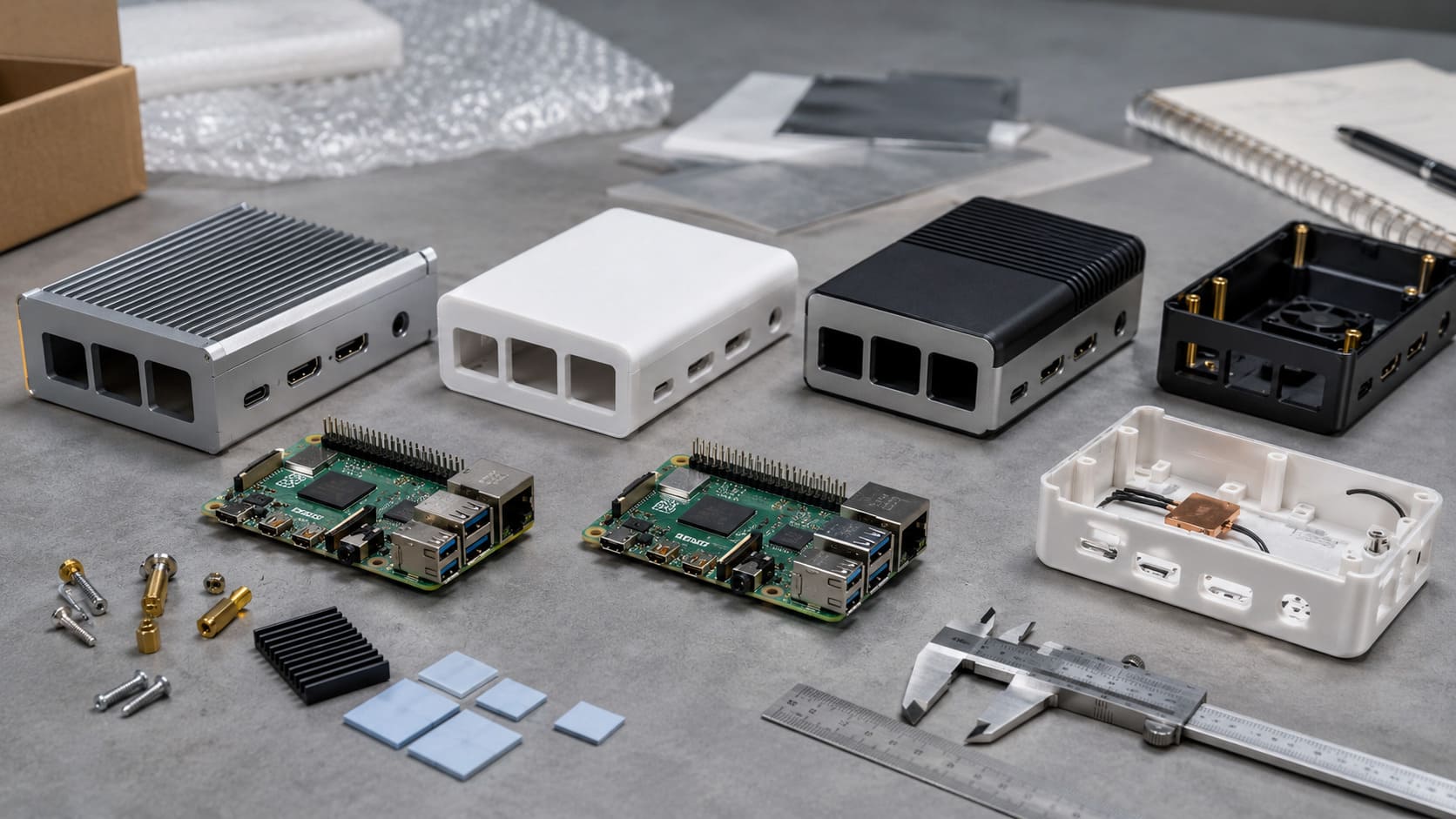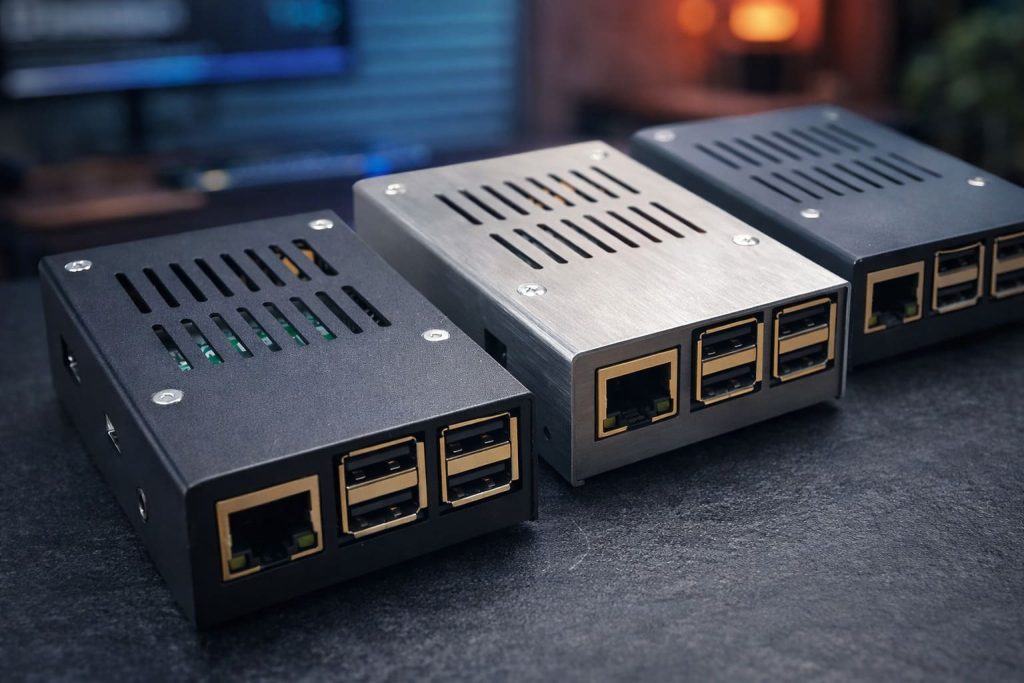
A metal Raspberry Pi case can look like a small thing on a quote sheet. I know why many buyers treat it that way. It sits there beside the board, the power supply, the heatsink, the cable, and the package. It feels like one more accessory. One more housing. One more shell.
But I do not see it that way anymore.
I have worked with enough buyers to know that the case often becomes the part people remember first. A customer may not open the unit and praise the machining tolerance. He may not talk about port spacing or wall thickness. But he will hold the case in his hand. He will judge the finish. He will notice whether it feels cheap, solid, hot, loose, neat, premium, rough, or trustworthy. That reaction happens fast. Much faster than most people expect.
I have seen this very clearly with re-brand clients. A buyer starts with a simple idea. He just wants to put his logo on a Raspberry Pi case and sell it on Amazon or in his local market. Sounds easy. Then the real questions come. Should the case feel heavier? Should the logo be engraved or printed? Should the case support a fan? Will the ports line up cleanly? Will it still look good after handling, packing, shipping, and shelf display?
That is the point where a standard case stops being enough.
An off-the-shelf enclosure is useful when speed matters more than identity. It is good for testing, sample use, or very basic resale. But a custom metal case gives me more control. I can shape the product around the business, not force the business around whatever a ready-made case happens to offer. That difference matters a lot when I want a stable product line, a cleaner brand image, or a better fit for a real project.
I usually see three common business uses for custom metal Raspberry Pi cases:
| Use case | What the buyer needs | Why custom helps |
|---|---|---|
| Re-brand retail sales | Logo, package, better appearance | Makes the product look like a real brand item |
| Industrial or project use | Better structure, mounting, thermal design | Makes the case fit the actual project |
| IoT deployment | Stable protection, cable access, repeatability | Makes batch installation easier |
In my experience, the customization process is not mysterious. It is just a chain of practical decisions. I start with the Raspberry Pi model. Then I look at the use case. After that, I think about heat, assembly, finish, branding, cost, and production quantity. That sounds simple on paper. In real work, each step can affect the next one.
That is why I think this topic deserves a careful look. A custom metal case is not just about making something look different. It is about making the product easier to sell, easier to use, and easier to scale.
And once I started seeing the case as part of the business model, not just the hardware, the whole conversation changed.
Why Should You Customize a Metal Raspberry Pi Case for Your Business?

I think many people ask the wrong first question.
They ask, “Can I customize it?”
I usually ask, “Why would I stay standard if the case affects the brand, the function, and the margin?”
That shift matters. It changes the whole buying decision.
Branding and Product Differentiation
When I sell or source for business, I do not only care about whether a case fits the board. I care about what it says about the product. A plain standard case can do the job. But it rarely builds identity. It rarely makes people remember the seller. It rarely helps a small business look more serious.
A custom metal case gives me room to build a product that feels like mine.
That may include:
- a laser engraved logo
- a custom color
- a branded label
- a retail box
- a custom user insert
- a unique shape or front panel design
These details sound small. They are not small in the market.
I have seen two sellers offer almost the same Raspberry Pi setup. Same board. Same basic function. Same audience. The one with the cleaner case, better branding, and more consistent packaging usually looks more trustworthy. Buyers often link appearance with quality, even when they do not say it directly.
Private label and logo engraving advantages
Private label work is one of the clearest reasons to customize. I can take a proven structure and make it fit a brand story. For many Amazon and local retail sellers, that is the difference between looking like a trader and looking like a brand owner.
Here is how I think about common logo options:
| Logo method | Best for | Strength | Limitation |
|---|---|---|---|
| Laser engraving | Premium metal cases | Clean, durable, professional look | Usually one-color visual effect |
| CNC engraving | Deep logo effect | Strong texture and visual depth | Higher processing cost |
| Silk printing | Simple logo and text | Low cost, good for volume | Can wear faster than engraving |
| UV printing | Color graphics | Flexible visual style | Not always ideal for harsh use |
I usually prefer engraving for metal Raspberry Pi cases when the buyer wants a more durable, higher-end feel.
A metal case already gives a stronger impression than many plastic ones. It feels more solid. It looks more serious. But “metal” alone is not enough. A sloppy custom job can still look cheap.
I have learned that premium image usually comes from the combination of details:
- clean cutouts
- even surface finish
- sharp logo placement
- no rough edges
- stable assembly
- packaging that matches the case quality
A premium image is not built by one dramatic move. It is built by many small correct decisions.
Standing out in Amazon and retail markets
This is where I think many sellers get trapped. They enter a crowded market with a product that looks like everything else. Then they hope lower pricing will carry the business. Sometimes it works for a while. Often it becomes a race to the bottom.
A custom case gives me another path.
I can stand out through:
- better appearance
- better fit for accessories
- cleaner package design
- stronger private label identity
- more professional product photos
That does not guarantee success. I want to be honest about that. A custom case cannot fix weak marketing or poor service. But it can help the product feel more intentional. And that matters.
Functional Advantages Over Standard Cases
Branding is only half of the story. I have also seen many buyers start with branding goals and then realize the real value came from better function.
A standard case is built for average use. Real business projects are not average.
Improved durability and heat dissipation
Metal cases are popular for a reason. They usually offer better strength and better heat handling than simple plastic housings. That helps in commercial use, industrial use, or long running Raspberry Pi projects.
When I design or choose a custom case, I can improve:
- wall thickness
- contact between case and heatsink
- ventilation openings
- screw structure
- protection during shipping and handling
Heat is not a side issue. Raspberry Pi boards can run hot in real work, especially with demanding tasks, enclosed spaces, or attached modules. A case that traps heat may look fine on day one and create trouble later.
Better EMI shielding performance
This part often gets ignored in casual projects. I do not think it should.
A metal case can help with EMI shielding. But that only works well when the design is right. A case is not magically good just because it is made of aluminum or steel. Contact points matter. Surface treatment matters. Seam design matters.
I have seen cases that looked excellent outside and still performed poorly because too much attention went to color and not enough went to conductivity.
Custom fit for specific Raspberry Pi modules and accessories
This is one of the most practical reasons to go custom.
A standard case may fit the main board, but not the full business setup. Many buyers need more than bare board coverage. They may need space for:
- HAT modules
- extra cooling
- custom cable exits
- mounting brackets
- DIN rail clips
- SSD support
- antenna holes
- special button or screen openings
That is where custom design becomes truly useful. It lets me build around the actual application, not around a generic assumption.
Business Scalability and Long-Term Value
I do not think customization only makes sense for big companies. In many cases, it helps smaller brands even more, because it creates structure and consistency early.
Bulk production benefits
Once the design is stable, batch production gets much easier. I can order with better planning. I can keep the same look across multiple runs. I can simplify packaging, assembly, and restocking.
That is hard to do when I depend on whatever ready-made stock happens to be available in the market.
Consistency in product quality
Consistency is underrated until it disappears.
I have seen buyers get frustrated when each batch feels slightly different. A corner changes. A port cutout moves a little. A finish looks off. The product page still shows the old version. Then complaints start.
A stable custom design helps reduce that mess.
Supporting OEM/ODM product lines
For OEM and ODM work, customization is not a luxury. It is often the whole point.
If my client wants his own branded line, or if he wants to redesign a similar case for a new project, then custom development becomes the real product path.
| Business goal | Standard case | Custom case |
|---|---|---|
| Quick sample use | Good | Good |
| Private label retail | Limited | Strong |
| Project-specific structure | Weak | Strong |
| Long-term product line | Unstable | More controllable |
| Brand image building | Weak | Strong |
I think that table explains the issue very clearly.
A standard case is fine when I just need a shell.
A custom metal case is better when I need a business tool.
The next question is not whether customization helps. The next question is how to design it well, because this is where many good ideas either become strong products or expensive mistakes.
What Are the Key Design Considerations for a Custom Metal Case?
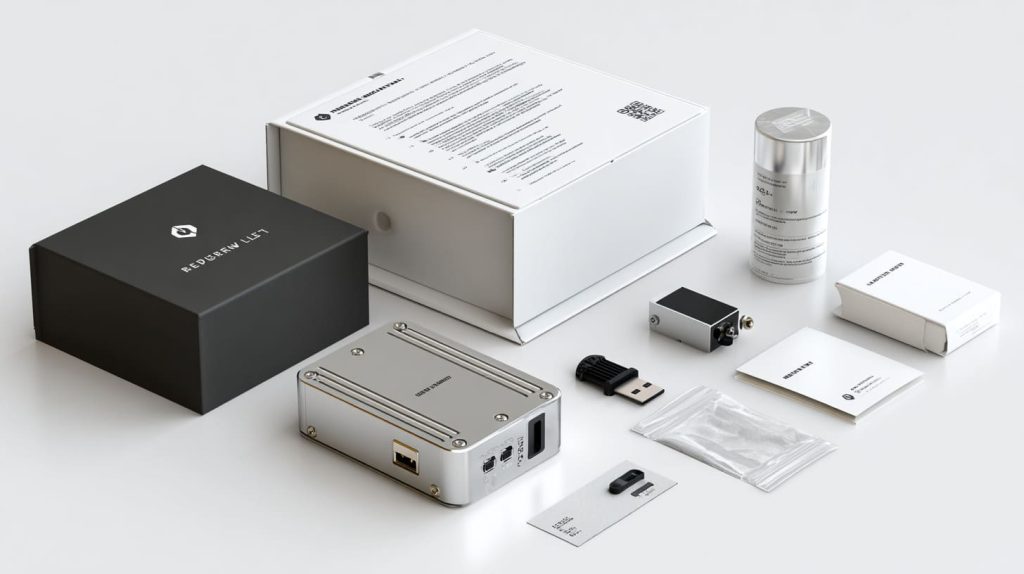
A custom case can solve many problems. It can also create new ones if the design starts from the wrong place.
I have seen buyers focus too early on color, logo position, or outside shape. Those things matter, yes. But the structure has to work first. If the board does not fit well, if the ports are awkward, if the heat has nowhere to go, then the design becomes a nice-looking problem.
Compatibility with Raspberry Pi Models
This is always my first checkpoint.
Not every Raspberry Pi case can serve every Raspberry Pi model. That sounds obvious, but mistakes still happen. Port layout changes. Board height changes. accessory needs change. A case for Raspberry Pi 4 is not automatically right for Raspberry Pi 5. CM4 projects often bring a completely different design path.
Raspberry Pi 4, 5, CM4, and other variants
Before I do anything else, I ask these questions:
- Which board will this case support?
- Will it support one model only or several?
- Will a HAT or extra module be installed?
- Will the case need room for future updates?
A case built for one exact board can be cleaner and tighter. A more flexible case can support more uses. The trade-off is usually size, cost, and design complexity.
Port alignment and GPIO access
Bad port alignment ruins confidence very fast.
I have seen samples where the HDMI opening looked fine in the drawing but felt awkward in the hand. The USB cutout was too tight. The SD card was hard to reach. The GPIO access was blocked. None of these issues were dramatic. But together, they made the case frustrating.
I try to review all access points early:
| Design area | Why it matters |
|---|---|
| USB and HDMI cutouts | Must allow smooth cable connection |
| Power port access | Must avoid awkward plug angle |
| GPIO opening | Important for development and expansion |
| SD card access | Useful for maintenance and testing |
| Indicator visibility | Helpful for diagnostics |
Future-proofing your design
This part needs balance. I do not want to over-design. But I also do not want a case that becomes useless after one board update or one small project change.
Sometimes it makes sense to allow extra internal room or modular panel options. Sometimes it does not. The right choice depends on the business plan.
Thermal Management Design
I treat heat like a business issue, not just a technical issue. If the product runs hot, the customer experience gets worse. The long-term stability gets worse too. That can lead to returns, support messages, and brand damage.
Passive cooling vs active cooling
I usually compare cooling in a very practical way.
| Cooling type | Good side | Weak side | Best use |
|---|---|---|---|
| Passive cooling | Quiet, simple, low maintenance | May not handle heavy heat load | Clean retail and light industrial use |
| Active cooling | Better heat control | Noise, dust, moving parts | High-load or enclosed applications |
For many business products, passive cooling looks cleaner and feels safer from a maintenance view. But I do not assume it is always enough. Raspberry Pi workloads vary a lot.
Heatsink integration and ventilation layout
A metal case can work like part of the thermal system. That is one of its best strengths. But only if the contact is designed well.
I usually think about:
- where the heat will move
- whether a heatsink touches the case body
- whether vents help or weaken the structure
- whether airflow is realistic in the final use scene
A vent pattern that looks nice is not always a vent pattern that works well. I have learned to be skeptical of decorative openings.
Aluminum vs other metals for heat dissipation
Aluminum is usually the first choice for Raspberry Pi cases, and I think that makes sense. It is lighter, easier to machine, and strong enough for many uses. It also handles heat well.
Steel has its own value, but it is heavier and often less attractive for this kind of product unless the project has special needs.
Structural Design and Assembly
I think structure gets less praise than it deserves. People notice it only when it goes wrong.
Wall thickness and strength considerations
Thickness is one of those details buyers often see as a cost line. I understand that. But I have learned to be careful here. A case that is too thin may save money first and lose value later through bending, weak feel, or poor thread strength.
Here is a simple way I look at it:
| Thickness choice | Typical effect |
|---|---|
| Too thin | Feels weak, may deform more easily |
| Balanced thickness | Good cost and strength balance |
| Too thick | Higher cost, more weight, more machining time |
The best choice depends on size, structure, finish, and use case.
Screw positioning and enclosure sealing
Screw layout matters more than many people expect. It affects structure, ease of assembly, and sometimes EMI behavior too. Poor screw placement can make a case feel annoying even when everything else looks fine.
I check:
- how many screws are really needed
- whether the lid closes evenly
- whether repeat assembly will damage threads
- whether the seam feels neat and stable
Ease of assembly for end users
I have seen technically correct designs that were still bad products because assembly felt clumsy. Too many screws. Hard-to-reach points. Loose internal parts. Sharp edges. Confusing orientation.
A business product should not fight the user.
EMI Shielding and Electrical Performance
This is the quiet topic that many people ignore until testing or field use exposes the problem.
Importance of conductive contact points
A metal case can support shielding, but it needs real conductive paths. Paint, heavy coating, or poor seam contact can weaken that path.
I do not assume “metal” automatically means “good shielding.” That assumption has caused too many problems in real manufacturing.
Impact of anodizing and surface treatment
Anodizing looks great. I like it for many products. But I also know it can create trouble if a design depends on stable conductive contact. The same finish that improves appearance and corrosion resistance can reduce conductivity at contact points.
That does not mean anodizing is bad. It means I need to use it with intent.
Grounding strategies for stable shielding
For cases with stricter electrical needs, I think grounding and contact planning deserve careful review. Even simple Raspberry Pi-based products may benefit from smarter electrical design if they are used in industrial or signal-sensitive scenes.
A custom case is not just a shell. It becomes part of the system.
That is why I always say the outside shape is only the beginning. Material and finish choices take that design and push it toward either a better product or a more expensive compromise.
Which Materials and Finishes Are Best for Metal Raspberry Pi Cases?
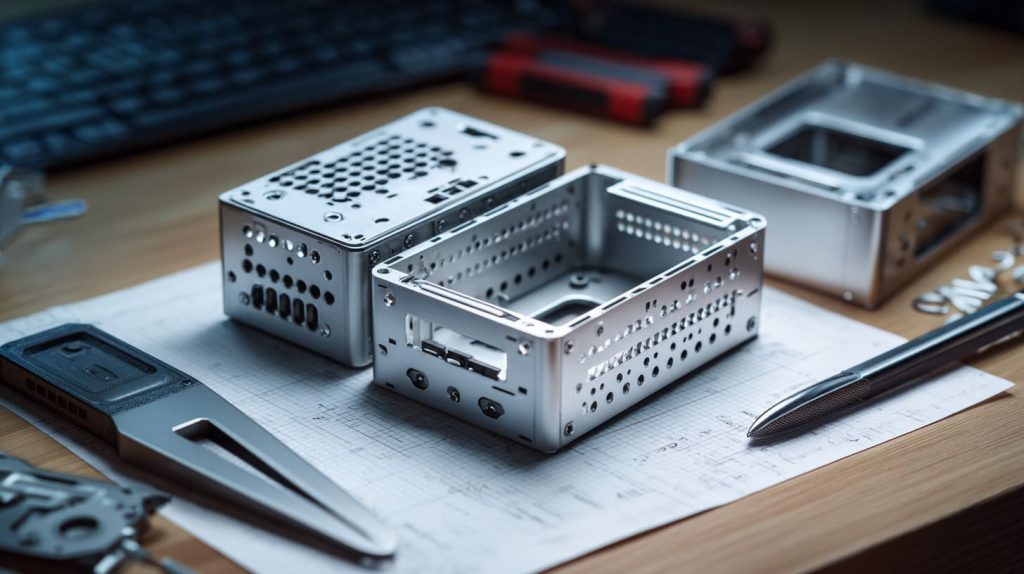
Material and finish decisions can make a case look smart on a quote and wrong in real life. I have seen that happen enough times that I no longer treat these choices as cosmetic.
A finish is not just a color. A material is not just a price.
Both shape the feel, the cost, the durability, the thermal behavior, and sometimes even the electrical performance.
Common Materials Used
Aluminum (most popular choice)
Aluminum is the material I see most often for custom Raspberry Pi metal cases, and for good reason.
I like aluminum because it gives me a strong overall balance:
- good heat transfer
- lighter weight
- easy machining
- clean appearance
- good support for engraving and finishing
For many B2B buyers, it fits both retail and project use well.
Steel and stainless steel options
Steel is stronger in some structural cases, but it usually adds more weight and may raise machining difficulty or cost depending on the design. Stainless steel can look excellent and resist corrosion well, but it is rarely the first choice for a typical Raspberry Pi case unless the application needs something more demanding.
Pros and cons comparison
| Material | Good side | Weak side | Typical fit |
|---|---|---|---|
| Aluminum | Light, good heat handling, easy to machine | Can cost more than simple plastic options | Most custom Raspberry Pi cases |
| Steel | Strong, solid feel | Heavier, may be harder to process | Industrial or rugged use |
| Stainless steel | Strong and corrosion resistant | Higher cost, heavier, less common for Pi cases | Special environments |
I usually tell buyers not to choose material by habit alone. The right answer depends on the market and the use scene.
Surface Finishing Options
Anodizing (color, durability, risks for EMI)
Anodizing is one of the most common choices. It gives a neat, professional look. It helps with surface protection. It supports nice colors. Buyers like it because it feels mature and commercial.
But I do not treat it as an automatic answer.
Why? Because it can reduce conductivity at surface contact areas. That matters when the case design depends on stable metal-to-metal electrical contact.
This is one of those places where appearance and function can pull in different directions.
Powder coating vs sandblasting
Powder coating can create a thicker, more decorative outer layer. It is good when appearance and surface protection matter more than direct conductivity. Sandblasting is often used before another finish, or as part of creating a more refined texture.
Both have value. But neither should be chosen only because they look good in photos.
Brushed and CNC-machined finishes
Brushed finishes give a strong metal feel. CNC-machined surfaces can look very crisp and technical. These options often work well for premium-looking business products.
I have seen brushed aluminum cases perform very well in branding-focused markets because they feel honest. Clean. Solid. Not flashy, but confident.
Choosing the Right Finish for Your Market
This is where business thinking needs to guide design.
Retail vs industrial application needs
Retail products often need stronger visual appeal. Industrial products often need more focus on function, handling, and environmental fit. Sometimes a finish that works beautifully for Amazon packaging is not the best choice for factory floor use.
Balancing aesthetics and functionality
I do not believe in choosing only function or only looks. Good business products need both. But the balance should be deliberate.
| Market type | Better finish focus |
|---|---|
| Retail re-brand sales | Appearance, logo effect, feel in hand |
| Industrial project use | Durability, practicality, electrical performance |
| Mixed business use | Balanced finish with simple branding |
Cost vs performance trade-offs
A better-looking finish may raise cost. A more conductive or practical surface choice may look less premium. That is normal. The point is not to avoid trade-offs. The point is to make them knowingly.
I think many expensive mistakes happen because buyers choose finish too late, after the structure is already fixed.
That is why I prefer material and finish discussions early.
Because once I know what the case is made of, and how it will be treated, I can start designing with fewer surprises. And that brings me to the next step, which is the real path from idea to production.
How to Design a Custom Raspberry Pi Case Step by Step?
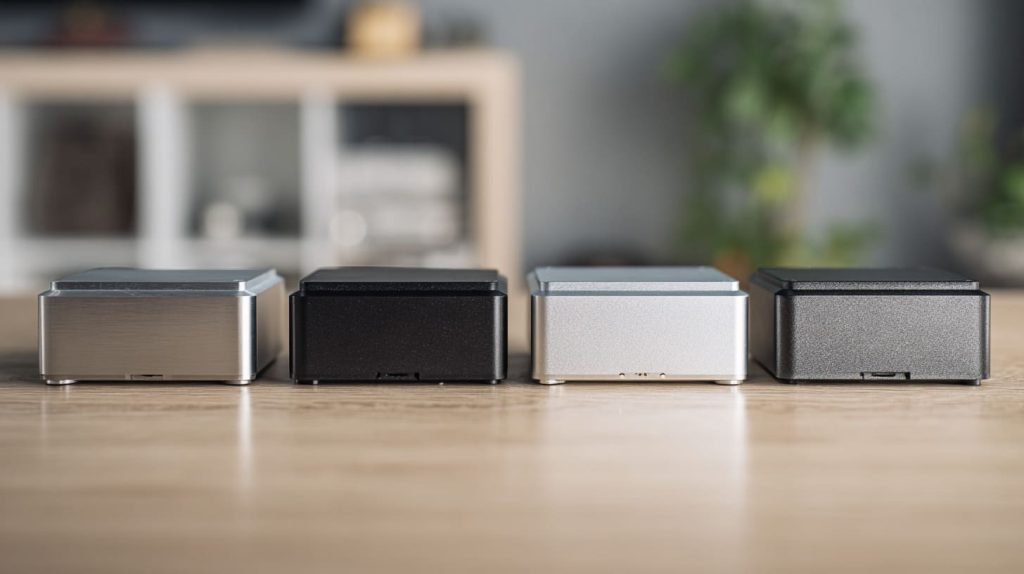
A custom case project usually feels simple at the start. Then the details arrive. That is normal. I do not see that as a problem. I see it as the real work.
What matters is having a process that keeps the project clear.
Step 1: Define Your Business Requirements
I always start here. Not with color. Not with logo size. Not with a beautiful render.
I start with business reality.
Target market (retail, industrial, project-based)
The first question is: who is this case really for?
A retail re-brand seller needs one kind of answer. An ODM client building around a special project needs another. A project buyer may care more about mounting, ports, or field stability than about shelf appearance.
Required features and accessories
I make a list before design starts.
That list may include:
- fan support
- heatsink contact area
- DIN rail mount
- wall mount holes
- custom button opening
- display window
- antenna hole
- cable management space
- SSD or module support
Budget and MOQ expectations
This part should be discussed early. If I skip it, the design may go in a direction that the budget cannot support.
A simple planning table helps a lot:
| Item | Early decision needed? | Why |
|---|---|---|
| Target price | Yes | Keeps design realistic |
| MOQ | Yes | Affects tooling and production plan |
| Finish level | Yes | Changes cost and process |
| Packaging | Yes | Adds to budget and branding |
Step 2: Create or Refine CAD Drawings
Once the requirements are clear, I move to drawings. This is where the idea starts becoming real.
Working with factory engineers
I think good engineering communication saves more money than aggressive price negotiation. A buyer who shares clear use needs, board details, and accessory plans often gets a better result than a buyer who only pushes the cost down.
Good engineers can help improve:
- internal structure
- port clearance
- screw placement
- cooling layout
- assembly logic
Common design mistakes to avoid
I have seen the same mistakes come back again and again:
- cutouts too tight
- weak internal support posts
- poor room for cable heads
- not enough space for add-on modules
- no thought for batch assembly
- ignoring packaging during design stage
Iteration and prototyping process
I do not expect the first drawing to be perfect. That would be unrealistic. A better mindset is to expect revision and keep it controlled.
Step 3: Prototype and Testing
This step tells me whether the design works in reality or only in theory.
Functional testing (fit, ports, assembly)
At minimum, I want to test:
- board fit
- port access
- screw closure
- lid alignment
- user assembly experience
Thermal and EMI testing
This becomes more important when the product will run longer, work harder, or enter industrial use.
I do not think every small project needs extreme testing. But I do think too many teams skip basic validation and pay for it later.
Feedback and design adjustments
This is where honest feedback matters. A prototype is not a trophy. It is a tool.
If something feels awkward, weak, too hot, too expensive, or too complex, I would rather say it now than hide it and regret it later.
Step 4: Finalize Design for Mass Production
Once the design is proven, I lock the key details.
Confirm tolerances and materials
This includes:
- final material type
- wall thickness
- finish details
- threading method
- logo method
- assembly standard
Packaging and labeling requirements
A lot of buyers leave this late. I think that is a mistake. Packaging should support the product, the brand, and the shipping method.
Production timeline planning
This is where practical manufacturing thinking matters. Sample approval, raw material prep, machining, surface treatment, branding, assembly, and packaging all take time.
A custom case does not become easier because I rush the final step.
That is also why branding and added features should be planned with the same seriousness as the structure, because they shape how the customer receives the product in the end.
How to Add Branding and Custom Features to Your Case?
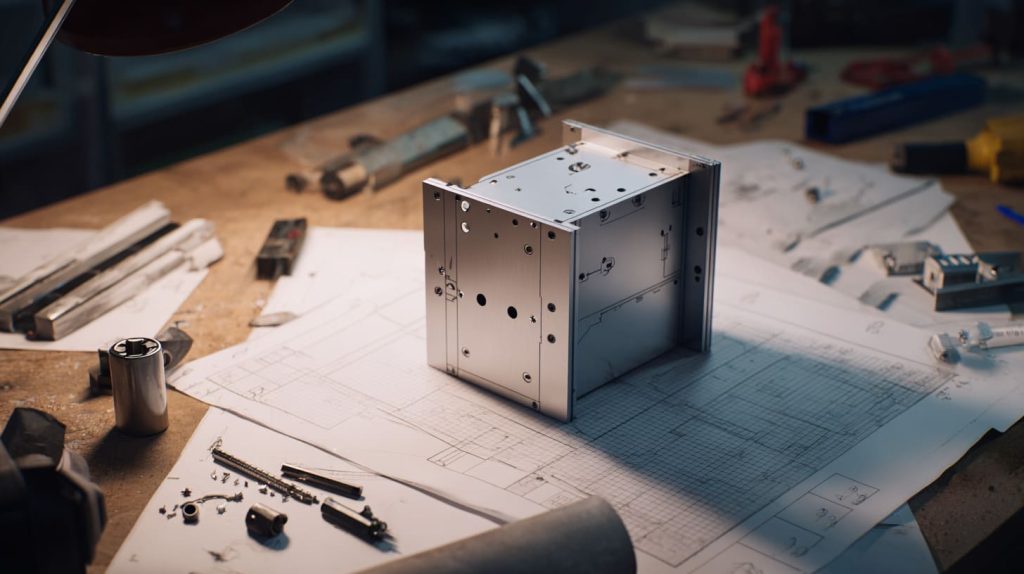
This is the stage where a metal case starts looking less like a hardware part and more like a product.
I enjoy this part, but I also think it needs discipline. Buyers sometimes get excited and add too much. Too many effects. Too many features. Too many ideas packed into one housing. Then the case loses clarity.
A better result usually comes from choosing the right few custom details, not every possible one.
Logo Customization Methods
Laser engraving
Laser engraving is often my first choice for metal Raspberry Pi cases. It looks clean. It lasts well. It gives the product a more stable brand feel.
For many B2B buyers, especially re-brand sellers, it creates the kind of serious impression they want.
CNC engraving
CNC engraving goes deeper and can feel more premium in some designs. It gives stronger texture. It can be a good choice when the logo itself is part of the case identity.
The trade-off is cost and processing time.
Silk printing and UV printing
These methods are useful when the buyer needs stronger visual freedom, such as colored logos, icons, or retail-facing graphics.
Here is a quick comparison:
| Method | Visual effect | Durability | Cost level |
|---|---|---|---|
| Laser engraving | Professional and neat | High | Medium |
| CNC engraving | Deep and premium | High | Medium to high |
| Silk printing | Simple and clear | Medium | Lower |
| UV printing | More color freedom | Medium | Medium |
Custom Packaging Solutions
A case does not reach the customer alone. Packaging shapes the first full impression.
Retail boxes and labeling
For Amazon and retail sellers, box design matters. A plain white box may work for low-cost trade. But a custom labeled box often helps the product feel more complete.
I have seen buyers improve product perception just by upgrading the outer box and insert card.
Instruction manuals and inserts
A simple insert can do more than many people expect. It can reduce confusion, improve setup, and make the brand feel more organized.
Enhancing perceived product value
Perceived value is real value in many buying decisions. That may sound blunt, but it is true.
A case with strong branding, a clean insert, and neat packaging often feels more trustworthy than a similar product with weak presentation.
Functional Custom Features
Mounting brackets and DIN rail support
This matters a lot for industrial and project-based use. A Raspberry Pi case may need to do more than sit on a desk.
DIN rail support, wall mounting, or custom bracket design can turn a general case into a real solution.
Waterproof or dustproof design (IP rating)
Not every project needs this. Some buyers ask for it because it sounds advanced. I prefer to ask whether the use scene really requires it.
A sealed design may improve protection, but it may also complicate heat management and cost. So I do not treat it like a free upgrade.
Custom cutouts and modular expansion
This is one of the strongest reasons to go custom. I can create a case that matches a real module plan instead of forcing workarounds later.
Examples include:
- custom antenna opening
- screen opening
- sensor interface hole
- terminal block window
- modular front panel options
That is the beauty of thoughtful customization. A basic box becomes a tool built for the buyer’s exact path.
Still, all of those nice additions lead to one practical question buyers always come back to. Cost. And that question deserves a direct answer, not vague factory talk.
What Are the Typical Costs and MOQs for Custom Metal Cases?

I have noticed that many buyers do not fear high cost as much as they fear unclear cost.
That makes sense.
If the pricing logic is clear, I can make decisions. If the quotation feels vague, trust starts breaking very fast.
Cost Breakdown
A custom metal Raspberry Pi case usually has several main cost parts.
Material and machining costs
This is the base layer. Material choice, thickness, part size, and CNC complexity all affect cost.
A simple, compact case with standard machining is very different from a larger case with many cutouts, internal features, and tighter appearance demands.
Surface finishing costs
Finishing may look secondary, but it can change the quote a lot. Anodizing, sandblasting, brushing, printing, and coating all add process steps.
Tooling and setup fees
Some designs need more setup effort or tooling support than others. The buyer should ask clearly whether any one-time charges apply.
A simple breakdown table helps:
| Cost area | What affects it most |
|---|---|
| Raw material | Material type, thickness, size |
| CNC machining | Shape complexity, hole count, tolerance |
| Surface finish | Finish type, color, quality standard |
| Branding | Engraving, printing, label work |
| Packaging | Box type, insert, printed material |
| Setup/tooling | New design complexity |
Minimum Order Quantity (MOQ)
MOQ often depends on business logic more than people think.
Standard MOQ ranges (100–200 units)
For many custom projects, this is a normal range. It gives the factory enough room to manage setup and production efficiently.
Lower MOQ for large-sized enclosures
Some larger or higher-value products may support lower MOQ, especially when the case itself has more value per unit. But the design and production path still matter.
Impact of customization complexity on MOQ
A very simple logo change is one thing. A full new enclosure structure is another. The more custom the project becomes, the more MOQ and setup discussion matter.
How to Optimize Cost Without Sacrificing Quality
This is one of my favorite discussions because it is where smart buying really shows up.
Standardizing parts where possible
If I can reuse a proven structure, a common screw size, or a standard packaging format, I usually save money and reduce risk.
Choosing the right finish and material
Not every case needs the most expensive finish. Not every buyer needs the most advanced structure. The best result often comes from choosing what fits the real market, not what looks impressive in a catalog.
Working with experienced factories
An experienced factory may not always show the very lowest price on the first line. But it often reduces hidden cost later through clearer communication, fewer mistakes, and faster correction.
I have learned this the hard way. A cheap quote can become expensive when delays, rework, and unclear details start piling up.
And once money is on the table, the next serious question comes naturally: who should I trust to make the product in the first place?
How to Choose the Right Manufacturer for Your Project?
This choice matters more than many buyers admit.
A good case design can still turn into a frustrating project if the manufacturer handles communication badly, misses details, or moves too slowly. I have seen buyers spend weeks fixing problems that should have been prevented in the first few emails.
Key Supplier Evaluation Criteria
Experience with Raspberry Pi cases
I prefer factories that understand Raspberry Pi products, not just general metal boxes. That background matters. It helps them think about port layout, heatsink needs, accessory fit, and actual market use.
Engineering support and communication ability
I think this is one of the most underrated factors in sourcing.
A supplier may have machines. That does not mean he has clear thinking. I want a team that can read the design, ask useful questions, and point out risks early.
Certifications and quality control systems
Certifications alone do not guarantee a perfect supplier. I want to be fair about that. But quality systems still matter. They show whether the factory works with some discipline.
Common Pain Points and How to Avoid Them
This section feels very real to me because I have heard the same buyer frustrations again and again.
Miscommunication in design details
Many project problems start here. A dimension is assumed. A finish is understood differently. A logo position changes. The buyer and supplier both think they are aligned. Then the sample proves they are not.
I prefer a written confirmation system with drawings, notes, finish details, and clear revision records.
Delayed production and shipping
Delays hurt re-brand sellers and ODM buyers in different ways. Retail sellers face stock-out risk. Project buyers face installation delays. Both lose time and trust.
Hidden costs and unclear quotations
I do not like quotes that hide setup fees, package changes, or finish upgrades until late in the process. A clear quote may not always be the cheapest. But it is usually easier to build a healthy business around.
Benefits of Working with a Specialized Factory
Faster design iteration
A factory that already understands this product category often moves faster. Less explaining. Fewer wrong assumptions. Better early advice.
Better understanding of Raspberry Pi ecosystem
That matters when the project includes boards, accessories, cooling parts, and branding needs together.
More reliable delivery timelines
Specialization does not solve everything. But it often reduces confusion, and confusion is one of the biggest reasons projects slow down.
| Supplier type | Main strength | Main risk |
|---|---|---|
| General metal factory | Broad machining ability | May not understand Raspberry Pi needs deeply |
| Specialized Raspberry Pi case supplier | Better product understanding | May focus on certain product styles only |
| Trading company | Easy contact in some cases | Less direct factory control |
Choosing the right supplier is not about finding a perfect partner. It is about finding the most reliable match for the product and the business model.
And even with a good supplier, there are still mistakes that can damage the result if I do not catch them early.
What Mistakes Should You Avoid When Customizing a Metal Case?

I do not think most customization mistakes come from bad intentions. They usually come from imbalance. Too much focus on one area. Not enough attention to another.
That is why I like looking at mistakes directly. They are often more useful than ideal theory.
Ignoring Thermal and EMI Performance
Over-focusing on appearance
This happens a lot. A buyer falls in love with the finish, the color, the logo effect, or the shape. Then thermal logic gets pushed aside. Or contact surfaces get coated in ways that hurt EMI behavior.
A case should look good. I agree with that. But it also has to work.
Poor ventilation design
Sometimes the design includes vents that look modern but do very little. Other times, the case is sealed too tightly with no serious plan for heat release.
I have learned to ask one simple question: where does the heat actually go?
If that answer is weak, the case is not ready.
Overcomplicating the Design
This is another common trap.
Too many custom features increasing cost
More features do not always mean more value. Sometimes they just mean more machining, more assembly, more delay, and more cost.
I like useful customization. I do not like decoration disguised as function.
Difficult assembly for end users
A case may look clever in a rendering and become annoying in real use. That is why I care so much about user handling. Screws should not feel awkward. Access should not feel cramped. The product should not make setup feel like a puzzle.
Poor Planning of Branding and Packaging
Branding is powerful. Last-minute branding is dangerous.
Last-minute logo decisions
Late logo changes often create messy results. Wrong size. Wrong position. Wrong contrast. Wrong method.
Inconsistent brand presentation
I have seen products where the case looked premium, but the label, box, or insert looked rushed. That mismatch weakens trust.
Here is a simple mistake-prevention table I would use in real work:
| Mistake | What usually causes it | Better approach |
|---|---|---|
| Poor heat performance | Design based only on appearance | Validate thermal path early |
| EMI weakness | Wrong finish or poor contact planning | Review conductivity needs in design stage |
| High cost creep | Too many added features | Rank features by real business value |
| Assembly frustration | No user testing | Test with real handling steps |
| Weak branding impact | Branding decided too late | Lock logo and packaging plan early |
Mistakes are useful teachers, but they are still expensive teachers.
That is why I prefer to connect customization to the bigger picture. Because when the case is designed well, it does not just avoid problems. It actively helps the business grow.
How Can Custom Cases Support Your Business Growth Strategy?

This is the part many people feel but do not always say clearly.
A custom case is not only a product decision. It is a growth decision.
When I look at successful small brands and steady B2B suppliers, I often see the same pattern. They stop selling random parts and start building a clearer product identity. A custom metal Raspberry Pi case can play a big role in that shift.
Building a Private Label Product Line
Creating a recognizable brand identity
A recognizable product line helps the business feel stable. Customers begin to remember the look, the packaging, the finish, the style, and the general quality level.
That matters in crowded markets.
Increasing profit margins
A stronger private label product usually has more room for margin than a plain resale item. Not always. I want to be careful here. Margin still depends on marketing, service, and demand. But customization often helps the product escape the worst kind of price comparison.
Supporting ODM and Project-Based Clients
Offering tailored solutions for clients
ODM buyers often need more than a logo. They need cooperation. They need redesign. They need honest feedback from the factory side.
A custom case gives me a way to support that kind of client with something real, not just talk.
Expanding into industrial and IoT markets
Industrial and IoT uses often need structure, mounting, thermal planning, and repeatable supply. Custom metal enclosures help open that door.
That can move the business from simple resale into more stable project work.
Improving Customer Satisfaction and Retention
Better product quality and reliability
Customers come back more often when the product feels consistent. That does not mean perfect. It means dependable.
Faster restocking and supply chain control
A stable custom design can make restocking easier because the product is already defined. I know what I am producing. I know what the buyer expects. I know how it should look and work.
| Growth goal | How custom cases help |
|---|---|
| Build brand recognition | Gives the product a distinct look and feel |
| Improve margin | Supports private label value |
| Enter project markets | Allows function-based design |
| Reduce product confusion | Creates repeatable standard inside the brand |
| Increase customer trust | Improves consistency and presentation |
I think this is the real heart of the issue.
A custom metal Raspberry Pi case is not only about metal, machining, or logo work. It is about turning a common hardware item into something that serves the business more directly.
And once I see it that way, the final conclusion becomes very simple.
Conclusion

When I look back at the full process, I do not see custom metal Raspberry Pi cases as a small add-on anymore. I see them as a practical business tool.
They help me shape the product around the market I want to serve. They help me improve branding, thermal design, structure, accessory fit, and long-term consistency. They also help me build something more stable than a generic resale item. That matters whether I am serving a re-brand buyer, an Amazon seller, a project client, or an ODM customer with a new idea.
I also think this topic deserves a balanced view. A custom case is not always the right move for every situation. If I only need a quick sample or a very basic solution, a standard enclosure may be enough. But if I want a better brand image, a more useful structure, stronger repeat orders, or a product that truly fits a real application, custom design makes much more sense.
For me, the key is balance.
I need to balance cost with function. Appearance with real use. Branding with engineering. Speed with long-term value. That is where good decisions happen.
If I take the time to define the board model, the user need, the cooling plan, the finish, the logo method, the packaging, and the right manufacturing partner, then the case stops being just a shell. It becomes part of the reason the business grows.
And that is the point I would leave you with.
If you are building your own Raspberry Pi case business, or if you want to create a custom metal enclosure for your project, do not start by asking only what the case will cost. Ask what the case should help your business become.
That question usually leads to a much better product.
If you want to discuss a custom metal Raspberry Pi case for your brand or project, I would start with the basics: your Raspberry Pi model, the features you need, your logo plan, and your target quantity. From there, the right design path becomes much easier to see.