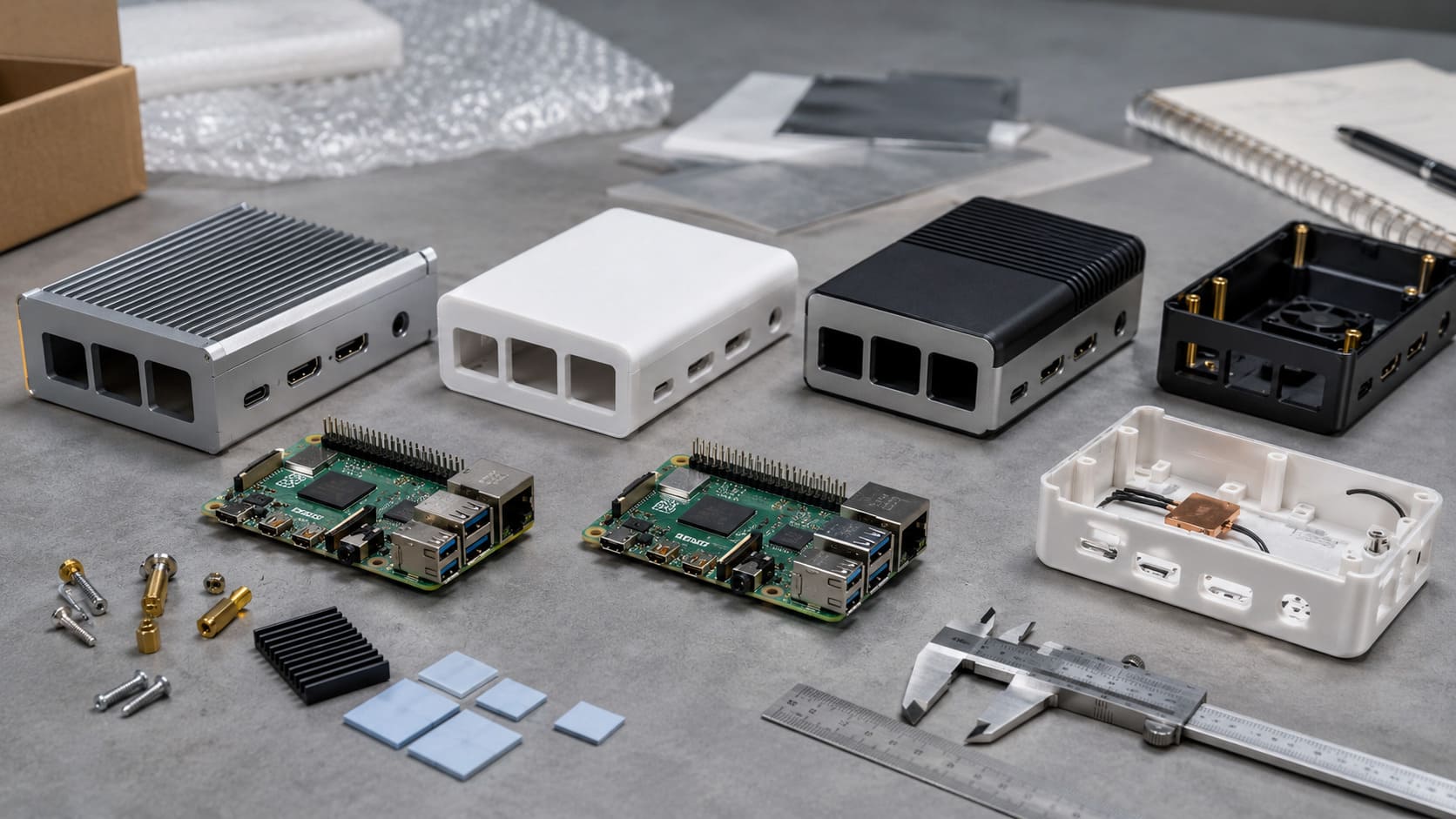
A custom Raspberry Pi enclosure can look harmless on paper. The drawing looks neat. The ports are marked. The logo area is there. The shell shape feels simple. Then the quote arrives, and many buyers breathe out too early.
I have seen this happen many times. A buyer compares two suppliers. One price looks lower. One lead time looks faster. One sample photo looks good enough. So the enclosure starts to feel like a basic plastic or aluminum shell. That is where the trouble begins.
A custom Raspberry Pi enclosure is rarely expensive because of the shell alone. It becomes expensive because buyers often ignore the hidden costs around design, tooling, sampling, branding, shipping, quality control, and communication.

I work with custom Raspberry Pi cases, accessories, and OEM projects all the time. So I do not look at enclosure cost as just a unit price anymore. I look at the whole path. I look at what happens before production, during production, and after the goods arrive. That is where the real cost lives.
Some buyers need re-brand cases for Amazon or local retail. Some buyers need a modified case for an ODM project. Some buyers need a housing that fits a power module, a heatsink, a cable path, or a board variation. On the surface, all of them are “buying a case.” In real life, they are buying risk, speed, control, and future problems or future stability.
One thing I have learned is very simple: the cheapest enclosure on a quotation sheet can become the most expensive enclosure six weeks later.
That sounds dramatic. It is not. It is just how projects go when small details stay hidden too long.
The hard part is that many of these costs do not show up in the first email. They show up after the sample does not fit well. They show up after the logo rubs off. They show up after the shipment arrives late. They show up after an Amazon customer leaves a bad review because the port opening is slightly off.
I write this topic for buyers like Jacky, Davide, and Lasle because they all face the same trap in different ways. One wants stable re-brand supply. One wants private label speed. One wants a custom design that supports a project idea. All of them need to look past unit price.
That is why I want to break this subject open from many sides. Not in a textbook way. In a working way. In the way I judge projects when real money, real schedules, and real customer expectations are on the table.
The first place I usually see buyers get pulled off course is much earlier than production. It starts with how they think about cost in the first place.
Why Do Buyers Underestimate the True Cost of Custom Raspberry Pi Enclosures?
Most buyers underestimate the real cost because they focus on the quoted unit price and miss the many small costs that build up around development, production, shipping, and after-sales issues.

I do not blame buyers for this. A quote is easy to compare. It gives a clean number. Human beings like clean numbers. They feel safe. But enclosure buying is not a clean-number game. It is a chain of decisions, and each weak decision adds cost later.
What often makes me nervous is not a high price. It is a very low price with too little detail behind it.
The illusion of low unit price
A low unit price can create false comfort. A buyer sees one factory offering a case at $2.10 and another at $2.65. The first quote looks better. But what is included? What is not included? That question changes everything.
A quotation can hide many things:
- no logo cost included
- no package cost included
- no insert or accessory cost included
- no assembly cost included
- no export carton upgrade included
- no extra sampling charge included
- no special QC step included
I have seen buyers save a few cents on the shell and lose far more on everything around it.
Here is a simple way I think about it:
| Cost Area | Looks Small at First | Can Become Big Later |
|---|---|---|
| Unit shell price | Yes | Yes |
| Sample revision cost | No | Yes |
| Logo process | Yes | Yes |
| Packaging | Yes | Yes |
| Freight | No | Yes |
| Rework | No | Yes |
| Delay cost | No | Very much |
The problem is not just missing cost categories. The problem is timing. These costs arrive one by one, so they do not feel heavy at first. But together, they change the whole project margin.
I have had buyers tell me, “Your unit price is a little higher.” Then we compare full cost side by side, and the story changes. One factory may offer a lower shell price, but need more time, more rework, more communication, and more correction. That is not a lower-cost solution. It just wears a lower number at the beginning.
Lack of technical evaluation in early stages
Many buyers judge an enclosure too visually in the early stage. They look at shape, color, and branding area. Those things matter, of course. But they are not enough.
A Raspberry Pi enclosure is not only a shell. It needs to work with heat, ports, boards, cables, mounting, access, and sometimes EMI concerns. If those checks come too late, the hidden costs start to stack up.
I often see these early-stage misses:
- no check for heatsink clearance
- no check for cable bend space
- no check for connector tolerance
- no check for wall thickness around screws
- no check for airflow direction
- no check for assembly sequence
A case can look excellent in a rendering and still become painful in production.
Here is a practical comparison:
| Evaluation Focus | What the Buyer Sees | What I Check in Real Work |
|---|---|---|
| Outer shape | Clean appearance | Moldability, machining ease, assembly access |
| Port cutouts | Correct positions | Tolerance, cable insertion, plug interference |
| Internal space | “Looks enough” | Board height, heatsink clearance, wire routing |
| Material | Nice finish | Heat, strength, cost, mass production behavior |
| Branding | Big logo zone | Printing method, durability, alignment repeatability |
The deeper point is this: technical mistakes do not stay technical. They become money problems.
This is one of those places where good buying and good engineering quietly overlap.
Communication gaps with suppliers
A custom enclosure project is full of small details. So poor communication does not create one big obvious mistake. It creates ten small mistakes. That is worse.
I have seen this many times. The buyer sends a drawing. The factory sends a quote. The buyer assumes the details were understood. The factory assumes the drawing is final. Then later both sides discover they imagined different things.
A few common examples:
- buyer expects label sticker application, but supplier quoted shell only
- supplier assumes standard texture, but buyer wants retail-grade surface finish
- buyer wants exact USB cutout alignment, but no board tolerance data was shared
- supplier uses default carton packing, but buyer needs Amazon-friendly labeling
That kind of mismatch is expensive because it wastes time before it wastes money.
I try to judge communication quality by one thing first: Does the other side ask the right annoying questions early? If they do, I trust the project more.
A supplier who asks careful questions can save money. A supplier who says “no problem” too quickly can cost a lot later.
Here is a short warning table I keep in my head:
| Communication Sign | What It Usually Means |
|---|---|
| Fast reply, vague content | Speed without control |
| Low quote, few questions | High risk of missing details |
| Clear questions, slower reply | Often safer for custom work |
| Repeated misunderstanding | Cost will rise over time |
Once buyers start to see the cost behind weak communication, they begin to understand something bigger: design decisions themselves can quietly become cost traps.
What Design Decisions Quietly Increase Your Total Cost?
Design choices raise cost when they add complexity, force difficult processing, or create performance problems that must be fixed later.

A lot of enclosure cost is decided before production even starts. That is why I pay close attention to the drawing stage. A buyer may think the factory controls the final cost. That is only partly true. The design often writes the future invoice long before the first part is made.
What I pay extra attention to is not whether a design looks smart, but whether it stays smart after tooling, assembly, shipping, and end use enter the picture.
Over-complex structural design
A custom Raspberry Pi enclosure can become expensive simply because it tries to do too much in one body. Too many holes. Too many snap points. Too many decorative edges. Too many internal features.
Each extra detail asks for time, tooling complexity, or more careful processing.
I have seen projects with:
- extra openings “just in case”
- decorative vent patterns that raise machining time
- unnecessary tight corner shapes
- internal pillars placed too close to board edges
- ultra-tight tolerances on non-critical areas
These things look small on CAD. They do not stay small in manufacturing.
| Structural Choice | Direct Effect | Hidden Cost Risk |
|---|---|---|
| More cutouts | More machining or mold complexity | Longer lead time |
| Tight tolerance everywhere | More inspection and rejection risk | Higher unit cost |
| Fancy vent pattern | Longer CNC cycle | Lower production efficiency |
| Complex snap-fit | Better look on paper | Higher breakage risk |
I usually respect the boring design more than the clever-looking design, because boring designs often survive production better.
That sounds unromantic, but it saves money.
Material selection mistakes
Material choice is where buyers often mix emotion and logic. Aluminum feels premium. Acrylic looks clean. ABS feels practical. Each one has a place. The trouble starts when the material is chosen for image rather than actual use.
I have worked on many projects where the material was over-specified. The buyer wanted aluminum because it looked more serious, even though the product did not need that cost. I have also seen buyers pick low-cost plastic when the device needed better heat handling or stronger feel.
Here is a grounded comparison:
| Material | Strengths | Weak Points | Best Fit |
|---|---|---|---|
| ABS | Low cost, easy molding, good for volume | Lower premium feel, lower heat tolerance | Retail re-brand, cost-sensitive projects |
| Aluminum | Better heat spread, premium feel, durable | Higher cost, more machining work | Industrial use, premium branded products |
| Acrylic | Clear look, display-friendly | Can crack, less ideal for impact and heat | Display or visible demo use |
The wrong material choice creates a chain of follow-up costs:
- stronger packaging needed
- heat problem needs redesign
- customer expectation mismatch
- more returns due to damage or feel
- branding process becomes harder
The right question is not “Which material is best?” The right question is “Which material solves this use case with the least total risk?”
Poor thermal design choices
Heat is one of the easiest hidden costs to ignore because it often does not show up in the first sample. The sample powers on. The board works. Everyone relaxes. Then the real use case begins. Long run times. Closed spaces. Added accessories. Warmer room conditions.
That is where a poorly planned enclosure starts to punish the project.
A Raspberry Pi case may need to account for:
- passive airflow
- heatsink height
- fan space
- vent position
- power cable heat effects
- nearby module heat load
I have seen buyers try to save cost by removing vents or fan support, only to pay more later in redesign or support complaints.
| Thermal Choice | Short-Term Benefit | Long-Term Cost Risk |
|---|---|---|
| No vents | Cleaner appearance | Overheating risk |
| Small enclosure | Lower material use | Poor airflow |
| No heatsink room | Lower size | Redesign later |
| Wrong vent placement | Nice look | Heat trapped inside |
I do not treat a cool-running sample as proof that thermal design is safe, because short testing hides many future problems.
That single mindset has saved more than one project from a painful second round.
And once design gets locked, the next cost layer usually arrives fast: tooling and MOQ.
How Do Tooling and MOQ Impact Your Budget?
Tooling and MOQ shape your budget by deciding how much money you must commit upfront, how flexible your changes can be, and how efficiently the project scales later.
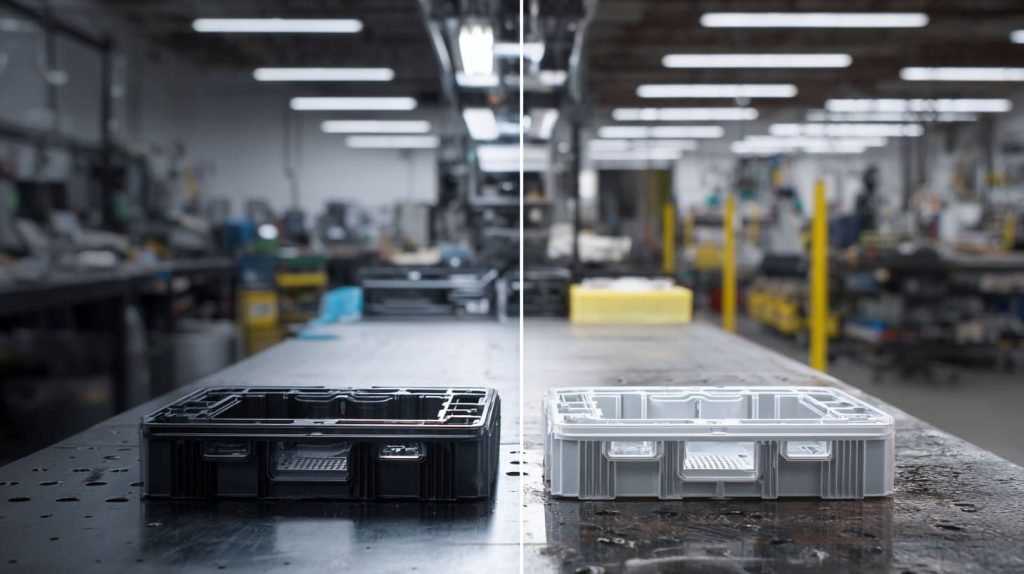
This is where buyers often feel squeezed. They want a custom result, but they do not want heavy upfront cost. That is fair. The problem is that manufacturing methods do not care about wishful thinking. They care about quantity, geometry, and repeatability.
More than once, I have had to tell a buyer that the cheapest per-unit path is not the safest path for the business at their current volume.
Injection mold vs CNC vs extrusion cost structure
Each process has a different logic. So buyers get into trouble when they compare them too simply.
| Process | Upfront Cost | Unit Cost | Flexibility | Best For |
|---|---|---|---|---|
| CNC machining | Low to medium | Higher | High | Low volume, prototypes, premium metal cases |
| Injection molding | High | Low | Low after tool completion | Large volume plastic cases |
| Extrusion + secondary machining | Medium | Medium | Medium | Long profile designs, certain aluminum structures |
Injection molding can look attractive because the unit cost gets low at volume. But the tooling cost can hit hard. That only makes sense if the volume is real and stable.
CNC feels more expensive per piece. That is true. But it can be much cheaper in the early stage because it gives freedom. You can change details. You can test fit. You can avoid mold lock-in too early.
A buyer once pushed hard for a mold-based plastic case because he wanted the lowest future unit price. His first order plan was only a few hundred sets. I advised against rushing. He did not listen at first. Then three small board changes appeared. The tooling path suddenly became painful. That project taught him what I already knew: low unit price is meaningless if the design still wants to move.
MOQ pressure from factories
MOQ is not just a factory rule. It is a cost signal.
Factories set MOQ because small quantities often do not absorb setup time, material prep, machine changes, labor arrangement, and packaging setup well. Buyers sometimes hear MOQ and think it is only negotiation pressure. Sometimes it is. But often it reflects real production economics.
Here is the rough truth:
| Order Size | What Usually Happens |
|---|---|
| Very small | Higher unit price, lower factory interest |
| Medium | Better balance of flexibility and cost |
| Large | Better unit price, but more inventory risk |
Small orders often create these hidden costs:
- setup cost spread across too few units
- special packaging cost becomes heavy per unit
- slower reorder because first batch was too cautious
- stock-outs because MOQ was avoided too aggressively
My instinct gets cautious when a buyer asks for a highly customized product but wants a tiny order, because that mix usually creates weak cost efficiency on both sides.
It can still be done. But it must be judged with open eyes.
Hidden tooling modification costs
Tooling is dangerous when people treat it like a one-time cost and not a commitment. The first tooling invoice is visible. The later modification bills are the ones buyers hate.
These usually come from:
- board version changes
- connector dimension changes
- missed assembly clearance
- weak snap structure
- branding area changes
- packaging-driven size updates
| Tooling Change Type | Why It Happens | Cost Impact |
|---|---|---|
| Port opening revision | New connector or wrong tolerance | Medium to high |
| Internal support move | Board fit problem | Medium |
| Surface area change | Branding or texture update | Medium |
| Structure reinforcement | Cracking or weak strength | High if late |
This is where I become very conservative. I would rather delay tooling by a little than rush a tool that starts needing surgery right away.
That judgment is not fear. It is cost control.
Once tooling decisions are made, buyers usually meet the next hidden bill during sample work and prototype testing.
What Hidden Costs Appear During Sampling and Prototyping?
Sampling and prototyping add hidden cost through repeated revisions, shipping fees, process mismatch, and lost time when early assumptions turn out to be wrong.

Many buyers think the sample stage is just a formality. I see it differently. The sample stage is where expensive truth shows up.
A sample is not there to impress you. It is there to expose problems while the damage is still manageable.
Multiple sample iterations
One sample rarely solves everything for a true custom enclosure. That is normal. But buyers still underestimate how fast repeated sample rounds can eat budget and schedule.
Each new round can add:
- new machining cost
- new surface treatment cost
- new logo setup
- new courier fee
- new waiting time for evaluation
Here is what repeated sampling often looks like in real work:
| Sample Round | What Usually Changes | Hidden Cost |
|---|---|---|
| 1st sample | Basic fit and look | Initial setup and shipping |
| 2nd sample | Port corrections, logo fix | More labor and courier cost |
| 3rd sample | Fine tuning and packaging check | Delay to launch timeline |
I do not get upset when a project needs another sample. I get upset when the need for another sample comes from avoidable poor checking.
That difference matters.
Prototype vs mass production mismatch
This is one of the most painful hidden-cost areas because the prototype may truly look fine. Then mass production behaves differently.
Why does that happen?
- prototype process differs from mass process
- hand-made finishing is cleaner than batch finishing
- tolerance stack changes in production
- materials may behave differently at scale
- assembly speed in production reveals weak points
A CNC sample of a plastic idea is not the same as an injection-molded production reality. A carefully hand-checked first sample is not the same as a batch packed by a busy line.
| Stage | Feels Safe Because | Hidden Risk |
|---|---|---|
| Prototype | One piece looks good | Not proven for full production |
| Pilot batch | Small control group works | Still not full-volume pressure |
| Mass production | Cost target met | Variation appears |
When I review a sample, I do not ask only “Does this look good?” I ask “Will this still behave well when we make hundreds or thousands?”
That question changes how I judge almost everything.
Time cost of delays
People count material cost. They count tooling cost. They count shipping cost. But many do not count delay cost with enough seriousness.
Delay cost can mean:
- missed Amazon season
- delayed customer launch
- slower cash return
- extra warehouse pressure
- more staff follow-up time
- project team frustration
I have seen buyers lose more from waiting than from the actual enclosure cost difference.
| Delay Cause | Direct Loss | Indirect Loss |
|---|---|---|
| Slow sample approval | Launch pushed back | Market window missed |
| Repeated revision | More engineering time | Buyer fatigue |
| Late production start | Late shipment | Stock-out or project delay |
I often tell buyers this: a cheaper supplier who moves slowly is not cheap if your business depends on timing.
That sentence may sound harsh, but Amazon sellers and ODM buyers usually understand it right away.
And once the shell itself is ready, many buyers get surprised again by something they thought would be easy: branding and customization.
How Does Branding and Customization Add Unexpected Expenses?
Branding and customization add cost because each logo, label, package, and variation increases process steps, setup needs, quality control points, and inventory complexity.

This part matters a lot for re-brand buyers. Many people think branding is just putting a logo on a case. It is not. Branding changes handling, inspection, packing, and sometimes even surface preparation.
I have seen branding become the hidden reason why a smooth product turns into a slow product.
Logo application methods
A logo can be applied in different ways. Each method has its own cost, look, and risk.
| Logo Method | Good Points | Weak Points | Best Use |
|---|---|---|---|
| Silk printing | Affordable, clear, common | Can wear off over time | Retail cases, standard branding |
| Laser engraving | Durable, premium feel | Less color freedom | Aluminum cases, long-life products |
| UV printing | Rich color, flexible design | Surface durability varies | Decorative or retail-focused cases |
A buyer may choose based only on appearance. I usually choose based on use, surface, quantity, and failure risk.
For example, a bright printed logo may look better online, but if the product is handled often, engraving may reduce complaint risk later. That is not always the cheapest first step, but it can be the cheaper full-life decision.
Custom packaging requirements
Packaging is where many “small custom projects” stop being small.
The moment a buyer wants retail packaging, barcode labels, instruction inserts, accessories arranged in a certain way, or Amazon-friendly outer labels, the process becomes more layered.
Common packaging-related hidden costs include:
- color box development
- insert tray or foam cost
- barcode label application labor
- compliance marking updates
- drop-test packaging upgrade
- carton mark revision per channel
| Packaging Type | Cost Level | Common Hidden Problem |
|---|---|---|
| Bulk packaging | Low | Less retail value |
| Simple branded box | Medium | Setup and print MOQ |
| Full retail package | High | More labor, more coordination |
I become extra careful when packaging requirements arrive late, because late packaging changes often force rework across labels, cartons, inserts, and master pack layout.
That is how a “small branding change” quietly becomes a much larger bill.
Rebranding complexity
Private label projects often grow in complexity faster than buyers expect.
One buyer may want:
- logo on case
- sticker on product
- sticker on box
- custom manual
- custom barcode
- model-specific label
- two or three color versions
That creates SKU growth. SKU growth creates inventory fragmentation. Inventory fragmentation creates more risk.
| Rebranding Element | Why It Seems Easy | Why It Gets Hard |
|---|---|---|
| More colors | Better customer choice | More stock split |
| Multiple logos | More market channels | More label control |
| Separate packaging versions | Better targeting | Higher inventory complexity |
I do not automatically say yes to every small branding variation, because a project can become messy long before it becomes profitable.
That is one of those business truths buyers feel only after stock starts moving slowly.
After branding, the next big surprise usually arrives from a part many people treat as outside the product itself: logistics.
What Logistics and Supply Chain Costs Are Often Ignored?
Logistics and supply chain costs are often ignored because they sit outside the enclosure quotation, yet they can heavily affect the final landed cost and delivery reliability.

A case can be well designed, well made, and well packed, and still become a costly project because the logistics plan was too shallow. I have watched strong products lose their margin after freight, duty, storage, and handling all took their share.
That is why I never treat shipping as an afterthought.
International shipping variables
Shipping is not one number. It changes with method, volume, timing, and destination.
| Shipping Method | Good Points | Weak Points |
|---|---|---|
| Air freight | Fast | Expensive |
| Sea freight | Lower cost for bulk | Slow |
| Express courier | Easy for samples | Very costly at volume |
The hidden issue is often volumetric weight. A light product with bulky packaging can cost more to ship than expected. That hurts re-brand projects fast because retail packaging usually takes more space.
I have had buyers optimize the case itself well and then lose the savings because the box size was not controlled carefully.
That is painful because it was preventable.
Import duties and taxes
Import cost is not glamorous, so it gets ignored. But it is real money.
Different regions apply different duties, taxes, and import handling costs. A buyer who only compares ex-factory price is not comparing full cost at all.
Important import concerns include:
- destination country duty rate
- VAT or similar tax
- customs handling fee
- documentation accuracy
- HS code classification
| Region | Common Buyer Concern |
|---|---|
| EU | VAT, import duty, documentation clarity |
| US | Tariff shifts, compliance, landed cost planning |
| UK | Duty and VAT treatment after entry |
| Smaller markets | Broker handling and local customs delay |
I get suspicious whenever a buyer talks a lot about product price but almost nothing about import structure, because that usually means the real cost picture is still incomplete.
Warehousing and fulfillment costs
This cost area hits re-brand sellers especially hard.
Once the goods arrive, the spending does not stop. Warehousing, pick-and-pack, relabeling, split shipment, and final delivery all add weight to the project margin.
Common post-import hidden costs:
- storage fee
- fulfillment fee
- relabel labor
- return handling
- local transfer cost
- slow-moving stock pressure
| Post-Arrival Cost | Why Buyers Miss It |
|---|---|
| Storage | It feels small per day |
| Fulfillment | It is outside factory quote |
| Returns processing | It depends on customer behavior |
| Relabel work | It is often decided late |
I have seen buyers save ten cents in production and lose much more in inefficient downstream handling.
That is why I keep asking the same quiet question: Will this version still make sense after it enters the warehouse?
Logistics can damage margin slowly. Quality problems, though, can damage it much faster.
How Do Quality Issues Turn Into Hidden Costs?
Quality issues turn into hidden costs when small production defects create rework, customer complaints, returns, lost trust, and more labor than anyone planned for.

Quality cost is rarely just defect cost. It is also time cost, reputation cost, and relationship cost. That is why I care so much about repeatability, not just one nice sample.
A product does not need to be terrible to become expensive. It only needs to be inconsistent.
Inconsistent production quality
Batch variation is one of the most common ways projects lose money quietly. One batch may look clean. The next one may show color shift, rough edges, weak print, or slightly different fit.
Buyers feel this pain in many forms:
- more inspection needed
- sorting labor increases
- replacements requested
- product photos no longer match reality
- retailer trust drops
| Quality Variation | What Happens Next |
|---|---|
| Color shift | Brand image weakens |
| Inconsistent texture | Product line looks unstable |
| Uneven logo quality | More complaints |
| Dimensional drift | Assembly trouble |
I worry more about inconsistency than about one isolated defect, because inconsistency is what breaks business confidence over time.
That is what makes quality cost so dangerous.
Poor fit and assembly issues
A Raspberry Pi enclosure that looks fine outside can still fail during assembly. Port misalignment, weak screw engagement, or poor board seating can create labor pain fast.
I have seen cases where the issue was tiny:
- USB cutout slightly tight
- HDMI opening slightly off
- screw post angle not ideal
- board support too high
- cable path pinched after closure
Small issue. Big effect.
| Assembly Problem | Direct Cost |
|---|---|
| Misaligned ports | Extra fitting labor or rejection |
| Bad screw fit | Rework and slower assembly |
| Tight internal space | Harder installation |
| Lid mismatch | Customer frustration and return risk |
The detail I often judge hardest is not whether the part closes, but whether it closes smoothly and repeatedly without forcing.
That is the sort of thing that separates a product that “works” from one that truly behaves well in business.
Customer complaints and returns
Returns are brutal because they multiply loss.
One defect may create:
- return shipping cost
- refund or replacement
- platform penalty
- bad review
- support time
- lower reorder confidence
This is especially serious for Amazon and retail sellers. One batch problem can spread outward fast.
| Problem Seen by Customer | Hidden Business Damage |
|---|---|
| Poor fit | Negative reviews |
| Logo wear | Weak brand impression |
| Cracked shell | Return and refund |
| Missing accessory fit | Support burden |
I have learned to fear the “almost acceptable” product more than the obviously bad one, because the almost acceptable one often slips through and creates slow damage in the market.
Once quality problems start repeating, buyers usually discover that communication problems were part of the cause all along.
What Communication Problems Increase Cost Over Time?
Communication problems raise cost over time because they slow decisions, create misunderstandings, block design improvement, and let small errors move into production.

Good communication does not just feel pleasant. It protects margin. That may sound simple, but I believe it strongly after seeing too many projects bleed time from unclear messages.
Poor communication is expensive because it delays correction.
Slow response cycles
A slow reply is not just annoying. It stretches the whole project.
Slow communication can delay:
- drawing confirmation
- sample approval
- packaging sign-off
- production release
- shipping decision
- issue correction
| Slow Step | Real Business Effect |
|---|---|
| Late drawing reply | Tooling start delayed |
| Late sample feedback | Production schedule slips |
| Late shipping choice | Missed dispatch window |
I do not need a supplier to reply instantly all the time, but I do need them to move key decisions without dragging the whole project.
That difference tells me whether a supplier supports business speed or only answers messages.
Misunderstood requirements
A project can go wrong even when both sides are trying hard. Custom work makes that possible. Technical language, time pressure, and different working habits all add noise.
Common misunderstood requirements include:
- exact logo position
- carton quantity per pack
- board version differences
- accessory inclusion
- surface finish level
- custom label content
| Misunderstood Detail | Later Problem |
|---|---|
| Wrong logo file version | Reprint or scrap |
| Wrong board assumption | Fit failure |
| Wrong carton spec | Shipping inefficiency |
| Wrong accessory list | Incomplete order |
I often judge project safety by how well both sides confirm small details in writing, because spoken assumptions disappear fast when production starts.
Lack of proactive supplier support
This point matters more than many buyers think. A supplier who only follows instructions may still be a weak supplier. For custom work, I value factories that notice risk and speak up.
Helpful supplier support can mean:
- suggesting easier structure
- warning about weak snap design
- advising a better logo method
- recommending better pack size
- pointing out thermal risk
- proposing a cost-saving material change
| Supplier Style | Buyer Outcome |
|---|---|
| Passive | More buyer burden |
| Proactive | Better prevention of cost issues |
| Over-promising | False confidence |
| Technical and honest | Safer project decisions |
The factories I trust most are not the ones who agree fastest. They are the ones who challenge weak assumptions before the damage becomes real.
Once that idea becomes clear, buyers can finally shift from reacting to hidden costs to actively reducing them.
How Can Smart Buyers Reduce These Hidden Costs?
Smart buyers reduce hidden costs by making better early decisions, simplifying what does not need complexity, choosing capable suppliers, and planning beyond the first order.

I like this part because it puts power back in the buyer’s hands. Hidden costs are real, but they are not magic. Many of them can be reduced early with better judgment.
The goal is not perfection. The goal is fewer expensive surprises.
Choosing the right manufacturing process early
The best process depends on volume, use case, design maturity, and budget.
| Situation | Better Fit |
|---|---|
| Low volume custom project | CNC or flexible process |
| High stable volume | Injection molding may make sense |
| Shape suits profile structure | Extrusion may help |
I prefer to match the process to the real business stage, not the buyer’s ideal future stage, because hope is not a production plan.
That one habit prevents many bad tooling decisions.
Simplifying design without losing function
Good simplification is not cutting value. It is protecting value.
Here are some smart simplification ideas:
- remove non-essential cutouts
- standardize screw types
- avoid decorative complexity that adds no function
- reduce unnecessary SKU variations
- use proven dimensions where possible
| Simplification Move | Benefit |
|---|---|
| Fewer cutouts | Lower processing cost |
| Standard components | Easier sourcing and assembly |
| Cleaner structure | Better repeatability |
| Reduced variants | Better stock control |
Some buyers worry that simpler means less competitive. I do not see it that way. I think simpler often means more controllable, and controllable products usually perform better in business.
Working with experienced suppliers
Experience saves money in ways buyers do not always notice right away.
An experienced supplier may help with:
- DFM suggestions
- packaging efficiency
- thermal design reminders
- logo process advice
- faster issue diagnosis
- stable repeat production
| Supplier Strength | Why It Matters |
|---|---|
| Raspberry Pi enclosure experience | Knows board fit and common risks |
| OEM/ODM support | Better custom project handling |
| Fast communication | Keeps project moving |
| Stable QC | Lowers repeat cost |
I trust experience more than marketing language, because real project scars teach better judgment than polished sales talk.
Planning for scalability
A case that works for 300 pieces may fail as a business plan for 3,000 pieces. So smart buyers think one step ahead.
Scalability planning includes:
- leaving room for future volume increase
- choosing branding methods that scale
- avoiding fragile packaging logic
- checking whether process choice still works later
| Early Choice | Future Risk if Ignored |
|---|---|
| No volume planning | Forced redesign later |
| Over-custom packaging | Fulfillment burden grows |
| Weak stock planning | Reorder panic |
| Tooling too early | Lock-in before validation |
I do not try to predict everything. But I do try to avoid choices that trap the buyer later.
That is usually enough to protect both cost and flexibility.
At that point, the final big question becomes obvious: before choosing a supplier, what should a buyer actually check?
What Should You Check Before Finalizing a Supplier?
Before finalizing a supplier, buyers should check the factory’s real product experience, quality control habits, communication reliability, and ability to support custom requirements without confusion.
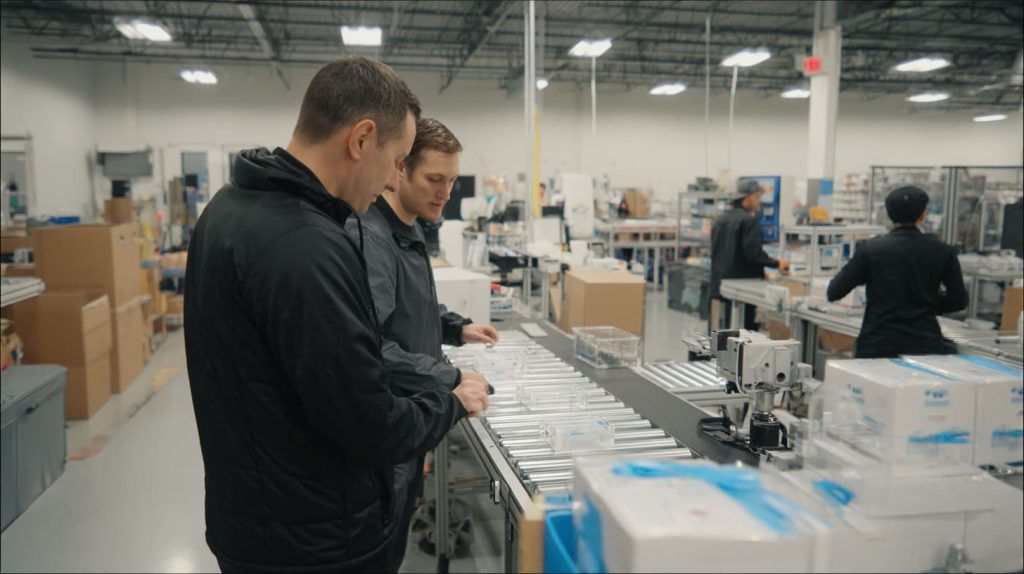
This is the stage where many buyers still make emotional decisions. They like the quote. They like the friendliness. They like the speed. Those things matter. But they are not enough.
I want evidence. I want signs that the supplier can still perform after the first easy conversation.
Supplier capability evaluation
A supplier should not only say they can make custom Raspberry Pi enclosures. They should show it through experience, structure understanding, and production logic.
Things I would check:
- experience with Raspberry Pi or similar board enclosures
- ability to handle logo and packaging customization
- clear understanding of material and process options
- real production capacity
- sample quality and detail awareness
| Capability Check | Why I Care |
|---|---|
| Similar product history | Lowers learning risk |
| Board-fit understanding | Prevents technical mistakes |
| Process range | Gives more options |
| Production capacity | Supports delivery stability |
I do not pick a supplier just because they can make a shell. I look for whether they can support the whole project without acting lost when details start getting specific.
Quality control systems
Quality control is easy to talk about and harder to prove. That is why I look for practical signs, not only certificates.
Good signs include:
- inspection steps defined clearly
- dimension checks on key areas
- logo quality control
- packaging verification
- sample-to-mass consistency attention
| QC Element | What It Tells Me |
|---|---|
| Incoming material check | Basic discipline |
| In-process inspection | Problems caught early |
| Final inspection | Shipment stability |
| Record keeping | Repeatability and accountability |
I care less about hearing “we do strict QC” and more about seeing whether the supplier knows exactly which dimensions and visual details are most likely to fail.
That difference tells me whether QC is real or just sales language.
Service and communication efficiency
A custom enclosure project needs a supplier who can think, reply, confirm, and adjust.
I would check:
- reply speed on important issues
- clarity of answers
- willingness to confirm small details
- ability to suggest improvements
- stability during revisions
| Communication Sign | My Reading |
|---|---|
| Clear and specific answers | Good control |
| Fast but shallow replies | Risky |
| Helpful technical pushback | Valuable |
| Constant confusion | Future cost warning |
Sometimes the supplier with the smoothest first sales chat is not the best long-term partner. I have learned to trust clarity over charm.
That lesson has saved me from more than one costly mistake.
Conclusion
A custom Raspberry Pi enclosure looks simple until real business starts pressing on it from all sides. Then the true cost shows up. Not only in the shell price, but in design choices, tooling decisions, sample rounds, branding work, shipping plans, quality control, and day-to-day communication.
That is why I do not judge enclosure projects by quote alone.
I think this way because I have seen too many buyers lose margin in places they did not even include in the first calculation. I have seen low-priced projects turn heavy because the design was too complex. I have seen “good enough” samples become bad mass production. I have seen beautiful branding plans create inventory mess. I have seen slow communication quietly push a promising order into delay, stress, and lost sales.
I also think this way because I work close to the details. I know how easy it is for a logo position, a port tolerance, a packaging choice, or a shipping method to change the whole project result. Small details do not stay small for long in custom work.
So my view is simple. I would rather help a buyer understand the full cost early than let them enjoy a cheap quote for a few days and suffer for the next few months.
If you are sourcing custom Raspberry Pi enclosures, re-brand cases, or an ODM case for your own project, I strongly suggest that you stop asking only one question: What is the unit price? Ask the better question: What will this project really cost me from sample to delivery to after-sales?
That is the question that protects profit.
That is also the question that helps buyers choose better suppliers, make cleaner decisions, and avoid the kind of hidden costs that drain both margin and patience.
If you want, you can send me your enclosure idea, drawing, board layout, or target quantity. I can help you review the risky parts early and point out where the hidden cost is most likely to appear before it becomes your real bill.