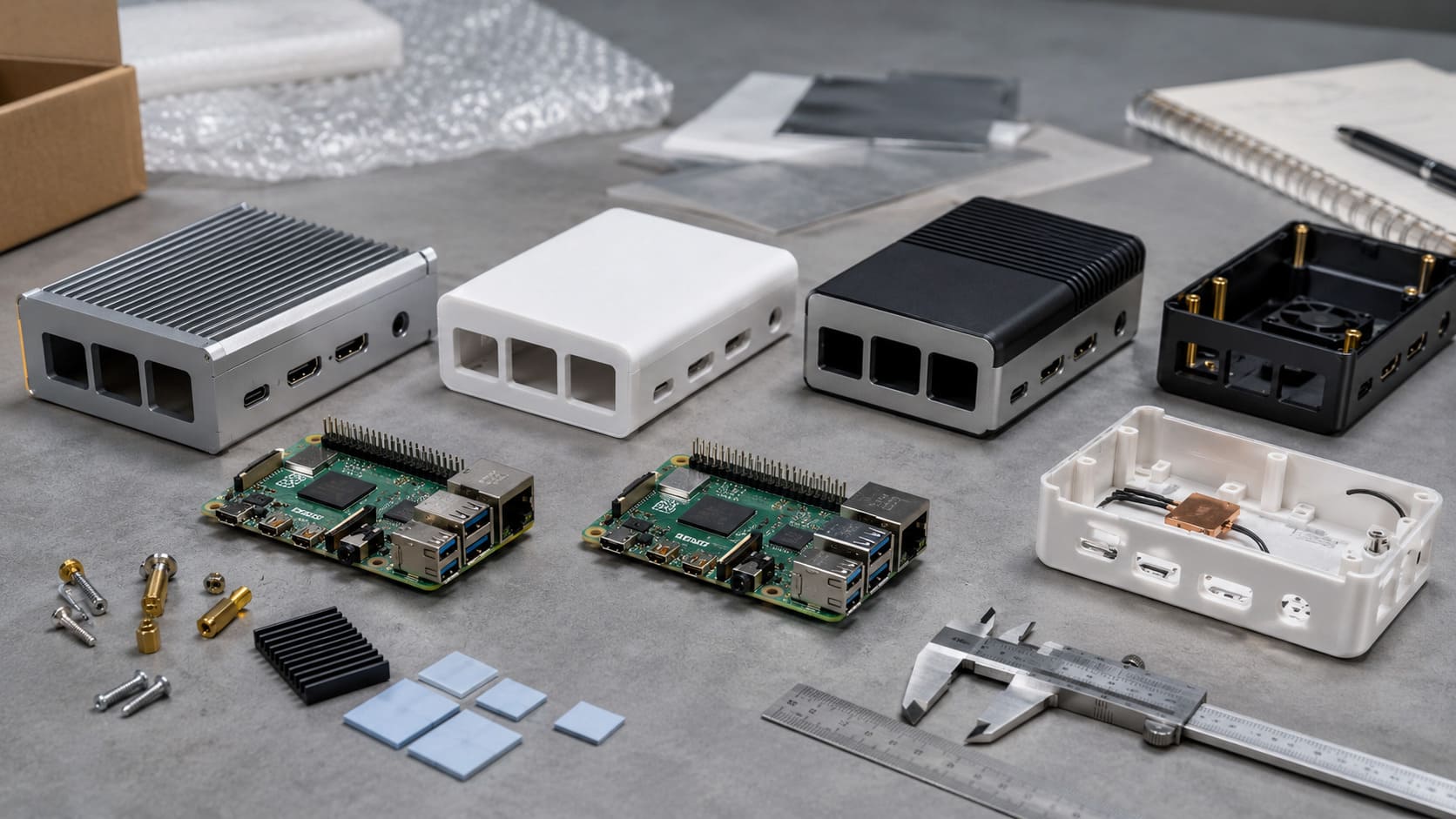
Last month a ten-year-old niece visited my Shenzhen shop.
She watched me code a line-follower on a Pi 5 and blurted, “Uncle Vincent, that looks like magic!”
I laughed, then realized she was half right—robots feel magical because they turn cold code into motion you can touch.
In this guide I explain how a simple starter robot kit can put that power in your hands—whether you build alone, teach a classroom, or resell under your own brand.
You will see:
- the clear edge Pi kits hold over Arduino sets,
- five kit styles ruling 2025,
- buying tips Davide and Jackson wish they knew sooner,
- and a six-month roadmap that grew from my factory floor.
Ready? Let’s roll forward.
Why Start with a Raspberry Pi-Powered Robot Kit?

What makes Pi robots more beginner-friendly than Arduino-only sets
I own stacks of both. Arduinos blink LEDs with grace, but the moment you need a camera stream or on-board Python, a Pi car leaves the older boards panting.
- Built-in Wi-Fi and full Linux /mean less solder, more shipping product/.
- USB and CSI ports welcome webcams, letting first-timers play with vision on day one.
2025 price-to-power sweet spot of Pi 4 & Pi 5 boards
Since the Pi 5 price settled near $80 in Q1 2025, the upgrade tax is tiny compared with the hours you save. A Pi 4 still shines for lighter tasks and usually shaves $20 off kit cost.
Real-world skills you gain: Linux, Python, AI, IoT, teamwork
A rolling bot forces you to juggle:
- Linux shell for updates,
- Python GPIO to move wheels,
- OpenCV for object tracking,
- MQTT / ROS 2 if you sync several bots.
That mix mirrors what employers and project clients pay for.
Short pit stop: before we map the market, let’s see what styles rule the shelves.
Snapshot of the Starter-Kit Landscape in 2025
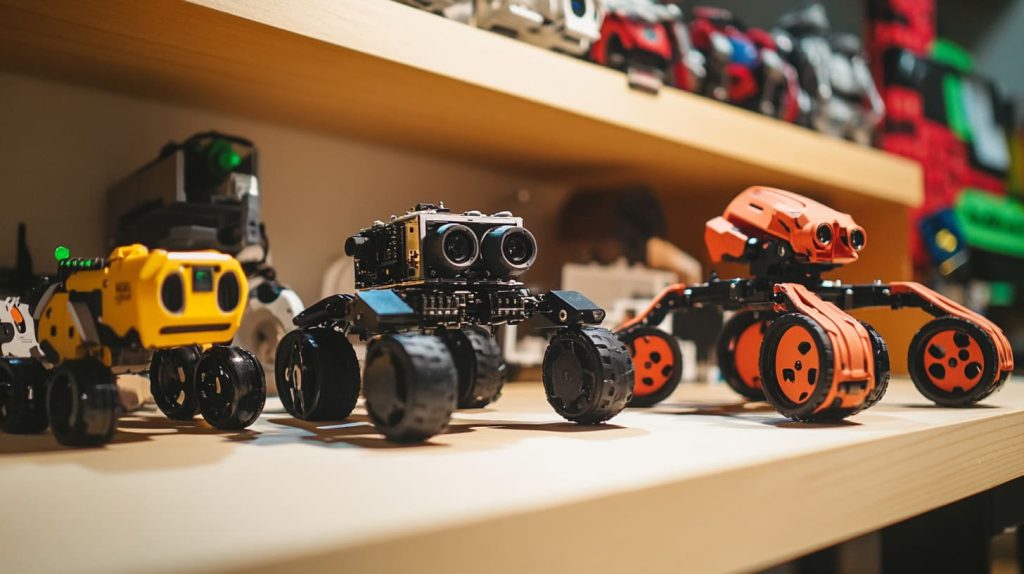
Car-style kits (2- & 4-wheel) dominating entry level
Think tiny RC cars with sensors. They cost $70–$150, teach motion control fast, and fit Pi 4 or Pi 5 boards.
Arm & gripper kits for pick-and-place learning
Add a servo arm to a base, and students meet forward kinematics without drowning in math. Prices hover around $160–$250.
Quadrupeds & animal-themed kits that teach inverse kinematics
Yahboom’s PiDog trots in at about $635. Costly, yes, but nothing beats four legs for teaching balance control.
Specialty kits (tank treads, Mecanum, hover) for niche goals
Need sideways movement or rough ground tests? Mecanum wheels or treads like the Freenove Mecanum variant answer that call, usually $100–$200.
A quick breath—next we drill into what to check before you tap “Buy.”
Key Buying Criteria for First-Time Builders

| Criterion | Why it matters | Quick check |
|---|---|---|
| Mechanical ease | Fewer screws = faster first success | Look for snap-fit or printed labels on parts |
| Coding path | Scratch lowers the first wall; Python grows skill | Kit should ship with both options |
| Sensor suite | More sensors = longer learning runway | Camera + ultrasonic at minimum |
| Docs & community | Saves nights of frustration | GitHub stars, active forum, video playlist |
| True cost | Board, batteries, tools, shipping add up | Build a full list before you compare |
Ease of mechanical assembly & tool requirements
If the kit needs a soldering iron day one, new builders quit. Aim for screwdrivers only.
Programming environments (Blockly, Scratch, Python, ROS 2)
I start kids on Scratch, switch to Python in week two, and introduce ROS 2 once they crave swarm control.
Sensor suite & expansion ports for future add-ons
A robot without I²C headers is a dead end. Check for at least one spare 5 V pin and room for a Pi camera.
Documentation quality, tutorials, and community support
Count tutorial videos, not just PDFs. Search YouTube for the kit name—if results are thin, expect forum silence later.
Total cost of ownership: board, batteries, spares, shipping
Batteries rarely ship by air from China. Factor local purchase into your budget.
Tired of theory? Let’s place five top kits side by side.
Quick Side-by-Side Comparison of the Top Five Kits

| Kit | Street Price* | Avg Build Time | Code Support | Upgradability |
|---|---|---|---|---|
| SunFounder PiCar-X 2.0 | $125 (w/out Pi) | 2 h | Scratch, Python, ROS 2 | Extra sensor bays, SPI header |
| Dexter GoPiGo 4 | $229 (with Pi 4) | 90 min | Blockly, Python | Servo & Grove ports |
| Freenove 4WD | $70–75 (w/out Pi) | 3 h | Python, C, Java | Mecanum wheel swap |
| Yahboom PiDog | $635 (kit only) | 4 h | Python, ROS 2 | Lidar, voice pack |
| Elecrow CrowBot Bolt | $50 (no Pi) | 1 h | Blockly, Python | Joystick, camera mount |
*Prices sampled May 2025, US retail.
Numbers tell part of the tale; hands-on stories fill the gaps.
Deep-Dive Reviews of the Leading Kits
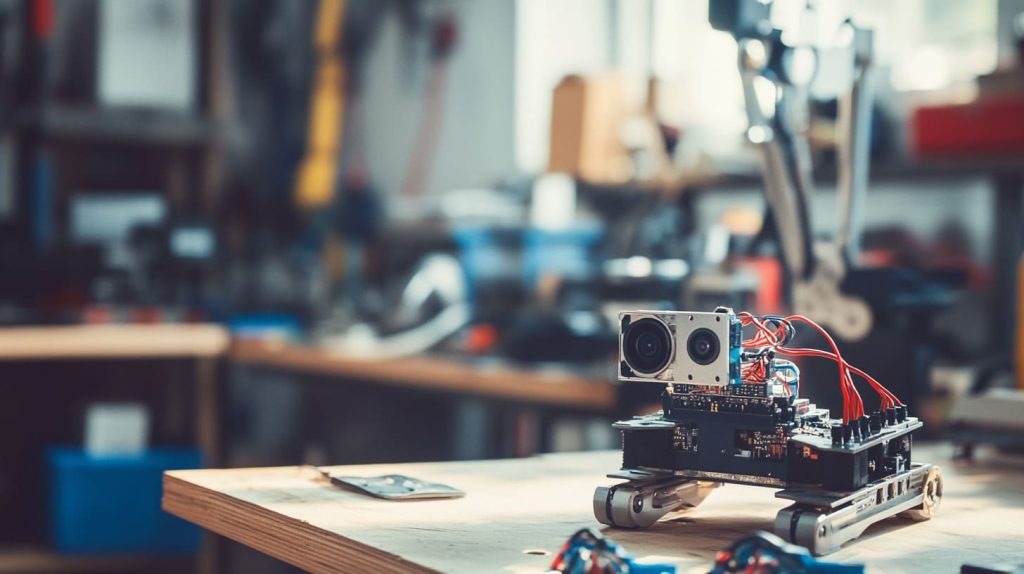
SunFounder PiCar-X 2.0 — AI-ready vision car
I built this kit on a rainy Friday night. The servo calibration tool saved me an hour. The camera pan-tilt combo means you can run YOLOv8 models and watch the bot “look” before it turns. Downsides? Plastic wheels slip on glossy floors—wrap them with thin silicone bands.
Dexter / ModRobotics GoPiGo 4 — classroom workhorse
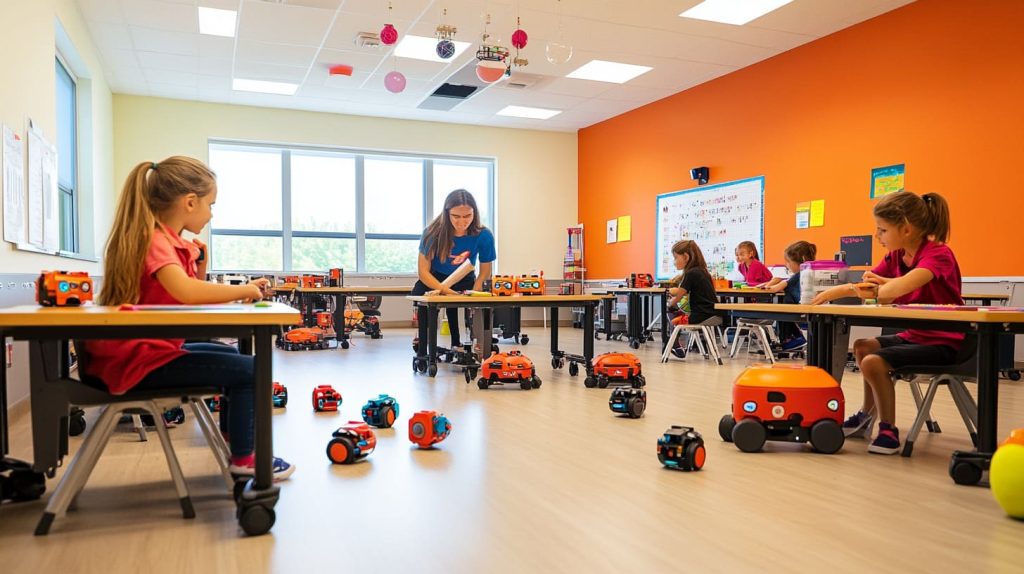
Teachers love the Blockly missions that ship free. I shipped ten sets to a Belgian school; none failed after fifty students hammered them. Price is higher because the kit bundles a Pi 4, Wi-Fi dongle, and charger. For B2B resellers, the company allows bulk orders with your own logo stickers.
Freenove 4WD Smart Car — budget-friendly hacker favorite
Under $80 buys a metal chassis, four geared motors, and pages of sample code. You supply the Pi and batteries, making this ideal for Davide, who already stocks Pi 4 boards and wants margin for private labels.
Yahboom PiDog (quadruped) — walking-bot fundamentals
Four legs teach patience. Joint alignment must be millimeter perfect. Once tuned, the bot struts across the desk and bows on voice command. I use it to demo inverse kinematics to corporate buyers; the “wow” factor sells itself.
Elecrow CrowBot Bolt — STEM-focused mini rover
Small enough to run on a hotel-room coffee table. Pre-flashed firmware lets you code via a phone app. I hand these out at trade shows; attendees code a light-show chase in fifteen minutes and walk off smiling.
Curious how to stretch learning past week one? Follow the roadmap.
Learning Roadmap: Projects from Day 1 to Month 6
| Timeframe | Goal | Key Tools |
|---|---|---|
| Day 1–7 | Remote-control drive & line follow | Scratch, GPIO PWM |
| Week 2–4 | Obstacle avoidance, basic SLAM | Ultrasonic, OpenCV |
| Month 2–3 | Voice or phone app control, object detect | MQTT, YOLO lite |
| Month 4–6 | ROS 2 mapping, cloud log, swarm | ROS 2 Foxy, Wi-Fi mesh |
Keep logs for each milestone; future buyers love seeing progress charts.
Now, how do you turn these bots into branded products?
Customization & Re-Branding Options for B2B Distributors

Private-label printing, engraving, and packaging bundles
At MaidaTech we laser-etch logos on acrylic chassis panels and add full-color box sleeves. MOQ starts at 200 sets; setup fee is waived for repeat clients like Davide.
Firmware pre-load & tutorial localization services
We flash your custom image—yes, German manuals included—and ship sealed so Amazon FBA receives ready-to-sell stock.
MOQ, lead-time, and logistics tips for buyers like Davide & Jackson
- MOQ: 200 kits standard, 500 for custom color plastics.
- Lead-time: 18 days production + 7 days FedEx Europe.
- Tip: book freight early in peak season (Sept–Nov) to dodge stock-outs.
How MaidaTech supports OEM / ODM redesign requests
Lasle once asked for a waterproof rover. We swapped in gasket seals, sent CAD for approval in 48 h, and cut the first mold in ten days—cost 12 % under his EU quote.
Big dreams attract big bugs; let’s dodge the usual ones.
Common Beginner Pitfalls & Troubleshooting Tips

Power draw & heat throttling on Pi 4 / Pi 5 boards
Use a 3 A supply. Stick a 20 mm heatsink on the CPU; otherwise the bot crawls once temps hit 80 °C.
Motor calibration drift and wheel-slip fixes
Mark wheel centers with a pen. After each run, compare tracks; tweak PWM values if drift exceeds 5 %.
Wi-Fi, SSH, and VNC connectivity hiccups
Turn off 5 GHz if your router sits far away—many bots ship with tiny 2.4 GHz antennas only.
Code deployment errors: GPIO pin mismaps & library conflicts
Print the pin map and tape it to your desk. Lock package versions in a requirements.txt; updates break demos at the worst moments.
Bots evolve fast—so will the kits. Peep the horizon.
Future Trends to Watch
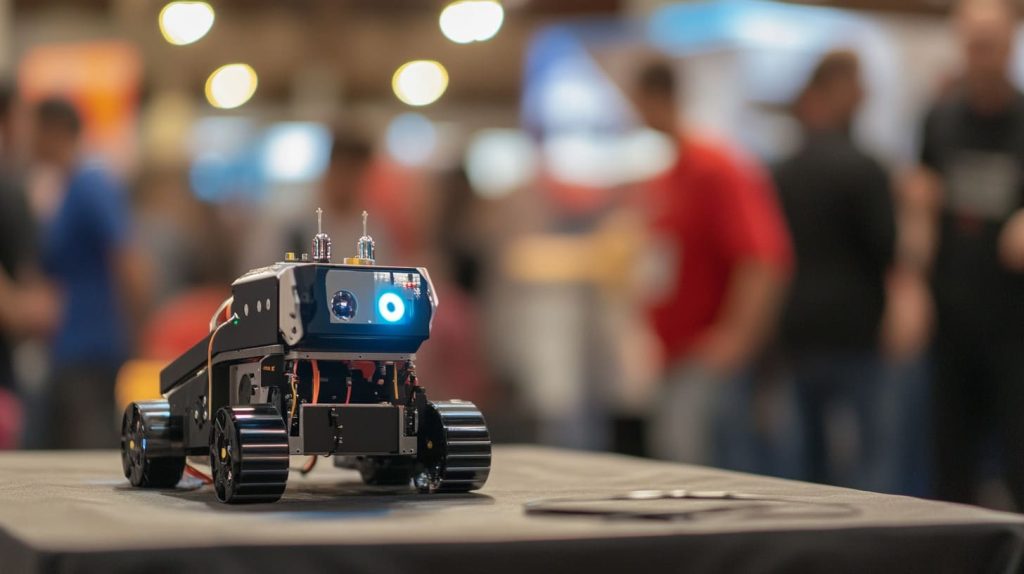
Affordable edge-AI accelerators landing in starter kits
Expect sub-$25 USB AI sticks bundling NPU chips this holiday season. They push object detection to 30 fps on a Pi 4.
Swappable sensor pods & click-board ecosystems
Magnetic pogo-pin pods let students swap Lidar for CO₂ sensors in seconds. Vendors are racing to standardize pinouts.
Growing shift toward ROS 2 for educational robotics
ROS 2 Foxy’s real-time safety and DDS messaging make it the new classroom default. Kits with native ROS 2 images will outsell others by 2026.
Questions pile up like spare screws—let’s tackle the common ones.
Frequently Asked Questions

“Do I need a Pi 5 or is a Pi 4 enough?”
Pi 4 handles most tasks. Choose Pi 5 only if you need 4K camera feeds or intense AI in real time.
“Can I reuse sensors from Arduino starter sets?”
Yes, if they speak I²C or SPI and run at 3.3 V logic. Mind voltage levels.
“What coding level is required to start?”
Scratch for beginners, Python after week one. Prior experience speeds things up but isn’t required.
“How long before my students can demo an autonomous task?”
With a PiCar-X, a diligent class shows obstacle avoidance in two hours.
We’ve covered a lot; let’s land the plane.
Conclusion

Key takeaways
- Start with car-style kits; they balance cost and learning depth.
- Check docs, power specs, and sensor headroom before buying.
- Plan a six-month path—skill grows when you push the bot step by step.
Action checklist
- Pick a kit that fits your budget and sensor wish-list.
- Order a spare battery and heatsink the same day.
- Block weekend time for the first build; log every issue.
- If you resell, send MaidaTech your logo AI file for a free sample panel.
Need more help?
Shoot me a note at vincent@maidatech.com or browse custom options on Raspberrypicase.com. I’m always one email away from your next robot adventure.