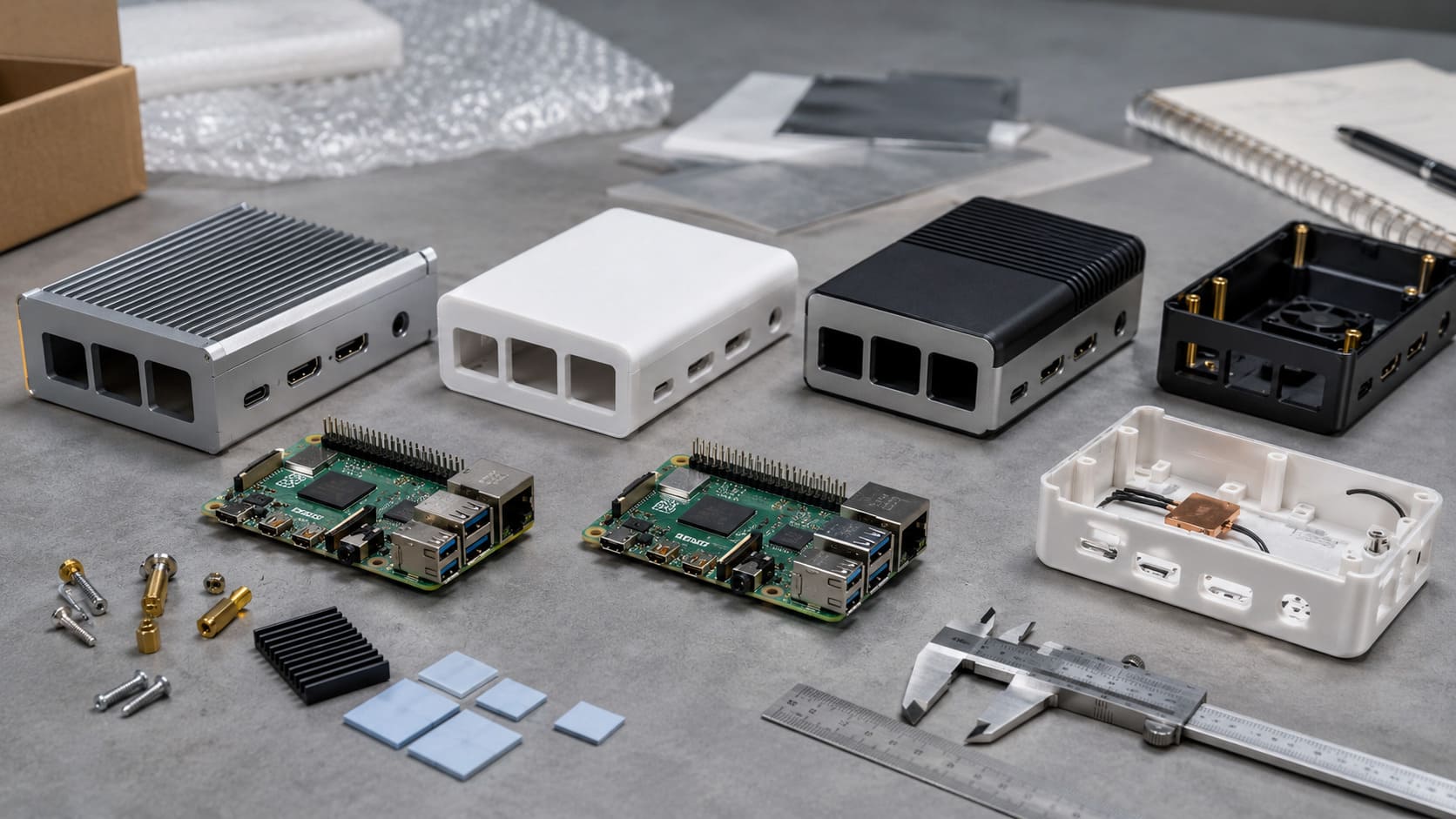
I remember the first time I plugged a chunky cartridge into a console. The screen flickered, the title music blared, and I felt like I had discovered a secret world just for me. I’m Vincent Li, and even though I run MaidaTech in China—where I handle B2B manufacturing of custom Raspberry Pi cases—I still get giddy about the nostalgic glow of retro gaming. Today, I want to share my personal take on retro emulator consoles and why they’ve found a special place in my heart.
What Are Retro Emulator Consoles?
I’ve often described these consoles as time machines for our living rooms. They replicate the experience of classic gaming without you having to hunt down expensive cartridges or battered old systems. They come in many forms—tiny handhelds, bigger boxes shaped like old consoles, or even single-board devices such as Raspberry Pis that you can tweak to your liking. My friend Davide, who usually sources parts from factories like mine, loves these for his online store because they let his customers relive childhood memories in a snap. I’ve seen a surge of interest from folks who crave old-school vibes but want modern convenience.
Purpose and Scope of the Article
This article explores the full journey of retro gaming, from its humble pixelated beginnings to the array of modern emulator consoles available today. I’ll delve into the types, pros, cons, and even the legal nuances. I want to share insights I’ve gathered, both as a nostalgic gamer and someone who handles custom cases for these devices. I won’t sum everything up yet; let’s just say we have plenty to uncover.
I always try to approach these topics from multiple angles. Let’s keep one eye on how people use these systems today and another on the heritage they’re preserving. So if you’re wondering what happened to the cartridges we used to blow into, you’re in the right place. Let’s keep going.
I’ve learned these stories never end where they begin. Let me take you on a journey back to a time when retro gaming didn’t even know it was retro yet.
The Evolution of Retro Gaming

I’ve chatted with some of my best industry pals about the dramatic shifts in gaming history. They shared stories of arcade tournaments, midnight console releases, and the excitement of inserting a fresh cartridge. Here’s a deeper look into that evolution.
A Brief History of Classic Gaming Hardware
When I think back to those chunky consoles, I remember simpler times. The plastic shells were thick, and the controllers had just a handful of buttons. I believe those hardware designs came from an era of engineering brilliance, where each game console had its own distinct personality. But from another perspective, it was also an era of limitations. Limited processing power and memory forced developers to be wildly creative.
One friend from Hungary named Lasle often jokes that these vintage consoles paved the way for his own interest in making custom enclosures for modern boards. He loves how those old machines had individuality, and he wants the same charm in new designs. But from a critical standpoint, those old systems can be fragile and prone to breakdowns over time.
The Shift from Physical Cartridges to Digital Emulation
Suddenly, we moved from handling physical cartridges to downloading digital files known as ROMs. This shift was massive. It unlocked huge libraries of games that people could emulate on modern hardware. My own journey into production line manufacturing for single-board computer cases began around the time hobbyists started loading thousands of classic titles into one compact device.
But we should also see the broader perspective: some folks argue that physical cartridges carry emotional weight that digital copies lack. Others champion emulation because it preserves games that might otherwise be lost. Personally, I respect both viewpoints. I still treasure the memory of blowing dust out of a cartridge, but I can’t deny the convenience of a single emulator system. That’s why I try to keep an open mind when working on custom Pi cases.
Now that we’ve dusted off some memories, let’s see how these nostalgic marvels are categorized in the modern scene.
Types of Retro Emulator Consoles

People come to me with all sorts of requests for custom enclosures. They’ll say, “I want something official,” or “I’m tinkering with a Raspberry Pi.” Let’s break down the common types.
Official vs. Unofficial Emulators
Official emulators are sanctioned by the original console makers. They’re polished, user-friendly, and come loaded with licensed games. Some gamers swear by them because of their authenticity. Unofficial emulators are often made by hobbyists or third-party companies. They can bring more flexibility, but they might be less stable or face legal issues.
From another angle, official products might skip certain fan-favorite titles due to licensing disputes, while unofficial ones include nearly everything under the sun—though that can raise ethical and copyright debates. One of my close clients, Jacky from Belgium, tells me that his customers lean toward unofficial systems for the large game libraries, but he’s careful about how they’re promoted to avoid legal tangles.
Classic Edition Consoles vs. DIY Raspberry Pi–Based Emulators
Classic Edition Consoles are plug-and-play. They look like mini versions of beloved systems and include curated game bundles. They’re fantastic if you just want to plug in and relive certain titles. However, they often lack expansion or customization.
On the flip side, we have DIY projects running on single-board computers like the Raspberry Pi. These allow custom firmware, user-selectable game libraries, and even unique enclosures. I’ve seen people sculpt wood for a vintage look or 3D-print futuristic designs. Yet, not everyone is comfortable with tinkering. While some folks love the freedom, others prefer the straightforward nature of an official console.
Standalone Devices vs. All-in-One Multi-System Emulators
Standalone devices typically focus on a specific console era. Maybe it’s an NES clone that only plays 8-bit games. All-in-One systems aim to emulate multiple consoles across generations. You might find a single device that handles NES, SNES, Genesis, and more, all at once.
From a practical standpoint, an all-in-one saves space and money, but it can be daunting to manage so many games. A narrower console is simpler but lacks variety. I often discuss these trade-offs with customers who want to brand their devices for retail. They must decide which market they’re targeting: the casual collector or the hardcore retro fanatic?
Now that you’ve seen the varied lineup, let’s weigh the good and the bad—because nothing is perfect.
Pros and Cons of Retro Emulator Consoles

I’ve personally learned a thing or two about these systems, especially when I’m shipping them worldwide. Some love them to bits; others have a few bones to pick.
Advantages: Convenience, Cost, and Accessibility
Convenience: One device can hold multiple classic titles, saving you from constant swapping of discs or cartridges.
Cost: Emulators are often cheaper than hunting down vintage systems that are getting rare.
Accessibility: People worldwide can experience retro gaming, even if their local market lacks old hardware.
However, we can’t ignore that convenience might dilute the nostalgic ritual of physically handling a cartridge. From a broader perspective, cost benefits might come at the price of collectible value. But for me, I love that a single console can run all my childhood favorites. It’s like a portable museum that fits in my hand.
Drawbacks: Authenticity, Licensing, and Quality Control
Authenticity: Some argue the feel isn’t quite the same without the original controller or the slight flicker of a CRT screen.
Licensing: Many emulators skirt legal boundaries when it comes to distributing game ROMs.
Quality Control: Some units might be poorly manufactured, with subpar components or flimsy casing.
If you look deeper, you’ll find that these drawbacks often spark debates about preserving gaming history. Some believe true preservation means using original hardware. Others see modern emulation as a life raft for aging games. I think both sides have valid points.
If you’re still with me, let’s dig into what to consider before adding one of these to your cart.
Key Considerations When Choosing a Retro Emulator Console
I’ve guided many clients, from large wholesalers to Amazon store owners, through this decision process. Let’s check out the major factors.
Hardware Performance and Specifications
The console’s CPU, RAM, and GPU capacity will determine how well it emulates different consoles. A weaker device might stutter with higher-end 3D titles. A more powerful unit will breeze through them but might be pricier. My friend Davide often invests in mid-range specs because his audience mainly wants 8-bit or 16-bit classics. Meanwhile, I’ve heard from others who crave N64 or Dreamcast-level emulation, requiring beefier hardware.
Basic Spec Comparison Table:
| Spec Aspect | Low-End Emulator | Mid-Range Emulator | High-End Emulator |
|---|---|---|---|
| CPU Speed | <1 GHz | 1–1.5 GHz | 1.5 GHz or higher |
| RAM | 256–512 MB | 1 GB | 2–4 GB |
| Emulation Capability | 8-bit & Some 16-bit | Most 16-bit & Some 32-bit | 32-bit & Some 64-bit |
| Price Range | Budget-Friendly | Moderate | Premium |
Software Compatibility and User Interface
The operating system and emulation software matter. Some come with a polished, intuitive front-end. Others need manual tweaking. I’ve spent late nights trying to perfect user settings for clients who rebrand these consoles. But from a consumer standpoint, a bad UI can ruin the entire experience. If you’re the kind of person who enjoys a bit of tech tinkering, you might love customizing everything. If not, you’ll want something straightforward.
Controller and Peripheral Options
Compatibility with original controllers or third-party pads can make or break the experience. Some consoles bundle controllers modeled after classic designs, giving that retro tactile feel. But from another angle, modern controllers might be more comfortable and functional. For me, I appreciate having both: a sleek modern option and a nostalgic old-school pad.
Price, Warranty, and Support
Cheaper isn’t always better. A brand that offers good warranty and responsive customer service can save headaches down the line. I’ve seen retailers lose business because the products they sold lacked proper after-sales support. Think critically about the brand’s reputation or the factory’s track record. Sometimes paying a bit more is worth the peace of mind.
Next, let me highlight some popular consoles you might see in stores or hear about on gaming forums.
Popular Retro Emulator Consoles on the Market
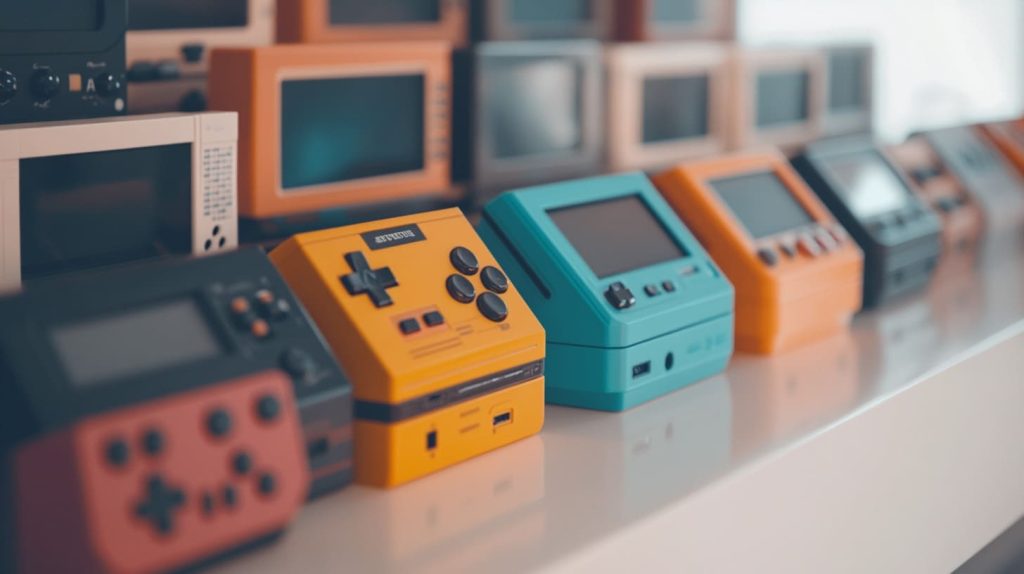
I keep an eye on these devices, both as a fan and someone who might help create custom cases. Let’s look at some examples.
Overview of Leading Commercial Devices
Companies like Nintendo have released “Classic Edition” consoles that come with curated game lists. Sony has its own attempts, and Sega has also joined the party. They’re officially licensed, often with top-notch build quality. Yet they might not be as flexible for adding more games. That’s a compromise some are willing to make for an authentic brand seal.
From a critical angle, these official versions can be pricey relative to the number of titles included. But they appeal to collectors who want a brand name. I’ve noticed many wholesalers picking them up to meet that specific niche.
Features Comparison and Unique Selling Points
Some devices offer wireless controllers, sleek UIs, or even built-in cheat codes. Others stand out for portability or the ability to save and load states. Here’s a quick table to visualize a few selling points:
| Console Type | Unique Feature | Potential Drawback |
|---|---|---|
| Official Classic Editions | Authentic branding, curated games | Limited expandability |
| Licensed Third-Party Consoles | Larger libraries, decent build | Might lack official endorsements |
| Custom Raspberry Pi Builds | Fully customizable, huge libraries | Requires setup and tinkering |
Notable Emerging Brands and DIY Projects
Beyond the mainstream, many smaller outfits craft emulator consoles targeting niche audiences. Some have crowdfunding origins. Meanwhile, the DIY scene remains huge. I’ve worked with people who produce distinctive enclosure designs—wooden boxes, metal cases, or even transparent acrylic shells. They cater to enthusiasts who want a personalized flair.
From an alternative viewpoint, these smaller brands might not have the marketing power of the big names. But they often innovate in ways larger corporations don’t. I see the heart they pour into each device, and I respect their commitment to detail.
Let’s talk about the people who take customization even further—by doing it themselves.
The Rise of DIY Retro Consoles and Customization

When I first set up my own factory line, I never realized how huge the DIY phenomenon was becoming. But it’s here to stay, and it’s inspiring.
Raspberry Pi and Other Single-Board Computers
Raspberry Pi boards remain the go-to choice for DIY retro consoles. They offer ample power for most classic games, plus the freedom to run custom firmware. I’ve made plenty of Pi cases for clients who embed these boards in everything from vintage lunchboxes to sleek laser-cut metal frames. In a broader sense, single-board computers also include alternatives like Odroid or Banana Pi, each with different performance profiles.
But I also consider the challenges: novices can feel overwhelmed by the steps needed to set up emulation software. The learning curve is real. On the flip side, once you get the hang of it, you unlock near-endless possibilities.
Customization: Hardware Mods, 3D-Printed or Laser-Cut Cases
I once saw a case mod inspired by an old arcade cabinet—complete with miniature joysticks. That’s the kind of creativity I love. People swap out basic components for custom cooling fans, LED strips, or new shell designs. Some folks collaborate with local makerspaces to 3D-print parts, while others send designs to professional factories for a polished finish.
From a critical perspective, though, these projects can become money pits if you aren’t careful. It’s easy to keep upgrading or changing designs. But if you budget wisely, you can craft something you won’t find anywhere else.
Branding and Re-branding: Private Labels, Logo Printing, ODM, and OEM Services
I work with a range of buyers who want their own branding on retro console cases—especially those running on single-board computers. Private labeling and logo printing is relatively straightforward, but genuine ODM or OEM involves deeper collaboration. It’s fulfilling to see someone’s concept evolve from a rough sketch to a final retail product.
But I always advise them to think about price points, minimum order quantities, and potential shipping times. With so many re-branding options out there, standing out requires a unique angle or high quality. I encourage them to focus on details that matter to their target audience, whether it’s comfort, durability, or a cool aesthetic.
Of course, all that creativity comes with a set of community norms and legal factors that can’t be overlooked.
Community and Legal Considerations

I’ve witnessed heated debates on forums about the ethics of ROM usage, or whether a fan project crosses legal lines. Let’s break that down.
ROMs, Copyrights, and Ethical Issues
Retro emulator consoles often rely on game ROMs, which are digital versions of old cartridges or discs. Downloading them might violate copyright laws unless you own the original. This issue doesn’t just vanish when we talk about official vs. unofficial. People in fan communities argue that it’s about preserving history. Critics say it’s piracy. I personally believe that responsible usage means respecting original creators where possible.
Homebrew Communities and Open-Source Collaboration
On the flipside, there’s a homebrew community creating original games for classic hardware. It’s a vibrant scene fueled by passion and open-source collaboration. Developers share source code, ideas, and improvements. This fosters a positive atmosphere that helps keep retro gaming alive and evolving.
However, open-source projects can face forks, disputes, or splintered user bases. People have different philosophies on how to proceed. But I admire the shared spirit that keeps innovation flowing.
How to Stay Compliant and Respect Intellectual Property
I generally suggest sourcing your games legally or ensuring your console’s software is properly licensed. If you run a business selling these systems, clarity on licensing is crucial. I’ve seen shipments get delayed because of IP concerns. Think about disclaimers and region-based restrictions. Let’s face it: if you want longevity and peace of mind, you can’t skirt the rules.
Now that we’ve navigated legality, let’s look into the horizon—because retro gaming doesn’t stop at emulating the past.
Future Trends and Predictions
I remember a day when we thought 2D sprites were the pinnacle of gaming. That’s changed, and emulation technology continues to evolve too.
Technological Advances in Emulation Accuracy
Modern emulators aim for near-perfect replication of old hardware, from sound channels to subtle screen effects. Specialized features like low-latency modes or hardware shaders mimic the authentic feel of CRT displays. This is fantastic if you’re a purist who wants the game to look and sound exactly as it did decades ago. But I also realize it’s a constant work in progress. Some games run flawlessly, while others still have slight glitches.
Potential Integration with VR and Cloud Gaming
I can’t help but imagine how VR might transform the retro space. Picture an arcade environment where you navigate the old cabinets in a virtual space. Or cloud-based services that stream entire retro libraries to any device. It might sound futuristic, but these ideas pop up in gaming communities all the time. If done right, it could bridge classic experiences with cutting-edge tech.
From another angle, some fans worry that layering too much modern flair dilutes the essence of classic gaming. They want the pure, no-frills experience. That’s fair. I suspect both paths—pure emulation and high-tech transformations—will coexist.
Growth of Community-Driven Development
Communities often drive innovation. I’ve seen them shape the future with open-source firmware updates, new features, or even fan translations of classic titles. It’s a grassroots movement that commercial entities sometimes overlook. If you’re open to multiple perspectives, it’s clear that this collaboration keeps retro gaming relevant. I plan to keep listening to that community when designing new cases or offering new customization services.
We’re almost at the end. Let me offer a final wrap-up of everything we’ve covered.
Conclusion

Recap of Retro Emulator Console Benefits and Challenges
Retro emulator consoles open a gateway to cherished memories. They help preserve classic games, offer flexible hardware configurations, and give us the chance to customize each experience. Yet, authenticity debates and legal concerns highlight their complexity. Some prefer official products for simplicity and peace of mind. Others embrace the do-it-yourself route for full creative control. Even major factories like mine pivot to meet these demands, offering custom cases or re-branded devices that balance aesthetics, functionality, and affordability.
Final Thoughts on Where the Market Is Headed
I see a bright future for retro gaming, powered by both large-scale commercial releases and grassroots innovation. Every discussion, every new mod, and every reimagined console design pushes us forward while honoring gaming’s roots. I believe the path ahead is shaped by community spirit, technological breakthroughs, and the timeless appeal of those old-school pixels. And personally, I’m excited to stay on this journey—both as a gamer and as someone who helps bring these nostalgic dreams to life.