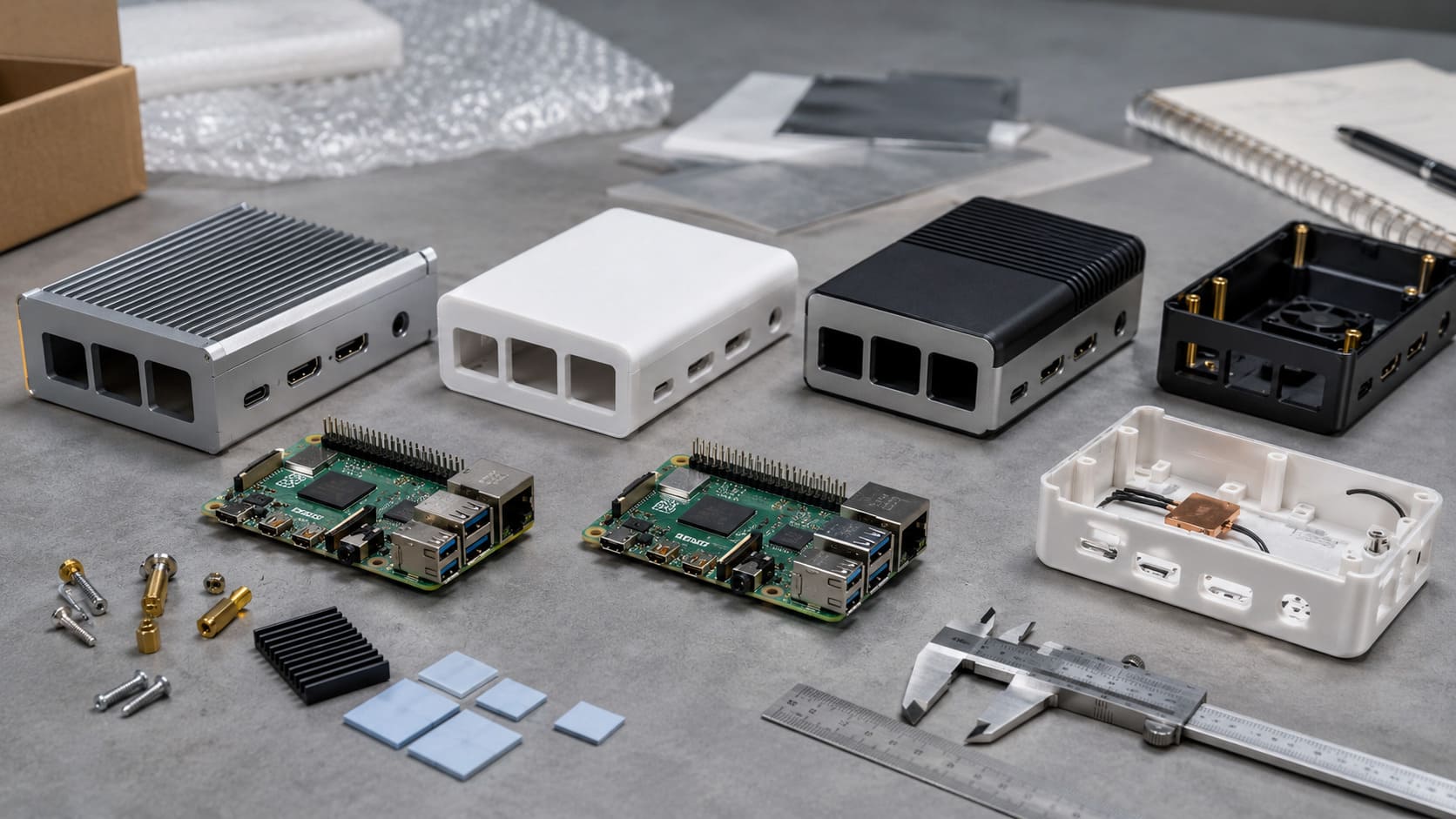
I remember the first time I tried to power multiple Raspberry Pis. I had this dream of creating a mini cluster for a project, and I thought I could just plug them all into the nearest power strip. That plan failed miserably. One Pi kept rebooting, and another wouldn't start at all. I learned the hard way that if I want stable, efficient performance, I need to give each Pi the power it deserves—without shortchanging the others. In this post, I'll walk you through my journey and share my best practices for powering multiple Raspberry Pis at once.

Understanding Raspberry Pi Power Requirements
I used to believe “power is power”—as long as it fits the port, it’s good. But it’s rarely that simple, especially if you want reliable performance.
Overview of Raspberry Pi Models and Their Power Needs
I have come across many Pi versions in my work. Each model draws a different amount of current. Some older versions get by with lower power consumption, while newer models, like the Raspberry Pi 4, are more power-hungry. When I overlooked this fact in one of my early projects, half my cluster kept randomly cutting out.
A quick reference for typical power draws:
| Raspberry Pi Model | Approx. Current Draw (Under Load) | Voltage Required |
|---|---|---|
| Model 3B | 600-1000mA | 5V |
| Model 3B+ | 700-1100mA | 5V |
| Model 4B | 700-1200mA | 5V |
By recognizing these nuances, we see how each Pi requires tailored power delivery. This helps us avoid unexpected shutdowns.
Voltage and Current Specifications
I always try to maintain a stable 5V power supply. If the voltage sags below a certain threshold, the Pi might struggle or show lightning bolt symbols on the screen. I like to double-check the power adapter’s rated current. For a cluster, every unit can add up. That’s why I usually sum up all the Pi current draws plus a small margin for any accessories attached—like cameras or fans.
Impact of Power Supply Quality on System Stability
I once bought some cheap power supplies thinking I was saving money, only to experience random reboots and corrupted SD cards. Now, I see the bigger picture. Using a quality power adapter can help sustain stable voltage and reduce noise. This ensures that heavy loads—like running multiple tasks—won’t crash the Pi.
I believe this perspective is essential. It’s tempting to go cheap, but from my experience, power supply quality directly affects performance. Stability is key, especially if you rely on your Pis for serious work.
I recently had a friend who faced random server-like crashes with his Pi-based setup. He switched to a better power brick, and the crashes disappeared. That taught me never to compromise on quality.
When I learned this, I was ready to explore how many Pis I could power at once, without turning my desk into a tangle of wires. Let me show you.

Key Considerations for Powering Multiple Raspberry Pis
I believe that powering multiple Pis requires a step-by-step analysis. It’s not just about adding more adapters. It’s about strategy, safety, and efficiency.
Calculating Total Power Consumption
I generally start by listing each Pi model and the accessories attached. Then, I sum up their power draw. If I have four Raspberry Pi 4 units, each drawing up to 1.2A, that’s around 4.8A in total. I add a little extra margin—maybe 10%—to be safe. That helps me pick a single high-capacity power source, or a distribution approach.
Example Calculation Table:
| Component | Current Draw | Quantity | Total (Approx.) |
|---|---|---|---|
| Raspberry Pi 4 | 1.2A | 4 | 4.8A |
| Camera Modules | 0.2A | 2 | 0.4A |
| USB Accessories | 0.3A | 2 | 0.6A |
| Grand Total | - | - | 5.8A |
By doing this math, I avoid the frustration of a project shutting down mid-run.
Electrical Safety and Overcurrent Protection
I know from personal experience that unprotected multi-Pi rigs can lead to serious trouble. If one Pi develops a short or a power surge, it shouldn’t take down the whole setup. I often use fuse-protected distribution boards or ensure each Pi is on its own protected rail. This might sound complicated, but it’s worth the peace of mind.
I often think about that time I smelled something burning in my workshop because I bypassed a fuse. Never again.
Environmental and Cable Management Considerations
When I line up multiple Pis, I worry about heat buildup. If they’re stacked without ventilation, they could overheat. Also, cable clutter can cause accidents or unintentional unplugging. I often use zip ties and short cables for a neat layout. That way, each Pi has enough breathing room.
This might seem trivial. But if your cables get tangled or if your cluster is jammed in a corner, you could end up with performance throttling. And trust me, you don’t want to discover that hours into a long data processing task.
I think that covers the main considerations. Next, I’ll show you the methods that have worked for me.

Methods and Solutions for Powering Multiple Raspberry Pis
I like to experiment with different setups. These range from single high-capacity units to more advanced boards with integrated power rails.
Using a Single High-Capacity Power Supply
Sometimes, I go with one powerful 5V supply. I make sure it has enough current to handle all my Pis. If each Pi needs 1.2A and I have five of them, that means at least 6A plus a margin. One big adapter can be convenient, although I have to watch out for voltage drop across longer cables.
From a critical angle, I would say it’s not always the best to rely on a single supply. If it fails, everything goes down.
Employing Power Distribution Boards and HATs
I once used a hat with a built-in regulator on each Pi. It streamlined cabling and gave each Pi consistent power. This approach is modular, so you can swap out or add boards easily. However, these boards can be a bit pricier, and they may generate extra heat.
I always keep an eye on new releases from Pi accessory makers. They often push out creative HAT designs that incorporate fuses, switches, and even fancy LED indicators. These solutions aren’t just about distributing power; they also address safety.
DIY Power Management Solutions
If you’re a tinkerer, you can design your own circuit with fuses and step-down regulators. This is cost-effective if you know what you’re doing. I once tried building a custom power board from leftover parts. It worked, but it was messy. Plus, I needed a friend’s help to make sure I didn’t create a hazard.
In my experience, the DIY approach shines if you have a unique project requiring special configurations. But keep in mind that building something from scratch takes time, patience, and some electrical know-how.
Commercial Power Supply Units Tailored for Multi-Pi Setups
There are dedicated multi-Pi power bricks on the market. Some are basically a hub with multiple USB ports rated for high current. Others are more sophisticated, offering surge protection and power monitoring. These can be a neat solution, though they often cost more. I once used a specialized PSU that came with built-in mounting options. It was almost as if it was designed just for Pi clusters.
Thinking of cost, convenience, and reliability from multiple angles helps you choose the best approach. Next, I’ll show you how custom cases might add another layer of convenience.

Integrating Custom Cases with Power Distribution
A little story: I spent so much time wiring everything in an open-frame cluster that I nearly lost my mind whenever I had to move it. That’s when I started exploring custom enclosures.
Custom Raspberry Pi Cases with Integrated Power Options
I’ve seen cases that come pre-fitted with power distribution boards. These cases have built-in connectors, so you plug your power source once, and it feeds each Pi. No more messy wires. In many of my custom design orders, people love to have a single connection on the side for power. It’s neat, it’s tidy, and it’s portable.
From a critical standpoint, some integrated cases can be restrictive if you upgrade your Pi model. So, always check compatibility.
Advantages of Custom Cases in Multi-Pi Deployments
An enclosed solution can shield the boards from dust and accidental bumps. I’ve found that a sturdy case not only protects the hardware but also improves airflow with strategically placed vents. Plus, for folks who want to brand their cluster—like custom raspberry pi case—it’s easier to add logos to a single enclosure rather than multiple individual cases.
I always mention that custom solutions allow for unique designs. This is crucial for people who want to stand out or keep hardware secure in a public setting.
OEM & ODM Opportunities for Tailored Power Solutions
In my line of work, I often get requests for unique power setups. Some want a specialized power switch or a direct AC input with built-in DC converters. I’ve worked with OEM and ODM clients who design entire systems around a Pi. This can include everything from integrated LED indicators to top-mounted fans.
I think that’s where the real creativity blossoms. You can approach a factory—like mine—and explore these solutions. But be mindful of cost and production time. Now, let’s see how to pull everything together smoothly.

Best Practices for Setting Up a Multi-Pi Power System
I’ve made many mistakes over the years. Allow me to help you skip a few pitfalls.
Step-by-Step Setup Guide
- Calculate Power Requirements: Sum up current needs for each Pi and accessories.
- Choose Distribution Method: Single supply, distribution board, or specialized PSU.
- Install Safety Measures: Fuses, surge protectors, or quick-blow components.
- Test Each Connection: Power each Pi individually before hooking up all of them.
- Arrange Cooling: Use fans or heatsinks to keep temperatures in check.
When I follow these steps, I avoid random reboots or meltdown scenarios.
Monitoring and Managing Power Consumption
I recall once hooking everything up and leaving it running, only to find out one Pi was consistently under-volting. Now, I check logs to see if the Pi complains about voltage drops. Tools like vcgencmd on Raspberry Pi can quickly show if the supply dips. When you’re working with many units, it’s easy to miss one that’s struggling.
Monitoring helps you spot issues before they become critical. That’s especially valuable if you plan to run your cluster 24/7.
Troubleshooting and Maintenance Tips
My biggest tip is to label everything—power cables, boards, everything. That way, if a particular Pi acts up, you can track the cable or port easily. I also keep spare fuses on hand. And I do a quick visual check every few weeks for dust or cable damage.
I try to keep these checks simple and consistent. A few minutes of maintenance can save hours of headache. That’s the mindset I bring to every project.
For more interesting angles on how to optimize your Pi setup, let’s look at some real-world applications.

Case Studies and Practical Applications
I’ve seen people use multi-Pi setups for a variety of tasks. Here’s what I’ve encountered—and maybe you’ll see a bit of yourself in one of these stories.
Educational and Hobbyist Projects
I worked with a small robotics club that created a cluster to run AI simulations. They used four Raspberry Pi 4 boards powered by a single 10A supply. One detail they overlooked was heat. Once they added a simple fan and an organized cable layout, everything worked smoothly.
From a critical viewpoint, these setups are usually low-budget. So reusing existing adapters might be tempting, but that can lead to inconsistencies. A stable, dedicated power source is worth the cost.
Industrial and Commercial Deployments
I once helped a manufacturing plant integrate multiple Pis for sensor monitoring. They required strict uptime, which meant each Pi needed an uninterruptible power source. They used a rack-mounted system with redundant power supplies. It was a bit pricey, but reliability was non-negotiable.
Looking at it from multiple angles, such solutions might be overkill for home labs. But for commercial operations, it’s standard procedure.
Research and Development Clusters
I’ve seen multi-Pi clusters in labs analyzing scientific data, running simulations, or even hosting local servers. The main challenge is ensuring stable power for round-the-clock usage. Over the years, I’ve come to value bulletproof designs. You can’t afford to lose days of computation due to a power glitch.
No matter the project, bridging the gap between experimentation and reliability is fascinating to me. Next, I’ll touch on future possibilities.

Future Trends and Innovations in Raspberry Pi Power Management
I’m always excited to see how technology evolves. The power aspect is no exception.
Emerging Technologies and Standards
With USB-C becoming more common, I anticipate more Raspberry Pi accessories leveraging advanced power delivery specs. Imagine a single cable that smartly negotiates power for each Pi. I think it might become mainstream for multi-device environments.
Integration with IoT and Smart Systems
I’ve worked on a project where each Pi was part of an IoT network. They managed everything from security cameras to machine learning modules. Integrating power monitoring into a central dashboard was key. It’s an approach that ensures early detection of anomalies.
Critically, it’s easy to get lost in the hype of “smart everything.” The real trick is ensuring the cost and complexity are justified.
Sustainability and Energy Efficiency in Power Solutions
I believe we’ll see more interest in solar power or energy-harvesting solutions. People are looking for ways to reduce their carbon footprint. I once tested a small solar array to power a single Pi in a remote location. It was feasible, though battery management was tricky. In the long run, these sustainable approaches might become more widespread.
I often think we should push for greener energy solutions while still keeping reliability high. As the technology matures, I’m optimistic.

Conclusion
I hope my experiences have given you some insights into powering multiple Raspberry Pis at once. I’ve seen just about every mistake you can imagine, from using flimsy adapters to forgetting basic safety measures. But I’ve also witnessed the incredible versatility of these tiny boards, especially when they’re given the stable power they need. Whether you’re running a home lab, building a commercial solution, or experimenting for the first time, choosing the right power approach can make your journey smoother. Feel free to reach out if you have any questions about custom cases or integrated power solutions. I’m always happy to share more of what I’ve learned along the way.