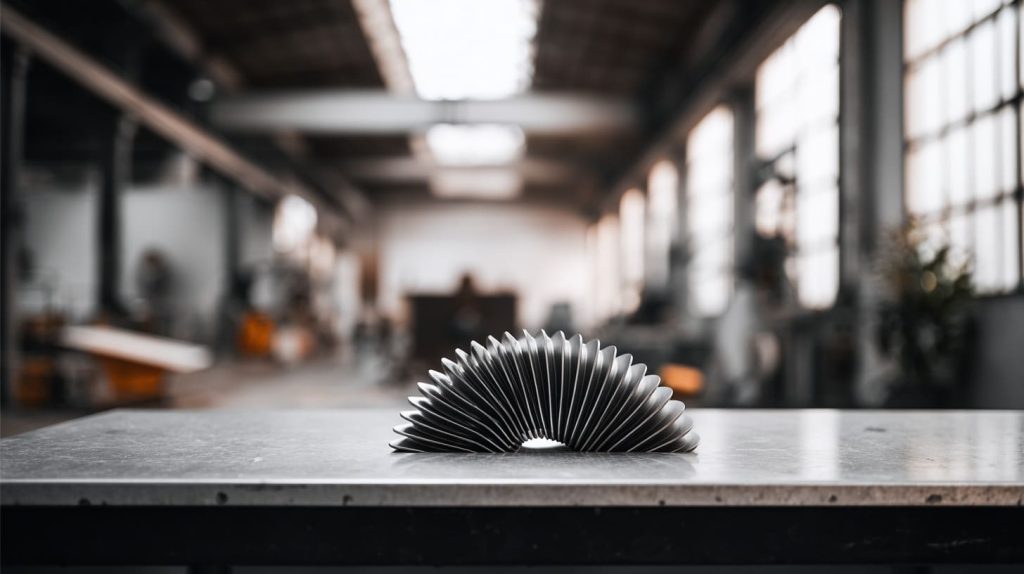
Turbine blades aren’t something I usually find lying on my desk. But there it was—still warm from the metal printer, edges sharp, surfaces clean. Someone from the shop had left it there after a trial run. No note, no label, just the part.
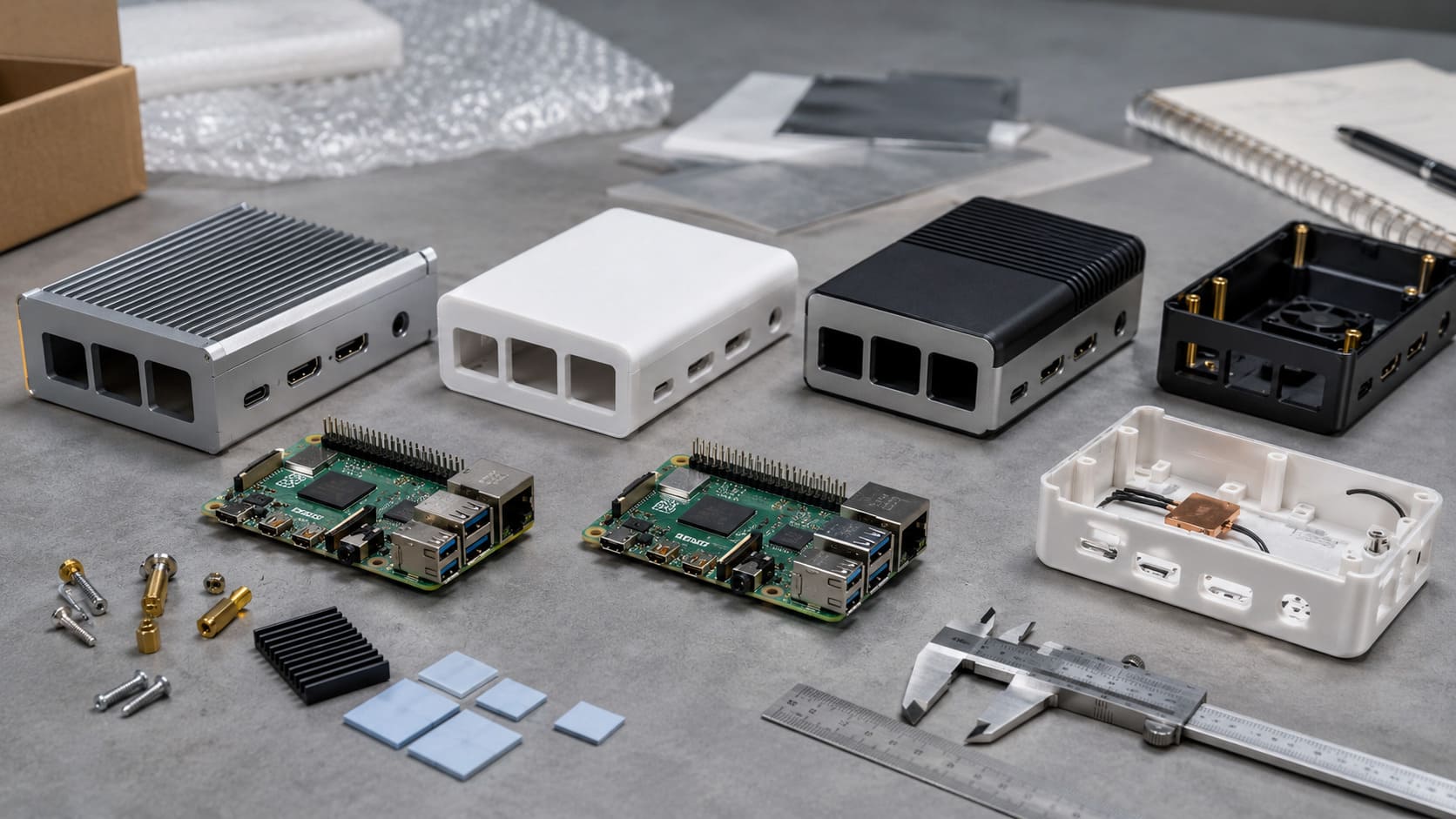
I picked it up, turned it over in my hands, and it hit me how much has changed since we started making custom Raspberry Pi enclosures. What once took weeks of tooling now feels like a Tuesday afternoon experiment. Not because we work faster—but because the tools themselves changed.
Why defining the “core idea” of 3D printing matters in 2025
The headlines shout about cheaper rockets and printed hearts. Cool—but day-to-day, my customers want to know why additive tech belongs on their shop floor or in their sourcing plan right now. Nailing down the core idea helps us see past hype and choose the right tool for the job.
From rapid prototyping to production: a 40-year snapshot
In the late 1980s, engineers saw the first stereolithography parts as fragile prototypes. Today, jet-engine nozzles leave the printer ready for flight. That arc—from “looks like” to “works like” to “ships today”—is what 40 years of layer-by-layer progress feels like.
I kept twirling that little turbine while a client asked if we could logo-mark his next Pi case batch. The leap from prototype to product felt almost invisible.
Four deep breaths later we dive into what makes that leap possible…
The Core Principle: Additive, Layer-by-Layer Manufacturing

Additive vs. subtractive: what fundamentally changes
I grew up watching machinists carve aluminum blocks into tidy curls of waste. Additive flips that script. We place material exactly where we need it, slice by slice. Less scrap, fewer clamps, more freedom.
Digital-to-physical workflow (CAD → STL → G-code)
Think of CAD as the idea, STL as the language, and G-code as the marching orders. Once a file is sliced, every layer is a promise: put filament here, cure resin there, fuse powder right now.
Layer adhesion & material solidification mechanisms
Plastic parts rely on heat and pressure; resin parts rely on photochemistry; metal parts depend on laser-induced melt pools. Each bond tells a story about strength, porosity, and post-processing time.
A table helps my buyers see the bonds clearly:
| Technology | Bonding Mechanism | Typical Strength* | Post-Processing Needs |
|---|---|---|---|
| FDM/FFF | Thermal fusion | 40 MPa | Support removal, sanding |
| SLA/DLP | Photopolymer cross-linking | 60 MPa | Wash & UV cure |
| SLS/DMLS | Laser sinter/melt | 100 MPa+ | Heat treat, media blast |
*Ballpark tensile strength for common materials.
Once you picture layers stacking like pages in a flipbook, another question pops up: how do design, materials, and machines team up to make that flipbook really sing?
Foundational Pillars: Design, Materials & Machines

Digital thread & Design for Additive Manufacturing (DfAM)
I learned the hard way: tossing an old CNC model into a slicer gives you a lumpy mess. DfAM means hollowing, latticing, and orienting parts so the printer becomes a partner, not a hurdle.
Material families: polymers, metals, composites, bio-based
ABS and PLA opened the door. Now we juggle PEI for heat, Ti-6Al-4V for flight, carbon-fiber nylon for stiffness, and even wood-filled PLA when a client wants an earthy vibe.
Printer technologies: extrusion, vat photopolymerization, powder-bed, DED
Each machine type is a dialect. Extruders speak in molten beads. Resin vats whisper in microns. Powder beds roar with lasers and argon. Pick the dialect that matches your product’s accent.
Last week I showed Davide two identically shaped lids—one milky SLA, one matte SLS. He rubbed each, raised an eyebrow, and said, “Same CAD, different feel.” Exactly. That tactile surprise sets the stage for design freedom…
Design Freedom & Functional Integration

Lightweight lattices & topology optimisation
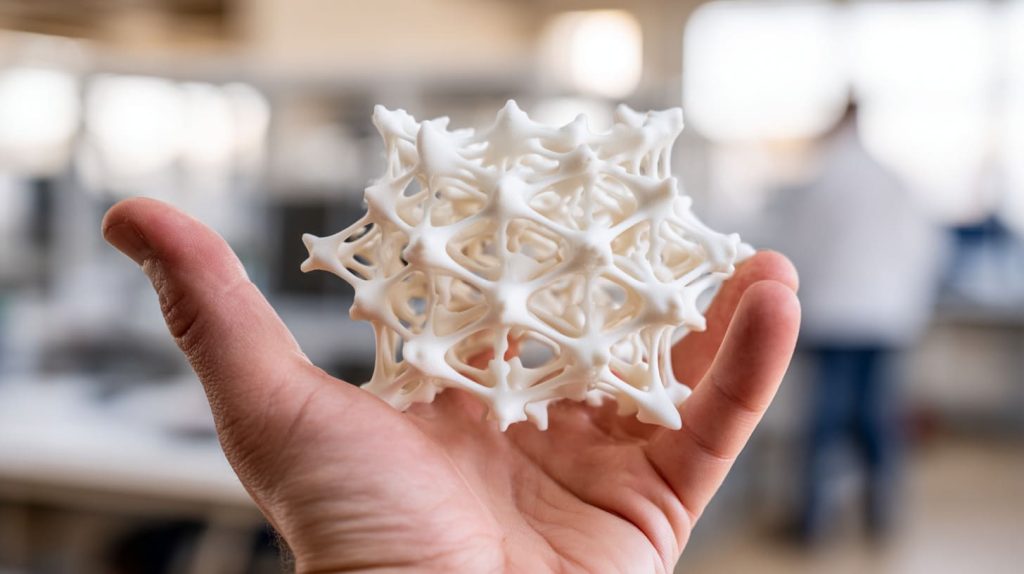
Aerospace engineers love weight cuts. So do Pi-case shippers. By hollowing interiors into gyroid lattices I’ve trimmed shipping weight by 18 % without hurting stiffness.
Part consolidation and assembly reduction
Why glue four standoffs when I can print them in? My record so far is collapsing a seven-piece bracket into one click-ready part. Fewer screws. Fewer headaches.
Mass customisation and personalisation at scale
Jacky in Belgium orders 200 cases with a dragon logo, while Lasle in Hungary wants 50 with extra vent holes. Same printer, two clicks, done. Custom no longer means costly.
A buyer once told me design freedom sounds like candy—sweet but risky. The real sugar rush kicks in when the numbers align…
Economic & Environmental Value Proposition
Rapid prototyping vs. distributed end-use production
Prototypes still shine—hours, not weeks. But small-batch end parts now make sense when molds cost more than metal powder.
Cost drivers, ROI, and total cost of ownership
Key levers:
| Cost Driver | High-Mix/Low-Vol | Mass Production |
|---|---|---|
| Machine amortisation | Low per part | High per part |
| Material price | Medium-High | Medium |
| Labor (setup) | Low | Low |
| Tooling | Zero | Very High |
When tooling dwarfs unit cost, additive wins.
Sustainability: waste reduction, circular feedstocks, localised supply chains
I sweep up maybe 5 % waste on an SLS run versus 70 % chips from a CNC mill. Re-melted powder loops back. Local print hubs shrink shipping miles.
Seeing both cash and carbon graphs tilt in our favor, clients lean closer. They always ask, “Who’s already doing this?” Cue the case studies…
Current Industrial Applications & Case Studies

Aerospace & automotive lightweighting breakthroughs
GE’s LEAP fuel nozzle merged 20 parts into one. BMW printed 300,000 water pump wheels last year—no mold, no backlog.
Medical devices, implants, and emerging bioprinting
Surgeons print patient-specific guides overnight. Titanium hip cups come lattice-ready for bone in-growth. Bioprinters test living cartilage, one cell at a time.
Consumer electronics and custom enclosures
We printed 5,000 Pi-5 cases with snap-fit lids in three weeks. No injection mold. Davide slapped on labels and hit Amazon Prime just in time for holiday spikes.
The victories sparkle, yet every medal has two sides. Let’s shine a flashlight on the rough edges…
Challenges & Technical Limitations

Surface finish, dimensional accuracy & mechanical properties
Layer lines love the camera. High-stress parts may delaminate if settings slip. Post-processing like vapor smoothing or shot peen adds time.
Repeatability, quality assurance, and certification hurdles
Printers behave like sourdough starters—temperature, humidity, even Monday moods affect output. Standards such as ASTM F42 help, but audits still feel like detective work.
Intellectual property, file security, and regulatory concerns
Send an STL abroad, and copies can bloom. Encryption, watermarking, and digital rights management are becoming must-haves.
Limitations highlight gaps. Gaps spark innovation. The next horizons are already peeking over the ridge…
Emerging Frontiers Shaping the Future

Multi-material & hybrid manufacturing systems
Picture a printer pausing mid-build to lay copper traces, then sealing them in polymer. Circuits and cases, born together.
Micro-/nano-scale additive manufacturing
Researchers now print nozzle tips thinner than a hair. Sensors shrink, possibilities grow.
AI-driven generative design & closed-loop process control
I feed specs into software; it spits out alien-looking, strength-optimised shapes. Machine-vision cameras tweak lasers on-the-fly to squash defects.
Recycled and bio-based materials innovations
Coffee-grounds filament smells like a café. Reclaimed PET powder offers a second life to soda bottles. The lab scraps from today could be tomorrow’s feedstock.
Tech moves fast—but so do market demands, especially in single-board computing enclosures. Here’s how I keep pace…
Strategic Takeaways for B2B Electronics-Enclosure Makers
Rapid iteration for custom Raspberry Pi and SBC cases
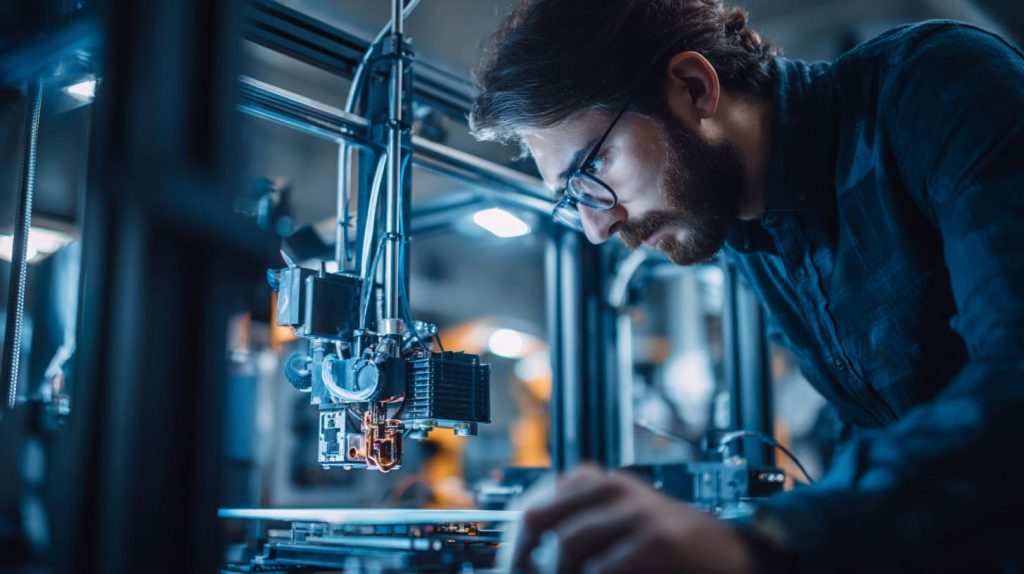
I can tweak port cut-outs before lunch and ship validation samples by dinner. ODM clients like Lasle iterate PCB layouts without waiting on steel molds.
Private-label advantage for re-brand clients like Davide & Jacky
Need 300 matte-black cases with an embossed logo? Easy. Need 120 in translucent purple with QR-code engraving? Also easy. Low MOQ meets niche branding.
Supply-chain resilience through on-demand spare parts and tooling
When a hinge mold cracked last winter, I printed replacement hinges in PA12 overnight. Production never paused. Additive acts as both Plan A and Plan B.
At this point you can almost hear the printer humming in the background. Let’s wrap our thoughts in one last layer…
Conclusion
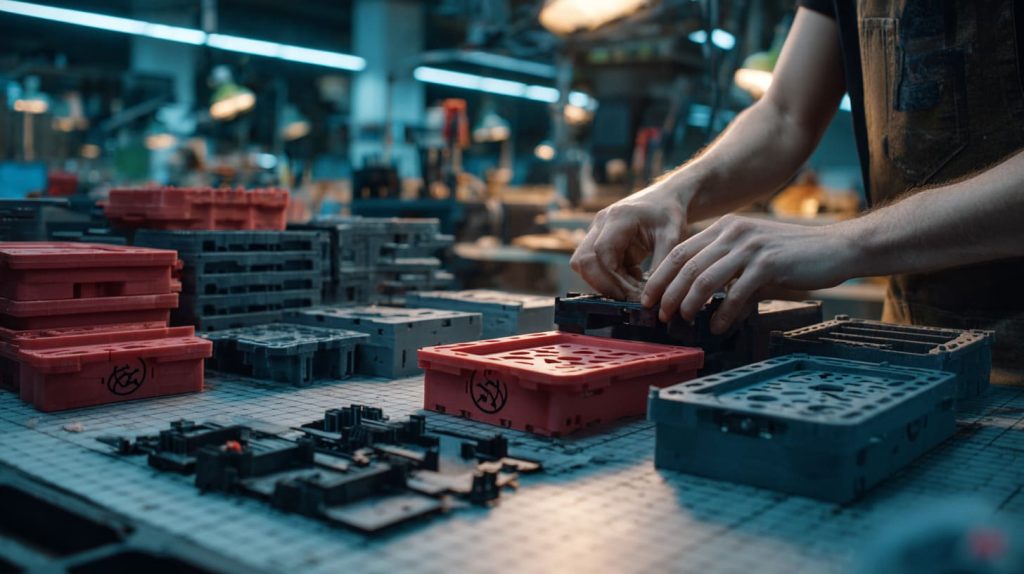
I started this journey chasing faster prototypes. I stayed because layer-by-layer thinking rewired how I see cost, design, and even risk. 3D printing’s core idea is simple: add what you need, skip what you don’t. Every ripple—lighter parts, local production, tailored branding—flows from that center.
If you source enclosures or dream up new gadgets, take a closer look at those ripples. They might carry your next product from sketch to shelf while the coffee is still warm.