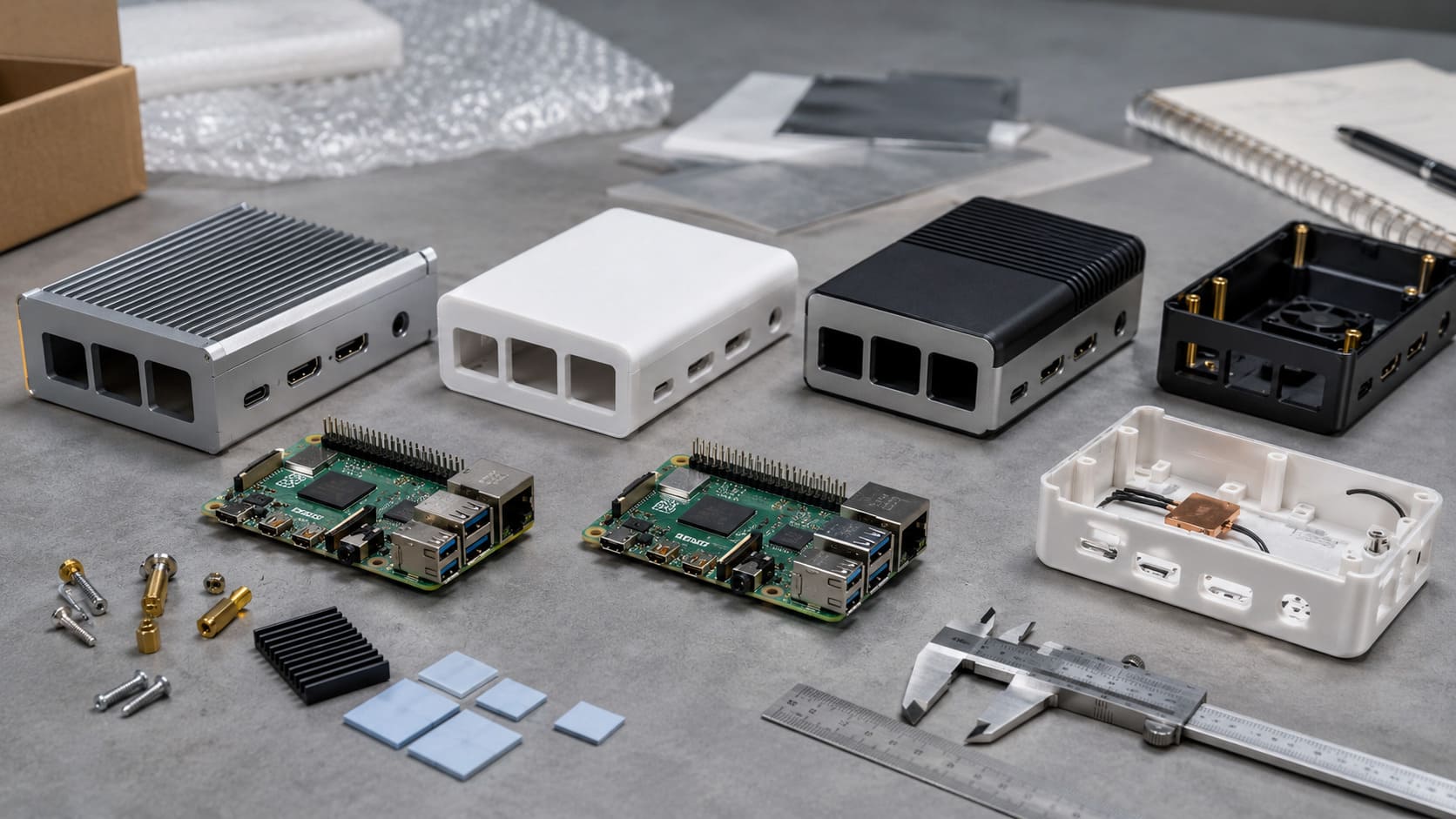
On my workbench sits a single green board, no larger than my hand, with ports lined up like little doorways waiting to be opened. Around it, scattered notes, sketches, and parts from our latest custom case order remind me why this board keeps showing up in so many conversations with our clients.
Whether I’m helping Davide fine-tune his private-label cases for Amazon, or working with Lasle on a new industrial housing for his Hungarian project, the Raspberry Pi is always at the center. It’s not just a computer. It’s a toolkit, a launchpad, and for many of my customers, a business foundation.
In this post, I want to take you through exactly why the Raspberry Pi has so many uses—from classrooms to factories—and why it remains one of the most versatile boards in the world.
Ready? Let’s lift the lid on this tiny green engine.
Education & STEM Empowerment

An affordable computer for digital literacy
When I visit a rural school in Guangdong, I bring a suitcase of Pi 4 boards. For many kids, it’s the first time they type print("Hello, world!") and see the screen talk back. A full PC was out of reach; a Pi is not.
| Item | Entry Laptop | Raspberry Pi 4 |
|---|---|---|
| Typical Price | $300 | $55 |
| Power Draw | 30 W | 7 W |
| Replaceable Parts | Few | Most |
| GPIO Pins | None | 40 |
Teaching programming (Python, Scratch) in classrooms
I guide students to drag blocks in Scratch first; then we switch to Python. They learn loops by lighting LEDs. Simple projects make code feel real.
Physical-computing lessons with GPIO pins
Blink a LED once, and the room cheers. Add a button, and they grasp input/output better than any slide deck could explain.
Code Clubs, Raspberry Pi Jams, and global outreach
Free clubs meet after class—online or in cafés. Volunteers share projects, swap code, and form a pipeline of future engineers.
Each classroom success feeds bigger dreams—projects that spill outside school walls and into the maker space down the road.
DIY & Maker Innovation Platform

Robotics, drones, and automation builds
My friend Lin once used a Pi Zero to steer a line-following robot at a factory tour. The code was 50 lines. The impact: one less human walking a loop every hour.
Retro-gaming & emulation consoles
Plug a Pi into a 3D-printed shell, add ROMs, and you’ve got a living-room time machine. It’s nostalgia without the attic dust.
Environmental sensing and data-logging projects
In Belgium, our client Davide monitors greenhouse humidity with a Pi and a $5 sensor. His basil crop thanks him.
Creative art, music, and interactive installations
I’ve seen artists project generative visuals onto acrylic panels we made. A Pi drives pixels; the crowd calls it magic.
But crafting one-off gadgets is only half the story—some ideas need to scale from bench to market.
Prototyping & Product Development

Rapid hardware iteration for startups and engineers
A founder shows up with a sketch. A day later, a Pi-based proof-of-concept blinks alive on my desk. Speed equals survival.
IoT proof-of-concepts with sensors, HATs, and cameras
Snap a camera HAT on top, stream images, and test in hours—not weeks. Cheap parts lower the cost of being wrong.
Scaling to mass production via Compute Module & CM4 IO boards
| Feature | Pi 4 Model B | Compute Module 4 |
|---|---|---|
| Size | 85 × 56 mm | 55 × 40 mm |
| Edge Connector | USB/HDMI | 100-pin board-to-board |
| Best Use | Desktop-style dev | Embedded product |
| Custom Carrier | Not needed | Required |
When a prototype lands its first order, the Pi often moves from lab bench to living room—and sometimes to the family TV.
Media & Entertainment Hub
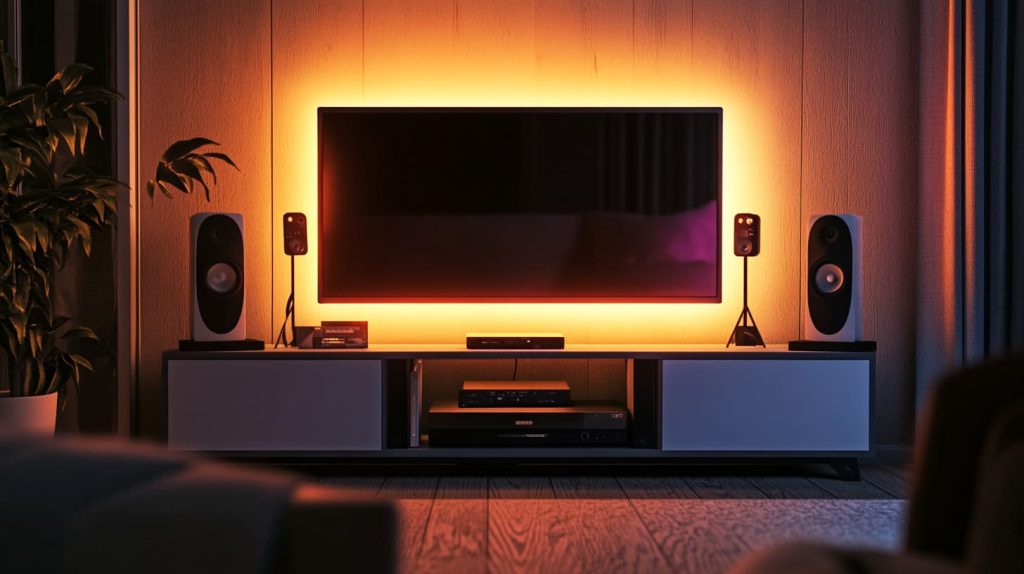
Kodi-based home-theater PCs and streaming servers
I swapped my bulky HTPC for a Pi 5 last year. It streams 4K movies while sipping power like a LED bulb.
Smart-TV upgrades and multi-room audio systems
An old monitor plus a Pi equals a smart display. Add a DAC HAT, and your speakers join the party.
Personal arcade cabinets and tabletop gaming rigs
Laser-cut plywood, a joystick, a Pi, and suddenly my nephew believes I own a 1990s arcade.
Entertainment is cozy, but the same board can also make a home smarter—and safer.
Smart Home & Automation Backbone
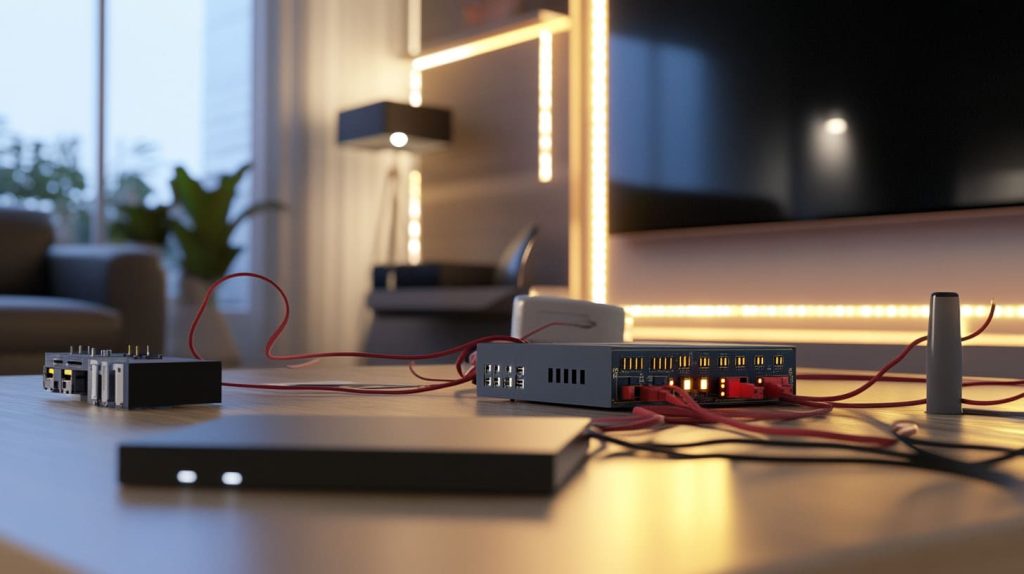
Home Assistant, openHAB, and MQTT control hubs
I run Home Assistant on a Pi 4 in my office. It talks to lights, AC, and even the factory’s coffee machine.
Energy-monitoring, smart-metering, and green-tech projects
Hungarian buyer Lasle pairs a Pi with CT clamps to track shop-floor power. His graphs spot waste before bills do.
Security cameras, NAS backups, and home-lab services
A Pi with MotionEyeOS becomes a silent guard. Another Pi mirrors my Git repos at night.
All that traffic turns the Pi into a tiny server farm—one that fits in a shoebox.
Networking & Edge Computing Node

Low-power web, DNS (Pi-hole), and VPN servers
Block ads for the whole office with Pi-hole; route travel traffic through WireGuard on the same board.
Wi-Fi extenders, routers, and mesh-network nodes
Stick a USB Wi-Fi dongle in, flash OpenWrt, and you’ve stretched coverage down the warehouse aisle.
Kubernetes clusters, AI inference, and edge analytics
Four CM4 boards in a 3D-printed rack churn through YOLOv8 models, detecting defects on our acrylic panels.
| Node Count | Power Draw | Images/sec |
|---|---|---|
| 1 Pi 4 | 7 W | 2 |
| 4 CM4 | 18 W | 9 |
Edge tasks solved, many firms ask a bigger question: can a Pi survive on the shop floor for years?
Industrial & Commercial Applications

Digital signage, kiosks, and point-of-sale systems
Airports across Asia show flight info on Pi-powered screens. They reboot faster than delayed planes land.
Process control, monitoring, and data acquisition
We embedded a Pi into an injection-molding line. It logs temperature spikes and warns before defects grow costly.
OEM embedded solutions with long-term availability
Compute Modules come with a promise: at least eight years in stock. Buyers relax; supply chains breathe easier.
Industrial grade means rugged shells and solid cooling—exactly where cases and branding step in.
Community, Ecosystem & Support

Raspberry Pi Foundation mission and resources
The Foundation funnels board sales into lessons, contests, and grants. It’s a loop where every hobby kit fuels the next kid’s lesson.
Open-source repositories, documentation, and forums
Type an error code into the forum, and some night-owl in another time zone saves your project before sunrise.
Global meet-ups, maker fairs, and collaboration culture
I shook hands with Davide at a Pi Jam in Brussels. A week later, we co-designed a case that now ships under his brand.
Collaboration sparks questions about models, cooling, and logos—the parts MaidaTech hones daily.
Customization, Enclosures & Branding Opportunities

Selecting the right model (Pi 5, Zero 2 W, CM4, etc.)
| Use Case | Suggested Board | Key Reason |
|---|---|---|
| Learning Python | Pi 400 | Built-in keyboard |
| Battery project | Zero 2 W | Low power |
| Industrial panel | CM4 | eMMC & PCIe |
Importance of cases, cooling, and robust power supplies
A metal shell drops core temps by 15 °C. A stable 5 V 3 A PSU saves hours of SD-card corruption drama.
OEM/ODM, private-label, and re-branding pathways for B2B buyers
We laser-engrave logos, bundle cables, add barcodes, and ship direct to Amazon FBA—so you focus on marketing, not packing tape.
After branding is set, what remains is vision—where will the Pi head next?
Conclusion

From the classroom blink of an LED to the hum of a factory line, the Raspberry Pi wears many hats. It teaches, entertains, prototypes, and powers products. Each new model brings more cores, better AI support, and fresh chances for builders—and for suppliers like us—to push ideas further. I can’t wait to see what you’ll create next.