Skip to content

Best word processor for a raspberry pi 4b+ Works great on Raspberry Pi OS, provides completely offline editing, supports DOCX, ODT, and opens big files with rock-solid stability on 4–8 GB RAM models. For lighter requirements, AbiWord starts up quicker and consumes less memory, but doesn’t have some layout and export capabilities. If you want to work within a browser, Google Docs in Chromium works for shared editing but requires reliable internet and has weaker offline support. For writing markdown or notes, Typora and ghostwriter provide slick, speedy workflows with minimal overhead. To print, Raspberry Pi OS’s CUPS support supports most printers. To pick between these, align feature, speed, and file format requirements with your usage.
Evaluating Native Word Processors
Native ones on Raspberry Pi OS stay clear of x86 emulation, so they launch speedier, take less RAM, and act as expected on ARM. LibreOffice Writer, AbiWord, Ted, and FocusWriter open popular formats like docx, odt, and rtf, which becomes important if you work in an office or attend school. Folks who experimented with Microsoft Word encountered architecture blocks, so remaining with native apps provides more stability and less surprises.
1. The Default Powerhouse
LibreOffice Writer remains the default choice on Raspberry Pi as it provides a comprehensive suite at no charge and comes with the new Raspberry Pi OS, often pre-installed. It opens and edits docx and odt, exports to PDF, and manages complex layouts with styles, page templates and cross‑references. Mail merge, custom fields, and change tracking assist book editors, policy writers, and engineers maintain organization and auditability.
The interface is familiar if you hail from Windows or macOS. A lot of users get Libre off OpenOffice for updates and file compat, but they still install OO out of muscle memory and like its menus. Both appear similar, but LibreOffice is usually best supported.
2. The Lightweight Champion
AbiWord trades features for speed and a small footprint, which comes in handy on tight RAM budgets or heavy multitasking. Its pared‑down UI cuts noise and keeps focus on text.
It imports doc, odt, rtf and html, just fine for drafts, letters and reports. Start‑up can still hang on some machines, but in the trenches it seems airy and less sclerotic than the bulkier packages. So if you want quick loads and easy tools, AbiWord comes in.
3. The Minimalist's Choice
Ted is made for rapid notes and easy docs. It launches in a flash, maintains a minimalist toolset, and gets out of your way.
Spell check and search exist but advanced layout does not. It exports to plain text, RTF, HTML, and PDF, which gets through a lot of simple handouts and logs. A few users hate the absence of visual niceties like margin gray areas, but retrocomputing fans love the no‑frills aesthetic. FocusWriter is another native choice that runs great on Pi and provides a nice, distraction‑free canvas.
4. The Performance Verdict
LibreOffice uses the most RAM on a Raspberry Pi 4B+ but is most stable for complex documents. AbiWord and FocusWriter seem snappier in typing lag. Ted is the quickest to launch and remain tiny in memory. Heavy office tasks, style-driven books and long technical specs fit LibreOffice best. DRAFTING, journaling, and meeting notes feel better in AbiWord or FocusWriter, while Ted shines on-the-spot scratch work.
Ranking table (lower is better for startup and resources):
- Startup time: Ted (fast) < FocusWriter ≈ AbiWord < LibreOffice (slow)
- Supported formats: LibreOffice (broadest) > AbiWord/FocusWriter (essential) > Ted (basic)
- Resource use: Ted (lowest) < AbiWord/FocusWriter < LibreOffice (highest)
Choice depends on workflow, document complexity, and resource headroom.
Why Your Desktop Favorite Fails

Raspberry Pi 4B+ is ARM, not x86, so desktop staples built for Intel, or AMD, miss. Full Microsoft Office isn’t available on Raspberry Pi OS, and macOS-only utilities like Pages don’t exist on Linux. Big suites assembled for x86 anticipate other instruction sets, memory models, and system APIs, which busts native install and blister speeds with workarounds. Choosing native, ARM-ready tools sidesteps wasted effort and glitchy configurations.
Architecture
X86 (Intel/AMD) and ARM have completely different instruction set architectures, so binaries compiled for one aren’t going to run on the other without a translation layer. A Raspberry Pi’s ARM Cortex-A72 won’t run the x86 machine code Microsoft Word or old-school desktop Office generates for Windows 10 or macOS, even if you satisfy disk or storage requirements.
Most popular office applications are compiled and packaged for x86 desktops, which restricts direct install on Raspberry Pi OS and most Linux ARM builds. Even if a .deb exists, it’s frequently x86-64 only.
You need ARM apps. LibreOffice on ARM is the pragmatic choice compared to OpenOffice since it’s actively maintained, has better DOCX fidelity, and ships ARM builds in numerous repos. Lighterweights, such as AbiWord or FocusWriter, run well but exchange sophisticated layout capabilities. Web alternatives like Office on the web or Google Docs sidestep CPU architecture, but depend on reliable internet and a contemporary browser.
Before you test a traditional suite, read the system requirements. If it says Windows 10/11 x86-64 or macOS on Intel/Apple Silicon only, it won’t natively install on Raspberry Pi OS.
Emulation
For emulation, x86 instructions are translated to ARM on the fly using Box86/Box64 + Wine. It interposes libraries, maps system calls, and just-in-time recompiles hot paths to emulate an x86 environment on an ARM CPU.
That translation is expensive. Anticipate high CPU consumption, UI frame drops and larger memory footprints. Heavy office suites with complex layout engines, font handling and embedded media can lag on 4–8 GB RAM, especially with large DOCX or multi-language spellcheck.
Setup isn’t trivial. You manage Wine prefixes, 32-bit versus 64-bit dependencies, font packs and DLL overrides, and updates can shatter workarounds. Ms office has no official linux support so stability and licensing checks are hit or miss.
For most users, native ARM builds (LibreOffice, AbiWord), markdown editors, or web-based suites are easier, quicker and more stable on Raspberry Pi hardware — even with touchscreens or non-traditional input.
Exploring Browser-Based Solutions
Browser-based word processors perform flawlessly on a Raspberry Pi 4B+ and provide instant access to your documents across devices. They operate in Chromium and Firefox, enable real-time edits, and cut setup headache relative to full desktop suites, depend on solid internet and can slow with dozens of tabs.
- Google Docs (via Google Drive)
- Microsoft Word on Office.com (Microsoft 365 web)
- Zoho Writer
- Dropbox Paper
- OnlyOffice Docs (cloud)
- Notion (basic drafting, limited export)
- Etherpad (self‑hosted or public pads)
Connectivity
A rock-solid link is not even up for discussion. Wi‑Fi should maintain a solid 5 GHz signal whenever available. Ethernet is superior for full-length sessions or video calls while co‑editing. Intermittent connections result in synchronization issues, version control problems, and missing modifications.
Tune the network stack on Raspberry Pi OS: enable Wi‑Fi power‑save off for consistent throughput, set a static DNS (e.g., 1.1.1.1), and check bufferbloat on your router. If on Ethernet, coerce full‑duplex at the switch and check link speed.
Chromium provides the best experience with Google Docs and Office.com, whereas Firefox is robust and can seem snappier. Others, like me, installed Iceweasel to get at Google Docs — says the simple stuff was just peachy.
Offline modes assist but are still confined. Google Docs offline requires configuration and sufficient local storage. Office.com’s offline stream is more limited. Native apps still win for no‑network environments!
Features
| Platform | Strengths | Gaps | Best for |
|---|---|---|---|
| Google Docs | Real‑time co‑edit, version history, cloud autosave, free with Gmail | Advanced styles, complex mail merge, custom scripts | Shared reports, student work, quick drafts |
| Office.com Word | High fidelity with desktop Word, tracked changes | Fewer macros, limited advanced layout | Teams in Microsoft 365 |
| Zoho Writer | Clean UI, templates, robust export | Add‑ons vary, some latency | SMEs, cross‑platform |
| OnlyOffice (cloud) | MS Office‑like UI, strong formatting | Setup if self‑hosted | Mixed document fidelity |
| Collaboration features and autosave are the clear wins. Many users report satisfaction for simple tasks, especially when they just need comments, sharing links, and quick export. Some note missing scripting or complex style tools, so heavy formatting may be better in native apps. Choose cloud editors if sharing beats offline control. |
Resources
Web apps tax RAM and CPU more than native light editors. On a 4B+ (4–8 GB RAM), Google Docs or Office.com is OK, just keep tabs small. Older ones crap out on heavy pages and large documents.
Shut down streaming sites, dashboards or dev consoles when you write. Turn off script-injecting extensions. Try uBlock Origin for ad-laden pages for some CPU time-savings.
Chromium is more RAM-hungry but most compatible. Firefox can seem slicker with less processes. A couple users had luck making and sharing docs using Google Drive on the Pi, with free entry through a Gmail account.
Optimizing Your Pi for Writing
Exploit the Pi’s advantages and prune what bogs it down. Raspberry Pi FAQ assures it can deal with word processing, and indeed a lot of people write on it every day with FocusWriter, LibreOffice or even vi and emacs. Results vary: one user found AbiWord too sluggish, while others report steady output with KWord or LYX. Select skinny utilities, then tweak the platform so strikes seem immediate.
- Mechanical keyboard with light switches and a 1080+ 60 hz monitor for clear text and low eye strain!
- Turn off visual effects, auto-start services and fat panels. Retain just the editor, file manager, and tabs you require.
- Update Raspberry Pi OS and your editor frequently for security and fixes.
- Prefer lightweight apps: FocusWriter (TXT/RTF/ODT) or a tuned vi/emacs setup. LibreOffice is OK for rich layout but heavier. LYX for LaTeX workflows.
- Keep distractions off: full-screen mode, do-not-disturb, and no social tabs. A typewriter eliminates distractions as well, but you can’t correct typos or distribute online.
- Mind power: a Pi with a battery pack can run long sessions—some report about 16 hours—but this depends on your pack and peripherals.
Overclocking
Overclocking the Pi 4B+ can make menus snappier and reduce input lag in editors, so it really shines when LibreOffice or LYX redraws complex pages.
Push clocks only if you’ve got good cooling and watch temps. See the CPU drop below 80°C to prevent throttling.
Steps: 1) Update firmware (sudo apt update && sudo apt full-upgrade). 2) Edit /boot/config.txt and add, for example: over_voltage=4, arm_freq=2000, gpu_freq=600. 3) Reboot, then run vcgencmd measure_temp and stress-test with your editor open. 4) If unstable, roll back to lower. Make backups prior to modification.
Risks exist: data loss on crash, SD wear from corruption, and possible shorter hardware lifespan if heat is unchecked.
Cooling
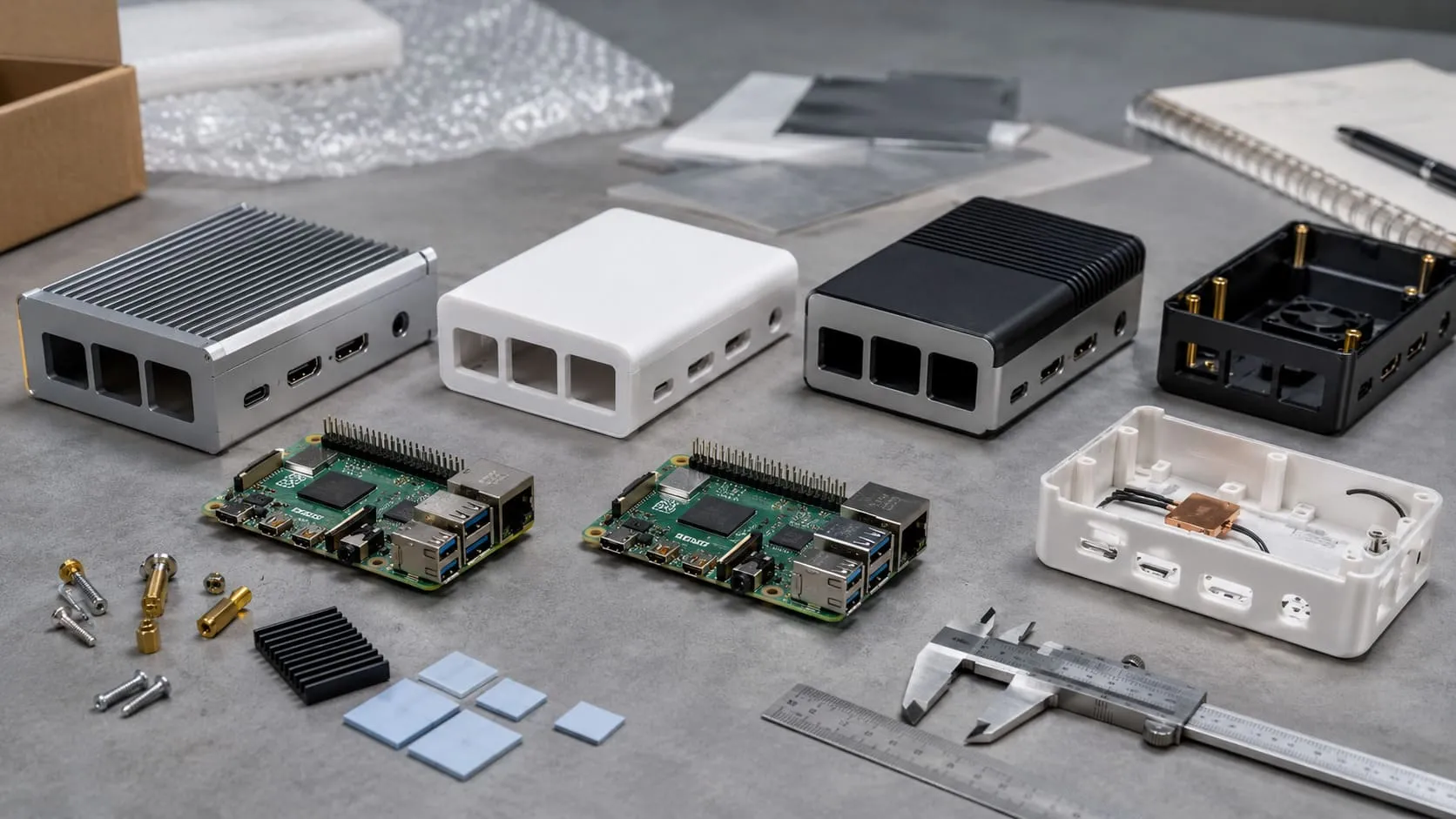
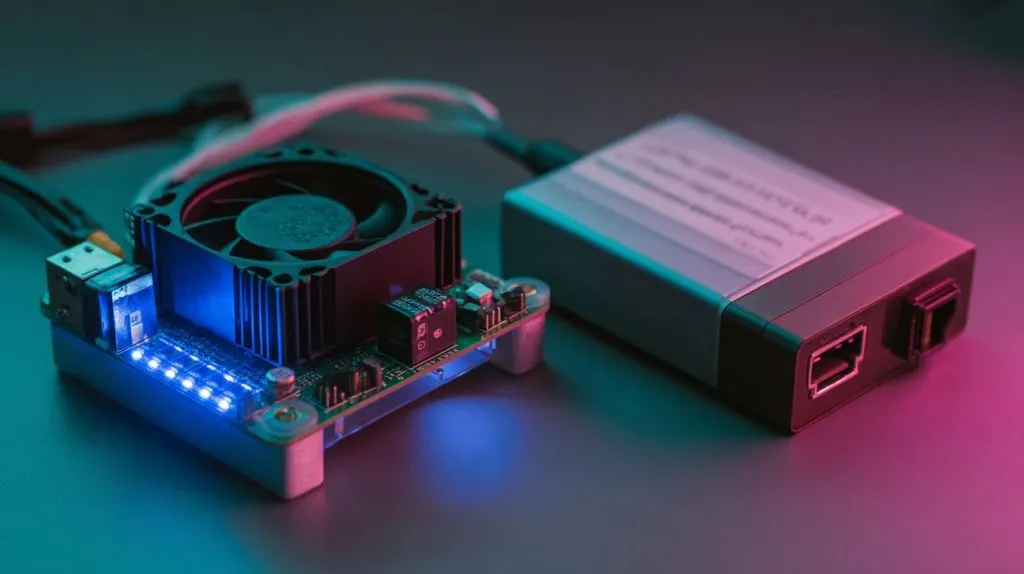
Add stick-on heatsinks and a 40 mm case fan, or a passive aluminum case for silent cooling on those long drafts.
Track temps with vcgencmd measure_temp or a panel widget. Third-party dashboards assist when testing overclocks.
Set the board on an air flow stand, away from plush surfaces. Shoot for chill intake and clean cable routing.
Cooling matters most if you overclock or run multiple apps – browser, pdf viewer and editor – at once.
Storage
Select a swift A2-class microSD or, even better, a USB 3.0 SSD for speedier saves, backups, and big document search.
Projects in datestamped folders, commit note, and back up weekly.
Use rclone to sync drafts to cloud storage for offsite safety.
More space comes in handy when drafts contain images, data tables or extended research PDFs.
My Personal Recommendation
Best overall pick on a Raspberry Pi 4B+: LibreOffice Writer. It installs cleanly on raspberry pi OS, runs like a dream on 4–8 GB RAM, loads and saves .docx with remarkable fidelity, and processes long, styled documents without strange layout drift. Setup is easy through apt, and it works offline, which counts if you write while traveling. Some users stick with OpenOffice out of habit, and that’s okay, but package freshness and MS Word compatibility still lean in LibreOffice’s favor on the Pi. For minimalists, plain text with vim or TeX is lightning-fast and stable. Shortlist by need: LibreOffice Writer (general use), AbiWord (lightweight), LyX (structure-first), plain TeX or vim + pandoc (text-first pipelines), and cloud tools like Google Docs or Google Spreadsheet when collaboration or web access is key.
The Balanced Approach
LibreOffice Writer strikes a reasonable compromise on the Pi 4B+. It loads quicker than full suites on older boards but supports section breaks, styles, images, tracked changes, and citations with extensions. It preserves intricate formatting when round-tripping with MS Word docs, which counts if you exchange proposals, resumes or papers with teams on Windows or macOS.
For document fidelity, Writer’s DOCX import/export is better than AbiWord, which can falter on tracked changes and complex tables. OpenOffice can seem familiar, but LibreOffice gets more active fixes and improved font rendering on Raspberry Pi OS. If you depend on templates and mail merge and non-Latin scripts, Writer’s format compatibility stack is just safer.
Cut the UI for concentration. Toggle Switch to Single Toolbar or Notebookbar, hide rulers until needed and Focus mode. Use styles panel for uniform headings. Add grammar & spell plugins. Pair Writer with Zotero for citations, with pandoc to convert drafts to PDF, DOCX, or HTML, and with Nextcloud for sync. For spreadsheets, Google Spreadsheet is a viable cloud alternative to Excel if your workflow resides in the browser.
The Mobile Setup
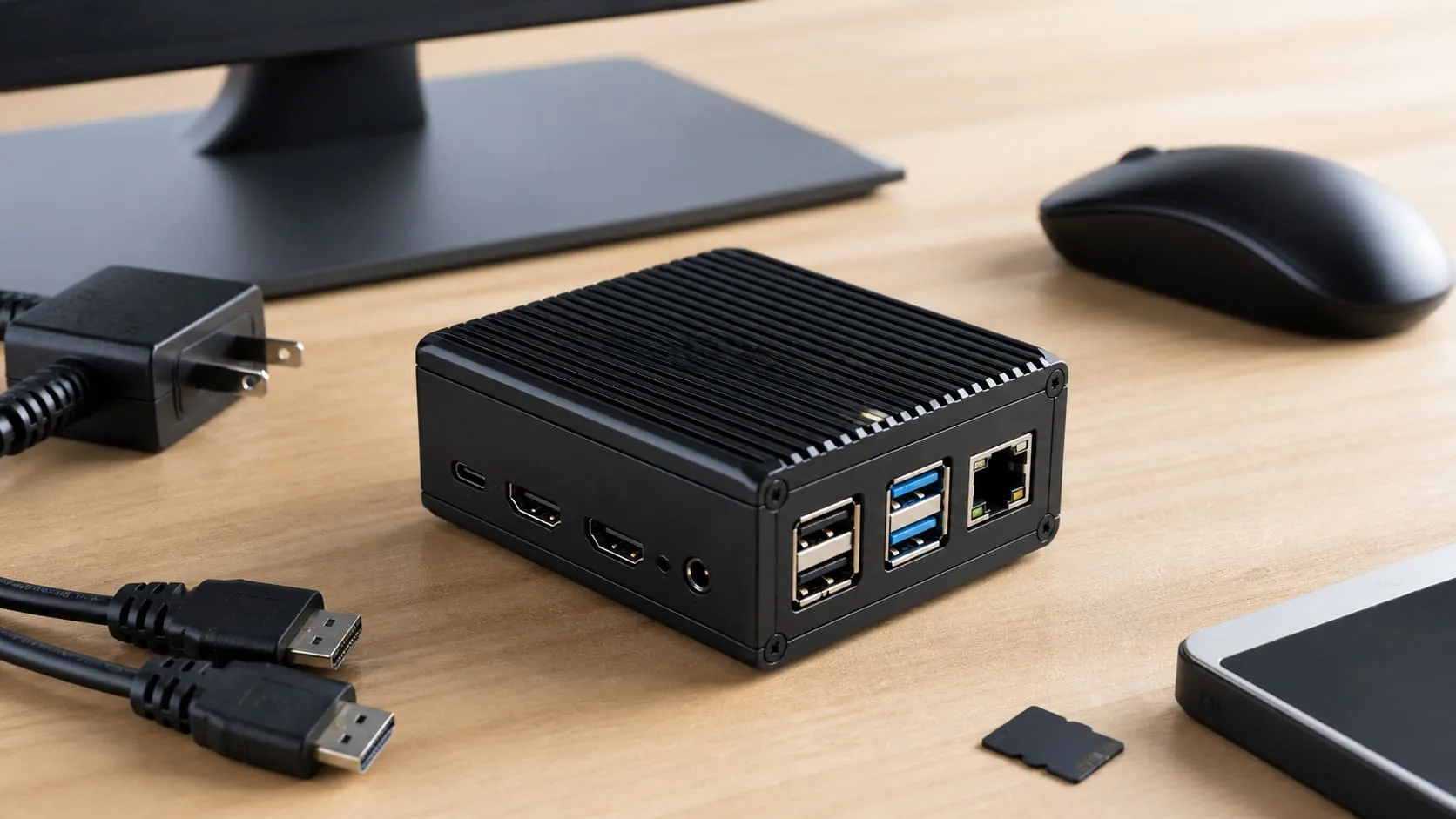
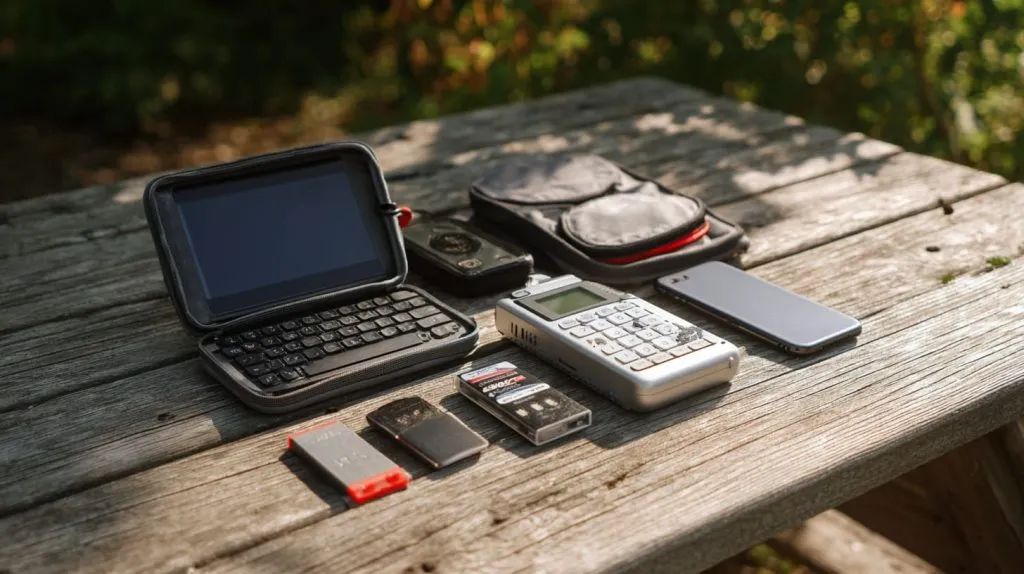
A portable Pi rig is straightforward: Raspberry Pi 4B+, a 10–13 inch HDMI monitor, a 10,000–20,000 mAh USB-C battery pack, and a low-latency wireless keyboard with touchpad. Toss in a stubby HDMI cable, kinda neat flat stand and a tank-like carry case.
Bring extra microSD cards with cloned images for quick recovery. Add to that a skinny USB-C PD charger, a micro-HDMI adapter and a tiny USB hub.
The reward is attention. Write anywhere, with no mains power, and less pings than your phone or overloaded laptop.
Stress-test the arrangement prior to actual work. Check battery draw under Wi‑Fi, confirm keyboard feel over long sessions, and try offline workflows: vim for speed, plain TeX for letters, LyX for structured papers, or LibreOffice for mixed media.
Installation and Setup Guide
Set up your Pi 4B+ by updating it, setting the correct time, and ensuring network access, before installing any word processor. Correct date and time assist package signatures, SSL and file timestamps. Set them syncing with online services or by manual input if your Pi is offline. Microsoft Office doesn’t run on ARM as it targets x86, so consider LibreOffice, AbiWord, Gnumeric, or FocusWriter. To maintain document fidelity, install common fonts used on other systems.
Using the Terminal
Update the base system and sync time:
- sudo timedatectl set-ntp true
- sudo apt update && sudo apt full-upgrade -y
- sudo apt install fonts-dejavu ttf-mscorefonts-installer
Install choices:
- Full suite: sudo apt install libreoffice
- Lightweight: sudo apt install abiword gnumeric
- Distraction-free: sudo apt install focuswriter
Launch apps fast from the shell for testing or scripting:
- libreoffice --writer, abiword, gnumeric, focuswriter
- Use which libreoffice to verify paths.
Automate installs and updates with a simple script stored in /home/pi/bin and run via cron:
!/bin/sh
- sudo apt update && sudo apt -y upgrade
- sudo apt -y install libreoffice abiword gnumeric focuswriter
For quick edits or server use, stick to terminal editors:
- nano for simple changes.
- emacs for power users who need Org-mode or advanced macros.
If installs are failing, check network, sudo apt --fix-broken install, verify disk space with df -h, and run apt with LANG=C to see easier-to-read error text. Save this Installation and Setup Guide for recurring installations.
Using the GUI
Open the Raspberry Pi menu and select Preferences or Recommended Software (or Add/Remove Software) and search for ‘LibreOffice’, ‘AbiWord’, ‘Gnumeric’ or ‘FocusWriter’. Make your selection and hit apply changes. Most Raspberry Pi OS images come with LibreOffice preinstalled, but check what versions after upgrades.
Pin apps to your taskbar by right-clicking the app icon after launch and selecting “Add to Panel,” or drag desktop shortcuts from the menu for one-click access. Which aids less technical users and shared machines.
Stay up-to-date from within the GUI by launching Add/Remove Software and install updates. If updates hang, check date/time is accurate and the Pi has a solid network connection. Slow on heavy docs (even on a 4B+)–switch to AbiWord or FocusWriter for light work, close other apps, & increase swap only if you know the wear risks on microSD.
Get the Pi’s IP through terminal (hostname -I), your router’s client list, or a network scanner. This assists with remote admin through SSH when the Pi is headless.
Conclusion

In other words, to seal the deal on a Raspberry Pi 4B+, select programs that launch quickly, save without delays, and run offline. Native apps like LibreOffice Writer scored for full docs, with styles and page layout. AbiWord runs light for quick drafts. Browser apps such as Google Docs are great for live edits with a team, but require a solid connection and introduce lag on large documents. A lean system, swap set right, and GPU mem near 256 MB keep the Pi snappy.
As for my stack, LibreOffice Writer for long work. Typora/FocusWriter for clean drafts. Google docs for shared notes.
Have a setup that trumps this on a Pi 4B+? Leave a comment. Share your hacks / plugins / keymaps that made your flow smooth.
Frequently Asked Questions
What is the best word processor for a Raspberry Pi 4B+?
LibreOffice Writer is your best all-around bet. It’s stable, feature-rich and runs well on Raspberry Pi OS. Supports .docx and .odt, templates, styles, and offline work. It leverages spellcheck and exports to PDF.
Why do some desktop word processors perform poorly on a Pi?
Heavy apps require more CPU, RAM, and GPU than the Pi provides. Electron-based or Java-heavy tools can stutter. The Pi 4B+ is great, but lightweight, native ARM apps like LibreOffice or AbiWord run smoother than bloated alternatives.
Are browser-based editors good on a Raspberry Pi?
Indeed, with restrictions. Google Docs and Microsoft Word Online work in chromium They’re awesome for collaboration and autosave. They require a reliable internet connection, and can be sluggish with numerous extensions or large files.
How can I optimize my Raspberry Pi for writing?
Go Raspberry Pi OS Lite or regular OS with light desktop. Shut down background apps. Turn on zram. Fast microsd or SSD. Maintain up-to-date firmware and packages. Go with lightweight fonts and turn off animation in your desktop environment.
What’s the easiest way to install LibreOffice on a Pi?
Use the terminal: sudo apt update && sudo apt install libreoffice. This brings in writer and the suite. Once installed, locate LibreOffice Writer in your menu. For quicker startups, uninstall unused modules through your package manager.
Can I open and save Microsoft Word files on a Pi?
Yes. LibreOffice Writer opens and saves .docx files well. When possible, use standard fonts and simple formatting for best compatibility. You can export PDFs direct in LibreOffice for sharing and printing.
Is there a minimal alternative to LibreOffice for older or lighter setups?
AbiWord is a lightweight editor that runs fast on the Pi. It takes care of simple .docx and .odt documents. It doesn’t have advanced layout features, but it’s great for fast drafts, notes, and low-resource environments.