If you're like me, the excitement of getting a Raspberry Pi 4 up and running is hard to beat. But then, you start pushing it a little—maybe you’re overclocking or running some intense projects—and the temperature starts to climb. The thing is, without proper cooling, that tiny little computer can quickly go from hero to zero. Overheating leads to throttling, where your Pi starts slowing itself down to protect itself. To avoid this, let’s dive into the best ways to keep your Raspberry Pi 4 cool, so it can do its best work without breaking a sweat.
Understanding Raspberry Pi 4's Thermal Management
The Importance of Cooling
It’s easy to forget how much heat a device like the Raspberry Pi 4 can generate. But when you’re dealing with a small, powerful machine, it doesn't take long for the processor to get too hot. This leads to something called CPU throttling, which essentially slows the device down to avoid damage. That’s a big deal, especially when you’re running demanding applications or heavy workloads. The solution? Effective cooling. Keeping things cool not only prevents throttling but also extends the life of your Pi. If you’ve ever dealt with the frustration of your Pi slowing down in the middle of a project, you know how important it is to get this right.

Common Cooling Challenges
The compact design of the Raspberry Pi 4, combined with its powerful components, means that it’s easy for things to heat up—fast. Without cooling, it doesn’t take long for the Pi to reach temperatures that trigger thermal throttling. In fact, it's something I've seen with customers who use their Pi for projects like home automation or even simple media centers. The device gets too hot and suddenly, tasks take longer to complete. To prevent this, we need to tackle the heat at its source with effective solutions.
Passive Cooling Solutions
Heatsinks
One of the easiest and most affordable cooling solutions is attaching a heatsink to the CPU. These are small metal pieces that sit on top of the processor, helping to disperse heat more efficiently. Aluminum heatsinks are particularly popular because they are both effective and cost-friendly. I’ve seen many customers use them with great success, especially in less demanding projects where active cooling isn’t necessary. The beauty of this solution is its simplicity—just place it on the chip, and you’re good to go.

Cases with Built-in Cooling
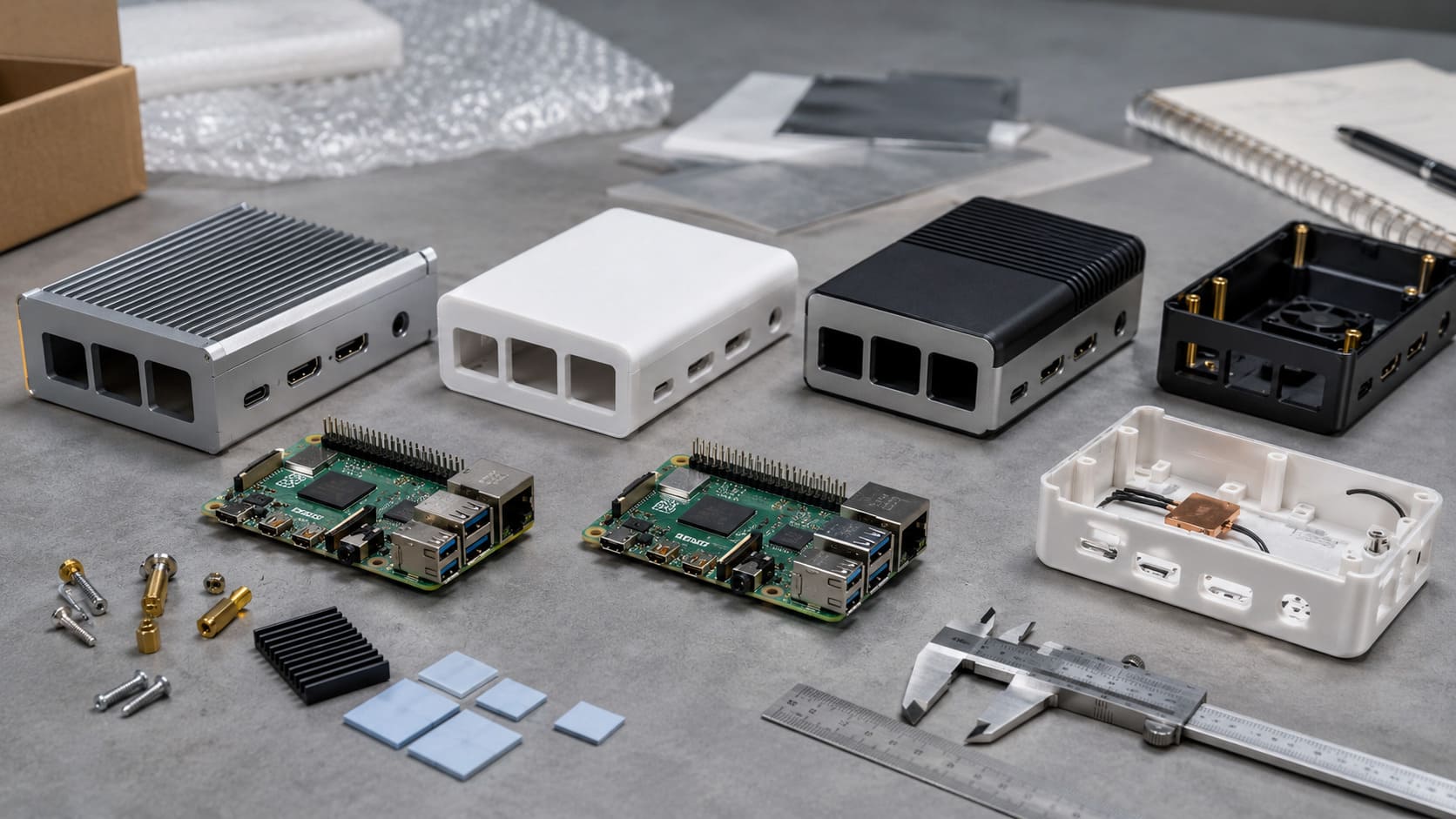
Sometimes you don’t want to mess around with multiple parts. In that case, a case that already incorporates cooling features can be a game-changer. For example, the Flirc case is a standout, designed with aluminum that works as a passive heatsink. I’ve recommended this to clients looking for a solution that’s both protective and cooling in one sleek package. It’s perfect if you want something that looks great on your desk or shelf but also takes care of the thermal management without extra hassle.
Let me tell you, when I first started using one for my own Pi setup, it was a relief to see the temperature drop right away. It’s an investment in long-term performance and device protection.
Active Cooling Solutions
Fans
Sometimes, passive cooling just doesn’t cut it. That’s when you need to kick things up a notch with active cooling—like adding a fan. Fans work by actively moving air across the Pi’s components, helping to lower the temperature. You can get small 30mm fans that mount directly onto the board or place them inside a case. They don’t take up much space, and the drop in temperature is usually significant. When I’ve worked with high-performance Pi users, like those running servers or media centers, a fan was a no-brainer to keep things running smoothly.

Fan HATs
If you’re looking for a more integrated solution, Fan HATs are the way to go. These add-on boards come with their own fans and offer additional features like temperature-controlled fan speeds or even power buttons. I particularly recommend the Argon Fan HAT, which comes with a 40mm fan and fits seamlessly with the Raspberry Pi. It’s perfect for those who want a one-stop solution for cooling and additional functionality. And, for those of us who want to make sure our Pi stays cool under pressure, it’s a solid, reliable choice.
Advanced Cooling Solutions
ICE Tower Cooling Fan
Now, if you’re dealing with a high-performance Raspberry Pi setup—maybe you’re overclocking or running heavy workloads—you might need something a little more advanced. That’s where the ICE Tower Cooling Fan comes in. This fan combines a large heatsink with a fan that can keep your Pi’s CPU at near-ambient temperatures, even when you’re really pushing it. I’ve used this myself when testing out more demanding Pi setups, and let me tell you, it’s like a mini air conditioner for your Raspberry Pi. No more worrying about heat-induced throttling!

Power over Ethernet (PoE) HATs
For those of us running headless setups or situations where you need extra power and cooling, a PoE HAT can be a lifesaver. It combines both power and cooling by incorporating a fan that turns on based on the temperature of the Pi. This is great for setups where you’re running a Pi in a remote location without access to a monitor or where you don’t want to worry about overheating. In my experience, PoE HATs have proven especially useful for clients working on large-scale projects or network-based applications.
Choosing the Right Cooling Solution
Assessing Your Needs
Choosing the right cooling solution is all about understanding your needs. Are you running resource-heavy applications? Is overclocking in your future? Or are you just using the Raspberry Pi for simpler tasks? Your decision on cooling depends on the intensity of your projects. If you’re like me and working with Pi for advanced computing tasks, you might want to invest in a high-performance solution like the ICE Tower Cooling Fan. For lighter workloads, a simple heatsink or a fan might be enough.
Compatibility and Installation
Another key factor to consider is compatibility. You don’t want to buy a cooling solution that doesn’t fit with your Raspberry Pi model. Thankfully, many of the cooling solutions I’ve mentioned are designed to work seamlessly with Raspberry Pi 4, so installation is generally straightforward. However, if you’re using a custom setup, it’s worth double-checking the specifications to ensure everything lines up.
Conclusion
Finding the right cooling solution for your Raspberry Pi 4 can be the difference between smooth, uninterrupted performance and frustration with throttling. Whether you go for passive solutions like heatsinks or more active options like fans and HATs, the right choice will depend on your specific needs. But one thing’s for sure: investing in cooling will pay off in the long run, keeping your Pi performing at its best for years to come. So go ahead—keep your Raspberry Pi cool, and let it do what it does best!