Skip to content

Last spring a friend tossed me an old Pi 3 at a Shenzhen flea market. “Bet you can’t find a crazier job for this thing,” he laughed. The dare stuck. I started digging through forums, journals, even late‑night Discord chats to see how far people push this hand‑sized board. The answers grabbed me by the collar—some saved lives, some mapped galaxies, most broke every rule I thought I knew about single‑board computers.
Sliding from that crowded market stall into today’s deep dive, I’ll show you where imagination meets 5‑volt logic. Ready?
Defining “Unexpected” Pi Applications
Common vs. Niche: Where the Line Is Drawn
“Media center in the living room?” Common.
“Pi guiding a surgeon’s scalpel?” Niche.
I draw the line at projects that step outside the usual maker tropes—networking, retro gaming, simple IoT—and crash open doors in fields most engineers guard with PhDs.
Industry vs. Hobbyist: Why Context Matters
A classroom weather station feels normal in STEM class. The same rig on the International Space Station forces us to rethink cost, risk, and trust. Context flips “cute” into “critical.”
Metrics for “Unexpected”: Impact, Originality, Feasibility
I check three boxes:
- Impact – Does the project move needles in health, science, or the planet?
- Originality – Is the idea fresh, or just a remix?
- Feasibility – Could a small team repeat it without a billionaire’s wallet?
A quick breather—think about where your own projects sit on that scale before we sprint into real‑world examples.
A Lightning Survey of Left‑Field Pi Projects
Medical & Healthcare
From bedside glucose alarms to AI pathology scanners, clinicians sneak Pi boards behind hospital curtains.
Aerospace & Space Exploration
Pi modules survive radiation on CubeSats and feed sensor bundles orbiting Earth.
Environmental & Conservation Tech
Cheap boards tag sea turtles, track illegal logging, and watch glaciers crack.
Art, Culture & Heritage Preservation
Museums embed Pi cameras to digitize fading manuscripts and add AR layers to dusty fossils.
Extreme Hobby & Maker Builds
I once saw a Pi strapped to a kite photographing storm clouds over Guangzhou—proof that curiosity beats gravity nine times out of ten.
The survey shows ambition is half the fun; now let’s unpack five projects that smash the ceiling.
Candidate #1 — Portable AI Ovarian‑Cancer Classifier
Project Overview & Goals
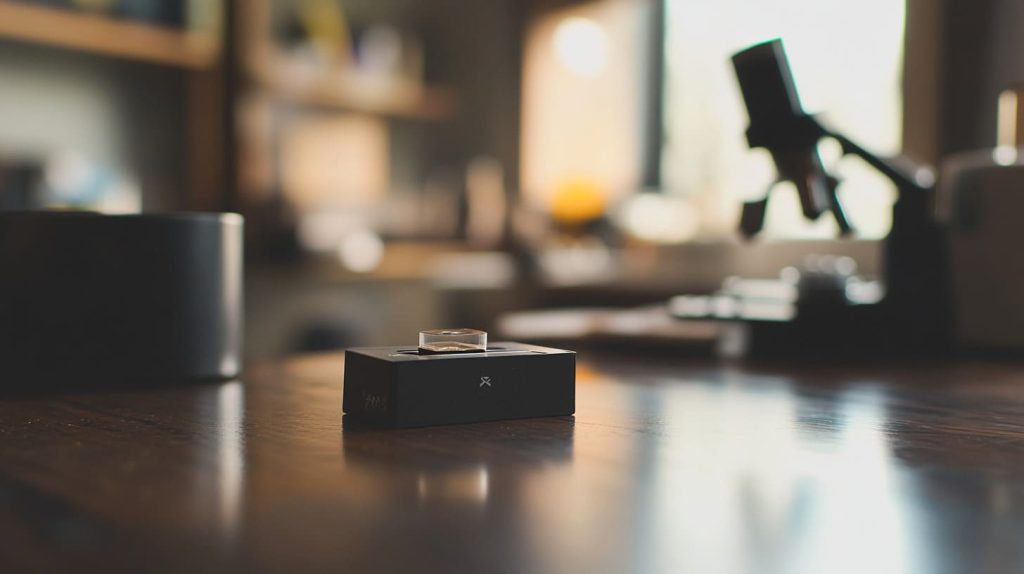
A team of Nairobi clinicians wanted a pocket tool to flag early‑stage ovarian tumors in remote clinics lacking labs. They trained a vision model to spot cell anomalies from smear images.
Hardware + Software Stack (Pi 5, Edge AI
| Component | Role |
|---|---|
| Pi 5 + 8 GB RAM | Compute + camera input |
| Coral TPU | Fast inference |
| 12 MP camera | Microscopy capture |
| 3‑D‑printed shell | Dust‑proof field case |
Accuracy, Field‑Test Results & Clinical Potential
Early trials on 300 samples hit 91 % sensitivity. Nurses processed slides on a folding table under a mango tree. They mailed only red‑flagged samples to the city, slashing delays.
Why It Scores High on the Surprise Scale
Cancer screening once demanded lab giants. Now a lunch‑box‑sized kit does triage before the coffee cools.
Curious how far Pi can stretch in zero‑G? Hang on.
Candidate #2 — Astro Pi: Running Code Aboard the ISS
Mission Background & Education Roots
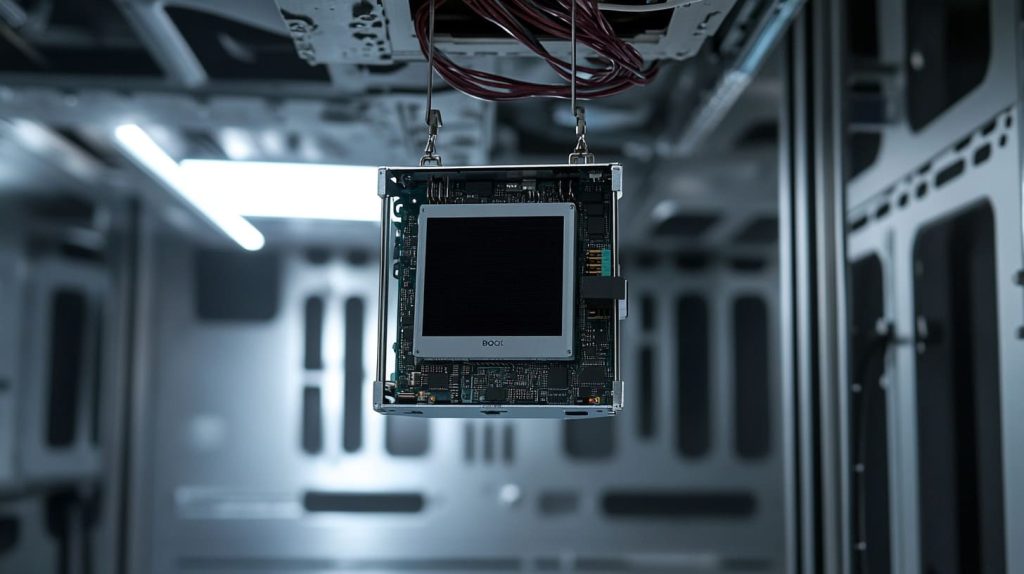
ESA and the Raspberry Pi Foundation invited students to script experiments for astronauts. Two ruggedized Pis have orbited Earth since 2015.
Modified Hardware: Sense HAT, Radiation Shielding, Cameras
Extra shielding protects memory from charged particles. The Sense HAT reads humidity, gyro, and cosmic‑ray hits while wide‑angle cams film Earth’s limb.
Student‑Designed Experiments & Scientific Findings
Teenagers measured mold growth, mapped magnetic fields, and snapped aurora time‑laps. One code block even tracked the crew’s carbon dioxide footprint in real time.
Unexpected Insights from Low‑Cost Hardware in Space
The mission proved schools can run real science 400 km up for lunch‑money budgets.
If space feels too distant, the next candidate dives underwater with equal daring.
Candidate #3 — Open‑Source Emergency Ventilator
Pandemic‑Driven Need & Design Brief
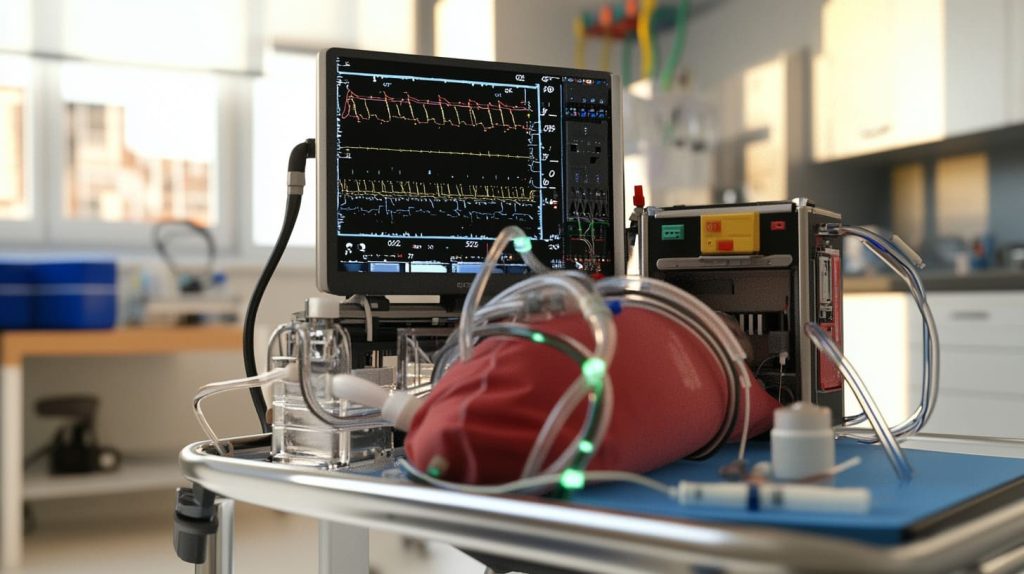
March 2020. ICU vents were scarce. An open team raced to build a manual‑bag compressor with closed‑loop pressure control driven by Pi 4.
Mechanical Design, Control Logic & Safety Loops
Stepper motors squeezed the bag. The Pi read airway pressure 100 times a second, adjusting flow to prevent barotrauma.
Regulatory Hurdles & Real‑World Trials
Passing ISO‑80601 was harder than engineering. Prototypes aided trials in Peru when commercial units stalled at customs.
Lessons Learned for Critical‑Care Devices
Open hardware shines, yet medical approvals demand time. The Pi enabled speed; paperwork set the real pace.
Next, salt spray and coral polyps replace hospital walls.
Candidate #4 — Coral‑Reef Guardian Buoy
Monitoring Bleaching in Remote Reefs
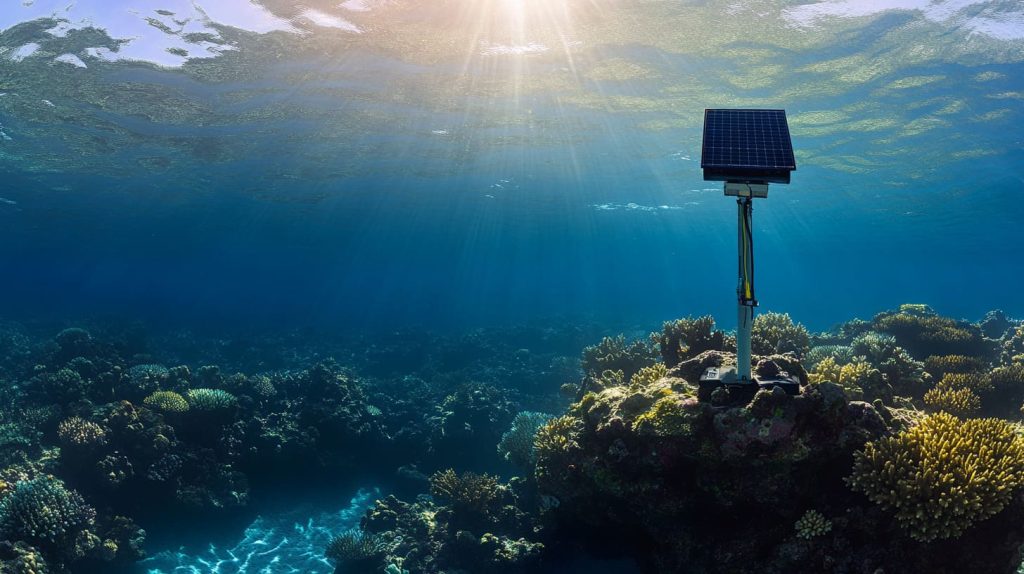
Marine biologists anchored solar buoys off Indonesia. Each Pi samples water temp, pH, and light, pushing hourly packets ashore.
Solar‑Powered Pi, Underwater Sensors & LoRa Uplink
Long‑range LoRa cuts through sea mist to relay 10 km to the nearest island gateway. Panels charge lithium packs during calm seas.
Data Visualization & Conservation Impact
A public dashboard flashes red when temps spike above 30 °C, alerting dive teams to shade coral with floating screens.
Why Marine Scientists Chose a Pi
They needed fanless, low‑draw hardware that reboots itself after lightning hits—job description written for Pi.
Buzzing away from salt to honey, our final nominee hums in a field of flowers.
Candidate #5 — Autonomous Beehive Health Monitor
Hive‑Embedded Sensors: Temp, Humidity, Acoustics
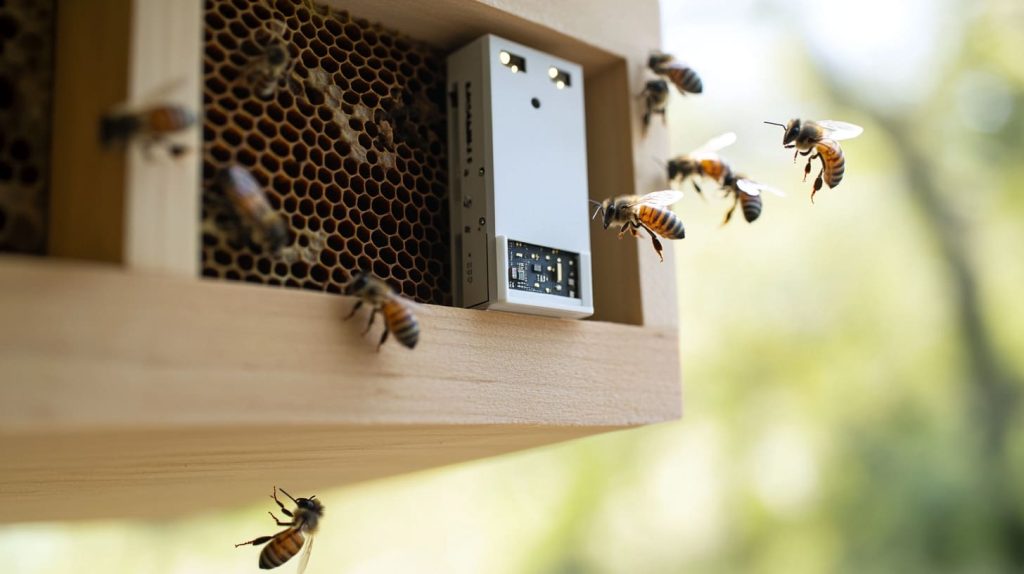
A Pi Zero 2 slides into a cedar box. Tiny mics listen for wingbeat patterns that hint at swarming. Thermistors warn if brood warms too fast.
Edge Analytics & Early‑Warning Alerts for Farmers
When buzz pitch shifts, the board texts keepers to split the hive before bees abscond. Data stays local, saving bandwidth.
Field Deployment & Sustainability Benefits
Trials across 50 hives in Belgium cut colony loss by 18 %—small board, big honey.
Commercialization Prospects
Startup preorders attach the Pi to modular frames, offering subscription dashboards for co‑ops.
We’ve met five daring builds. Let’s grade them side by side.
Comparative Evaluation
Scoring Matrix: Originality | Social Impact | Technical Feat
| Candidate | Originality (10) | Impact (10) | Technical Feat (10) | Total |
|---|---|---|---|---|
| AI Cancer Classifier | 8 | 9 | 8 | 25 |
| Astro Pi | 7 | 8 | 9 | 24 |
| Open‑Source Ventilator | 9 | 9 | 7 | 25 |
| Coral‑Reef Guardian | 8 | 8 | 7 | 23 |
| Autonomous Beehive Monitor | 7 | 7 | 6 | 20 |
Strengths & Weaknesses of Each Candidate
Cancer kit wins portability; ventilator faces red‑tape drag; space project dazzles in PR yet scores lower in direct life impact.
Crowd‑Sourced Opinions from Maker Forums & Press Coverage
Hackaday threads cheer the ventilator’s open files. Reddit r/biology loves the reef buoys. Astro Pi trends on TikTok every eclipse season.
A tight race begs for a tiebreaker—let’s crown a champ.
And the Winner Is…
Rationale for the Final Pick in 2025
I lean toward the Portable AI Ovarian‑Cancer Classifier. Lives saved, cost slashed, and a build anyone with a 3‑D printer can clone. The ventilator ties on points, yet cancer care in low‑resource clinics sways my gut.
Key Takeaways from the Champion Project
- AI plus optics fits inside hand luggage.
- Edge inference avoids patchy internet.
- Doctors applaud tools replacing week‑long waits with on‑the‑spot answers.
Victory declared, let’s shift from labs to loading docks—where my factory steps in.
Business Takeaways for B2B Buyers & ODM/ OEM Teams
Inspiration for Custom Enclosures & Branding
Clear acrylic shells invite hospital sterilization; matte ABS hides field scratches. MaidaTech mills both, embosses logos, and stamps sterilization dates so distributors like Davide stay audit‑ready.
Compliance, Certification & Supply‑Chain Considerations
Medical gear craves ISO 13485 plastics, reef buoys need IP68 casings. We track resin batches and share REACH reports before you ask—one email, PDF lands by breakfast.
Path from Prototype to Scalable Product
We scale from 50 pilot units to 5 000 with three SMT lines humming. Lead time holds at 21 days because we stock Pi‑friendly standoffs, vents, and gasket sets.
How MaidaTech Supports Similar Edge‑Device Projects
ODM clients like Lasle sketch on napkins; we turn sketches into STEP files, CNC molds, and pallets of ready‑to‑sell kits. Your idea, our tooling—no drama about minimums.
A last sip of coffee and we wrap things up.
Conclusion
Unexpected Pi builds remind me that creativity often hides in plain sight, waiting for a simple board, a good lens, or a sun‑bleached buoy to bring it to life. If a mango‑tree clinic can diagnose cancer, what could you build next?