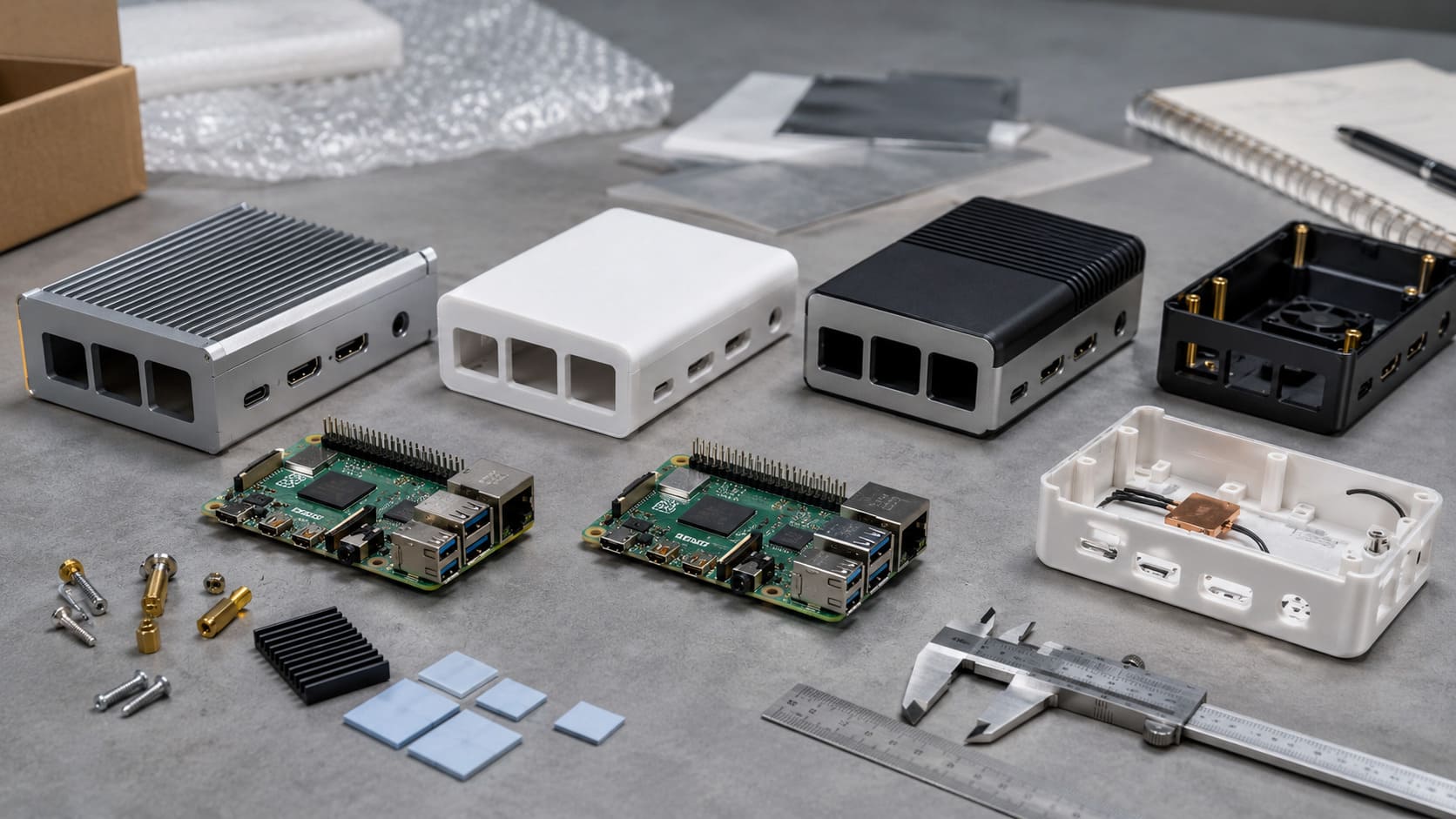
Engineers are constantly asked to do more with less—less space, less power, less budget. In that kind of world, the Raspberry Pi feels like a natural fit. Not because it’s perfect, but because it’s flexible. It doesn’t demand a commitment up front. You plug it in, test your idea, and it either works or it doesn’t. And if it doesn’t, you haven’t blown your whole quarterly budget.
Engineers’ evolving toolkit: where Raspberry Pi fits in
Traditional controllers still rule heavy industry, yet more engineers now mix them with single-board computers. A Pi slips into that gap between costly industrial PCs and fragile hobby boards. It bridges fast prototyping and reliable field use.
Snapshot of current Pi models & specs that matter to engineers
Below is a quick look at what each board brings to the bench.
| Model | CPU / RAM | GPIO Pins | Typical Power Draw | Key Perks |
|---|---|---|---|---|
| Pi 5 | 2.4 GHz quad, up to 8 GB | 40 | 5 W idle | PCIe 2.0 lane, RP1 I/O |
| Pi 4 | 1.5 GHz quad, up to 8 GB | 40 | 3 W idle | Dual 4K HDMI, USB 3.0 |
| Pi 3B+ | 1.4 GHz quad, 1 GB | 40 | 2.5 W idle | On-board Wi-Fi/BT, PoE hat |
| CM4 | Same as Pi 4 | Up to 5 custom I/O banks | 2–6 W | Card-edge for custom carrier |
Specs shift with firmware; check raspberrypi.com for the latest.
A board this small can replace shelf-size gear, yet it costs less than a decent caliper.
Next, let’s see why that price tag is only part of the story…
Why Engineers Choose Raspberry Pi

Cost-efficiency vs. traditional industrial PCs
A fanless x86 IPC often starts at USD 500. A Pi 5 board is one-tenth of that. Add a quality case, SD card, and power brick, and you still spend less than a single DIN-rail module. For budget-squeezed teams, this math unlocks more prototypes per quarter.
Compact form factor & ultra-low power draw
Bench space is gold. A Pi hides under a panel, sips 5 W, and runs from a USB power bank during field tests. I once taped one inside a wind-tunnel model—no extra cabling, no blown fuses.
Rich I/O, GPIO, and HAT ecosystem for rapid prototyping
Need RS-485 today and SPI tomorrow? Swap hats. Over 150 verified hats cover CAN, PoE, relay arrays, cellular modems, even spectrometers. That modular stack beats re-spinning custom PCBs every change request.
Massive open-source community & software library support
Someone, somewhere, has already solved 80 % of your driver issues. Forums, GitHub, and docs mean less time on hold with vendors and more time shipping code.
Every advantage above sparks fresh project ideas. Let’s dive into the ones I meet most often on the shop floor…
Core Engineering Applications
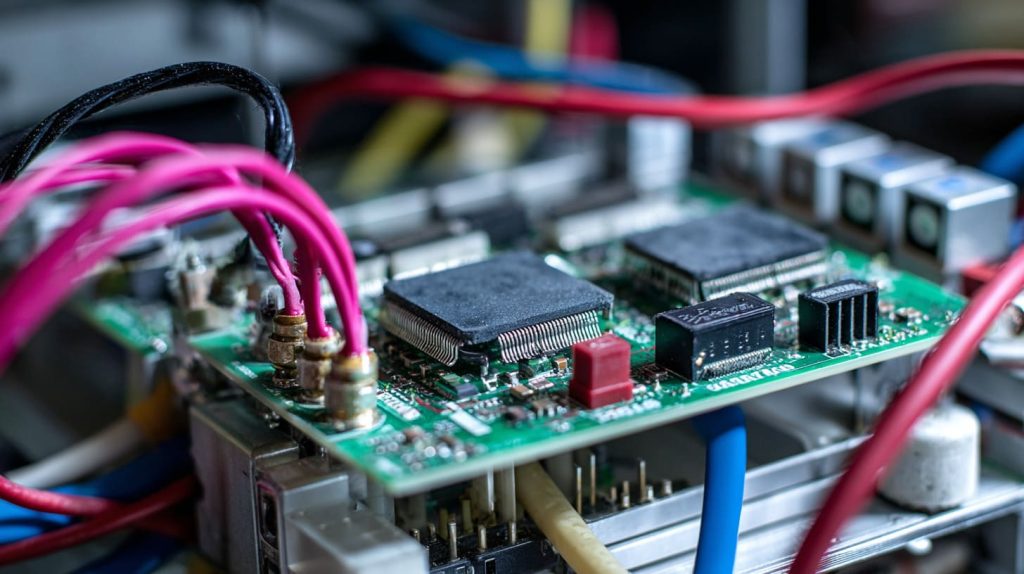
Embedded control systems & real-time automation
Pair a Pi with a PREEMPT-RT kernel or Xenomai patch. I used this combo to close a 5 ms loop on a conveyor sorter—tight enough for carton detection without expensive PLC cards.
Data acquisition, logging, and environmental monitoring
Attach an ADS1115 ADC and a rugged enclosure. Now you have a remote datalogger for temperature, vibration, or pH that emails CSVs every night.
Industrial IoT gateways & edge computing nodes
OPC UA on the southbound side, MQTT on the northbound. One Pi ties legacy machines to Azure or AWS without ripping out old SCADA.
AI/ML inference at the edge with Pi 5 & accelerator hats
The Coral TPU hat pushes 4 TOPS. I’ve run defect-detection CNNs in real time on a Pi-powered vision station sitting next to the pick-and-place line.
Test benches, instrumentation, and hardware-in-the-loop setups
Simulate sensors in-loop while the rest of the system remains physical. Cut firmware bugs before the prototype PCB arrives.
Secure networking, firewalls, and VPN appliances
Pi as a WireGuard gateway keeps remote sites safe. Add an enterprise-grade SD-card mirroring script and uptime rivals small routers.
Robotics, mechatronics, and motion control projects
Four-axis stepper control with a Pi and a hat costs less than a single motion card. Perfect for lab scribes, XY plotters, or small AGVs.
Different fields harness these ideas in unique ways. Let’s break it down by discipline…
Use Cases by Engineering Discipline

Electrical & electronics engineering: signal processing, power management
- Real example: I mounted a Pi 4 with an MCP3008 ADC to digitize mains ripple during PSU burn-in. FFTs in Python helped us spot a faulty batch in hours, not days.
Mechanical & mechatronics: actuator control, condition monitoring
A Pi-hosted Grafana dashboard plots bearing vibration. Maintenance techs walk by, scan a QR code, and pull trend data on their phones.
Civil & environmental: structural health & pollution sensing platforms
Low-power Pi Zero pairs with LoRa to push bridge strain data every ten minutes. Replace the battery once a year—cheap insurance against micro-cracks.
Chemical & process: PID controllers & lab automation
Two temperature probes, one solid-state relay, and a Pi drove my ethanol reflux column within ±0.2 °C. No LabVIEW license needed.
Software & DevOps: CI/CD runners, containerized micro-services
A Pi swarm compiles ARM firmware and runs integration tests in Docker. When a build dies, I yank the SD card, re-flash, and we’re back.
Prototyping is fun, but production is where budgets live or die. So, how do we bridge that gap?
From Prototype to Production

Compute Module & industrial-grade Pi variants
The CM4 drops into a custom carrier with locked connectors and onboard eMMC. Vendors like Techbase add conformal coating and -40 °C tolerance.
Custom enclosures, heatsinks, and power design best practices
At MaidaTech, we mill aluminum cases that pull 6 °C off the SoC under 100 % load. Add a wide-range DC input and Sudden Power Loss (SPL) circuit, and the board survives forklift spikes.
EMC, reliability, and environmental hardening considerations
Shielded cables, ferrite beads, and grounded standoffs push CE compliance from “maybe” to “yes.” A burn-in chamber at 60 °C weeds out marginal SD cards.
Certification paths (CE, FCC) for Pi-based products
- Pre-scan in a 3 m chamber
- Tweak enclosure seams, rerun
- File docs under Radio Labelling Directive
Total time: four weeks if paperwork is tight.
Once certified, the Pi has to live inside bigger workflows. Let’s connect the dots…
Integrating Raspberry Pi into Professional Workflows
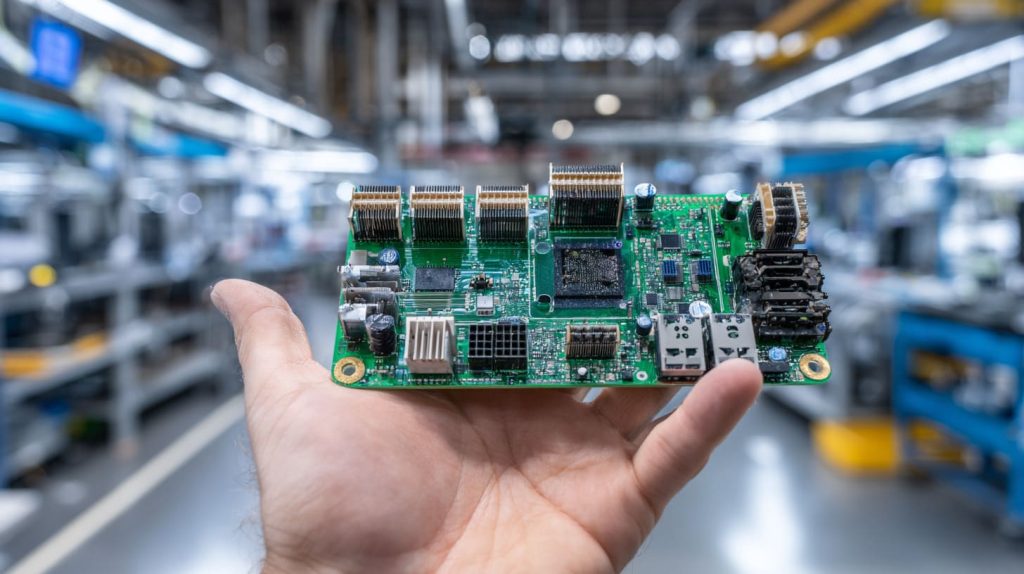
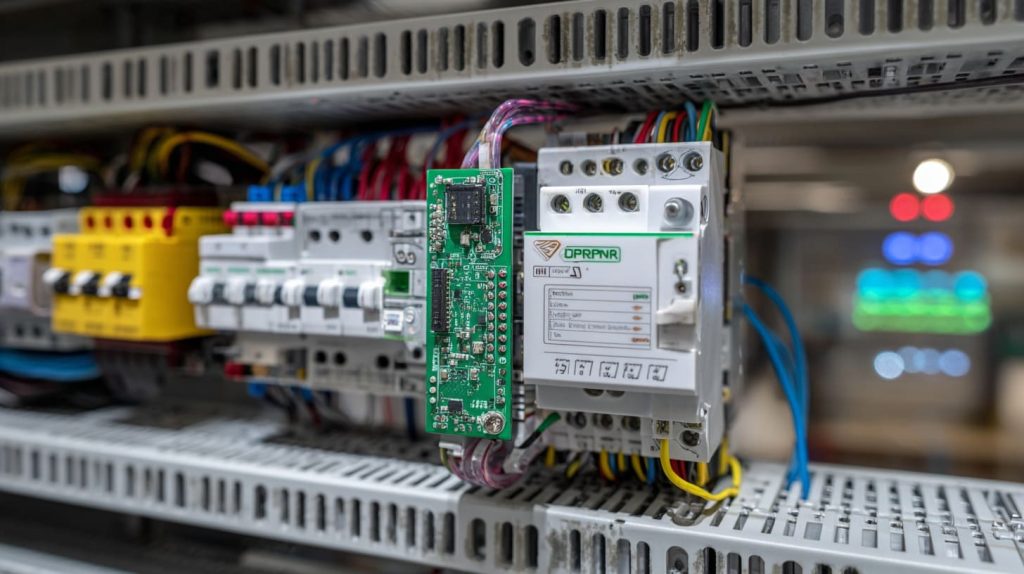
Interfacing with sensors, PLCs, and SCADA systems
Modbus-TCP acts as the lingua franca here. One Python library pulls coil values, another writes them to InfluxDB.
Cloud connectivity, data pipelines, and MQTT/OPC UA
A dual-queue—local SQLite plus MQTT—keeps logs alive when the WAN blinks. I learned this after a storm took down fiber at our Dongguan plant.
Remote firmware updates, fleet management, and version control
BalenaCloud or Ansible handles over-the-air pushes. Rollbacks take one click; the board boots the last known-good partition.
Open-source EDA & CI toolchains for hardware-software co-design
KiCad, GitLab, and Docker. Designers commit board files; CI scripts spit out gerbers and BOMs you can quote by end of day.
Efficiency is great, but finance signs the PO. Let’s talk numbers…
Cost–Benefit Analysis for B2B Buyers
| Item | Qty | Unit Cost (USD) | Extended | Notes |
|---|---|---|---|---|
| Pi 5 8 GB | 1 | 80 | 80 | Retail box |
| Custom MaidaTech case | 1 | 9 | 9 | Branded, anodized |
| 5 V/3 A PSU | 1 | 4 | 4 | UL listed |
| Assembly & QC | 1 | 3 | 3 | Line labor |
| Subtotal | 96 |
Bulk tier drops Pi board cost by 12 %. An x86 IPC with similar IO costs ~ 450 USD.
Scaling production: OEM/ODM perspectives and lead-time planning
- MoQ: 500 units per carrier board revision
- Lead time: 5-7 weeks PCB fab + assembly
- Buffer: 10 % spares for DOA swap
Case study: Davide’s private-label smart enclosures
Davide orders 2 k kits quarterly, each laser-etched with his logo and ready for Amazon FBA. His margin sits at 28 % after fees.
Case study: Lasle’s project-specific Pi redesign journey
Lasle’s team baked the CM4 into a custom smart-lighting hub. Early Pi prototypes shaved three months off project time, letting them beat a European competitor to market.
Margins survive only if pitfalls stay small. What can trip us up?
Challenges and Mitigations
Supply-chain volatility & alternative sourcing strategies
Keep dual suppliers for boards and SD cards. I reserve 20 % extra stock in Dongguan when global Pi supply tightens.
Thermal management, power integrity, and uptime assurance
Passive sinks plus heat spreader pads cut throttling. A cheap INA219 monitors current and flags brownouts before they kill data.
Security hardening for industrial deployments
- Disable password login; use SSH keys
- Move services off default ports
- Apply unattended-upgrades nightly
Longevity, obsolescence planning, and migration paths
Pi Foundation promises at least eight years of availability per model. Start software abstraction early so a Pi 6 swap needs only a new Docker image.
Which brings us to a final checkpoint before you order that first carton…
Conclusion
Key takeaways and actionable next steps for engineers
A Raspberry Pi sits at the crossroads of affordability, flexibility, and community support. Map your IO needs, pick a board, prototype fast, and plan for production from day one.
When a Raspberry Pi is not the right choice
If you need hard real-time < 1 ms, multi-gig RAM, or secure SIL-rated safety loops, stick with a certified PLC or industrial PC.
Future trends: Pi 6, RISC-V SBCs, and expanding industrial adoption
Rumors of an M.2 slot and RISC-V variants hint at broader horizons. I’m already sketching case drafts in the MaidaTech lab—ready for whatever engineers like you build next.