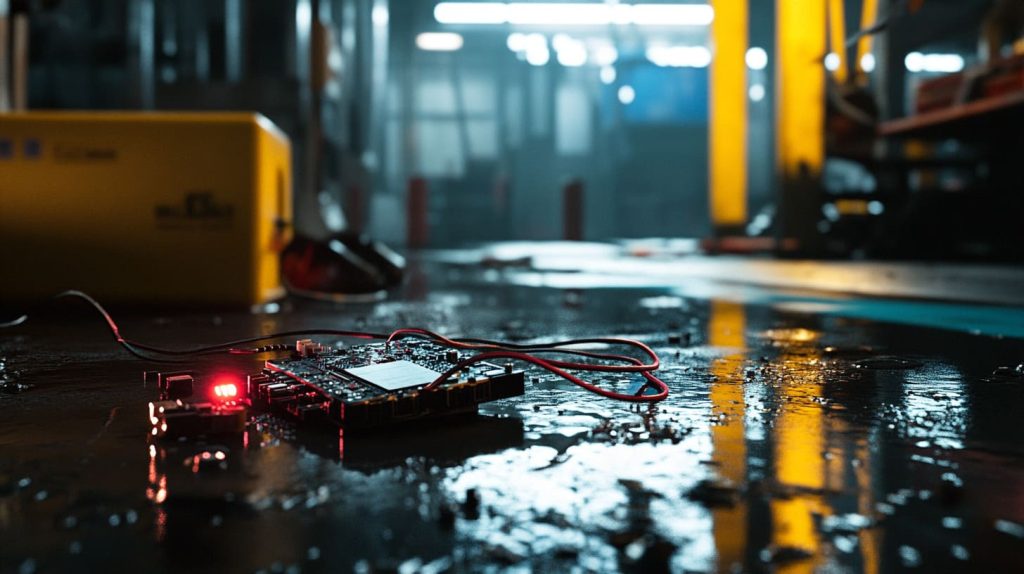
Six years ago a summer typhoon knocked out the power in Dongguan just as I was debugging a sensor rig. The factory floor went dark, but a lone Raspberry Pi running on a power‑bank kept streaming temperature data to my phone. That tiny green board reminded me that great tools don’t need large price tags—they need grit, ports, and a global army of makers who refuse to accept “impossible.” In 2025 that stubborn spirit still drives the Pi’s place in the Internet of Things (IoT).
Before we dive into specs and silicon, let me set the scene. IoT projects usually fall into five buckets—smart homes, industrial control, environmental sensing, edge AI, and fast prototyping. Each bucket trades money for insight, automates dull work, and, if done right, pays back in months, not years.
I’ll show you where the Pi shines, where it stumbles, and how folks like Davide and Lasle build real businesses on top of it. Ready? Let’s pull the first thread and see what unravels.
I promise the next section won’t read like a datasheet—but we do need to talk about why the Pi is such a good fit.
Why Raspberry Pi Fits IoT Projects

Low Cost & Accessibility
I buy Pi Zero 2 W boards for less than the price of lunch in Shenzhen. That cost ceiling means we can scatter sensors like confetti without checking the CFO’s pulse. Low stakes open doors for classroom demos, guerrilla trials, and risky “what‑if” experiments.
Critical lens: Cheap is good, but it tempts teams to skip documentation or security. I’ve seen fleets of bargain boards turn into silent liabilities because no one budgeted for maintenance. Affordability is a launchpad, not a parachute.
Rich GPIO / Interface Support
Forty pins might look modest until you hook up relays, I²C soil sensors, and a UART‑based GPS—all on one header. Throw in SPI, CSI, and a half‑dozen USB ports on bigger models and you get Lego for electrons.
Critique: GPIO bliss fades when real‑time deadlines appear. Bit‑banging a high‑speed bus on Linux feels like tap‑dancing in hiking boots.
Vibrant Community & Software Ecosystem
If you can type a question into Google, someone has wrestled with that exact issue—probably yesterday. From Python libraries to 3D‑printable cases, the communal toolbox grows faster than any single vendor can manage.
Flip side: Community code ranges from brilliant to brittle. Always audit; always pin versions; always test twice. Free wisdom should still earn its keep.
Thirty dollars, forty pins, and a million brains—that is why the Pi refuses to fade. Now let’s see where all that potential actually lands in the real world.
Popular IoT Application Areas

| Use‑Case | Typical Pi Model | Payoff Window | Stand‑Out Risk |
|---|---|---|---|
| Smart Home Hub | Pi 4 B | 3–6 months | Firmware sprawl |
| Industrial PLC Shadow | Compute Module 4 | 6–12 months | Electromagnetic noise |
| Field Weather Station | Pi Zero 2 W | 9 months | Power stability |
| Edge‑AI Camera | Pi 5 + TPU | 4–8 months | Thermal throttling |
| STEM Classroom Kit | Pi Zero 2 W | Immediate | Device loss |
Smart Home & Automation
My own apartment lights dim when Shenzhen’s humidity climbs above 80 %. A Pi 4 speaks MQTT, nudges a dehumidifier relay, and logs data to InfluxDB. The magic isn’t brightness—it’s control, my control.
Industrial Monitoring & Control
A Belgian brewery I support uses CM4 boards to log keg pressure every two seconds. They saved €12 000 last year by flagging leaks in hours, not days. Of course, stainless‑steel tanks don’t forgive loose cables—industrial cases and PoE hats are non‑negotiable.
Environmental & Agricultural Sensing
Rice paddies in Guangxi drown sensors fast. We coat Pis with acrylic conformal spray, pipe data over LoRa, and wake the board only when sunlight tops 200 lx. Battery life jumps from two weeks to four months.
Edge AI & Computer Vision Nodes
Edge means no cloud bills and no extra privacy paperwork. One Lasle prototype counts forklifts using a Pi 5, a Coral USB, and OpenCV. Forklift traffic falls 18 % after the first month—workers respond to live dashboards faster than to memos.
Education & Rapid Prototyping Platforms
I run weekend workshops where kids build a voice‑controlled fan in two hours. They leave with solder smoke in their hair and a sense that code can move plastic. That feeling sticks.
Enough theory—choosing the right board matters just as much as choosing to start at all.
Selecting the Right Raspberry Pi Model

Pi Zero 2 W vs. Pi 4 Model B vs. Pi 5 vs. Compute Module 4
| Feature | Zero 2 W | Pi 4 B | Pi 5 | CM4 |
|---|---|---|---|---|
| CPU | 4× 1 GHz | 4× 1.5 GHz | 4× 2.4 GHz | 4× 1.5 GHz |
| RAM | 512 MB | up to 8 GB | up to 8 GB | 1–8 GB |
| Ethernet | None | GbE | 2.5 GbE | GbE (optional) |
| Size | 65 × 30 mm | 85 × 56 mm | 88 × 56 mm | 55 × 40 mm |
| Price | $15 | $35+ | $60 | $25+ |
Matrix Takeaway:
-
Zero 2 W—perfect for battery nodes.
-
Pi 4 B—general powerhouse.
-
Pi 5—edge AI star; needs real cooling.
-
CM4—OEM dream; carrier‑board freedom.
Cost, heat, and IO often trump raw gigahertz. I once swapped a Pi 5 for a Zero 2 W in a freezer monitor because the latter didn’t cook itself.
Model sorted? Good. Let’s shop for the things that actually touch the physical world.
Required Hardware Components
Sensors & Actuators (Temperature, Motion, Relay, etc.)
Start with sealed DS18B20 probes; they survive soup, snow, and slip rings. Cheap relays click fine in a demo, but solid‑state relays laugh at vibration. Trade dollars for uptime wisely.
HATs & Expansion Boards (PoE, LoRa, Motor Drivers)
PoE HATs cut wall‑wart clutter in offices. For farmland, I favor LoRa concentrators—15 km range on a clear morning still feels like magic.
Enclosures, Heatsinks & Reliable Power Supplies
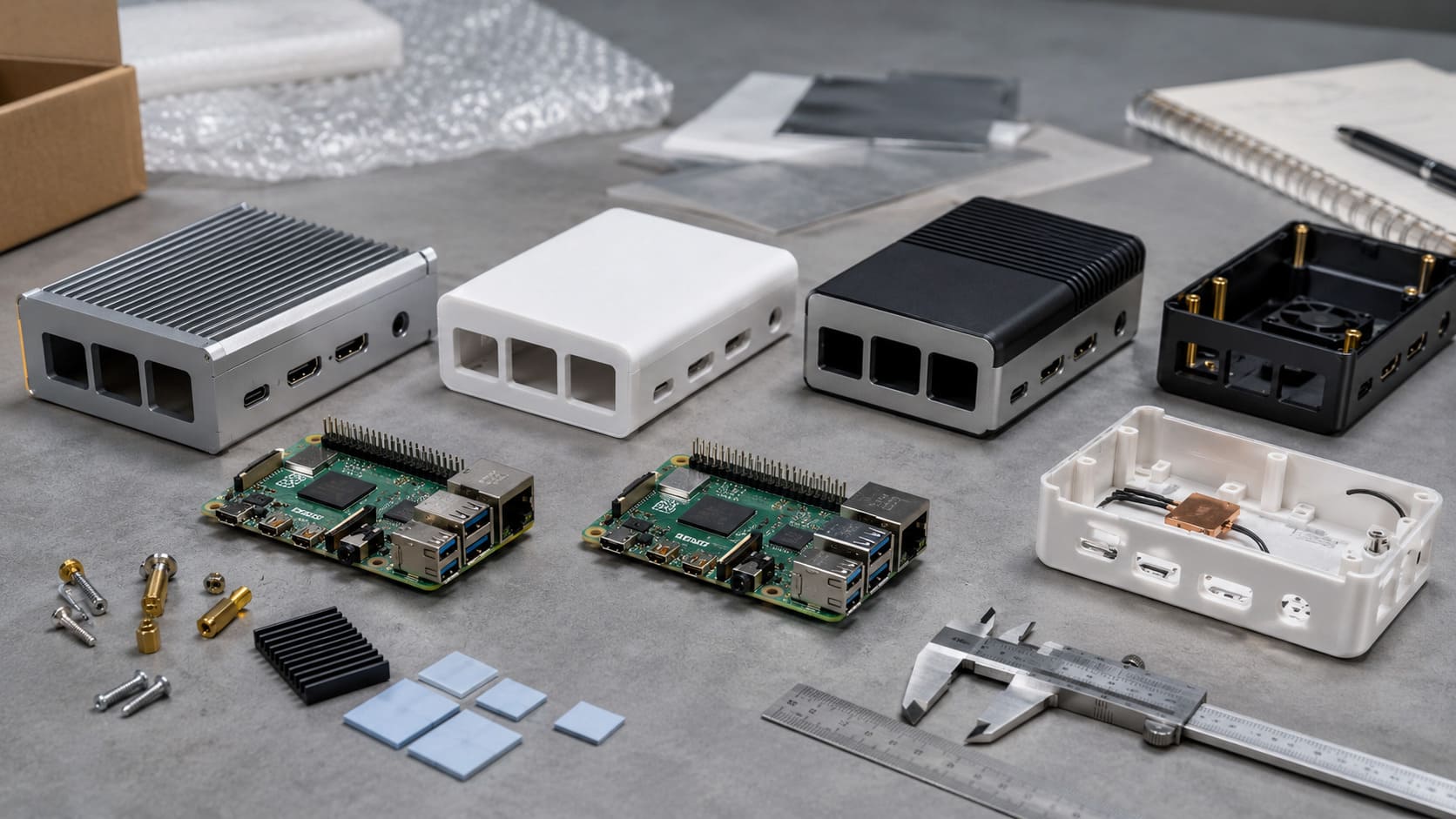
Acrylic looks sharp on a desk; aluminum works on a forklift. And never—never—ship a Pi without a branded 5 V 3 A supply. Brownouts breed ghosts.
That hardware shopping list sets the stage. Now we need the right bits and bytes to drive it.
Software Stack & Operating Systems
Raspberry Pi OS Lite for General‑Purpose Projects
I flash Lite when I need ssh in five minutes and nothing fancy. Apt‑gets stay small, boots stay quick.
Ubuntu Core & Snap‑Based Deployments
Snaps feel heavy on day one, heavenly on day ninety when automatic rollbacks save field units from bad pushes.
Real‑Time & Industrial Linux Options (PREEMPT_RT, Yocto)
Hard deadlines? Patch the kernel. Yocto builds hurt heads but delight auditors who demand every license listed.
Packages ready? Time to wire the board to the outside world.
Connectivity Options
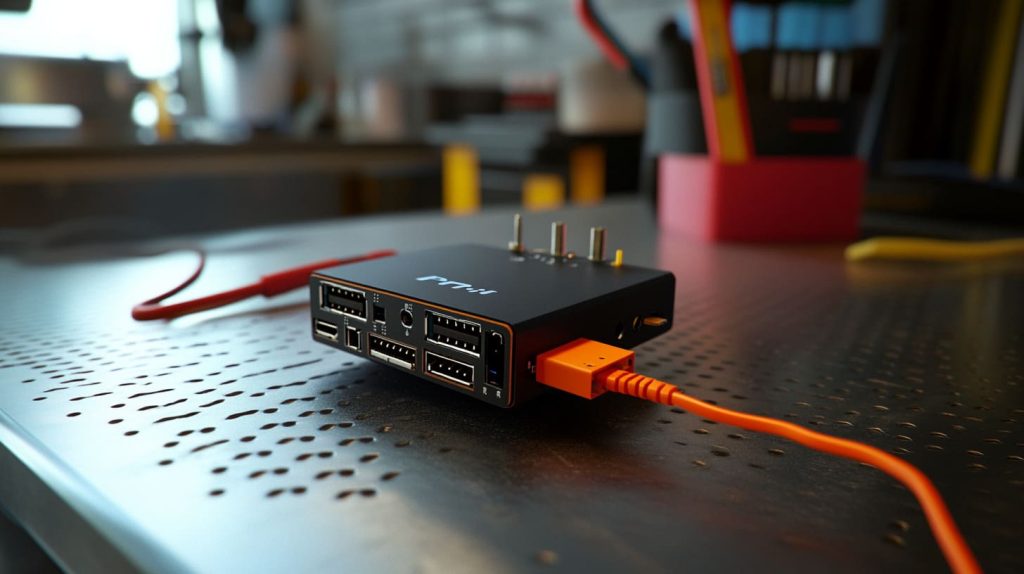
Wi‑Fi & Bluetooth LE Basics
Wi‑Fi is a given in offices, poison in metal sheds. BLE beacons sip power but hate concrete walls.
Wired Ethernet & Power‑over‑Ethernet
PoE lets one cable feed both electrons and packets. I’d pay double for that simplicity—and sometimes I do.
LPWAN Options (LoRa, NB‑IoT, LTE‑M)
LoRa gateways sleep like monks and shout like town criers. NB‑IoT fills gaps inside cities; LTE‑M rides existing cell towers.
Mesh & Short‑Range Protocols (Zigbee, Thread, Matter)
Mesh networks heal like lizard tails but watch packet overhead. Matter tries to end protocol wars—jury’s still out.
Every packet is a potential attack vector. Let’s lock the gate before thieves test the handle.
Security & Device Management
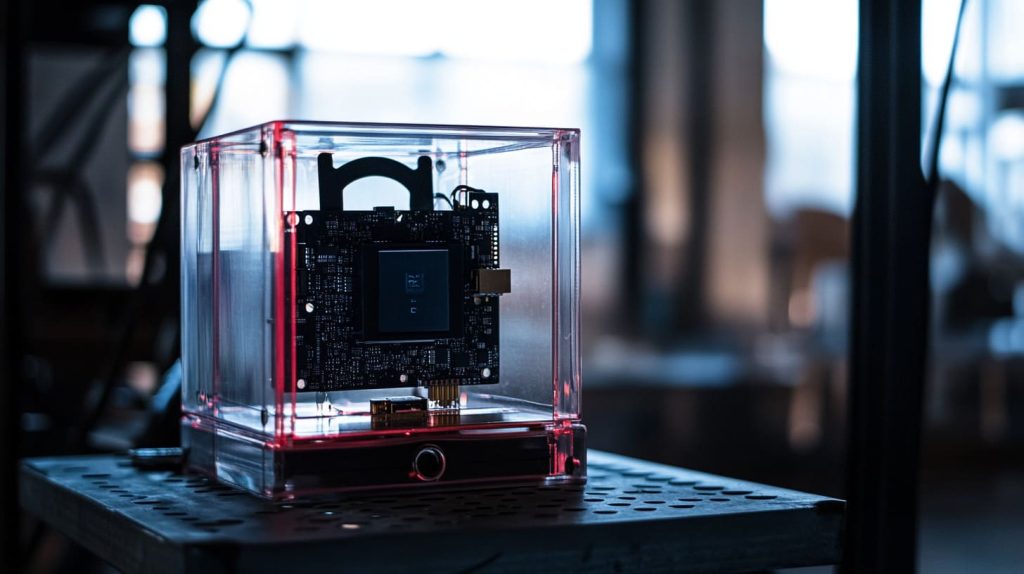
OS Hardening & Secure Boot
Change default passwords. Disable unused services. Yes, even on test rigs. I learned that after a student mined crypto on our demo wall.
Over‑the‑Air (OTA) Updates & Rollbacks
Balena pushes delta updates; a 5 MB patch beats a 1 GB image on shaky LTE. Keep an A/B partition in your back pocket.
Fleet Management Platforms (Balena, Ansible, Azure IoT Hub)
I script Ansible for in‑house gear and pay Azure when clients demand dashboards at 3 a.m. Both beat logging into 100 nodes by hand.
Security adds overhead, but downtime costs more. Next question: how do we keep the lights on when sunlight fades?
Power Management & Reliability

Battery & Solar‑Powered Deployments
A 10 W panel, a 6 Ah LiFePO₄ cell, and aggressive sleep cycles kept a hilltop LoRa repeater alive through typhoon season.
Watchdogs, Auto‑Recovery & Remote Reboot
Hardware watchdogs yank hung boards back to life. I set mine to 60 s; fear is a fine motivator.
Industrial‑Grade Considerations (‑40 °C to 85 °C, Conformal Coating)
Silicone‑based conformal coat costs cents, saves thousands when salt fog creeps in. And yes, I learned that the wet way.
Reliable power is half the battle. The other half is a workflow that respects humans and silicon alike.
Development Workflow & Best Practices

Rapid Prototyping with Python, MQTT & Node‑RED
Python reads like English; Node‑RED draws like Lego. I glue them with MQTT and ship proof‑of‑concepts before lunch.
CI/CD Pipelines for Embedded Projects (GitHub Actions, Jenkins)
Push once, test thrice. GitHub Actions cross‑compiles and runs pytest on a QEMU image. I sip tea while LEDs blink in the lab.
Testing & Debugging in Production (Logging, Telemetry, A/B)
Structured logs beat screenshots. Rate‑limit telemetry or watch LTE bills explode. A/B rollouts let 5 % of devices take the bullet first.
Process nailed? Then let’s talk money and real‑world wins.
Case Studies & Business Models
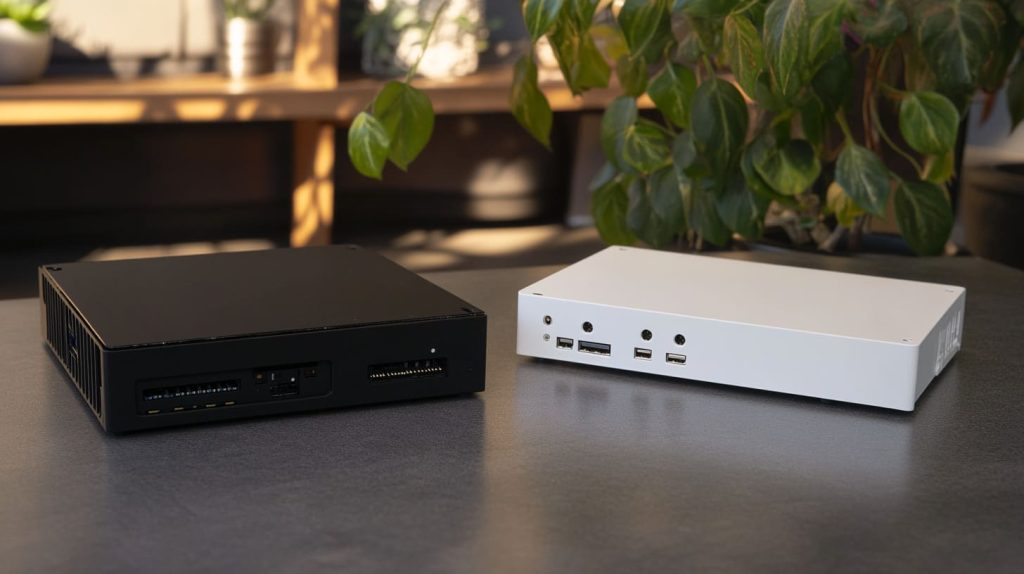
Re‑Brand Scenario (Davide): Private‑Label Smart Home Hub
Davide stamps his logo on a Pi 4 B in a matte‑black MaidaTech case. We flash Home Assistant, add Matter, and pre‑install 3 M of label tape. He sells on Amazon for a 40 % margin. Pain point solved: zero firmware flashing in his garage.
ODM Scenario (Lasle): Custom Industrial Sensor Gateway
Lasle sketches a DIN‑rail box that snaps onto a CM4 carrier with dual CAN bus. We mill the mold, add heat‑spreader fins, and leave extra GPIO for version 2. His cost drops 28 % vs. European suppliers.
Lessons from Large‑Scale Deployments (1000+ Nodes)
At scale, shipping eats silicon. We pre‑stage SD cards, run soak tests, and palletize by install wave. A single delayed screw can stall an entire roll‑out.
Bright stories aside, clouds still gather on the horizon.
Challenges & Limitations
Supply‑Chain Availability & Pricing Fluctuations
The 2023 chip crunch taught me to stock six months ahead. Spot prices turned polite inquiries into bidding wars.
Thermal Management & Performance Throttling
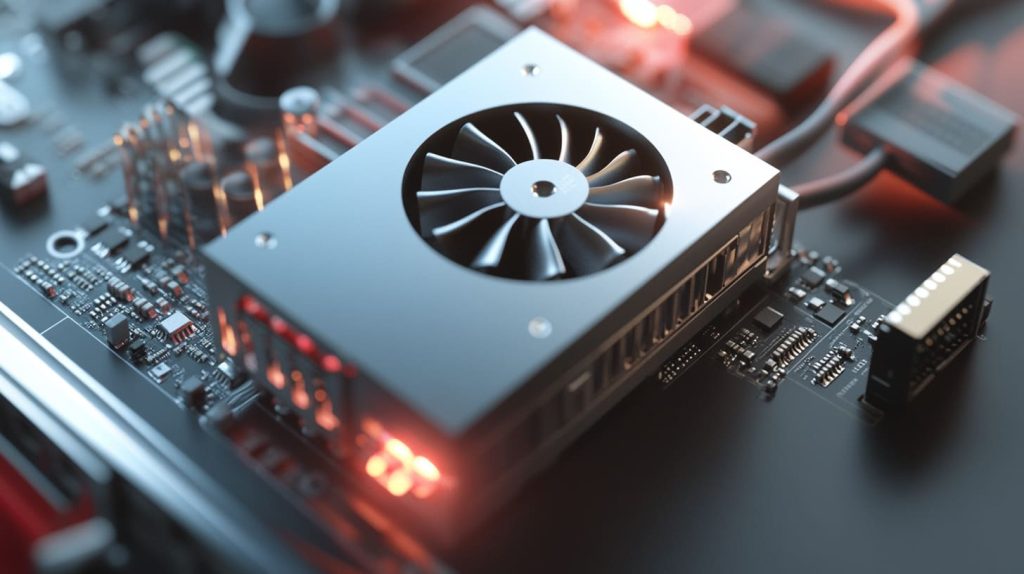
A Pi 5 will throttle under a plastic lid in July. Active fans or big heat sinks keep frame rates honest.
Real‑Time Constraints & Deterministic I/O
Linux is great until you need a 5 µs pulse. That’s why I offload tight loops to a microcontroller or FPGA.
Shortcomings mapped, let’s glance at fresh options waiting in the wings.
Alternatives & Future Trends

RP2040/Pico for Ultra‑Low‑Power Nodes
Two M0+ cores, no OS, sleep current in microamps. Perfect for battery buttons.
Emerging RISC‑V Single‑Board Computers
Open silicon promises transparency, but toolchains and driver support still lag a year behind.
AI Accelerators (Coral TPU, Hailo, NVIDIA Jetson Nano)
Edge AI needs watts and watts need cooling. I bolt Coral TPUs onto Pi 5 boards for license‑plate detection without banishing every frame to the cloud.
Now we stand at the crossroads of present capacity and future promise—time to wrap things up.
Conclusion
The Raspberry Pi stays relevant because it wears many hats without growing an ego. It scales from kitchen hack to thousand‑node fleet, provided you respect power, heat, and security. For re‑brand buyers like Davide, Pi 4 B plus a custom case equals a ready‑to‑ship product line. For ODM dreamers like Lasle, the CM4 unlocks near‑infinite form factors.
My advice? Start small, document everything, and buy extra SD cards. Iterate in weeks, not months. And if a typhoon knocks out the grid again, make sure your Pi blinks back first.