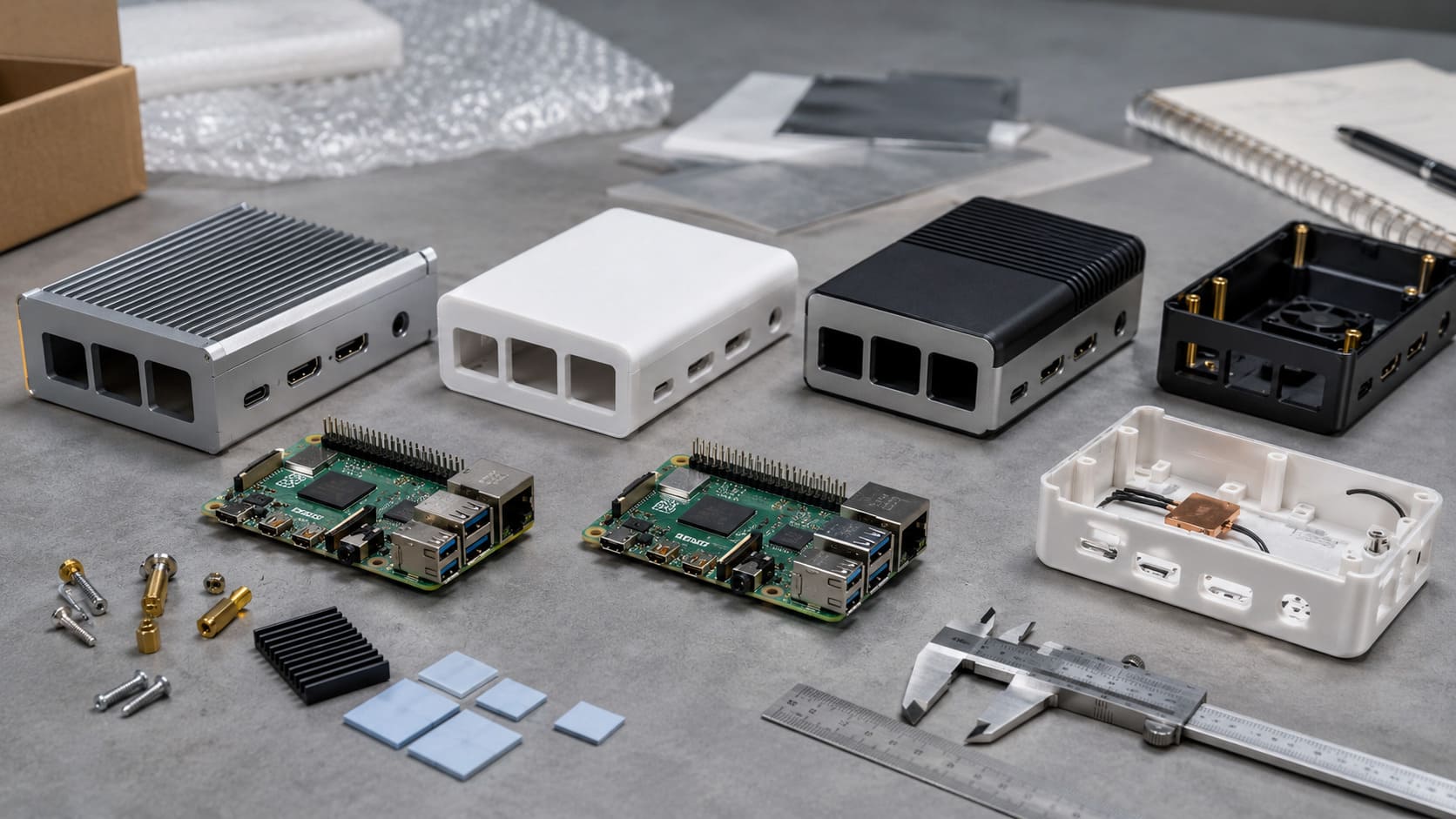
When I first encountered the Raspberry Pi. I was a curious college student, tinkering in my dorm room, excited by the prospect of turning a tiny computer into something that felt big and transformative. Years later, I run a factory in China—MaidaTech—where we specialize in custom Raspberry Pi cases. I’ve met entrepreneurs who use these boards to power retail kiosks, DIY security systems, and everything in between. Today, I want to share how commercial applications of Raspberry Pi work in real-world settings.
1. What Is Raspberry Pi and Why Use It Commercially?
I often describe the Raspberry Pi as a small yet powerful single-board computer. It can handle tasks like data processing and multimedia playback, which many of my factory clients require. From my perspective, it’s a strong candidate for commercial applications because it offers reliable performance without breaking the bank.
We must also be mindful that commercial means dealing with bulk orders, strict quality standards, and expectations for timely delivery. For instance, my Belgium-based friend Jacky often checks if Raspberry Pi boards can handle 24/7 operation for his retail kiosk projects. They usually can, but only with the right cooling and enclosure.
2. Benefits and Opportunities in Commercial Settings
I’ve seen many business owners switch to Raspberry Pi because it’s cost-effective. But it’s more than that. The ecosystem is massive, with plenty of community support. There are countless raspberry pi accessories that can be integrated to expand functionality in surprising ways.
One critical viewpoint is balancing innovation with practicality. Yes, the Raspberry Pi is budget-friendly, but can it scale for enterprise-level workloads? Sometimes yes, sometimes no. I’ve had local retailers find success with up to 50 units in operation. But I’ve also advised large overseas companies to test each Pi-based prototype thoroughly, especially if they want a robust networking solution.
3. Overview of Common Commercial Use Cases
Most requests I get revolve around digital signage, interactive terminals, data logging, and even automation controls. People love how they can customize the Pi to fit almost any scenario. However, a Pi is still a Pi—it isn’t a server rack. So we should always assess our needs carefully.
At this point, if you’re thinking of commercial uses like kiosk systems or small robotics, you’re right on track. If you’re trying to replace massive server infrastructure, that might need more scrutiny.
Let me share a quick table that highlights some popular use cases and the main considerations:
| Use Case | Key Considerations | Complexity Level |
|---|---|---|
| Digital Signage | Display resolution, OS stability | Medium |
| Retail Kiosks | Payment integration, enclosure security | High |
| Automation & IoT | GPIO expansion, real-time data | Medium |
| Education Programs | Ease of setup, cost per unit | Low |
I recall one of my big corporate clients who needed over 500 Pi boards for an in-house analytics project. They loved the scalability at first but realized they needed additional cooling solutions for constant data crunching. This taught me the importance of planning for hardware limitations right from the start.
We should now explore what commercial applications really mean in terms of requirements, so stay with me as we shift to the next section.
Understanding Commercial Requirements

When I chat with business owners—especially those venturing into bulk manufacturing or large-scale distribution—they often have one big question: How do I meet commercial standards without losing flexibility?
1. Identifying Core Business Needs
I believe the first step is understanding what you actually want from a Raspberry Pi project. Is it low power consumption? Is it fast deployment? In my experience, tackling these questions upfront saves time and money.
However, it’s not always straightforward. I had a Belgium client, Davide, who needed custom labeling on cases for an e-commerce project. His core need was strong branding, but he also wanted quick assembly. By asking the right questions—like “Are we focusing on aesthetics or functionality first?”—we avoided delays and costly redesigns.
2. Balancing Cost, Quality, and Time-to-Market
In commercial projects, cost, quality, and speed often butt heads. You can’t have it all without compromise. For instance, you might want a top-notch case design with customized etching, but that can lengthen lead times. Or you can choose a more generic enclosure, which speeds up mass production but sacrifices uniqueness.
From a critical standpoint, it’s about trade-offs. Sometimes, paying for premium materials is warranted—especially if product reliability is key. Other times, it’s better to meet a tight launch window at a slightly lower product spec. Always weigh these factors carefully.
3. Typical Client Profiles (Re-brand vs. ODM Perspectives)
I’ve learned that re-brand and ODM clients come with different mindsets:
| Client Type | Focus | Challenges |
|---|---|---|
| Re-brand | Logo printing, quick stock | Price sensitivity, brand image |
| ODM | Custom design, unique parts | Longer lead time, R&D cost |
Take Jacky for example: He often goes for re-branding. He just wants our factory to print his logo or engrave it. This approach is fast, but less customizable. On the other hand, my Hungary-based friend, lasle, is all about creative redesigns (ODM). He’s patient with prototypes and invests time in a final product that no one else has. Both approaches can be profitable, but they require different mindsets and planning steps.
If you’re unsure which approach fits you, think about your main audience and timeline. Re-branding gets you to market quickly. ODM is more disruptive but demands detailed R&D work.
Let me share another brief story: One of my earliest ODM clients wanted a Pi case shaped like a retro gaming console. The design was intricate, which meant multiple iterations and cost checks. But the final product stood out and earned them significant customer buzz.
We should now move to selecting the best Raspberry Pi model. This choice can make or break your commercial ambitions, so let’s keep going.
Choosing the Right Raspberry Pi Model

Deciding on the right model can be tricky. That’s why I always say: define your use case first, then match the hardware.
1. Raspberry Pi 4, Compute Module, and Other Variants
If you need more horsepower, the Pi 4 is a solid choice. It offers multiple RAM options, which is great for tasks like digital signage or data analytics. But for projects involving specialized expansions, I’ve seen some folks gravitate toward the Compute Module. It’s slimmer, modular, and fits more customized boards.
When comparing these options, consider both the required performance and your long-term goals. Some large orders might need standardization, so picking a single Pi variant might simplify supply chain logistics.
2. Performance, Memory, and Connectivity Considerations
In my factory, we’ve done stress tests on Pi 4 boards to confirm they can handle video streaming. The results were encouraging, but keep in mind they can generate heat under heavy loads. This is where a well-vented enclosure or a decent heatsink helps.
From a critical viewpoint, if you need consistent connectivity—like Ethernet or multiple USB ports—verify those ports can support your data flow. Make sure to factor in how your software might push hardware limits. For example, 4K video rendering could demand more from the board than a simple IoT sensor reading.
3. Scalability and Future-Proofing
Scalability matters for commercial plans. I’ve met entrepreneurs who start with just a few test units, then jump to a full production run. If you plan to scale, think about Pi availability, potential version upgrades, and even future expansions. Overlooking these details now can lead to major headaches later.
A good approach is to test your prototype thoroughly. That’s something I’ve learned after many production cycles. Always plan for extra ports or memory overhead if you suspect your project will grow. Don’t box yourself into a tight corner.
Let’s now talk about something I’m extremely passionate about: customizing Raspberry Pi cases to elevate branding and functionality.
Designing and Customizing Raspberry Pi Cases

Early in my factory career, I realized that a great enclosure can be the difference between a product that wows customers and one that just sits on a shelf.
1. Importance of Enclosure Design in Commercial Applications
An enclosure does more than protect your board. It communicates quality, brand identity, and sometimes even the product’s intended function. For commercial uses—like in retail displays—people notice if the case looks cheap or unprofessional.
One might argue that the Pi is the star. But I’ve seen how a sturdy, well-ventilated case can ensure the Pi runs at optimal performance. It’s a balance between form and function.
2. Material Selection and Heat Dissipation
Plastic, aluminum, or a hybrid approach? Each material has strengths and weaknesses. Plastic might be cheaper but can trap heat unless vented well. Aluminum dissipates heat effectively but can drive up costs.
I recall a time we experimented with a custom plastic blend for a client in Japan. They had concerns about heat because they planned on 24/7 operation in a warm environment. We added extra vents, and it worked out great. But we had to test multiple prototypes before finalizing.
3. Branding and Re-branding (Logo Printing and Engraving)
Re-branding is popular with many of my wholesale buyers. They send me their logo, and I either print or engrave it on the case. This can elevate the perception of their final product.
But from a critical angle, is branding enough? It depends on your market. If your customers value aesthetics and brand identity, yes. If they only care about performance, basic labeling might do the trick.
4. OEM & ODM Services for Unique Case Design
For those who want full creative control, we offer OEM and ODM. This means custom shapes, materials, and even custom packaging. It’s more time-intensive, but it can set your product apart.
One example is the sports-themed case a client requested for a promotional event. We molded the case to look like a miniature stadium. It was a hit, but we had to manage the extra engineering and assembly time. These unique projects can pay off, but always weigh the investment against potential returns.
Up next, we’ll look at how to ensure your product meets consistent quality standards, because no business wants a wave of defective units hitting the market.
Quality Control and Production Efficiency

I’ve had moments where I shipped a large batch of cases only to discover a tiny defect. Trust me, it’s an experience you want to avoid.
1. Testing Procedures and Certifications
I believe in thorough testing. For cases, we check everything from the mold’s precision to how well the final product fits the Raspberry Pi board. For the electronics (like power supplies), certifications such as CE or FCC can be crucial.
From a critical perspective, certifications are not just about legal compliance. They also build trust with your customers. However, each certification can add cost and time, so balance that against your market requirements.
2. Ensuring Consistent Quality for Large Batches
Manufacturing at scale can be tricky. Sometimes, the first 100 units are perfect, then the 101st is flawed. That’s why we have multiple quality checks. My production lines include automated and manual inspections. Automated checks catch major errors, while manual checks confirm details like branding or color consistency.
I recommend setting up quality checkpoints at every stage—molding, printing, assembly—to avoid last-minute surprises.
3. Partnering with Reliable Manufacturers and Suppliers
No factory is an island. I rely on partners for raw materials, and that relationship must be strong. It’s important to verify each supplier’s track record. Look for references, case studies, or even in-person audits.
But keep a watchful eye. Sometimes, a supplier that was reliable can slip up during a surge in orders. Regular communication and periodic quality reviews can keep everyone on track.
Now, let’s discuss the challenges of getting your product to market. Because even the best product won’t matter if it gets stuck in transit.
Managing Supply Chain and Logistics

When I think of supply chain, I think of the countless nights I spent worrying if shipments would arrive on time. Timely delivery is crucial in a competitive landscape.
1. Inventory Planning and Stock Management
It’s easy to overstock and tie up cash, or understock and miss deadlines. I try to maintain a just-in-time approach. But I also know that unexpected surges in demand—like a new product announcement—can throw off calculations.
A more detailed approach involves forecasting demand based on past sales or market trends. From a critical standpoint, no forecast is perfect. Have a backup plan, such as working with multiple suppliers or having a small buffer stock.
2. Shipping and Delivery: Avoiding Delays
Delays can cripple your business. I’ve dealt with customs backlogs, holiday rushes, and even port strikes. Having a reliable freight forwarder and transparent communication can help. If time is critical, consider air freight. If budget is a concern, sea shipping is cheaper but slower.
3. Effective Communication Across Different Time Zones
I’ve learned the hard way that time zone differences can stall projects. My approach is to schedule regular meetings with clients, even if it means stepping out late at night for a call. It builds trust and keeps everyone aligned.
From a critical angle, cultural differences can also impact communication. Some clients prefer formal updates, while others like an informal check-in. Adapting to these preferences shows respect and fosters long-term relationships.
Once your product is in hand, you’ll need software to run the show. Let’s see how software and system integration factor into commercial success.
Software and System Integration

Back when I started, I focused mostly on hardware. But as I worked with more clients, I realized that software can make or break a project.
1. Operating System Selection and Configuration
Raspberry Pi OS is common, but I’ve seen businesses choose Ubuntu or specialized Linux distros. The choice depends on familiarity, available software, and performance needs.
Think critically: does your software team have experience with a specific OS? That alone can drive your decision. Switching mid-project can be time-consuming.
2. Application Development and Integration
Sometimes, a custom app is needed to handle real-time data, payment gateways, or user interfaces. If you’re not a coder, consider hiring a developer or using a reliable agency.
I’ve seen too many attempts at in-house development that stalled because the team was unfamiliar with Pi-specific libraries. However, a good developer can weave everything together smoothly.
3. Maintenance and Remote Management
Once deployed, how do you maintain your Pi-based systems? Remote updates, monitoring tools, and secure connections matter a lot. If you plan large-scale deployments (like in multiple retail stores), a remote management solution can save you endless headaches.
On the flip side, investing too heavily in sophisticated management software might not be necessary for small projects. Evaluate your scale first.
Now, how do you actually sell and support these creations? Let’s talk marketing.
Marketing, Distribution, and Post-Sale Support
I’ve learned that you can have a fantastic product, but without proper marketing and distribution, it’s like shouting into an empty room.
1. Private Labeling and Packaging Strategies
This is where re-branding really shines. Simple packaging changes or private labels can make your product look exclusive. I remember working with a local startup that went from plain cardboard boxes to stylishly designed packages with their logo. Sales jumped because customers perceived higher quality.
Still, packaging should remain functional. Overly fancy materials can increase shipping costs or complicate recycling. Critically think about how your audience will interact with the package. Function can be as important as form.
2. Online Retail Channels (Amazon, Facebook, etc.)
Amazon has been a gold mine for some of my clients who do wholesale. Listing your product effectively is half the battle. Product photos, SEO-friendly descriptions, and real customer reviews can drive conversions.
However, competition is fierce. So stand out by offering unique features or strong branding. Some prefer niche platforms like Tindie or specialized forums, but Amazon and Facebook remain popular for broad reach.
3. Customer Support and After-Sales Services
I often tell newcomers: Support is where you make or break loyalty. Handling returns, addressing technical questions, and offering warranty options all matter.
Take time to craft a clear policy. From a critical perspective, yes, this adds to your overhead. But it also fosters trust and repeat business. I’ve seen brand reputations soar after a thoughtful support team rescued a client from a last-minute crisis.
We’re almost at the finish line. Let’s wrap up and consider where to go from here.
Conclusion

1. Recap of Key Steps for Successful Commercial Integration
Using the Raspberry Pi in commercial projects takes a thoughtful approach—from selecting the right model and designing a sturdy case to managing supply chains, integrating software, and providing top-tier customer support. Each step is an opportunity to refine your vision and deliver real value.
2. Final Thoughts and Next Steps
In my journey, I’ve seen how a small board can reshape businesses. I invite you to think about your next idea. Maybe it’s a kiosk, a smart device, or a custom case with your brand. Whatever you choose, take it one step at a time. And if you need guidance, I’m here—just like a friend who’s walked this path before.