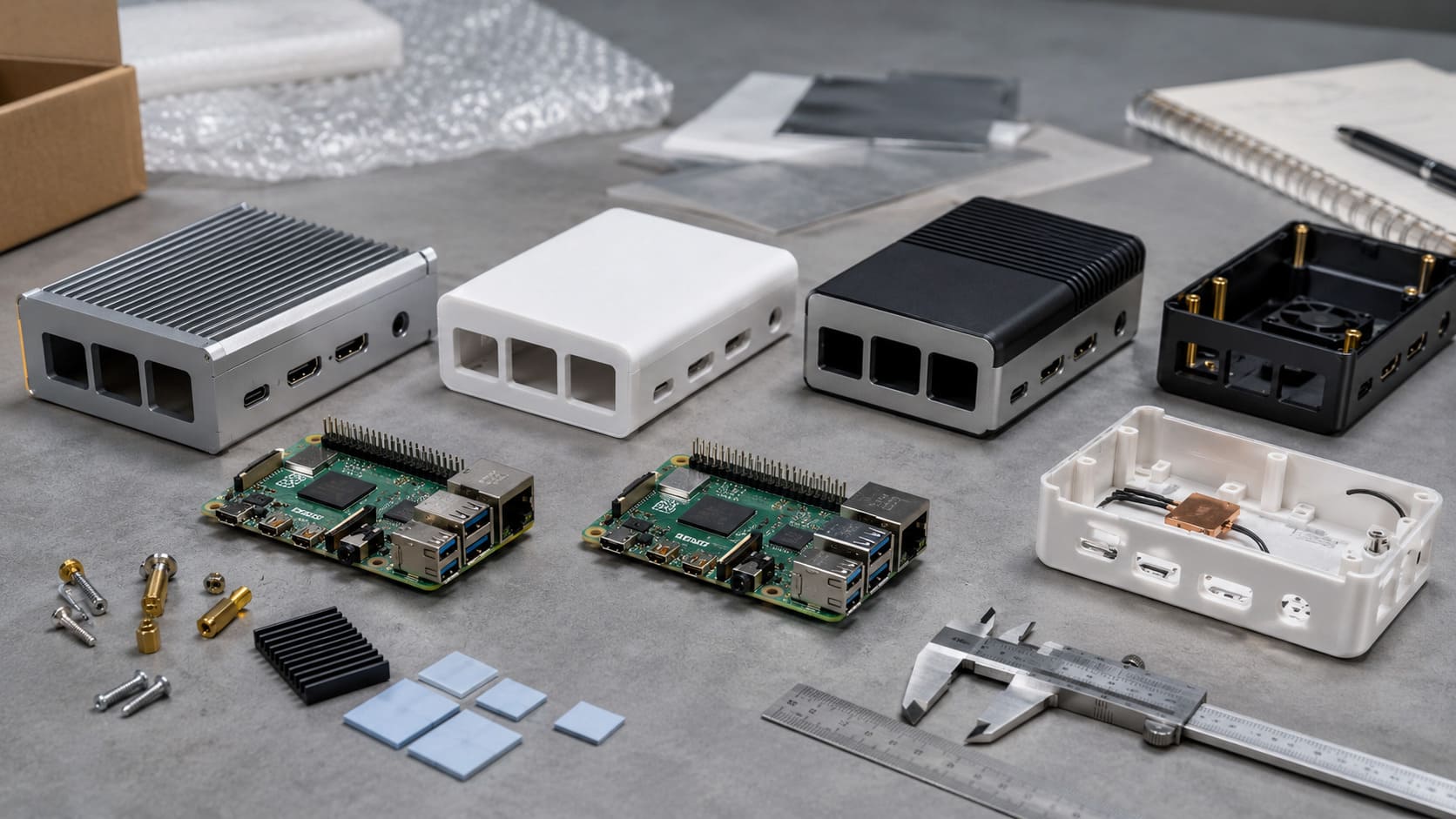
Custom branding on Raspberry Pi cases allows businesses and enthusiasts to showcase their identity while enhancing the device's functionality.
These custom printed cases keep your electronics safe without compromising the appearance of your brand. Insert your custom logos, color schemes, or other designs to make it your own!
This approach is especially useful for startups, educational institutions, or tech enthusiasts aiming to create a cohesive and professional look.
In this eBook, we’ll look through some real-life examples in order to find the most efficient custom branding for maximum effectiveness.
Why Choose a Custom Case?

Custom Raspberry Pi cases offer a creative opportunity to blend functionality with marketing and design. Creative spirits need more than what standard off-the-shelf options can provide. When you’re approaching a project with unique requirements or a defined visual language, a custom case is the only way to go.
It makes sure design and functionality come together beautifully. By catering to individual requirements, these custom cases offer increased functionality, greater protection against wear and tear, and a perfect stage to display your corporate identity.
Project-Specific Needs
Understanding the unique needs of your project is the first step to designing custom Raspberry Pi cases. For instance, projects in industrial settings may require rugged materials that resist elements like dust, heat, or moisture. Having a case design tailored to these conditions can prevent costly environmental shutdowns. Incorporating features such as ventilation or custom ports enhances airflow and cooling, significantly improving the performance and reliability of the AR device.
Custom cases allow for unique customizations, accommodating one-of-a-kind deployments or modified for non-standard port configurations. For example, if you have a development robotics project that needs specific cutouts for sensors or accessories, a stock case simply won’t suffice. Poor fitting can lead to frequent reboots caused by adapter connection issues. This highlights why the dependability of quality custom plastic enclosures is invaluable for ensuring your project runs smoothly.
In summary, investing in custom solutions for your Raspberry Pi projects provides the flexibility needed to meet specific requirements while enhancing overall functionality. Whether through personalized packaging or tailored designs, these customizations ensure that your devices operate efficiently in their intended environments.
Brand Identity and Recognition
In addition to being a killer tool for promotion, custom cases are one of the best ways to reinforce your brand’s identity. Capture attention, A unique design that reflects your brand’s character helps your product jump off the shelf. Not only does it protect your device, but it makes a memorable impact with your audience.
Upload your logo, brand colors or custom design patterns right onto the case to stay on brand. This will better allow you to present a cohesive and easily recognizable brand. In an increasingly competitive market, such personalization goes a long way to developing trust and loyalty with customers.
Approximately 90% of businesses in North America and Europe leverage custom cases to stay ahead by ensuring their products are as memorable as they are functional. Customized designs reflect professionalism and signal a commitment to quality, instilling confidence in users.
Enhanced Functionality and Aesthetics
A truly great custom case finds harmony between eye-catching design and versatile function. This is why a sleek and robust custom case perfectly balances modern aesthetics with essential functionalities. It provides better cooling solutions and it’s easy to access internal parts.
With custom cases, every detail can be tailored to meet the unique goals of the project, improving functionality and usability as well as the overall aesthetic.
Designing Your Custom Raspberry Pi Case

Designing your custom Raspberry Pi case involves more than just housing your hardware. It’s all about combining the functionality, aesthetics and branding into one cohesive design. A custom-designed case allows you to protect your Raspberry Pi in style.
That consideration goes beyond aesthetics; it’s a key opportunity to communicate your brand and is crucial for cutting through the noise on a shelf packed with competition. Here, we discuss the most important steps to ensure a successful custom case design.
1. Define Project Requirements
The design process always starts with establishing firm project goals. Begin by writing out all the must-have features like dimensions, cooling, and access to ports.
Consider including design elements such as added cooling or shatter-proof casing if you know your Raspberry Pi will be used in high-performance settings. Prioritize functionality. Start with user needs and technical requirements.
This can mean designing for manufacturing assembly or accounting for the peripherals already out in the world. Consider limitations such as budget, form factor needs, or hardware-specific requirements that could constrain the design.
2. Select the Right Material
The material you choose will heavily impact your ability to create a durable yet visually stunning case. ABS plastic is a good balance of lightweight, cost-effective material that is easy to work with and widely used.
Aluminum provides great strength and heat dissipation, but it can add cost and weight. Polycarbonate, which offers superior impact resistance, is a great choice if you want to prioritize durability.
You should take into account your material’s thermal properties, weight, and overall strength. For example, if you need a professional-grade case with silicon aluminum levels, aluminum may fit the bill while the ABS would do just fine for regular-use cases.
3. Choose a Manufacturing Method
Quality, cost, and lead time all hinge on the production approach. For low quantities, 3D printing or CNC machining are both good options, though CNC machining provides a higher level of precision and durability.
For higher volume runs, injection molding makes more sense as the cost per part works out when producing at scale. Note that custom Raspberry Pi cases typically take 3-4 weeks to ship.
This time frame can vary greatly, based on how complex the case is.
4. Design for Thermal Management
Properly controlling heat is one of the most important aspects of Raspberry Pi performance. Vents, heatsinks, and smart airflow optimization features keep your Raspberry Pi from overheating without sacrificing style or aesthetics.
For instance, vents artfully hidden under arches or along other lines can keep a case very clean while still supporting proper cooling.
5. Ensure Hardware Accessibility
Accessibility should improve function while still protecting your case internals. Design cutouts for ports and components, considering user interaction points like USB and HDMI connections.
Don’t leave usability out of the design process — protection shouldn’t come at a cost to functionality.
6. Incorporate Custom Branding Elements
Branding takes your otherwise generic and functional case and turns it into a marketing asset. Complete your creation by adding logos, specific colors, or patterns to match your brand or style.
Things such as laser engraving or silk-screen printing can give you a nice finished touch. I like to put branding elements where they’re seen, but not annoying—on the lid, or side panels for example.
7. Prototype and Test Your Design
Whatever the reason, prototyping is crucial to making sure your design functions the way you want it to. Early on, sample your design to test fitment, functionality, and aesthetics.
Testing ensures that any issues such as misaligned ports or lack of cooling can be quickly recognized and fixed. Then, getting feedback from potential users can help significantly refine the design before production on a larger scale.
To maintain a high and stable level of quality, some have chosen to use third-party inspection services.
Manufacturing Techniques for Custom Cases

So, you’ll have to strike the right balance between price, quality, and turnaround time to meet your unique design objectives. Custom manufacturing equipment and production techniques have advanced rapidly over the last decade.
In doing so, we’re able to produce cases that best protect the hardware while actually enriching its functionality. Read on as we dive into four custom manufacturing techniques and how they can be utilized.
3D Printing Advantages
While 3D printing provides unparalleled design freedom, enabling truly unique designs suited for rapid prototyping or low-volume production, there are limitations and other considerations. This technique enables us to produce complex shapes and structures which are otherwise challenging to fabricate through conventional methods.
For instance, cases with built-in cable management channels or custom ventilation designs become simple to create. Of course, 3D printing helps save on materials with less waste meaning lower costs for short production runs.
While it may not be the best option for large-scale production, its quickness and flexibility are put to great use elsewhere. Most people love it to prototype new designs or make custom enclosures for specialty applications.
CNC Machining Benefits
CNC (Computer Numerical Control) machining is one of the best techniques for making high-precision parts. This approach shines when producing rugged, high tolerance cases.
It’s quality fabrication techniques that guarantee the almost perfect fit of Raspberry Pi’s boards and peripherals. CNC machining supports a broad range of materials, including aluminum and high-strength plastics, allowing us to select the best option for specific requirements.
Factories outfitted with specialized CNC machinery can produce high-volume orders with uniformity and accuracy, sometimes certified by a third-party quality inspector. When custom cases require unparalleled durability and precision, CNC machining is the proven solution.
Injection Molding Considerations
For high-volume production runs, injection molding is the most economical option. In creating even cases with perfect finishes, it fulfills the intention of professional looking enclosures.
Though mold production has a greater initial expense and lead-time, the cost per unit drops dramatically with large orders. This method has been used to great success in producing mass-market Raspberry Pi cases, aimed to serve the millions of units sold.
Manufacturers with advanced injection molding setups can maintain rigorous quality control, ensuring consistency across thousands of units.
Other Fabrication Methods
Techniques such as laser cutting and sheet metal forming offer even more possibilities when it comes to custom cases. These techniques offer the biggest benefits with flat designs or modular approaches.
Laser cutting makes highly accurate cutouts in acrylic sheets. At the same time, metal stamping is ideal for producing durable equipment housings.
Hybrid approaches, blending techniques such as CNC machining and laser cutting, allow us to maximize both efficiency and quality.
Surface Finishing Options Explained
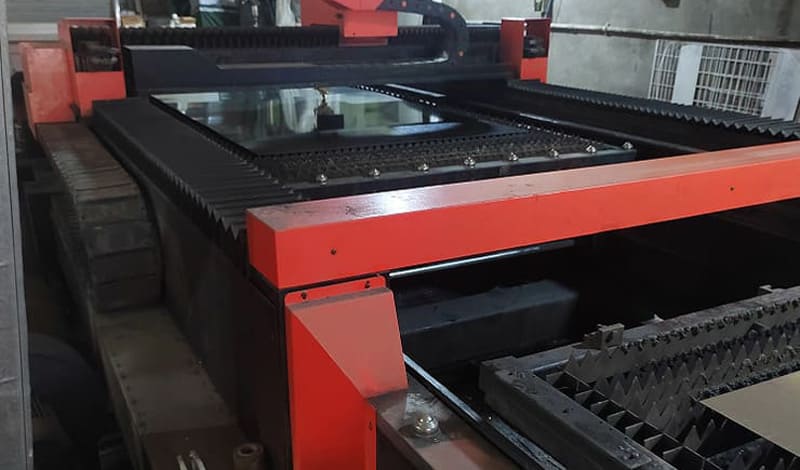
Our custom branding service on Raspberry Pi cases is more than just printing logos and graphics. The surface finishing options you select have a deep impact on the aesthetic quality and product performance of your final piece.
These additional finishes improve durability and user experience. They further enhance the aesthetic presentation as a whole, giving you the opportunity to match your case design to particular branding efforts. Below, we break down a few common surface finishing options to help you choose wisely.
Painting and Coating
Applying paint or coatings allows for limitless options and unparalleled flexibility in achieving highly custom colors and textures. Matte finishes can give an elegant, contemporary feel, and glossy finishes produce an eye-catching, sophisticated aesthetic.
Durability is a must, so choosing top-quality paints will give you all-important resistance to scratches, fading, and wear from the elements. For truly unique effects, methods such as spray painting or hydro dipping can add deeper gradients or even metallic sheens, presenting limitless potential for custom design.
For instance, automotive-grade paint can give a car incredible durability and a high-end look and touch.
Powder Coating Durability
Powder coating provides a very durable finish on metal cases with a smooth, hardwearing surface. This approach is particularly superior when excelling chips and the antonym of rust.
It provides for a wide variety of colors and textures, such as satin finishes and weathered, textured coatings. That’s because powder coatings contain no volatile organic compounds (VOCs) and generate very little waste.
For enclosures deployed in more extreme circulatory conditions, this process provides not only durable performance but enduring good looks.
Anodizing for Metal Cases
Anodizing deepens the color and provides a protective layer which improves the performance of aluminum weapon cases. As a result of creating a protective oxide layer, anodizing adds to corrosion resistance and surface hardness.
Beautiful and aesthetic customization is another key benefit, as the process allows for bold, vibrant coloring and texturing. For example, anodized aluminum enclosures can have uniform finishes with an upscale appearance that are perfect for corporate identity branding.
Laser Engraving Details
Laser engraving produces amazing detail and long-lasting marks. It allows you to engrave detailed logos or characters on type 3D printed plastic and aluminum cases quickly and accurately.
The results are clean, professional, and durable in finish and wear, providing you continuity and reliability in your branding. This method is particularly good for anodized metals since the contrast really helps to pop those engravings into view.
Screen Printing Applications
Screen printing is an extremely versatile and cost-effective method of applying bright, multi-color designs to cases. Because it lays flat on any surface, it looks great on flat or mildly curved surfaces, whether you’re printing on plastic or metal materials.
Second to engraving, UV-cured inks are the next best thing in terms of durability, but they can improve fading resistance.
Texture and Pattern Options
Using textured materials or incorporating patterns and graphics into your case design helps achieve more attractive cases that are easier to use. Production methods such as embossing or debossing add dimension and texture, resulting in a rich, eye-catching surface.
Textured, grippy finishes, which are especially useful for handheld cases, combine beauty and utility perfectly.
Custom Branding: Logos and More

Custom branding on custom Raspberry Pi cases allows companies to create a lasting impact. By weaving their logo and overall brand identity into the product’s design, they have an opportunity to shine. This process goes beyond simply adding a logo; it’s about creating cohesive and professional appearances that align with your brand story, especially when using quality custom plastic enclosures.
A flashy logo will most certainly do the trick. If you’re not consistent with your packaging and communication materials, you risk confusing customers rather than reinforcing brand recognition. Modern digital printing and finishing technologies give manufacturers the ability to produce highly individualized custom solutions for their enclosures.
These custom enclosure projects promote their brand and win them more loyal customers. Here are four things to keep in mind for smart, effective custom branding.
Placement Strategies for Visibility
Where you place your logos and branding elements is very important and has a direct impact on your production’s brand visibility and functionality. Placing logos on highly visible spots, like the top or face of the case, guarantees your logo will be seen by the most eyes possible.
That user interaction touchpoint, like a port or a push button, becomes extremely important. Every time branding is placed around these places, it’s doing the heavy lifting of attracting attention. Branding can never come at the expense of the case’s usability.
For example, an awkwardly scaled or hung logo design next to ventilation openings would hinder the airflow or purpose of the vents. Intelligent placement guarantees that branding adds to the overall product design aesthetic instead of taking away from it.
Color Considerations for Branding
Color is an important factor when it comes to establishing brand consistency. Selecting colors that match your company’s color scheme makes a huge difference in achieving a unified and professional look that your audience responds to.
A tech startup with a sleek, innovative approach might lean towards a palette of minimal, crisp neutrals. Conversely, when a gaming company creates a logo, they might go with deep, saturated colors. Using color psychology can take brand attractiveness even further.
Blue can imply trust and red is exciting. Whatever you choose, make sure you’re consistent, because using different colors for different elements of your branding dilutes the overall effect. Being consistent with the same colors for logos, text, and other accents will create a more refined look.
Logo Integration Techniques
There are many ways you can use logos to create beautiful visual connection points to your custom case design. Techniques such as embossing and engraving provide a tactile dimension, while digital printing enables high-resolution, full-color graphics.
The logo’s size and placement should take into consideration the need for visual prominence and artistic discretion. If your logo is too big it’ll cramp the design, but if it’s too small nobody will see it. Making sure it reads clearly is equally important—fancy designs may need reconsidering or editing to ensure readability.
Adding Serial Numbers or QR Codes
Whether you choose to add serial numbers or QR codes, or both, you’ll reap the practical and branding rewards. These factors can help you keep inventory flows in check and keep customers coming back.
For example, when consumers scan a QR code, they can be directed to more detailed product information or support. In order to preserve the case’s open design aesthetic, position these accoutrements in second order locations.
Think about using the underside or rear panel if possible. Advanced creative implementation, like incorporating QR codes directly into the logo itself, can take the design to the next level, in addition to their functional use.
Cost and Lead Time Factors

When you are exploring custom raspberry pi cases, understanding the trade-offs between cost and lead time is crucial. Factors such as design complexity, material selection, and production volume significantly influence both cost and lead time expectations. Additionally, these elements must be carefully evaluated to achieve a balance between aesthetics, performance, and cost, especially when considering various custom solutions and finishing processes.
Design Complexity Impact
Tight tolerances and complex designs can make production extremely difficult and expensive. Other cases demand advanced shapes or intricate designs. These in particular require costly and often highly technical and specialized equipment, such as high-precision CNC machinery or intricate molds and tooling for injection molding.
These new standards force manufacturers to add more features, which increases production costs. Whatever their location, the more a team can simplify the design without sacrificing function, the better equipped they’ll be to keep costs down. Even deciding to go with a sleek, minimalistic design can help cut down production lead time significantly.
Beyond cost savings, this strategy simplifies assembly, resulting in reduced costs. Finding the sweet spot of just enough complexity and a high level of practicality helps make sure the project serves branding objectives without blowing the budget.
Material Cost Variations
The materials selection has a HUGE effect on the cost and the lead time. Affordable materials such as ABS plastic are often selected for Raspberry Pi enclosures since they’re robust and inexpensive. Higher-quality materials, such as aluminum and polycarbonate, provide additional durability and improved appearance.
They certainly can’t be beat on price and availability. Buying materials in bulk can further lower costs, particularly for longer runs of production. For instance, sourcing ABS plastic in bulk can significantly reduce costs per piece.
Considering the long-term performance of materials extends the initial investment value beyond the first few years. This smart approach produces the greatest return on every transportation dollar.
Production Volume Influence
The number of cases needed has a direct impact on how the cases are made and production costs. For more sizeable production runs, injection molding continues to be the ideal dollar-wise option. It opens the door to mass production, allowing the cost per unit to school districts to drop dramatically.
Batches that are smaller can take advantage of CNC machining or even 3D printing, which are more efficient for low-run productions. This last point goes back to the idea that factories with advanced machinery are incredibly efficient at high volumes and achieve consistent quality.
To maintain the highest level of quality, many clients decide to spend additional funds on third-party inspections. Though this increases the cost overall, it ensures that quality standards are achieved.
Finishing Process Expenses
Surface finishing techniques, such as painting, polishing, or UV coating, enhance the visual appeal and tactile experience of a Raspberry Pi case. These processes can add significant production costs. For instance, a high-gloss finish might need to go through an extra layer of machinery during the production process, increasing lead times.
Keeping that balance of cost while maintaining quality is key in this one. Perceived value premium finishes can be used to increase a product’s perceived value by leaps and bounds. Opting for less flashy methods can cut costs without sacrificing essential function.
Legal and Licensing Aspects

When exploring custom Raspberry Pi case branding, having familiarity with the legal and licensing aspects is important. Doing this goes a long way towards keeping you legal, protecting your intellectual property, and staying out of future lawsuits.
We’ll identify important elements including trademark rights, design protection, and open-source implications. Each of these pieces is an important component to developing a product that is legally defensible.
Trademark Usage Rights
Trademark law has a huge impact on custom branding. The Entrepreneur Programme is sponsored by the Raspberry Pi Foundation, whose registered trademarks—known collectively as the Raspberry Pi Marks—are used to protect their brand image.
You are prohibited from including these marks in a URL, business name, product name, or logo. Just be sure to get an appropriate licensing agreement in place beforehand. Consumers could be easily confused by your unauthorized use of the label, “Raspberry Pi Custom Case Pro.
This trick can lead to dire legal ramifications for you. The best way to prevent these kinds of problems from happening is to get educated on how to use trademarks the right way. Such unauthorized use would lead to substantial confusion among consumers, misleadingly suggesting that it is endorsed, approved, or otherwise affiliated with Raspberry Pi.
We highly recommend seeking legal counsel for trademark registration as they can bring clarity to the process and help you avoid these intricacies. Further, if your branding involves the commercial exploitation of Raspberry Pi Marks, you need to get the proper commercial licensing. So be certain to obtain yours through the Raspberry Pi Foundation!
Design Protection Strategies
In the same vein, protecting the distinctiveness of your original, one-of-a-kind designs should be a top priority. Registering your designs or patenting them can offer you legal recourse if they are copied or otherwise misused by competitors.
For example, a patented case design prevents competitors from copying and marketing the same case design without royalty payments. Monitoring the competitive space for infringements is a smart, proactive way to protect your intellectual property.
Automation and tools such as reverse image search or professional IP monitoring services can assist in detecting violations. If you find any violations, moving quickly with legal enforcement action demonstrates your ownership rights and provides a precedent to protect you in the future.
Open Source Considerations
Open-source components frequently enhance custom-built projects, but they include strict licensing obligations. Many open-source designs are governed by licenses like GPL or Creative Commons, which dictate how they can be used or modified.
If you use an open-source Raspberry Pi case design, please provide attribution to the original designer. You’ll be required to release your changes back to the world under the same license. Striking the right balance between innovation and compliance is essential.
Familiarity with these licenses will help you keep your project legally above board, while still gaining the fruits of a vibrant open-source creative economy. By being diligent in reviewing and following these agreements, misunderstandings can be prevented, while promoting and sustaining the open-source community.
Trends in Custom Case Design

For businesses, customizing Raspberry Pi cases is a perfect blend of creative branding and practical functionality. A well-designed case not only provides superior protection, but it also enhances a brand’s identity. This is key, particularly in high-competition areas such as digital marketplaces. When 9 out of 10 businesses have found custom cases to both boost sales and raise brand visibility, it’s no wonder that this tactic is so incredibly valuable.
Custom mobile device trends, consumer habits, and a brand new market landscape. Staying ahead of the curve is crucial in this field.
Modular Case Designs
Modular cases are a big step in that direction, leaning heavily into the trends of flexibility and personalization. These designs let users modify or upgrade components without needing entirely new cases, making them highly appealing for Raspberry Pi projects.
So for instance, a modular case could include panels that easily swap in and out to accommodate various GPIO configurations or extra slots for cooling fans. This strategy further has the benefit of planning for future upgrades from the outset, whether that’s new connectors or adding more storage.
Modular markets are booming and never has the demand been more pronounced than in the modular space—thanks, in part, to the efforts of DIYers. Companies that read the trend right will be able to serve everyone from gamers looking for the latest custom design to schools wanting science kits.
Sustainable Material Choices
With eco-conscious consumers placing greater and greater value on sustainability, material selection has never been more important. Whether you choose biodegradable plastics, recycled aluminum, or bamboo, eco-friendly custom cases create a brighter future while simultaneously making your brand more socially responsible and appealing.
For example, custom cases produced using recycled PET plastic will appeal to eco-conscious consumers without sacrificing strength. Looking at the whole lifecycle of materials from production to usage to disposal makes sure these products are sustainable in the long term.
Highlighting these green credentials in promotional marketing can help businesses stand out as innovative leaders and socially responsible organizations.
Integrated Cooling Solutions
Mobile designs with a focus on performance may need to feature integrated cooling systems to mitigate overheating, a frequent issue with the Raspberry Pi. Integrated heat sinks, ventilated panels or rack mounting options that accommodate fans can all create a healthier thermal environment.
Utilizing advanced cooling technologies such as heat pipes or thermal pads can help to further boost performance. Designers experiment with various approaches to find just the right combination of efficiency and beauty.
This balanced approach strikes a pleasing aesthetic quality with equally stunning performance advantages.
Unique Form Factors
Unusual forms and dimensions are a great opportunity to set products apart from a crowded competitive space. Creating custom designs for particular target markets engages the niche markets.
Lustrous metallic finishes draw buyers’ eyes in dazzling tech retail spaces, while muscular designs speak to manufacturing workers. User feedback on these prototypes and beyond, iteratively refining these designs, ensures the designs are grounded in reality as well as creativity.
Conclusion
Designing a custom Raspberry Pi case provides us with an opportunity to incorporate functionality while expressing personal or corporate aesthetics. It allows us to keep our device safe and sound while showing off whatever special branding, artistry, or mission they might have. From picking the right material to adding a logo or choosing a sleek finish, every step offers control and flexibility. Thanks to advances in manufacturing, it’s all quite feasible to produce these designs, whether to suit a particular project aesthetic or a company’s brand objectives. Custom cases provide avenues for creativity and producing cutting-edge designs ahead of the trend.
Prepare to design an eye-catching case! Step into the extraordinary realm of custom design and watch your imagination soar! Nothing caps off an impressive looking setup like a perfectly tailored case. It captures your individual history—the way it’s most authentic to you.