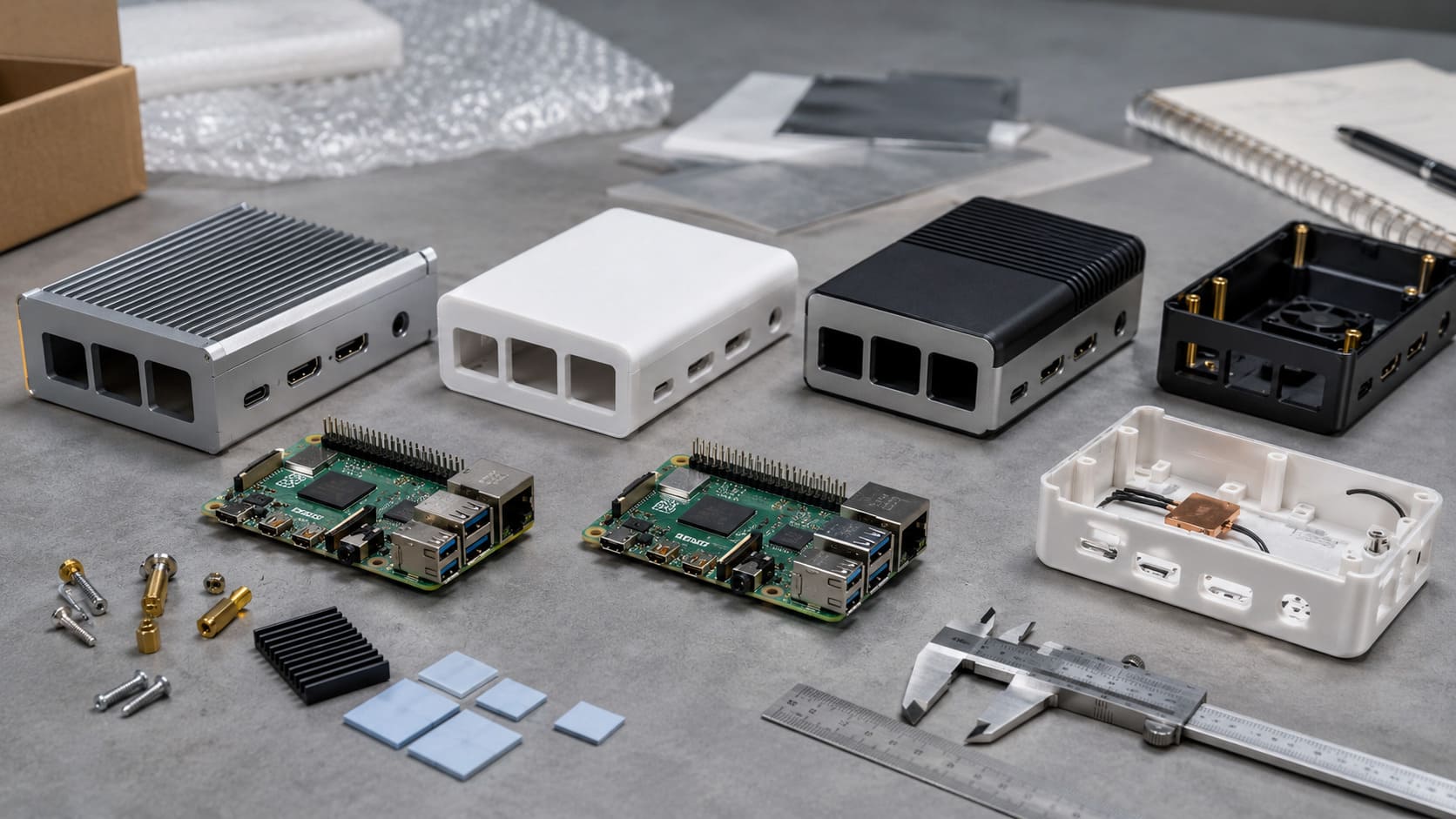
Moving a Raspberry Pi-based Internet of Things (IoT) prototype from the drawing board to mass production can feel like a huge leap. But trust me, once you know the key steps involved, it’s not as daunting as it seems. Whether you're just starting out with your Raspberry Pi project or you’ve already got a prototype up and running, transitioning to full-scale production requires careful attention to several important details. From refining hardware and software to choosing the right enclosures and ensuring your product is compliant with industry standards, every step plays a critical role in making sure your IoT project is production-ready.
Let’s dive into these essential phases and explore the best practices to successfully bring your Raspberry Pi IoT product into the market!
1. Refining Hardware Design

1.1 Transitioning from Prototype to Custom PCB
At this stage, your Raspberry Pi prototype might be serving its purpose, but let’s face it—if you want to go beyond a small-scale prototype, you need to think about a custom solution. While Raspberry Pi boards are great for development, you’ll likely need to transition to custom Printed Circuit Boards (PCBs) for production. This change will not only reduce the size of your design but also improve performance and reliability. A custom PCB allows you to create a product that’s uniquely suited to your specific needs, making it a crucial step in scaling your IoT solution.
Custom PCBs can be tailored to your device’s power needs, connectors, and layout, leading to better integration and a more refined product. Trust me, making the jump to a custom PCB is one of those decisions that pays off in the long run.
1.2 Selecting Appropriate Components
As you move from the prototype phase to production, picking the right components is absolutely critical. After all, the durability and performance of your IoT device depend on it. When you’re selecting parts, think about the conditions your product will be exposed to. Will it be used in a hot, humid environment? If so, opt for industrial-grade components that can withstand temperature fluctuations and moisture. Reliability is key, so don’t skimp on the quality of the parts that go into your product.
Just remember—choosing the right components can make the difference between a product that works flawlessly for years and one that breaks down after a few months.
2. Software Optimization

2.1 Operating System Selection
When it comes to the operating system, Raspberry Pi’s default OS may be fine for prototyping, but it’s not always the best choice when you’re preparing for production. I recommend looking into alternatives like emteria.OS. Based on Android, it’s designed specifically for embedded systems, making it a great option for industrial IoT applications. Emteria offers simplified customization, device management, and over-the-air (OTA) updates, which can save you a lot of hassle as your product evolves. This OS helps you ensure that your IoT device is not only reliable but also scalable as it enters full production.
Selecting the right operating system at this stage can save you time and headaches later on, especially when it comes to updates and maintenance.
2.2 Ensuring Software Stability
Software stability is essential when moving to production. No one wants a product that crashes or has bugs that affect performance. That's why it’s critical to thoroughly test and validate all software components, ensuring they meet reliability standards. Make sure to include error-handling protocols in your code so that even if something goes wrong, your device can handle it gracefully.
Additionally, plan for over-the-air (OTA) updates to make future software enhancements easier. With OTA updates, you won’t need to ship new versions of your hardware every time there’s a software update, making your device more flexible and future-proof.
3. Designing for Manufacturability

3.1 Simplifying Assembly Processes
Manufacturing your IoT product shouldn’t be a complex, error-prone process. To keep things simple and efficient, focus on design for manufacturability (DFM). This means designing your product so that assembly is as straightforward as possible. The easier it is to assemble your device, the lower the production costs and the fewer mistakes you’ll make along the way. Simple designs not only reduce costs but also speed up the manufacturing process, getting your product to market faster.
3.2 Selecting Suitable Enclosures
Next, you need to consider the enclosure for your device. Not only does the enclosure protect your product’s internal components, but it also needs to be durable enough to withstand environmental factors like heat, moisture, and impact. For industrial IoT applications, I recommend looking at aluminum cases. They’re excellent for heat dissipation and offer the kind of rugged durability that makes them ideal for harsher environments. A well-designed enclosure can also enhance the aesthetic appeal of your product, which is important if you’re planning to sell it to consumers.
4. Compliance and Certification

4.1 Meeting Industry Standards
Once your product is ready for production, it’s time to think about compliance. Every region has its own set of standards that electronic devices must meet before they can be sold. For example, if you’re selling in Europe, your device must have a CE mark, while in the US, you’ll need to meet FCC regulations. Compliance is not just about following the law; it’s also about ensuring that your product is safe and reliable for your customers.
Getting these certifications can be time-consuming, but it’s a necessary step in gaining the trust of your customers and expanding into international markets.
4.2 Conducting Reliability Testing
Before you hit that “Go” button and start scaling production, reliability testing is a must. You’ll want to subject your device to a variety of stress tests, like temperature and humidity simulations, to ensure it can handle different environmental conditions. This is the kind of testing that can catch issues early on and prevent costly product recalls down the line.
5. Supply Chain and Manufacturing

5.1 Establishing a Reliable Supply Chain
In production, the supply chain is everything. If your supply chain isn’t solid, you risk running into delays and quality issues. Start by establishing strong relationships with trusted suppliers who can provide the components you need on time and to the required specifications. A reliable supply chain is one of the most important factors in ensuring the success of your product in the market.
5.2 Scaling Production
As demand for your product grows, you’ll need to scale up production. Finding manufacturing partners with experience in large-scale production is key here. You want to ensure that as your orders increase, your production capabilities can keep pace without sacrificing quality.
Conclusion

Transitioning from a Raspberry Pi IoT prototype to full-scale production is a big step, but it doesn’t have to be overwhelming. By refining your hardware design, optimizing your software, designing with manufacturability in mind, ensuring compliance, and establishing a reliable supply chain, you can successfully move your product from prototype to market-ready. The key is careful planning, attention to detail, and a focus on quality at every stage of the process. So, take it step by step, and soon enough, your Raspberry Pi IoT product will be ready to make its mark in the world!