Sometimes I worry my Raspberry Pi might fail at the worst moment. That stress keeps me up at night. But there’s a better way to check its health quickly.
You can test your Raspberry Pi’s health by checking CPU temperature, power supply stability, and performance metrics. Confirm it boots without errors, responds to basic commands, and shows no blinking warning lights or suspicious system logs.
I once freaked out when my Pi wouldn’t boot for a new client demo. That panic pushed me to learn smarter ways to spot issues early. Let me walk you through the easiest checks I’ve discovered.
How To Check If Raspberry Pi Is Working Correctly?
I start by looking for normal boot messages and testing simple commands in the terminal.
A working Raspberry Pi will show a steady green LED, accept basic terminal commands, and run without unexpected restarts or error messages.

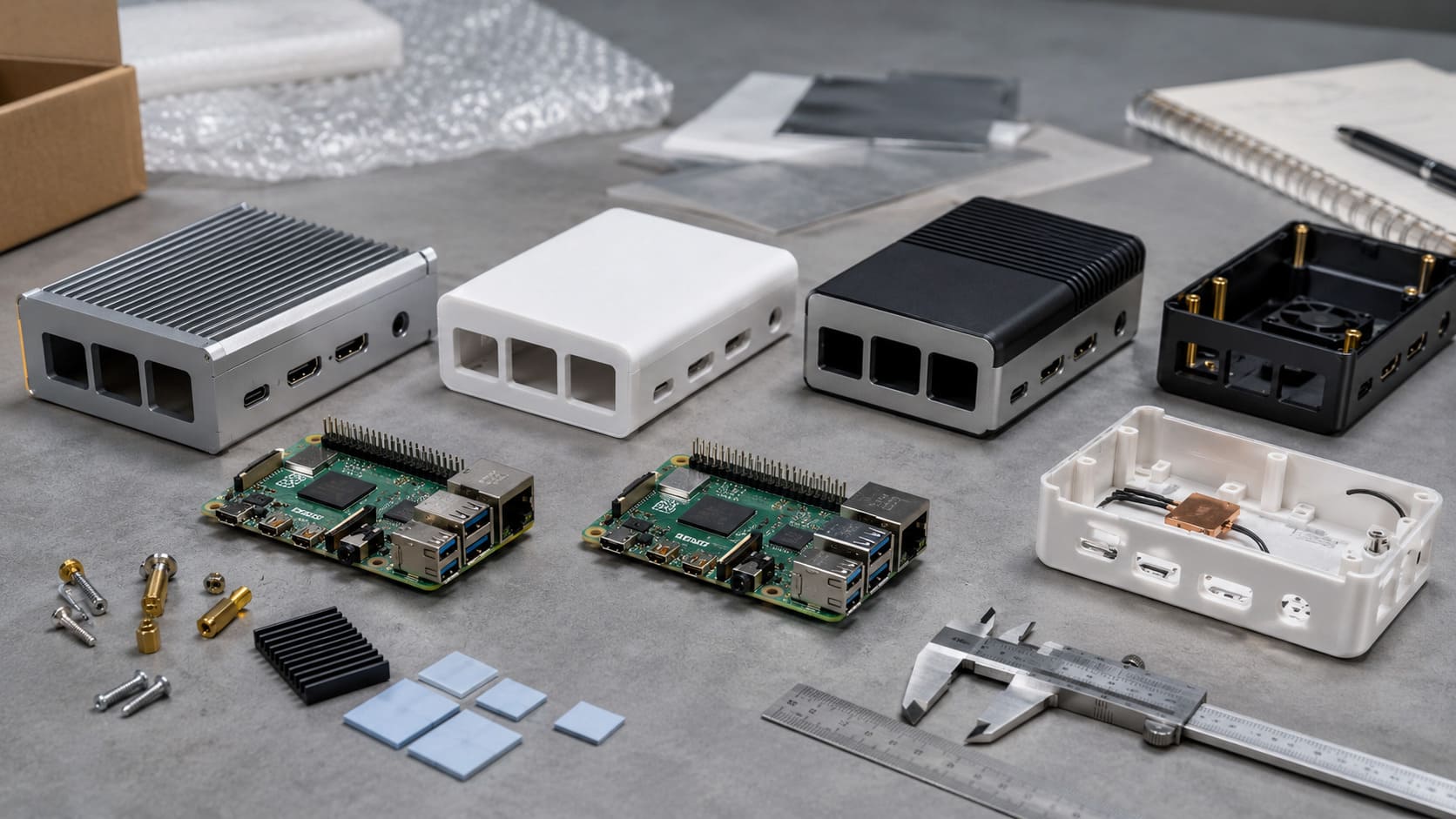
I remember a time when I was testing a new custom Raspberry Pi case for a client from Belgium. I powered up the board and waited for the green LED to flicker normally. Then I opened the terminal and typed ls. Everything looked good, so I knew the Pi was healthy.
Physical Checks
- Steady Lights: A gently flickering green LED during boot is a good sign.
- No Overheating: The device should feel warm but not scorching.
| Indicator | Sign Of Health | Sign Of Issue |
|---|---|---|
| Green LED Solid | Normal operation | Potential SD card or boot problem |
| Temperature Range | Warm to the touch | Too hot to handle or frequent throttling |
| Boot Messages | Loads OS without errors | Errors or stuck on rainbow screen |
What Is The Life Expectancy Of Raspberry Pi?
I often think about how long a Pi will last when I plan new projects.
A Raspberry Pi can last several years with proper cooling, quality power supply, and safe handling. Good hardware habits often extend its lifespan well beyond five years.

My oldest Pi is still running after seven years. I keep it in a ventilated case and use a stable power adapter. Many of my clients push them for industrial tasks day and night without issues.
Factors That Affect Lifespan
- Temperature Control: Overheating shortens the board’s life.
- Power Stability: Poor adapters lead to damaged chips.
- Physical Protection: Protective cases or enclosures guard against dust and bumps.
How Do I Know If My Raspberry Pi Is Underpowered?
I learned to spot an underpowered Pi when my screen showed lightning bolt icons during heavy tasks.
Watch for the lightning bolt symbol on the screen or throttled performance. Frequent reboots, USB disconnects, or SD card corruption can also hint at low power supply.

I once helped a friend who used a cheap power adapter. His Pi kept freezing when installing large packages. We swapped in a proper 5V/3A supply, and everything ran smoothly afterward.
Signs Of Low Power
- Lightning Bolt Icon: The most obvious warning.
- Random Freezes: Underpowering can trigger system hang-ups.
- USB Dropouts: Keyboards or mice might stop responding occasionally.
How Do I Check My Raspberry Pi Performance?
I do quick terminal commands to gauge speed and see if CPU usage spikes.
Use commands like htop or top for CPU and memory usage, and vcgencmd measure_temp for temperature. A balanced load with normal temps means performance is good.
When I was testing a custom-coded project, I noticed my CPU usage spiked. I typed htop and saw all four cores at 90%. A quick temperature check showed moderate heat, so it wasn’t a serious issue—just heavy computation.
Useful Checks
htoportop: Real-time CPU and memory usage.free -h: Available memory to see if you’re maxing out.stress -c 4: Stress testing each core.
How Do I Know If My Raspberry Pi Is Bricked?
Bricking a Pi feels scary, but it may not be permanent if it’s just an SD card issue.
A bricked Pi fails to boot every time, shows no green LED activity, and doesn’t respond to peripherals. Re-imaging or replacing the SD card can sometimes fix this.
I had a meltdown when my Pi displayed a plain black screen and refused to blink. But flashing a fresh OS onto a new SD card brought it back to life. “Bricked” can be fixable if it’s only storage corruption.
Troubleshooting
- Test A Known-Good SD: Corrupt cards can mimic a bricked board.
- Check Power: Confirm your supply is consistent.
- Reseat Connections: Sometimes the simplest fix is enough.
How Can I Monitor My Raspberry Pi’s Real-Time Temperature And Performance?
I rely on real-time data to ensure my Pi doesn’t overheat or choke.
Real-time monitoring tools like vcgencmd measure_temp and htop show CPU load, temperature spikes, and memory usage. They help prevent sudden breakdowns.
I run a simple Python script that logs temperature over time so I can spot trends. This helps me know if the Pi will stay stable or begin throttling when workloads get heavy.
Recommended Tools
vcgencmd measure_temp: Quick temperature check.htop: Real-time CPU monitoring.- Graphical Monitors: Tools like
glancesorRaspberry Pi Diagnostics.
What Are The Key Signs That My Raspberry Pi Might Be Overheating Or Experiencing Hardware Issues?
Overheating can be quiet at first, but sudden slowdown or forced reboots are big clues.
Look out for temperature warnings, frequent slowdowns, or forced shutdowns. Physical touch can hint if it’s too hot. A heat-throttled Pi often lags and drops performance quickly.
One summer, my workshop got stuffy and I placed my Pi near a window. Direct sunlight baked it. It slowed to a crawl and displayed a thermometer icon on the screen.
Early Warning Signs
- Thermometer Icon: A clear OS warning.
- Hot Surface: If you can’t keep a fingertip on the SoC.
- Performance Drops: CPU frequency is lowered to reduce heat.
Common Hardware Issues
- Fried GPIO Pins: Possible if wiring is incorrect.
- SD Card Corruption: Often caused by sudden power cuts or faulty cards.
Which Software Tools And Commands Can Help Diagnose My Raspberry Pi’s Overall Health?
I keep a small toolkit of commands for quick diagnosis when my Pi acts up.
Use dmesg for logs, sudo apt-get update && sudo apt-get upgrade for software integrity, and vcgencmd for temperature. Tools like stress or sysbench reveal hardware stability.
When troubleshooting an unexpected reboot, I ran dmesg and discovered a power-related kernel warning. That clue saved me hours of guesswork. Software tools narrow down problems before they spiral.
Command Cheat Sheet
| Command | Purpose |
|---|---|
dmesg |
View kernel and boot messages |
sudo apt-get update |
Keep system packages updated |
vcgencmd measure_temp |
Check CPU temperature |
stress or sysbench |
Stress test CPU and RAM |
I run a factory in China called MaidaTech, specializing in custom Raspberry Pi cases and accessories. I collaborate with clients like Davide and Lasle who have unique branding and ODM needs. They care about fast shipping solutions and open communication that beats time zone barriers. I always say: a healthy Pi is like a reliable friend—quiet, steady, and ready to help.
Conclusion
A well-monitored Raspberry Pi can power your projects for years, bringing peace of mind and smoother collaborations.