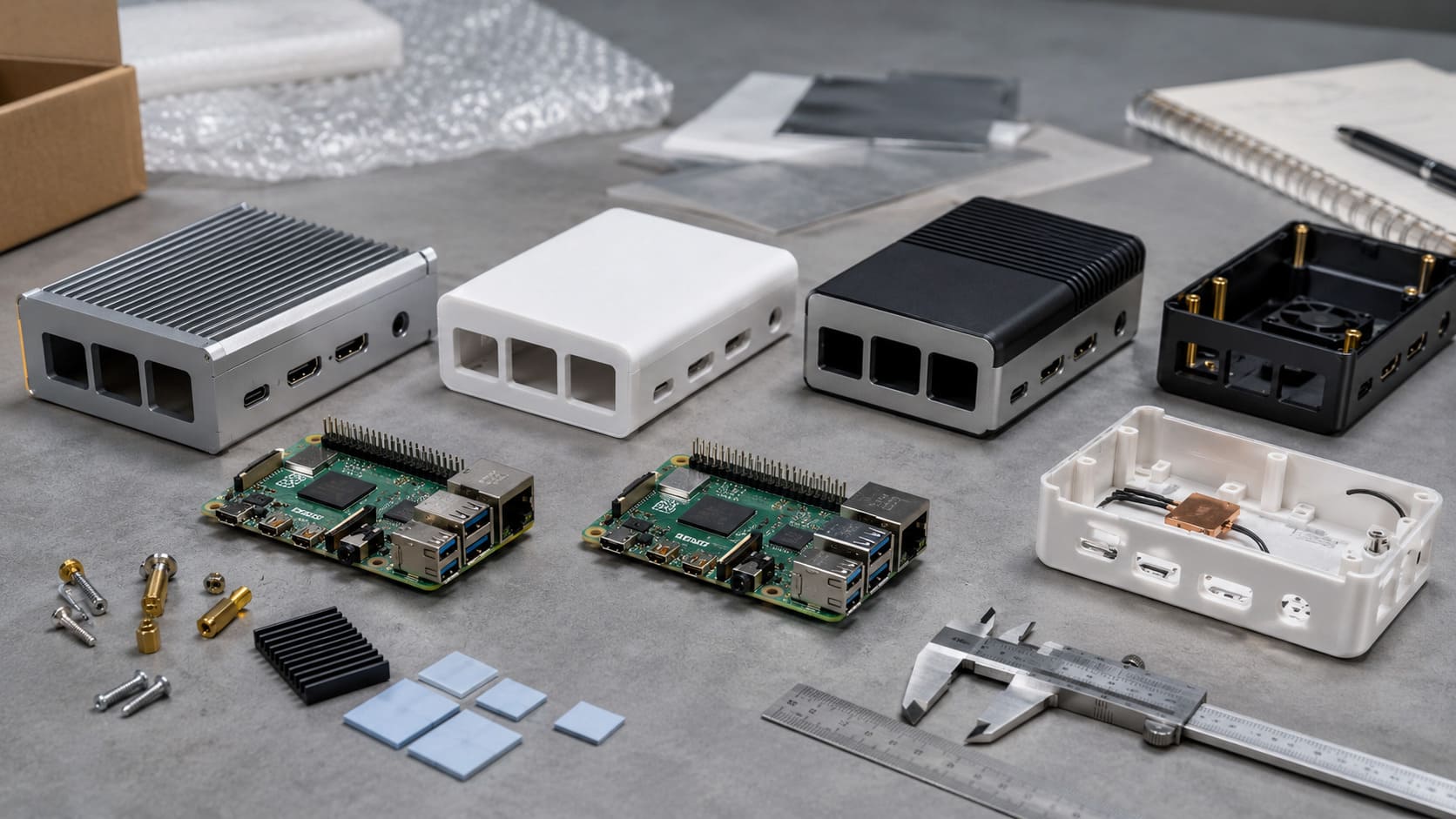
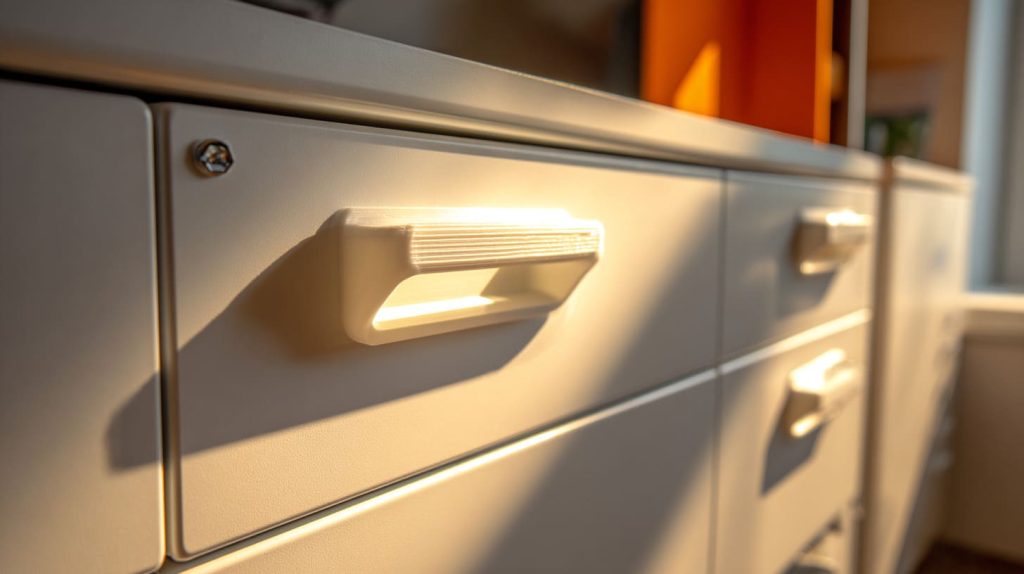
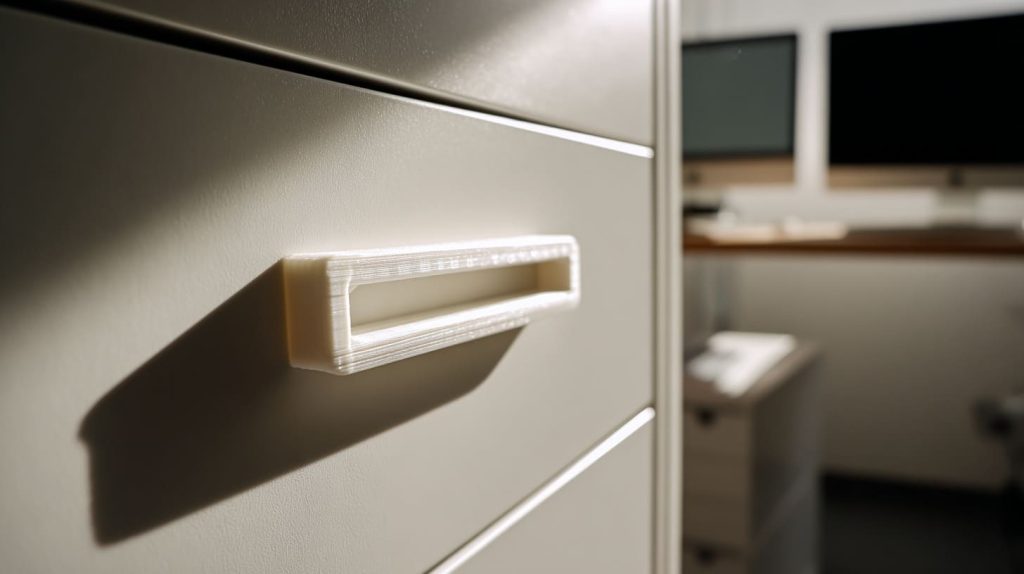
It all started with a broken drawer handle in my office.
I didn’t want to wait for a replacement, so I printed one myself.
It fit perfectly — smoother than I expected. That moment changed how I looked at 3D printing forever.
The truth? We don’t remember the prettiest prints. We remember the ones that made life easier.
Let’s talk about function — not just form.

What “functional” means in the context of 3D printing
When I say “functional,” I mean useful. Not a toy, not a display piece, but something that earns its keep.
It’s the bracket holding your router under the desk. The mount that saves your cables from tangling.
A functional print does real work — and keeps doing it.
Why choosing a “most functional” piece matters
Every maker remembers that first “aha” moment — when a print stops being decoration and starts being solution.
Picking the “most functional” piece helps you understand your journey: how you think, design, and solve problems.
For me, it was less about what I made and more about why I made it.
How this article will help you reflect on your own work
We’ll explore what makes a 3D print functional, look at some examples (including mine), and extract lessons that can shape your next project — whether you’re a hobbyist, engineer, or someone rebranding custom Raspberry Pi cases.
The Role of 3D Printing for Functional Parts

I often think of 3D printing as my “instant workshop.” When something breaks, I don’t ask who can fix it — I ask how can I design it?
Types of functional 3D‑printed pieces
Some of the most practical 3D prints I’ve seen fall into a few groups:
| Category | Example | Purpose |
|---|---|---|
| Tools | Wrench holder, cable clip | Organizing & simplifying work |
| Fixtures | Camera mounts, light brackets | Stability & adjustability |
| Replacement parts | Drawer handles, knobs | Repairing without waiting |
| Custom enclosures | Raspberry Pi cases, sensors | Protection + personalization |
Key benefits of 3D printing for functionality
3D printing thrives in the small gap between “I need it now” and “nobody sells this.”
It’s fast, flexible, and affordable — especially for low-volume or customized parts.
That’s why many of our clients at MaidaTech use prototypes before they invest in molds.
Common design & material considerations for functional prints
When printing for function, every line matters.
Stress on orientation, infill, layer adhesion
Strength in 3D printing isn’t just about material.
It’s about orientation — print direction determines tension points.
For example, a vertical bracket may break easily if printed with weak layer adhesion.
I learned this the hard way after my first Raspberry Pi mount snapped clean in half.
Material choice trade‑offs
Here’s a quick guide I keep taped near my printer:
| Material | Pros | Cons |
|---|---|---|
| PLA | Easy to print, affordable | Brittle, not heat-resistant |
| ABS | Strong, heat-resistant | Warps easily, needs enclosure |
| PETG | Flexible, durable | Can string, needs careful tuning |
| Nylon | Super strong | Hard to print, absorbs moisture |
Post‑processing, assembly and integration
Sometimes a print alone isn’t enough.
Adding screws, inserts, or rubber pads turns a plastic part into a true component.
Think of it as combining the best of digital design and mechanical craftsmanship.
And just when I thought I’d mastered this balance — I realized design philosophy mattered even more…
Criteria for Evaluating the “Most Functional” Piece

I once asked friends in a maker forum, “What’s your most functional print?”
Nobody said “the prettiest one.” Most said “the one I use daily.”
Utility & frequency of use
If you reach for it every day — it’s functional.
That drawer handle I mentioned earlier? Still there after three years.
A good print earns its spot by being invisible — you forget it’s printed because it just works.
Complexity & fit
A perfect print often solves a specific problem.
When I designed a Pi enclosure for a client’s industrial project, every port mattered.
Precision in CAD became the difference between “fits perfectly” and “starts over.”
Success vs iteration
We often celebrate first-try wins. But in 3D printing, iteration is the hero.
I’ve reprinted the same part five times just to fix one millimeter gap.
Each try teaches you something about your printer — and yourself.
Longevity and robustness
Durability is the final exam.
Does the print survive heat, load, time, and accidents?
The best pieces last quietly — the ones that don’t, remind you to design smarter next time.
Learning and impact
Every functional print teaches something — about materials, mechanics, patience.
The real success? When that learning helps someone else build faster or think differently.
Case Study: My Most Functional 3D Printed Piece
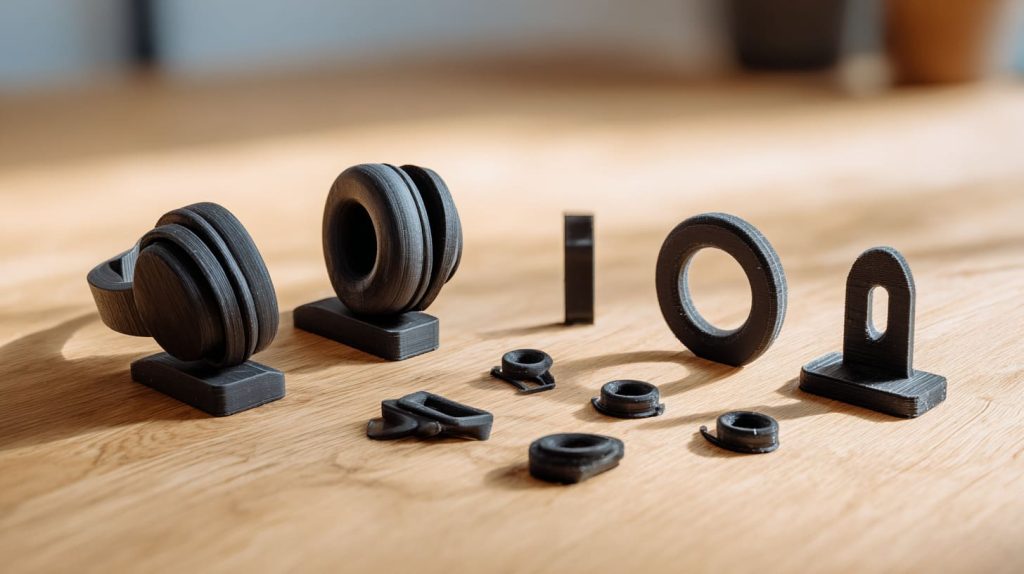
If I had to pick one — it would be a custom Raspberry Pi wall mount I made for a customer setup.
Background: What prompted the print
A client needed their Pi units fixed neatly under each monitor.
The commercial mounts were either too bulky or didn’t match their cable layout.
So I offered to design one — custom to their spacing.
Design process: concept, software, iteration
I used Fusion 360 to sketch a low-profile case with rear cable channels.
After two test prints, I adjusted the mounting holes by 1 mm. That small fix made installation effortless.
Material and print settings chosen
PETG was my choice — strong and slightly flexible.
0.2 mm layer height, 40% infill, and 3 walls kept it sturdy without wasting time.
How the piece functions
It’s still in use in their office today.
It holds the Pi securely, keeps cables hidden, and allows airflow — a small detail, but it matters.
Challenges faced & how they were solved
The first version melted near the CPU area under heat.
I redesigned the vent pattern, and added an air gap under the Pi. Problem solved.
Results
They ordered 50 units. Later, another client saw it and asked for custom branding — that’s when I realized functional prints can become products.
Reflections
If I did it again, I’d integrate modular clips to make upgrades easier.
Every project plants the seed for the next idea.
That experience reminded me — the magic of 3D printing isn’t in perfection. It’s in evolution.
Broader Examples of Functional 3D Prints (for inspiration)

Once you start seeing functional prints, you can’t stop. They’re everywhere.
Home / workshop fixes
Cable clips, wall hooks, drill bit holders — small items that quietly improve your day.
I printed a headphone stand last month. It’s not fancy, but now my desk feels organized.
Custom enclosures and mechanical parts
For engineers, enclosures are where art meets precision.
A well-designed Raspberry Pi or Arduino case shows how functionality and branding can blend.
Project‑specific bespoke solutions
Sometimes a part is so specific that only you can make it.
A friend printed a custom gear to restore his old record player — irreplaceable anywhere else.
Industrial / advanced functional prints
Factories use printed jigs, fixtures, and even robot grippers.
I’ve seen them speed up testing and save thousands in tooling costs.
That’s the real future of “functional” printing — invisible innovation.
Lessons Learned: Tips for Designing Your Own Functional Print
When I teach new makers, I tell them this:
Don’t print to impress. Print to improve.
Start from the real need
Ask yourself: “What’s annoying me right now?” That’s usually where the best ideas start.
Measure carefully and imagine the environment — is it hot, dusty, or under pressure?
Choose the right geometry
Ribs, fillets, and rounded corners matter more than looks.
They distribute stress, just like good architecture.
Select material wisely
Match the filament to its job.
No one wants a PLA hook in a hot garage — it’ll droop faster than ice cream in July.
Print settings matter
Layer height, infill, wall count — these are your secret dials of strength.
I once doubled shell thickness and suddenly a weak clip became rock solid.
Test and iterate
Start small, test fit, and tweak.
Each failure is a free tutorial — and your printer’s way of teaching patience.
Plan for assembly
Leave tolerance for screws, nuts, or adhesives.
Good design is not about one part; it’s about how parts meet.
Document and reflect
Keep notes. Save print profiles.
Because six months later, when you forget what worked — that file will be gold.
And that brings me to the bigger picture — how all of this connects back to our work as creators and manufacturers.
How This Applies to Makers, Engineers, and Re‑branding Businesses
For makers and hobbyists
Print what makes your life easier.
A good print doesn’t have to go viral; it just has to matter to you.
For engineers and customers
Functional 3D prints can replace weeks of waiting for parts.
We use this process at MaidaTech to validate enclosure designs before final molding.
It’s cheaper, faster, and gives you full control.
For B2B and custom‑OEM scenarios
Rebrand buyers like Davide often start with small custom prints — logo-engraved cases or prototypes.
Those functional models later evolve into production-ready designs.
That’s how real OEM collaboration begins: a shared problem, solved by plastic and patience.
Integrating 3D printing into factory workflow
Design → print → test → iterate.
It’s the same rhythm we follow before CNC machining or injection molding.
That’s the secret: small prints, big insights.
Conclusion
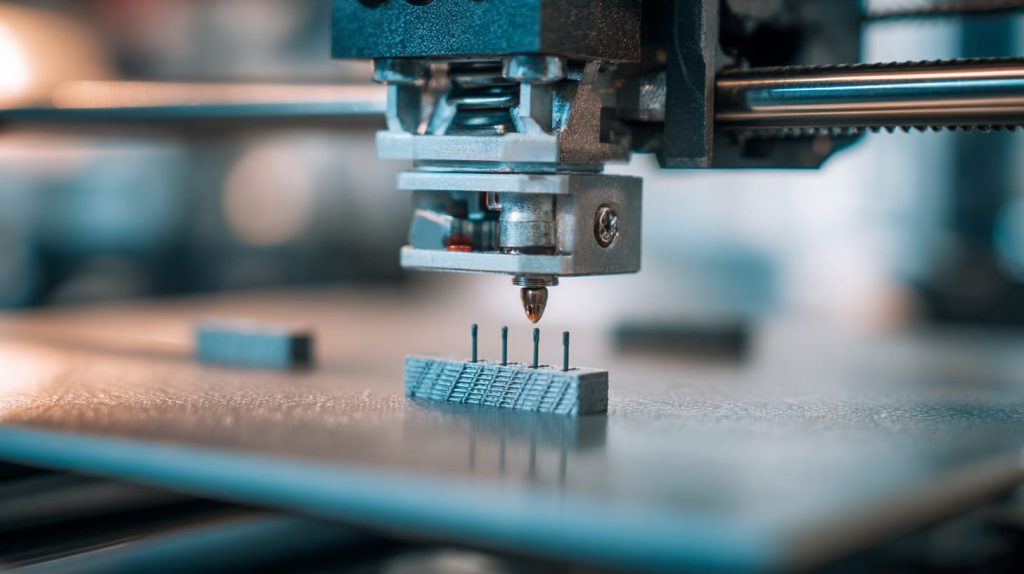
Looking back, my “most functional” print isn’t the flashiest — it’s the one that lasted.
It solved a real problem and taught me something deeper about design, patience, and collaboration.
If you’ve printed something that still works months later, that’s your winner.
The best prints don’t shout for attention. They just quietly do their job — over and over.
So, what’s your most functional 3D print?
Maybe it’s time to tell that story — and inspire someone else to make their own.