Skip to content

I used to worry that my projects were missing real-time control. Then I discovered Arduino, which solves that exact need. Let’s explore how it can outperform a Raspberry Pi.
An Arduino can handle real-time hardware tasks more reliably because it runs a microcontroller with direct pin control. It excels in dedicated, simple functions that need immediate responses, free from operating system overhead.
I remember once trying to control a motor quickly, but my Pi’s OS caused hiccups. That experience revealed the power of a microcontroller approach. Let me share what I learned about Arduino’s unique strengths.
What Are The Advantages Of Arduino Over Raspberry Pi?
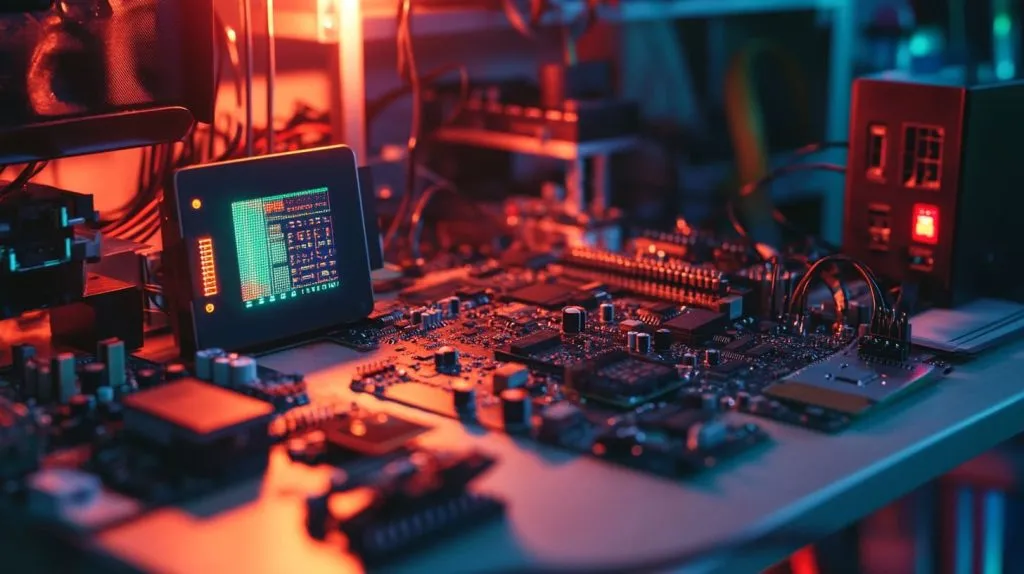
I once spent hours wiring up sensors on a Pi, then discovered Arduino’s simpler setup.
Arduino boards are easier to program, offer direct pin control, and lack an operating system layer. This means predictable timing and fewer delays for tasks that demand immediate responses.
Additional Thoughts
If you want to explore Arduino basics, you’ll see how microcontrollers run code immediately, without juggling system processes. This direct approach shines in sensor monitoring or quick motor controls.
| Feature | Arduino | Raspberry Pi |
|---|---|---|
| Operating System | Not required | Runs Linux |
| Setup Complexity | Simple | More involved |
| Real-Time Performance | Predictable | OS might introduce lag |
Which Board Is Better Than Raspberry Pi?
I’ve tested various boards for different tasks.
No single board is best. Options like BeagleBone or Jetson excel in higher-level processing, but Arduino shines in direct hardware handling where you need easy wiring and faster response times.
Additional Thoughts
For heavy computing, a Jetson might outperform a Pi. For tight sensor loops, Arduino still comes out on top. Sometimes it’s helpful to check low-power microcontrollers if battery life matters more than processing power.
What Is The Disadvantage Of Raspberry Pi?

I love Pi’s versatility but have hit a few snags.
Its main drawback is OS overhead, causing unpredictable timing in critical tasks. It also needs more power and takes longer to boot, which can hinder quick setups or battery-dependent projects.
Additional Thoughts
When I needed precise sensor readings, the Pi occasionally paused to handle background jobs. That delay mattered. It’s fine for running servers or full applications, but less optimal for tight control loops.
What Is The Advantage Of Using Arduino?
My first Arduino project was a simple motion sensor.
Arduino’s advantage lies in its straightforward, microcontroller-based approach. It boots instantly, manages pins directly, and doesn’t get bogged down by an operating system or background processes.
Additional Thoughts
When I flipped a switch, the sensor code ran right away—no delays, no waiting. It was refreshing to see that level of responsiveness for immediate tasks or loop-based programs.
What Is Arduino Best For?
Minimalism wins in some cases.
Arduino works best for projects needing direct input and output control, like sensor monitoring, motor driving, and quick reaction tasks. It handles these jobs consistently without complicated software layers.
Additional Thoughts
I once built a weather station that reported temperatures every second. The Arduino never missed a beat, running smoothly without worrying about background updates or OS tasks interrupting its schedule.
What Are The Disadvantages Of Arduino?

Not every task suits a microcontroller.
Arduino has limited memory, slower processors, and lacks multimedia capabilities. It can’t run a full OS or handle heavy applications like streaming video or advanced GUI interfaces.
Additional Thoughts
I tried a complex display once and quickly hit the Arduino’s memory limit. A Pi would’ve been better for heavy graphics or multi-threaded software. Arduino is simpler but less powerful overall.
Why Is Arduino Preferred For Real-Time Applications Over Raspberry Pi?

I once lost a robotics race because my Pi-based bot lagged.
Arduino is favored for real-time tasks because it operates on a loop without an OS. It executes instructions immediately and predictably, crucial for timing and sensor-heavy applications.
Additional Thoughts
Real-time means microsecond precision. The Pi juggles background processes, so it can’t guarantee those timing windows. In robotics, even minor delays can be the difference between smooth control and jerky movements.
How Does Arduino Handle Low-Level Hardware Interfacing Better Than Raspberry Pi?

I tried bit-banging on a Pi and got inconsistent results.
Arduino’s microcontroller architecture accesses pins at the register level. There’s no OS scheduler, so you can flip pins in exact timing. This reliability is ideal for custom protocols or rapid signal changes.
Additional Thoughts
When my project required precise, low-level manipulation of GPIO, the Arduino gave me confidence that signals would fire exactly when coded, without random wait times.
What Are The Power Consumption Advantages Of Using Arduino Instead Of Raspberry Pi?
I once built a battery-powered garden sensor with a Pi.
Arduino typically uses less power since it runs at lower frequencies and lacks an OS. This makes it better for remote or battery-based tasks where energy savings are critical.
Additional Thoughts
Switching to Arduino let my garden sensor run for weeks. The Pi needed more juice and a stable shutdown routine. For small, continuous tasks, those power differences are a big deal.
Conclusion
Arduino excels at real-time control, fast pin manipulation, and low power use, while Raspberry Pi remains best for heavier computing and multimedia.