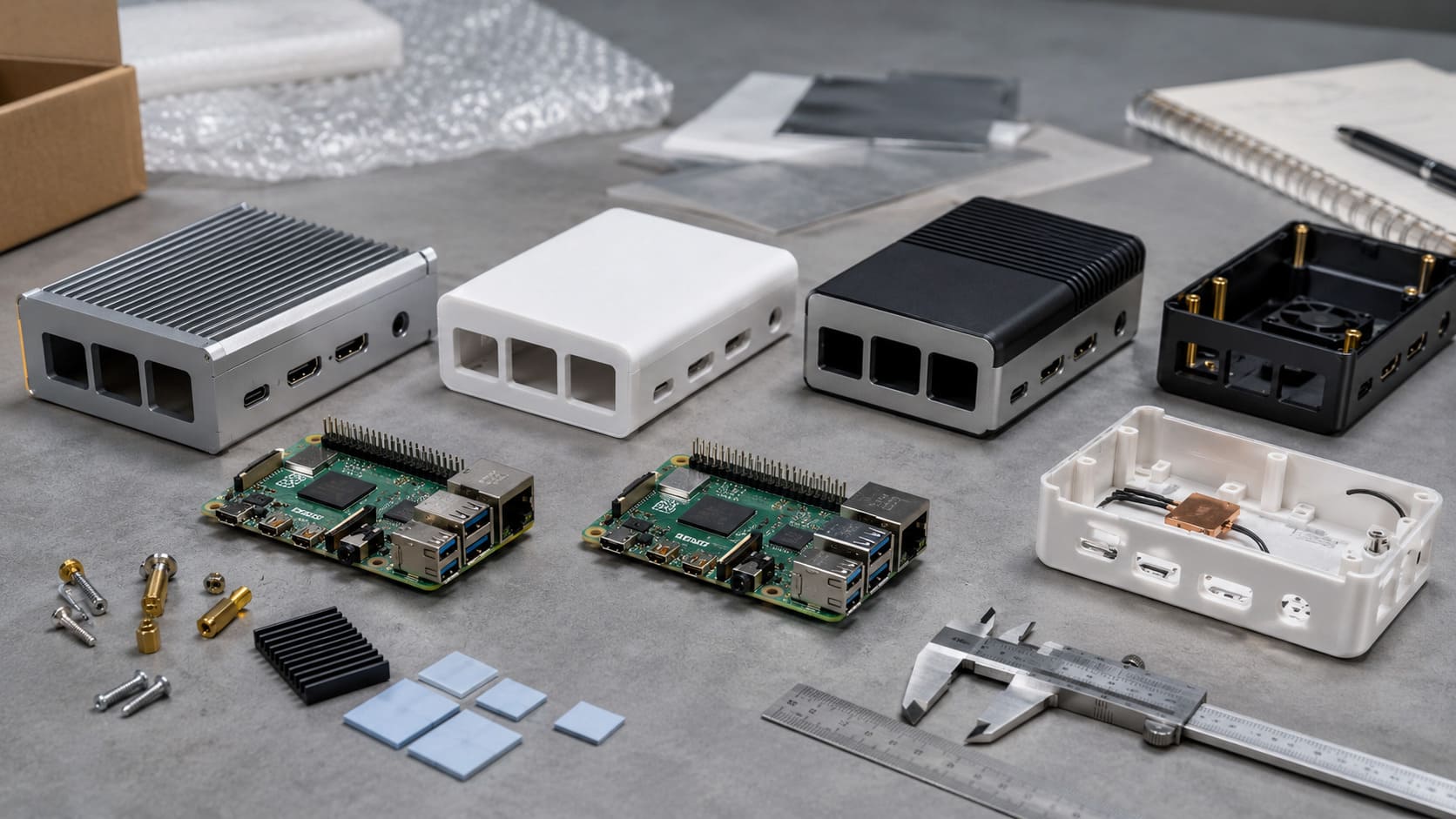
I remember the first time I realized how powerful private labeling could be. I was in my workshop, staring at a plain Raspberry Pi case, thinking, “What if I could make this more unique?” I had seen big brands place their logos on everything from coffee mugs to power banks. I knew the same potential existed for tech accessories.
The Rise of Private Labeling in Tech Accessories
I have watched private labeling grow every year. It feels like everyone wants to add a personal touch to the devices they sell. Raspberry Pi cases are not an exception. Large companies and small shops both love putting their own spin on these enclosures. It makes their brand feel different in a crowded market.
Critical Angle: There is a risk in chasing trends blindly. Some folks add a logo or two and expect it to become an overnight sensation. But branding requires consistency. I have seen friends, like Davide from Belgium, discover that a flashy logo without a cohesive brand story can confuse customers. It’s about crafting a deeper connection.
Overview of Custom Logo Opportunities for Raspberry Pi Cases
A Raspberry Pi case can be like a mini billboard. It can show a person’s personality or a company’s entire identity. I have worked with re-brand customers who start with a simple logo, then move to engraved slogans, and finally create complete color schemes. Each step changed how end users saw their products.
Critical Angle: These custom logos can also backfire if the quality of the printing is poor. I’ve seen cases fade or peel because of subpar techniques. Good providers use advanced methods like UV printing, laser engraving, or heat transfers. This attention to detail matters. No one wants to deal with returns or customer complaints.
I know that was quite a journey of ideas. Let me walk you further into the world of private labeling by explaining why it might be the right choice for you.
Why Private Label Raspberry Pi Cases?

I spoke with a local distributor who once told me, “Everyone sells the same case. Why not be the one that stands out?” That simple question opened my mind. Private labeling is not just about stamping a logo. It’s about shaping a story.
Advantages for Wholesalers, Distributors, and Retailers
I work directly with wholesalers who order thousands of units. When they put their own branding on these cases, they become the “go-to” in their region. They develop loyalty. Retailers often talk about how it helps them add a personal touch. And I have seen distributors build entire promotions around a holiday-themed Raspberry Pi case design.
Critical Angle: The big worry is cost. In my experience, the price of private labeling can be offset by increased sales or better margins. Some clients are willing to pay extra for exclusivity. But I usually advise them to keep their budget balanced so they don’t overcharge or lose profit.
Market Demand and Growth Potential
I’ve watched interest in Raspberry Pi accessories rise each year. The demand is fueled by tech hobbyists, educational programs, and commercial applications. When I started out, I supplied cases mainly for makers. Now, large companies want to incorporate Raspberry Pis into their products. They want their branding front and center.
Critical Angle: That growth can make some folks jump in blindly. I always remind them to research. Where do they see the highest volume of orders? Is it Amazon, local shops, or direct sales to schools? Each channel might want a different look. Without that knowledge, they risk overstocking or missing the real market.
Differentiating Your Brand in a Competitive Marketplace
I notice that many sellers offer the same standard black or white cases. It’s like walking into a store and seeing rows of identical items. Private labeling sets you apart. A unique color or embossed logo helps you remain in customers’ minds.
Critical Angle: But there’s a fine line between standing out and confusing buyers. If you make the case too quirky or complicated, people may avoid it. I remember a friend who added so many symbols and patterns that it looked messy. Balance is crucial.
I believe these reasons are eye-opening. Let’s look deeper at the foundation you need before you dive in.
Key Considerations Before Starting Private Labeling

I once spoke to Jacky, who runs a re-brand shop on Amazon. He told me how easy it is to get lost in the “cool factor” of private labeling. He realized that skipping key steps can create big roadblocks. His story reminded me to slow down and plan carefully.
Identifying Target Audience and Their Requirements
I create a simple chart in my notebook whenever I start a new private labeling project:
| Target Audience | Specific Needs | My Observations |
|---|---|---|
| Wholesalers | Competitive pricing, bulk orders | They often want simple packaging |
| Small Retailers | Custom logos, lower MOQs | They focus on brand recognition |
| ODM Customers (like lasle) | Unique designs, project-based requirements | They need fast feedback and open support |
Critical Angle: Not everyone wants the same thing. Wholesalers may care more about large volumes, while ODM customers want creativity. If you fail to understand their priorities, you risk offering the wrong solutions.
Understanding Raspberry Pi Case Materials and Manufacturing Techniques
I run a factory in China. We use ABS plastic, aluminum, or polycarbonate. Each has different advantages. ABS is common and cost-effective. Aluminum is premium and good for heat dissipation. Polycarbonate is durable and has a clear finish for see-through cases.
Critical Angle: Some clients think they can use any cheap material, but lower quality leads to cracks or warping. I always remind them how crucial durability is. If an enclosure fails in the middle of a major project, it can ruin reputations.
Establishing Budget, Pricing, and Minimum Order Quantities (MOQs)
When Davide placed his first large order, he asked me, “Can you give me a small run of 50 units?” That was tough because we usually require higher MOQs for custom designs. But we talked it through and found a middle ground.
Critical Angle: This process can be tense. If your MOQ is too high, you lose smaller clients. If it’s too low, you might fail to meet manufacturing efficiency. It’s a delicate balance that every supplier must handle wisely.
I’ve realized planning is key, but you also need the right manufacturing partner. Let’s see how to pick one you trust.
Selecting the Right Manufacturer

I visited a manufacturing expo in Shenzhen once and spoke to various suppliers. Some promised the moon but had outdated machines. Others were transparent about their capabilities. That taught me not to believe the first glossy brochure I see.
Evaluating Production Capabilities and Quality Standards
When you choose a supplier, look at their equipment. Ask if they do injection molding or CNC machining in-house. Check if they have certifications like ISO. I run advanced lines with a focus on quality control at my factory. It cuts down on defects.
Critical Angle: Not every supplier is honest about their limitations. I’ve had overseas clients who faced repeated delays. It turned out their manufacturer was outsourcing tasks to smaller workshops. This leads to inconsistent results and wasted time.
Communication, Lead Times, and Time Zone Challenges
I live in China, and I know the frustration of scheduling calls with clients in Europe or the US. I try to offer flexible times. But if a supplier ignores your emails or takes a week to respond, it can mess up your entire timeline.
Critical Angle: Good communication is vital. It prevents misunderstandings about color codes, shipping details, or packaging. Jacky once had a case color mismatch because a single digit in the Pantone code was off. That led to wasted samples and extra freight costs.
Negotiating Pricing and Customization Services
I prefer open discussions about budget. Some manufacturers don’t reveal hidden fees until the last minute. I give a single all-inclusive quote with a breakdown for tooling, branding, and packaging. That approach builds trust.
Critical Angle: There’s a fine line between a good deal and cheap quality. I tell my customers that paying a bit more for solid craftsmanship is worth it. I’ve seen too many corners cut in pursuit of unrealistic discounts.
I enjoy finding solutions. Next, let me walk you through the practical steps to launch your private-labeled Raspberry Pi case.
Steps to Launch Your Private-Labeled Raspberry Pi Case

I once guided a client from concept to finished product in under a month. We worked day and night, but we did it. Let me share the general flow I use.
Defining Your Brand Vision and Logo Design
I always start with the client’s vision. Some people want a minimal approach. Others want bold shapes and bright colors. I ask them for a logo file and brand guidelines. I prefer a vector format for clarity.
Critical Angle: If the client doesn’t have a brand style, I offer suggestions. But too many changes can slow down the process. I advise them to finalize designs early. Endless revisions can lead to missed deadlines and ballooning costs.
Requesting Prototypes and Samples
I make sure to produce a sample after the design is set. This step catches issues like color mismatches or a logo that looks too small. One time, I discovered a misalignment that would have caused huge problems in mass production.
Critical Angle: Some clients skip the sample stage to save time. That’s risky. A sample is your chance to spot mistakes. Without it, you could receive thousands of flawed cases. That’s a nightmare no one wants.
Finalizing Production and Quality Control
When the sample looks right, mass production begins. I have a dedicated QC team that checks each batch for cosmetic defects and correct branding. This helps me maintain high standards.
Critical Angle: If you’re not involved in the QC process, you might be in for a surprise. I recommend receiving weekly updates. A little extra vigilance can save weeks of trouble.
Managing Packaging, Labeling, and Shipping
Packaging can be as simple as a box or as elaborate as a gift-style package. I also help with labeling, like adding barcodes for Amazon or private label design stickers. Shipping is arranged via sea or air, depending on the client’s timeline.
Critical Angle: Shipping can be delayed by customs or weather issues. Planning a buffer period is wise. I had a client once who insisted on just-in-time delivery. A storm caused a week’s delay, and it became a stressful scramble to keep orders on schedule.
Now that you know the basic steps, let’s talk about making your brand shine with the right packaging approach.
Best Practices for Branding and Packaging

A friend once showed me a beautiful phone case box that included a small note: “Made with care for you.” That simple message made the product feel more human. I aim to replicate that warmth when I package my Raspberry Pi cases.
Consistent Brand Identity Across All Touchpoints
I usually recommend the same color palette, fonts, and logo style on the case, the box, and even the instruction manual. It builds brand recognition. I learned this from a Belgian client who saw a spike in repeat sales after he simplified and unified his brand design.
Critical Angle: If your business card, case design, and packaging all look different, you weaken your brand. It’s like wearing mismatched shoes and a hat that doesn’t fit. Consistency can be your best friend.
Packaging Options: Custom Boxes, Inserts, and Stickers
Many clients love creative unboxing experiences. Some want foam inserts that cradle the case. Others add Raspberry Pi community stickers for a fun flair. I often suggest a neat info card that thanks the customer for their purchase.
Critical Angle: Too much packaging can raise shipping costs. Too little packaging can lead to damage. It’s a balancing act. I remember one batch that got crushed in transit because the boxes were too thin.
Showcasing Added Value: User Guides, Warranty Cards, and Support
I always add a brief user guide with pictures. It helps new users set up their Pi without confusion. A warranty card or support information can reassure them. If something goes wrong, they know where to reach me.
Critical Angle: Some sellers skip these extras to cut costs. But a user guide or warranty card can boost customer satisfaction. Happy customers leave great reviews, which can translate to more sales.
But even with these best practices, challenges can still arise. Let’s face those head-on.
Common Challenges and How to Overcome Them

I have faced my share of hiccups. Once, I spent days clarifying a tiny detail that caused a production delay. Challenges will come. The trick is to handle them effectively.
Communication Barriers and Time Zone Differences
I wake up early to answer emails from clients in Europe and America. It’s not always easy, but I prioritize fast replies. Some of my customers speak English as a second language, so I keep sentences short.
Critical Angle: Communication issues can lead to product errors. I had one customer who requested “slightly bigger” vents on the case but never specified how much bigger. The final design ended up with awkwardly large vents. Precise communication matters.
Production Delays and Stock-Out Risks
Equipment breakdowns, material shortages, or shipping strikes can happen. My factory invests in backup machines and multiple material suppliers. That way, we can pivot quickly.
Critical Angle: Some clients order just enough inventory without a safety net. A delay could mean lost sales. I suggest ordering a buffer or staggering production runs to avoid a total shortage.
Ensuring Competitive Pricing Without Compromising Quality
I believe in fair pricing. Sometimes I see quotes that are shockingly low. They usually come with hidden catches, like cheap materials or little to no quality checks. That can hurt a brand in the long run.
Critical Angle: If a deal sounds too good, it might be. I advise folks to compare multiple quotes, factoring in quality, lead time, and reliability. The lowest price is not always the best option.
I think these challenges shape the entire journey. Let’s wrap things up with some final thoughts.
conclusion

Key Takeaways and Next Steps
I’ve shared what I’ve learned over years of helping people private label Raspberry Pi cases. First, plan well and know your audience. Second, choose the right manufacturer with strong communication and quality standards. And third, brand consistently to leave a lasting impression.
Future Outlook and Potential Expansions
I see more growth in custom designs, especially with the demand for unique projects and commercial applications. If you invest in solid partnerships and keep refining your brand, you can expand beyond simple cases to power supplies, heatsinks, or entire kit bundles.