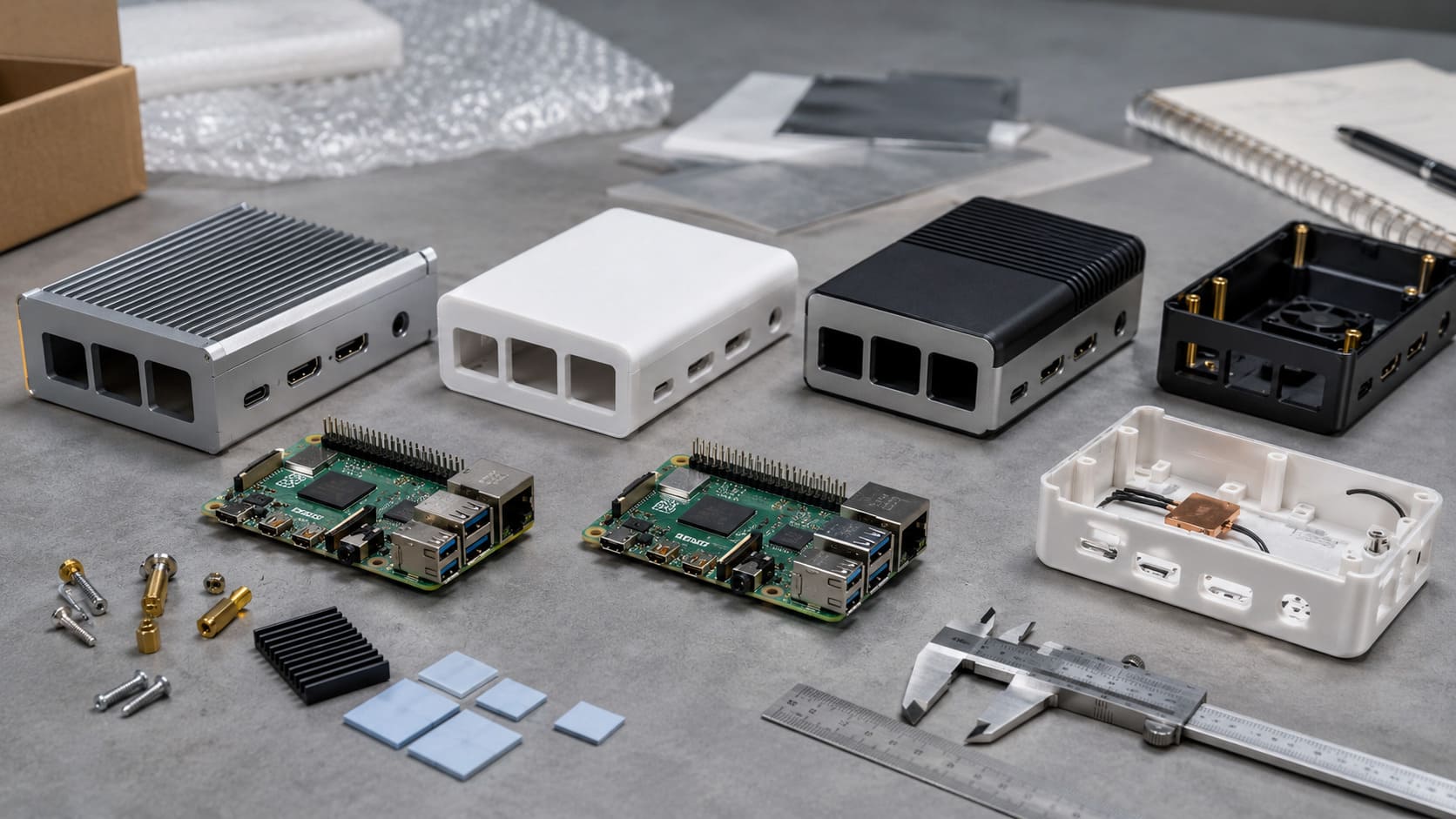
Raspberry Pi often sparks confusion—some see it as a mini PC, others think it's just code. So, which is it?
Raspberry Pi is primarily a hardware device—a single-board computer—but it depends entirely on software to function.
I still remember the first time I held one. It felt too light, too small, to be a “real” computer. But once I plugged it in and saw the desktop pop up—it changed everything.
Does the Raspberry Pi have software?
You bet it does. Without it, the board is just a fancy coaster.
Raspberry Pi needs an operating system—like Raspberry Pi OS or Ubuntu—to do anything useful.

Pre-installed or downloaded?
Most Raspberry Pi kits come with no software. You’ll usually download an image and flash it onto a microSD card. Some suppliers offer pre-installed OS cards for convenience, especially for first-timers.
Software is the soul
Think of Raspberry Pi hardware as the body, and the software as its mind. One doesn't mean much without the other. The beauty of Pi lies in how you can shape its software to do nearly anything—from smart mirrors to robots.
Is Raspberry Pi software free?
Yes—and that’s part of its magic.
The core software for Raspberry Pi, including Raspberry Pi OS, is completely free and open-source.

Why free matters
Free doesn’t mean limited. Raspberry Pi OS includes a full desktop, coding tools, browser, and even games. If you’re working with kids or doing a budget project, that zero-dollar price tag makes the Pi unbeatable.
A list of free gems
| Software | Purpose |
|---|---|
| Raspberry Pi OS | Main operating system |
| Thonny IDE | Python programming |
| LibreOffice | Document editing |
| Chromium | Web browsing |
| Scratch | Block-based coding |
What hardware is needed for Raspberry Pi?
To get up and running, you’ll need more than just the board.
Besides the Raspberry Pi board, you'll need a power supply, microSD card, monitor, HDMI cable, and keyboard/mouse.
Minimum setup checklist
| Component | Purpose |
|---|---|
| Power adapter | Powers the board (usually 5V 3A) |
| microSD card | Stores the OS and files |
| Display | Shows the output (HDMI recommended) |
| Keyboard/Mouse | Input devices for navigation |
| Case (optional) | Protection and cooling |
Some users skip the screen and go headless (SSH or VNC), but beginners often start with a full desktop setup.
What software do I need for Raspberry Pi?
This depends on what you want to build.
At the very least, you'll need an operating system. From there, install tools based on your project needs.
Software by use-case
| Project Type | Recommended Software |
|---|---|
| Programming | Thonny, VS Code, Geany |
| Media Center | Kodi, Plex |
| Robotics/IoT | Node-RED, MQTT, Python libs |
| Server Projects | Apache, MySQL, Docker |
Don't worry—there’s a tool for every dream. And most of them are lightweight enough to run well on a Pi.
What are the main hardware components of a Raspberry Pi?
It’s tiny, but it packs more than you’d expect.
Raspberry Pi includes a CPU, RAM, GPIO pins, USB ports, HDMI, and networking ports—all on one board.
A closer look under the hood
| Component | Function |
|---|---|
| CPU (SoC) | The brain of the Pi |
| RAM | Memory (varies from 512MB to 8GB) |
| GPIO Pins | For sensors, LEDs, and external control |
| HDMI Port | Connects to display |
| USB Ports | Mouse, keyboard, storage |
| Ethernet/WiFi | Networking and internet |
It’s basically a full PC—just shrunk to palm size.
Which operating systems can run on a Raspberry Pi?
More than you’d guess.
Raspberry Pi supports Raspberry Pi OS, Ubuntu, Kali Linux, RetroPie, and even limited versions of Windows.

Popular choices
| OS | Best For |
|---|---|
| Raspberry Pi OS | General use & education |
| Ubuntu | Linux lovers, dev work |
| RetroPie | Game emulation |
| Kali Linux | Security testing |
| Windows IoT | Specific Windows applications |
And yes, you can even try Android-based systems like LineageOS if you’re feeling adventurous.
Can Raspberry Pi run without an SD card or operating system?
Nope—no SD card, no boot.
Raspberry Pi won’t work without a microSD card flashed with an OS or other boot medium like USB or network boot.
Why the SD card is crucial
Think of it like a computer without a hard drive. The Pi needs a place to find instructions—no card means no boot screen.
Some newer models support USB boot or PXE boot, but they still need a file system to pull from.
How does Raspberry Pi's hardware compare to a regular PC?
Let’s be honest—it's not a powerhouse. But it holds its own.
Compared to a regular PC, Raspberry Pi is slower, less powerful, but smaller, cheaper, and more power-efficient.
Tradeoffs in specs
| Feature | Raspberry Pi | Regular PC |
|---|---|---|
| Cost | ~$35–$100 | $500+ |
| Size | Credit card-sized | Bulky |
| Power Draw | 5–15W | 65–300W |
| Ports | Limited | Abundant |
| Performance | Modest | High |
The Pi wins in minimalism and creativity. The PC wins in raw power.
Is Raspberry Pi considered an embedded system or a full computer?
Depends on how you use it.
Raspberry Pi can be both—it’s a full computer by design, but often used as an embedded system in projects.

Real-world examples
If you plug it into a monitor, use a keyboard and surf the web, it’s a desktop computer.
But if you tuck it inside a robot or weather station? Now it’s embedded.
That dual identity is part of what makes the Pi so versatile.
Do you need to install software on Raspberry Pi before using it?
Almost always—unless someone prepped it for you.
You’ll usually need to flash an operating system onto a microSD card before first use.
Setup is part of the learning
You’ll get to know Raspberry Pi Imager or Balena Etcher pretty quickly. It’s a simple step, but it teaches you how systems boot—and that’s valuable knowledge.
What is pre-installed on Raspberry Pi kits from suppliers?
Not always the same—and not always included.
Some Raspberry Pi kits come with Raspberry Pi OS pre-installed on a microSD card, while others require setup from scratch.
What's usually in the box?
| Item | Commonly Included? |
|---|---|
| Raspberry Pi board | ✅ |
| Power adapter | ✅ |
| microSD (w/ OS) | ❌ / ✅ (varies) |
| HDMI cable | ✅ |
| Case | ✅ |
| Heatsinks/fan | ✅ or optional |
Always read the listing carefully before you buy—it varies wildly between brands.
Can Raspberry Pi be used without programming knowledge?
Absolutely.
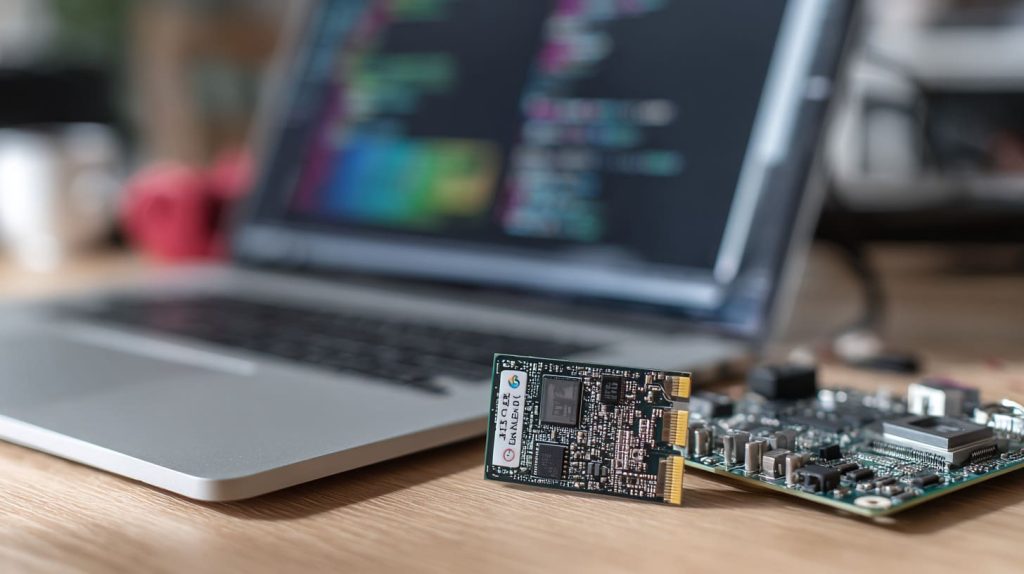
You can use Raspberry Pi as a mini desktop, media player, or retro console without writing a line of code.
But here’s the twist
The more you learn, the more you unlock. A little Python or Bash can turn your Pi from “cute” to “powerful.” But it’s not required from day one.
Is Raspberry Pi good for running Linux or Windows?
Linux, hands down.
Raspberry Pi is optimized for Linux distributions, while Windows support is limited to IoT Core or special ports.
Side-by-side view
| OS Type | Performance | Compatibility | GUI Experience |
|---|---|---|---|
| Linux (Pi OS, Ubuntu) | ✅ Great | ✅ Broad | ✅ Smooth |
| Windows (IoT, 10 ARM) | ❌ Limited | ❌ Somewhat | ❌ Often Laggy |
Most power users, educators, and tinkerers stick with Linux for good reason.
What software tools are recommended for Raspberry Pi users?
There’s a toolbox for every need.
Top software tools include Raspberry Pi Imager, VS Code, Thonny, and VNC Viewer for remote access.
My personal toolbox
- Raspberry Pi Imager – for flashing OS images
- VS Code – my go-to for coding
- Thonny – great for Python beginners
- VNC Viewer – headless control from my laptop
- GParted – for partition tweaks
Once you get the hang of it, your software stack will evolve with your projects.
Conclusion
Raspberry Pi is hardware—but without software, it’s just a board.