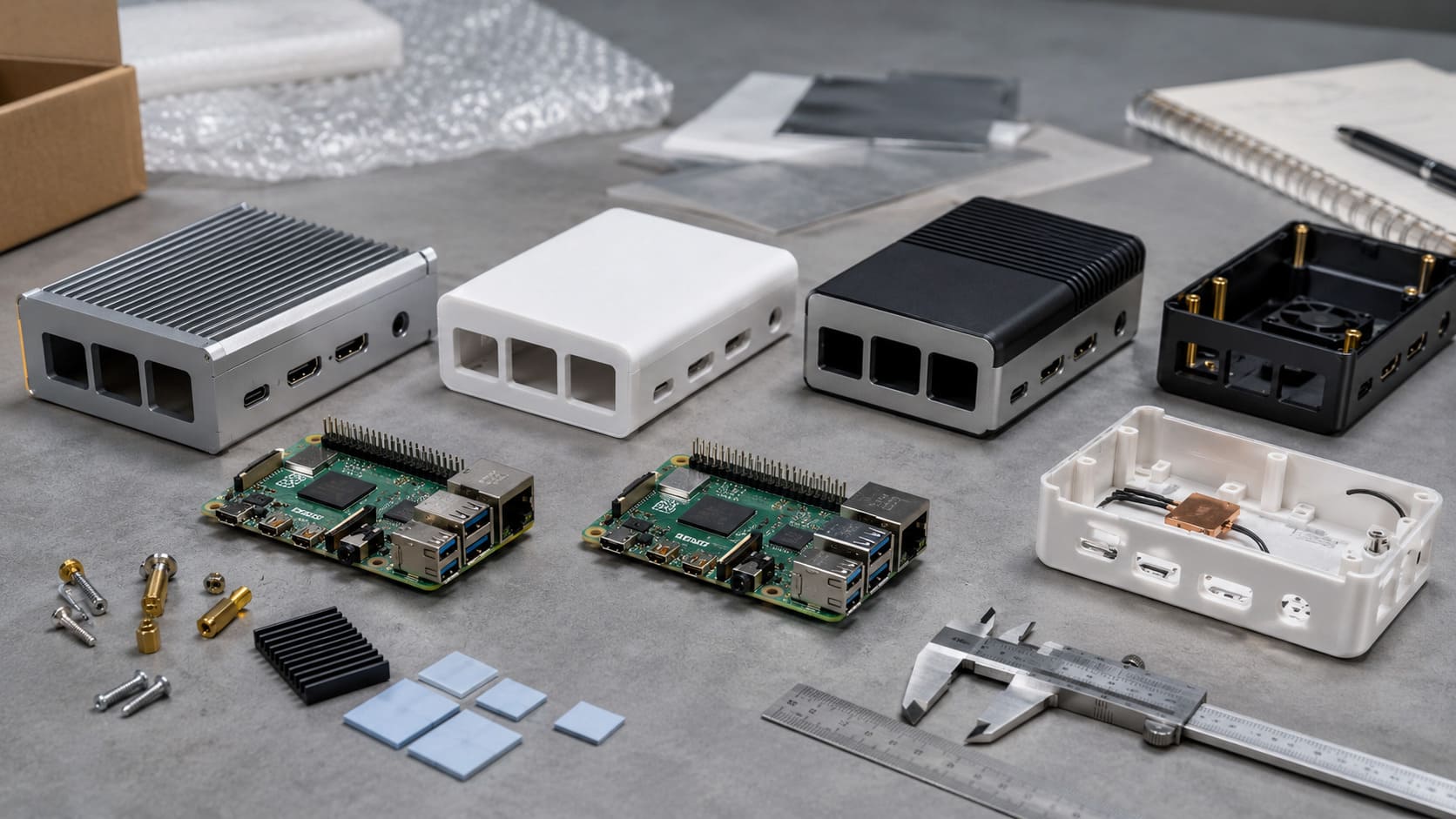
I remember the first time I was introduced to microcontrollers. I was sitting in a tiny workshop, surrounded by tangled wires and half-soldered circuit boards. A friend handed me a small Arduino board and said, “You should try this out.” At that moment, I had no idea how one tiny device would open up a new world of experimentation for me. Not long after, I discovered the Raspberry Pi 3 B+. It felt like I’d taken the leap from riding a bicycle to driving a car. Even though both help me get from point A to point B, they do so in very different ways. That’s what sparked this article.
What Are Arduino and Raspberry Pi 3 B+?
Arduino is a microcontroller-based platform that takes me back to my earliest DIY days. Its strength lies in simplicity and direct control. When I use Arduino, I feel like I’m fine-tuning every single signal on each pin. Meanwhile, Raspberry Pi 3 B+ is a mini-computer with a proper operating system. It reminds me of a small laptop that can fit in my palm.
I run a business in China called MaidaTech, where we focus on making custom Raspberry Pi cases and other accessories. I’ve seen many clients get confused between Arduino and Raspberry Pi 3 B+. This confusion often stems from not knowing what each board does best. I understand the struggle because I’ve been there too.
Why Compare Them?
I compare them because many of my partners, like Davide from Belgium, often ask, “Which one should I pick for my next project?” Some folks need bare-bones control over sensors, while others need an entire computer with Wi-Fi and a full OS. I’ve realized that saving money is not the only factor here. It’s also about matching the right tool to the right job.
Sometimes I remind new buyers that a new project is like planning a trip: are you hiking or driving a sports car? Different journeys require different gear. Now, let’s see how these two platforms differ in their architecture, features, and potential usage.
I don’t want you to doze off. Let’s move to the core differences and keep this interesting.
Core Differences in Architecture and Design

When I’m picking a development board, I usually think about what’s under the hood. I ask myself, “Do I need a powerhouse or a simple, efficient tool?” That question quickly leads to architecture.
CPU vs. Microcontroller
Arduino uses a microcontroller. It’s like a dedicated, single-minded helper that focuses on one job at a time. I often use Arduino boards when I need reliable, loop-based tasks. For instance, a sensor reading repeated thousands of times in a day.
Raspberry Pi 3 B+ has a more advanced CPU and acts like a fully functioning computer. I can install an operating system, run multiple programs, and even open a web browser. In many ways, Arduino is the hammer, and Raspberry Pi 3 B+ is the entire toolbox.
To see these differences clearly, here’s a simple table:
| Feature | Arduino (e.g., Uno) | Raspberry Pi 3 B+ |
|---|---|---|
| Architecture | AVR or ARM | ARM Cortex-A53 |
| Clock Speed | ~16 MHz | ~1.4 GHz |
| Multitasking | No | Yes |
| Main Usage | Sensor control | Full OS, multiple tasks |
I sometimes imagine it like comparing a light switch to a digital assistant. The switch (Arduino) does one thing but does it very well, while the assistant (Raspberry Pi) can handle multiple tasks and still have energy left over for other chores.
Memory and Storage
Memory is crucial. Arduino often has limited SRAM, sometimes measured in a few kilobytes. It’s enough for smaller tasks, like toggling an LED or listening to sensor data. Raspberry Pi 3 B+ has up to 1 GB RAM, plus you can add a microSD card with a full operating system. This difference reminds me of reading a short grocery list (Arduino) versus reading a whole book (Raspberry Pi).
I once built a temperature logger with an Arduino. It stored data in an external EEPROM because the onboard memory was tiny. By contrast, with a Raspberry Pi 3 B+, I simply saved data onto the microSD card or even used an online database. The difference in memory capacity really changes the game.
Operating System and Runtime Environment
Arduino typically runs a single program compiled in C/C++. It’s a loop-based environment. Raspberry Pi 3 B+ runs a Linux-based OS like Raspbian (Raspberry Pi OS). This means I can code in Python, C, Java, or almost anything else. I often compare it to riding a motorcycle (Arduino) versus driving a minivan (Raspberry Pi). The minivan can carry more people and things at once, but the motorcycle is more direct and nimble.
Power Consumption and Efficiency
For low-power projects, I usually reach for Arduino. It can run on battery for extended periods. The Raspberry Pi 3 B+ draws significantly more current, especially when Wi-Fi or Bluetooth is on. If I’m building a solar-powered sensor station in a remote area, Arduino might be the better fit. On the other hand, if I need to run multiple software processes or connect to the internet constantly, Raspberry Pi 3 B+ stands out.
That’s the gist of how I see architecture. Let’s talk about ease of use next. I promise it won’t be boring.
Ease of Use and Development Environment

I’ve been in countless workshops watching people scratch their heads over cryptic error messages. Development environment can be a dealbreaker if it’s too complicated.
Programming Languages and Frameworks
Arduino coding is often done in C/C++ using the Arduino IDE. It’s straightforward, and I love how quickly I can get an LED blinking. Raspberry Pi 3 B+ lets me use Python, Node.js, or even Java. This variety feels freeing. I once wrote a small web server in Python on the Pi to control an LED strip. It felt like a mini miracle to type a URL in my phone browser and see the lights change.
One time, I met a new buyer who wanted to do machine learning on a small footprint. I advised them to go for Raspberry Pi 3 B+ because libraries like TensorFlow Lite are available for ARM-based systems. Arduino is great, but it’s not suited for heavy computations.
Setup and Configuration
An Arduino is almost plug-and-play. I connect it via USB, open the IDE, and upload a sketch. Raspberry Pi 3 B+ requires an OS image, a microSD card, and some configuration. It’s still not hard, but it’s more like setting up a mini-PC.
For re-branding clients at MaidaTech, we often provide pre-configured images for Raspberry Pi, so they can flash the card and start testing. This helps them skip some steps, which is especially valuable for folks who want to resell with their own custom case. Still, Arduino might be less time-consuming if all they need is a single, straightforward application.
Community Support and Documentation
I can’t count how many times I have leaned on forums for troubleshooting. Both platforms have massive communities. If I search for “Arduino error troubleshooting” or Raspberry Pi setup guides, I usually find a forum thread that answers everything. In my opinion, Arduino edges out slightly in terms of beginner-friendly help, while Raspberry Pi has vast resources on advanced topics.
Whenever I’m stuck, I think of my early days when I had to debug everything from memory leaks to Wi-Fi disconnections. Without these communities, I’d still be scratching my head. It’s like having a global support team on standby.
Let’s look at real-world usage to see how these boards compare.
Common Use Cases

I’ve seen many interesting projects. From monitoring factory lines to building smart home systems, each use case calls for a different approach.
Simple Prototyping and Hobbyist Projects
Arduino is popular for quick prototypes. It’s so simple to get started. I once built a motion-activated alarm system for my garage in a single afternoon with Arduino. No OS overhead, no complex libraries needed. Just wire up a sensor and write a few lines of code.
Raspberry Pi 3 B+ can handle more advanced hobby projects, like a custom media center. But if I’m just blinking LEDs or reading temperature, Arduino might be the easier choice. At trade shows, I’ve seen people connect a few sensors to measure humidity, temperature, and light. Arduino shines in that scenario.
Robotics, Automation, and IoT
Robots often need real-time responses. Arduino can do that because it doesn’t have to juggle multiple processes. Yet, if I need vision processing or remote updates via a web server, Raspberry Pi 3 B+ might be better. For instance, I once saw a small Pi-based robot with a camera streaming live video. That’s not something Arduino handles easily.
But I stay cautious: if my automation only requires toggling motors and reading sensors, I keep the Pi out of it. Why overcomplicate my life?
Education and Classroom Learning
Arduino is a gem for beginners. It teaches the basics of programming and hardware in a direct way. However, some classrooms want to show students a full operating system, command-line interfaces, and networking. Raspberry Pi 3 B+ helps with that. I recall a workshop where students used the Pi to learn Linux basics. It opened their eyes to how computers really work at a lower level.
Product Customization and Branding Needs
In my business, MaidaTech, we help folks like Jacky from Belgium. He sometimes needs a custom Raspberry Pi case with his own logo. This is crucial if he’s selling on Amazon. The Raspberry Pi 3 B+ is usually the star product in that scenario. But if he ever decided to brand an Arduino, we could also do that, although it’s less common in the re-branding scene.
Many of my clients in B2B want to add a custom label or even a redesigned shell. They often prefer the Pi if they plan to run software that interacts with end users, because a Pi can display graphical interfaces. Still, an Arduino works fine for less flashy tasks, like a background sensor node.
Let’s now shift to performance and see how they expand.
Performance and Expandability

Performance can sound like a buzzword. But I’ve found it’s often about the details—how much speed, how many pins, which expansions?
Processing Speed and Connectivity Options
Raspberry Pi 3 B+ has a 1.4 GHz quad-core CPU. It’s robust enough to run a full desktop environment or handle moderate computing tasks. It also has built-in Wi-Fi and Bluetooth, which I love for IoT projects. Arduino has to rely on add-on modules for Wi-Fi or Bluetooth, which can increase complexity.
I recall testing a Pi-based system streaming real-time video, controlling a servo, and hosting a small website. That’s a lot for one board. Arduino wouldn’t keep up with video streaming, but it’s not designed for that. It’s designed for direct control tasks.
GPIO and Extension Boards (Shields, Hats, etc.)
Arduino uses shields that stack onto the board. Raspberry Pi uses HATs that attach to its GPIO pins. Both are easy to find. I usually check an online marketplace or drop by electronics expos in Shenzhen to see the latest expansions.
One difference is the voltage levels. Arduino (5V logic on many models) differs from Pi (3.3V). I have to be careful if I mix them. This voltage difference sometimes surprises beginners. I remember hooking up a 5V sensor to a Pi once, and it caused some problems. That’s why I always check pin specs first.
Hardware Customization and Upgrades
Modifying an Arduino board is common. Soldering your own headers, changing clock speeds, or using custom bootloaders. Raspberry Pi 3 B+ is more of a closed ecosystem. Sure, I can swap microSD cards or attach expansions, but I won’t be modifying the CPU.
In my OEM and ODM services, I see more mechanical customization for Raspberry Pi—like different case designs or integrated fans. With Arduino, I see a focus on simpler enclosures because the board doesn’t need as much cooling or space.
Now, let’s peek at cost. That’s often the deciding factor.
Cost and Availability

I always tell my clients to consider total cost. It’s not just the sticker price of the board.
Unit Price and Bulk Pricing
Arduino boards can be cheaper, especially clones or third-party versions. If I buy them in bulk, the cost per unit can drop. Raspberry Pi 3 B+ boards are pricier, but you’re getting more horsepower. If you’re doing a large-scale project, you must consider this difference.
| Item | Approx. Price (USD) | Bulk Discounts |
|---|---|---|
| Official Arduino | $20 - $25 | Available |
| Arduino Clones | $5 - $10 | Yes (varies) |
| Raspberry Pi 3 B+ | $35 - $40 | Limited |
These numbers can vary, but it’s a rough snapshot. From experience, I sometimes see bigger discounts for Arduino orders if I buy over a thousand units. Pi boards might have limited wholesale flexibility. I do keep in mind shipping costs and import duties, which can shift the final expense quite a bit.
Value Proposition for Different Project Scopes
If I only need to blink LEDs or read sensors, investing in a Pi might be overkill. But if I need complex tasks like streaming data or hosting a server, paying extra for the Pi often saves me time and frustration. I weigh how important each feature is. A $5 Arduino clone can be a huge money-saver if it meets your needs.
Wholesale and Customization Opportunities
At MaidaTech, we focus on wholesale for both Pi and Arduino. We also do custom Raspberry Pi cases and branding. For large businesses or Amazon sellers who want a unique look, that’s a major plus. I’ve had a Belgian client request a custom color case to match his brand. That was a fun project. We engraved his logo and shipped out a hundred units. The Pi was more expensive, but it fit his brand identity better.
If you find yourself yawning, hold on. The next question is how to choose the right one for your specific project.
Which One Should You Choose?

When I’m consulting on projects, I always break it down into three key areas: project needs, budget, and future plans.
Project Requirements and Complexity
If you need multi-threading, OS-level tasks, or want to run advanced apps, Raspberry Pi 3 B+ is your friend. For simpler sensor reading, servo control, or anything with a quick real-time loop, Arduino is often enough.
I recall a friend who wanted to build a weather station. All he needed was a few sensors and a data logger. He picked Arduino and it worked perfectly. Another friend wanted a home media server plus sensor integration. He needed the Pi for all those combined tasks.
Budget and Resource Considerations
Arduino is cheaper in general, especially for big orders. Raspberry Pi 3 B+ costs more, but you get a full computer. If your budget is tight or you need many units, the Arduino might be the safer choice. Yet, if your application demands the performance of a Pi, that extra cost can be justified.
I’ve seen start-ups try to cut corners by using Arduino for tasks that really need a Pi. They ended up spending more time and money on complicated workarounds. In those moments, I wish I could rewind time and guide them differently.
Long-Term Support and Scalability
Arduino boards are simpler. They usually have fewer updates and changes. Raspberry Pi 3 B+ might require OS updates over time, which can be a blessing (new features) or a curse (unplanned maintenance). If you plan to scale your project or integrate with advanced services, a Pi might be more future-proof.
Now, let’s wrap up with some final thoughts and steps you might consider.
Conclusion

Final Thoughts
Comparing Arduino and Raspberry Pi 3 B+ is like comparing a reliable bicycle to a compact car. Both take you places, but their purposes differ. Arduino excels at handling straightforward tasks and real-time controls, while Raspberry Pi 3 B+ can host an entire operating system and run complex programs. In my experience running a custom case business, I’ve seen the strengths of each. It’s crucial to weigh what you truly need before picking a board.
Next Steps for Selecting the Right Platform
- Evaluate Your Needs: Write down each requirement. Do you need a full OS? Or do you just need to toggle a sensor?
- Check Your Budget: Don’t forget about bulk discounts and shipping fees.
- Test a Prototype: Buy one Arduino and one Raspberry Pi 3 B+ if possible. Experiment and see which one feels right.
- Think Long-Term: Make sure you can support updates or expansions if your project grows.