Skip to content
There are different kinds of servers a Raspberry Pi 4 can host such as web servers, file servers, and media servers. Thanks to its quad-core processor and up to 8GB of RAM, it’s perfectly capable of handling lightweight hosting tasks with ease.
As a web server, it can handle frameworks such as Apache or Nginx. The Pi excels as a low-powered file server, especially when using software such as Samba.
As a media server, it streams content with Plex or Jellyfin. It’s small, quiet, and energy-efficient, which combined with its versatility, makes it perfect for small-scale server needs.
What is a Raspberry Pi 4?

The Raspberry Pi 4 is a credit-card-sized, extremely low-cost computer that truly puts the power of computing in the palm of your hand – pun intended. The boxy little device is part of the growing field of single-board computers (SBCs), which house all the necessary computer components on a single circuit board.
Its design emphasizes ease of use, providing a versatile foundation for millions of imaginative technology endeavors. From powering everyday computing tasks to driving advanced AI applications, the Raspberry Pi 4 exhibits unparalleled versatility. That flexibility is a big reason why hobbyists, students, and developers all love the Raspberry Pi. It empowers them to experiment, discover, and design cutting-edge solutions.
The Raspberry Pi 4 is unique among traditional computers in that it’s widely heralded as a viable server. It’s capable of hosting web servers, file storage systems, VPNs, DNS services, and even mail servers. For instance, you can use it as a media server.
Organize and stream all your movies, music, and photos easily on all your devices. Its compact form factor, low cost, and versatility in applications make it a favorite for use in home projects or as a home server.
Features of the Raspberry Pi 4
The Raspberry Pi 4 is loaded with features that really make it shine, especially if you plan on hosting any servers. It has several USB ports – two USB 3.0 and two USB 2.0 – giving you the freedom to connect all of your peripherals or use external storage.
Dual micro-HDMI outputs supporting up to 4K resolution are a boon for media-heavy projects or visual monitoring. The GPIO (General Purpose Input/Output) pins allow users to interface with external hardware, opening up endless possibilities for IoT projects.
The Raspberry Pi 4 gives you plenty of choices, from 2GB all the way up to 8GB for memory. Users can select a configuration that’s ideal for their specific server requirements. Whether they intend to run a lightweight web server or a more resource-intensive option such as a file-sharing application—the choice is theirs.
Network connectivity is a breeze. With built-in Ethernet and dual-band Wi-Fi, enjoy reliable server performance in nearly any configuration.
Technical Specifications for Hosting Servers
The Raspberry Pi 4 packs a super-powerful quad-core ARM Cortex-A72 processor. This lets it punch above its weight, providing strong performance for a range of light to moderate server workloads. Originally developed for teaching programming, it runs many different operating systems including Raspbian (now Raspberry Pi OS) and Ubuntu.
That flexibility means it is up to users to choose the platform that best fits their requirements. The new USB 3.0 ports increase data transfer speeds dramatically. This feature is extremely useful for operating large files or operating media servers.
Limitations in Server Hosting
As amazing as the Raspberry Pi 4 is, there are some caveats. While it is a great option for light workloads, its processing power is unlikely to hold up to rugged workloads often found on legacy server hardware.
Even more unforgiving is the lowered RAM configurations for the more memory-intensive applications. Such as, for instance, being unable to host a database or run several server instances concurrently.
Storage still depends on convenient microSD cards, though those come with potentially less durability and speed than an SSD. These considerations help illustrate why it’s so important to find the right balance between the Raspberry Pi 4’s power and the unique requirements of your project.
Types of Servers a Raspberry Pi 4 Can Host

It’s hard to understate just how much power the Raspberry Pi 4 puts into its little chassis. It’s a great place to host all sorts of servers. Its adaptability allows it to take on many different types of servers. This flexibility makes it an attractive option for hobbyists, students, and professionals.
With a rapidly expanding community hard at work developing server applications specifically optimized for Raspberry Pi, the potential just keeps getting bigger.
1. Web Server
A web server on Raspberry Pi 4 is one of the easiest things you can set up. Apache, for example, powers more than 67% of all websites online and is still a great option to use. Whether you want to host a simple collection of static HTML pages or a fully dynamic web application, the Pi can handle it.
Here’s what you’ll need for a basic setup:
- A Raspberry Pi 4
- A stable power supply
- An SD card pre-installed with Raspbian OS
- An active internet connection
With Apache, you can build your very own web server that can receive requests from users over the internet and serve them the files they request. This configuration is perfect for quickly deploying personal websites or testing web development projects.
2. File Server
A file server accommodates local file sharing, whether accessed by your family, friends, or coworkers. Software such as Samba or NFS makes it easy to set up a file-share service on Raspberry Pi. For best performance, complement the Pi with high-quality storage.
You can use an external SSD to prevent one from ever being an issue. This configuration is ideal for home or small office environments where users would benefit from an easy-to-reach hub for storing and organizing data.
3. Media Server
Pair it with popular media server software, such as Plex, Emby, or Jellyfin, and the Raspberry Pi becomes a powerful multimedia hub. These devices can stream videos, music, and photos to different TVs, computers, or mobile devices.
Benefits include:
- A centralized media library for easy organization
- Remote access to media files from anywhere
- Support for a wide range of formats
This feature alone makes the Pi one of the best options for building your own personal entertainment center.
4. Game Server
The Raspberry Pi 4 can furthermore be used to host dedicated game servers for popular titles like Minecraft and Terraria. Tools such as Nukkit make it quick and simple to set up a Minecraft server on your Raspberry Pi, creating hours of multiplayer gaming fun.
This makes it a very cost-effective option and able to deliver a great gaming experience for friends or small communities.
5. Print Server
By using software such as CUPS, the Raspberry Pi can take care of print jobs over a network. Letting many devices use a single printer just makes life so much easier.
From home to small office environments, this configuration is ideal and doesn’t require additional hardware.
6. Home Automation Server
If you want to use Raspberry Pi as a central hub for smart home devices, it’s compatible with home automation platforms such as Home Assistant. This enables users to easily access and control their smart devices, enhance energy efficiency, and develop tailored automation routines.
Features include:
- Remote control of smart home devices
- Enhanced energy management
- Personalized automation to suit daily schedules
7. DNS Server
A DNS server is similar to a telephone directory that translates domain names into IP addresses. Software such as BIND or dnsmasq is well equipped to make this work, especially on a Raspberry Pi.
Hosting your own DNS server greatly increases your security. It makes your favorite websites load faster while giving you more privacy and security.
8. Cloud Storage Server
Using software such as Nextcloud or ownCloud, Raspberry Pi can be turned into your own private cloud storage hub. This setup allows for control over data privacy, easy file accessibility, and the freedom to access files remotely via an internet connection.
It’s a safe and affordable replacement for third-party cloud services.
Benefits of Using Raspberry Pi 4 as a Server

With these features, the Raspberry Pi 4 emerges as a unique and relatively low-cost and easy-to-learn platform for hosting all sorts of interesting servers. Its low cost, combined with its small form factor makes the Raspberry Pi 4 a great server candidate. Its compatibility with popular open-source tools draws in the experts.
The use of economic devices for server implementations is a growing trend. For those reasons, it’s no surprise that people are flocking to Raspberry Pi 4 as their server of choice. Below, I’ll explain its biggest benefits to demonstrate why it’s the most cost-effective and practical server hosting solution.
Low power consumption
The most fascinating reason to use the Raspberry Pi 4 as a server is energy efficiency. Most traditional servers draw several hundred watts. This substantial energy consumption can rapidly result in high electric bills for 24/7 use.
The Raspberry Pi 4B is pretty special when it comes to power consumption. It consumes only 2–4 watts at idle, which varies according to connected peripherals and active processes. The low power draw means huge savings on your monthly power bill. This is a huge benefit to applications where the server needs to be running 24/7.
Beyond the financial savings, the increased energy efficiency of the Raspberry Pi is better for the planet too. By going with a low-power device such as this you are already taking a step to reduce your carbon footprint. It’s a greener alternative to conventional hosting environments. This fits nicely with a developing ethos around sustainability in the tech space.
Cost-effective solution
The Raspberry Pi 4B is one of the most cost-effective servers on the planet, with base models starting at $35. This saving is significant compared to traditional server hardware, which often costs hundreds or even thousands of dollars.
One of the cheapest basic hosting plans on Bluehost starts at $100 per year. Remember, this price does not take into account any add-ons or upgrades. The Raspberry Pi runs on an extensive library of free and open-source software, which lowers overall costs even more.
Most server applications like Apache, Nginx, and MariaDB are completely supported and need no licensing costs. The Raspberry Pi demands scant maintenance. This combined with the server-like form factor and connectivity options makes the Pi 4 an attractive solution for users with a tight budget.
Compact and portable design
The compact form factor of the Raspberry Pi 4 contributes to its versatility and convenience for server hosting. Its small design allows it to easily adapt to small places. You can deploy it in your home, small office, or even within a mobile project box.
This is particularly advantageous if you plan to run several servers. You can easily stack or arrange multiple Raspberry Pi devices without taking up much space. Its portability provides opportunities for creating dynamic server deployments.
Whether you’re relocating between workstations or experimenting with an array of setups, moving a Raspberry Pi is a breeze. You can take it anywhere, easily fitting in your pocket or bag. Deploy it to any location, which is convenient for home, work, or play.
Open-source software compatibility
Another big selling point for the Raspberry Pi 4 is its support for a huge library of open-source software. Systems such as Ubuntu Server, Nextcloud, and OpenMediaVault are easily accessible and offer strong solutions for many different server applications.
The open-source nature of these tools gives you the flexibility to tailor and fine-tune them to your specific needs. Community support is another huge strength. An engaged and eager user base helps maintain that momentum.
Rely on frequent software updates for continual enhancements along with useful troubleshooting tips! This collaborative ecosystem makes sure that your server setup continues to be secure, functional, and adaptable in the future.
Additionally, the vast flexibility in customizing software allows for increased security. For example, setting up a Cloudflare tunnel adds an extra layer of protection to your hosted files and web pages. This amount of control is something that you won’t receive with the typical hosting providers.
Use Cases for Raspberry Pi 4 Servers

Whether for personal or educational use, the Raspberry Pi 4 is an affordable and versatile option to host a wide variety of servers. Its size and speed open up a lot of possibilities that have captivated tech enthusiasts, students, and small businesses. Once again, whether for personal exploration or practical applications, the possibilities are endless.
The increasing popularity of DIY server solutions like the Raspberry Pi 4 indicates a broader trend toward innovation and resourcefulness. I’ll dig into some of the most interesting use cases below.
Personal projects and learning
The Raspberry Pi 4 is a fantastic introduction to learning the basics of server management. Its accessibility means users can dig into the server basics without the need for costly hardware. For instance, you can host a web server using Apache, the open-source project that runs more than 67% of all websites on the internet.
This practical experience will create familiarity with different server configurations, troubleshoot common errors, and optimize performance. This is where the Raspberry Pi 4 shines: Experimentation. Attempt hosting an online Minecraft server on it, or setting up a secure, private VPN between you and your buddies.
Hosting your own mail server is another option, though that takes a lot more elbow grease and technical skill. For beginners, starting with simpler projects, like setting up a file server to share files across your network, can be more approachable.
Making documentation a habit is a great practice. As you explore configurations or software like Watcharr—a self-hosted application for building watch lists—you create a reference for future use. Publishing these lessons learned online can help serve others who have similar needs while solidifying your own learning.
Small business applications
Small businesses can benefit greatly as they can use the Raspberry Pi 4 as a low-cost, efficient server solution. As an example, a business could use it to host a lightweight web server. This enables them to host their websites or web applications with the least amount of cost.
It can be used as a file server too, simplifying how files are shared and stored inside an organization. Email services are another option, but often need more technical setup and maintenance over time. Scalability is the third benefit.
Enterprise-ready companies can deploy with minimal configurations and build-out as their requirements increase. This versatility provides companies testing the waters with cost-effective technology solutions a strong value with the Raspberry Pi 4.
Home network management
Managing your own home network is easier with a Raspberry Pi 4. As a DHCP server, it can assign IP addresses more efficiently. Or, it can be a local DNS manager, which makes your web browsing experience much faster.
Plus, it can analyze network traffic, offering valuable insights to help you enhance network performance and swiftly address any problems. These features provide a powerful and dependable means of enhancing connectivity while keeping your home network under your control.
IoT device integration
The Raspberry Pi 4 can be used as a central hub for Internet of Things (IoT) devices. Its compatibility with different protocols, whether it be MQTT or Zigbee, allows easy integration with existing smart home systems.
For instance, you might want to be able to manage all your smart lights, security cameras, or home thermostats from one place. The opportunities for automation are enormous.
You could set daily schedules, such as dimming lights and changing thermostat settings at key hours. Remote monitoring support offers a new level of convenience, allowing you to remotely monitor and control devices.
How to Optimize Raspberry Pi 4 for Hosting Servers

Optimizing a Raspberry Pi 4 as a home server is simple, cost-effective, and economical. It’s ideal for small projects or home servers! Properly optimizing the Raspberry Pi 4 will significantly improve performance and reliability. This is important if you are hosting a web server, media server, or a private cloud. Here are the main things to look out for to create an efficient setup.
Use lightweight operating systems
Installing the right operating system is the most important and most commonly skipped step. Lightweight operating systems such as Raspberry Pi OS Lite are all about removing the bloat. This is a whole different area where this can be very useful, and that’s when you’re hosting servers.
Different from full desktop environments, Lite versions steer clear of complicated graphical interfaces, which leaves the system much leaner and more responsive. If your primary server use case is a webserver such as NGINX you’ll notice a huge speed improvement using Raspberry Pi OS Lite. This installation has the added benefit of being easier on your hardware.
Its installation process is intuitive and user-friendly, so you won’t need extensive technical expertise to get started. Tools like Raspberry Pi Imager make this even easier by providing a selection of pre-configured images to choose from. By using fewer resources, you can make your servers faster while extending the longevity of your hardware by avoiding resource-based bottlenecks.
Ensure proper cooling and ventilation
Keeping temperatures down is important to consider when using the Raspberry Pi 4 in a server application, particularly over long-term usage. To prevent overheating, the Pi will throttle performance under excessive load, and at extreme temps, the system will become unstable.
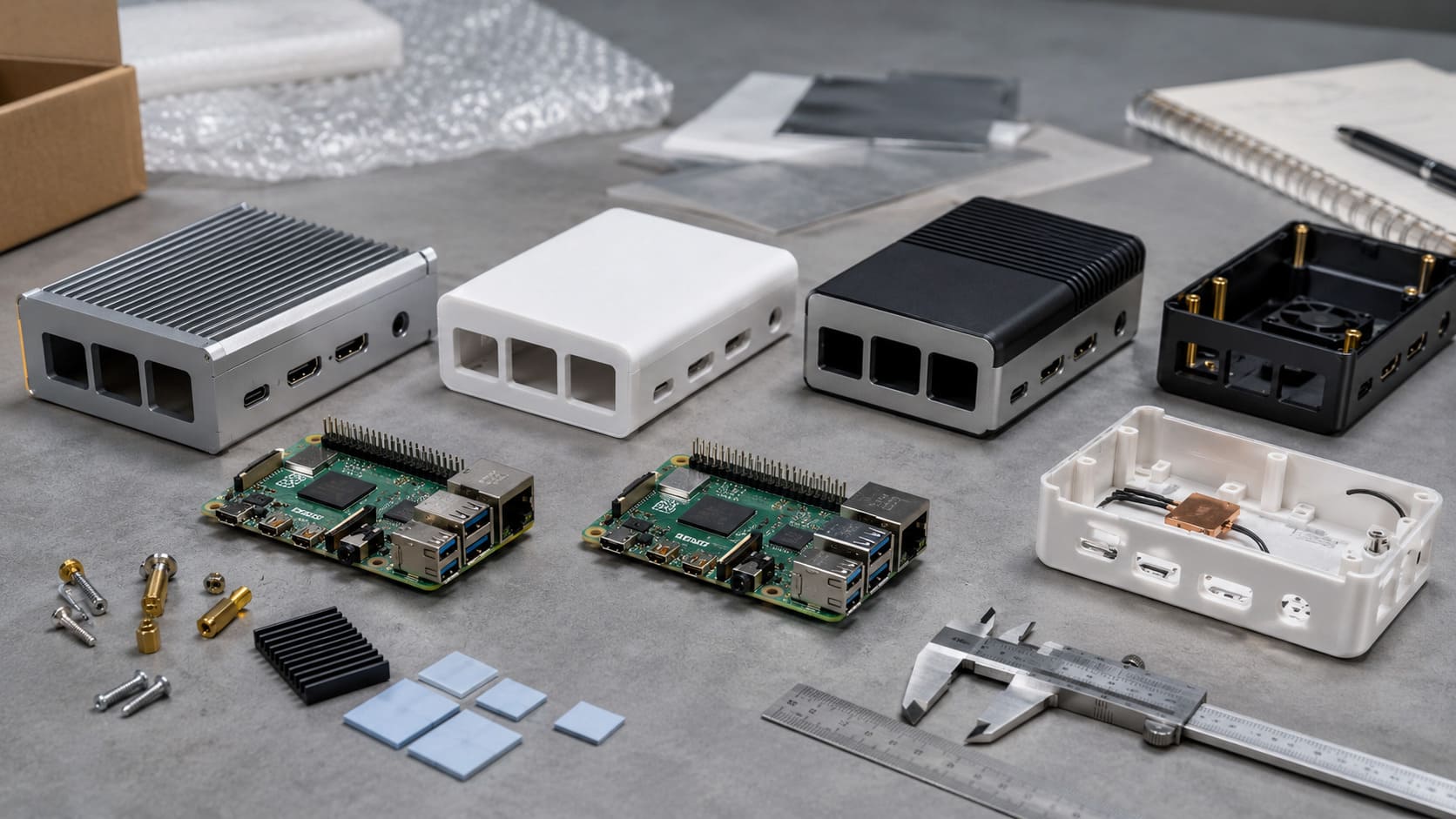
In general, including heat sinks in your setup or a small fan will prove helpful. If you want something a little more all-in-one, there is no shortage of cases with integrated cooling solutions. The exact placement of the Raspberry Pi does make a difference.
Don’t keep it in a confined or unventilated area, which would prevent heat from escaping. Keep your server stable and reliable by housing it in a cool, dry environment. If you’re planning to run high loads, add cooling accessories to help manage the load.
Upgrade storage capacity
Additionally, storage is an area where you absolutely want to stop and think about your use case. Although the Raspberry Pi 4 does support microSD cards, external USB drives or SSDs are ideal options for server hosting.
SSDs outshine HDDs with their amazing speed and reliability. They are optimal for hosting applications that require regular reads and writes to the database. To further protect their data, users can implement RAID configurations to ensure redundancy and increase performance.
Just as important is making regular backups to protect yourself from data loss. External drives greatly increase your storage capabilities. They further make data management and recovery easier in the event of a hardware failure.
Secure the server with best practices
Security should not be an afterthought when hosting a server. Changing the default username and password is an important first step to keeping your Raspberry Pi secure from unwanted visitors. By enabling a firewall and keeping all software up to date, vulnerabilities are further reduced.
For example, configuring UFW (Uncomplicated Firewall) is an easy method to manage incoming and outgoing network traffic. For added security, implement strong passwords and make use of SSH to allow for encrypted remote access.
Be sure to regularly check server logs to identify any unauthorized access. Hosting on a local network requires setting a static IP address and configuring port forwarding on your router for external connectivity. Combined, these simple practices go a long way to securing your server environment.
Leverage community resources
The Raspberry Pi community is a helpful resource for solving issues and optimizing your setup. Forums, blogs, and other documentation provide real-world answers to real-world problems.
Whether you’re tuning NGINX, getting a static IP address configured, or optimizing for cooling, there’s great guidance available. Getting involved with the community ignites your imagination. It helps you stay informed on new tools and techniques specifically tailored to Raspberry Pi servers.
Conclusion

There is so much you can do when you start using a Raspberry Pi 4 as a server! Whether you need it for web hosting, file sharing, or even game servers, it gets the job done smoothly. Its small form factor and minimal power consumption lend themselves well to small, low-impact projects. Its versatility means that you can quickly pick up new skills. Setting it up is pretty simple and the cost is minimal, which is always a nice thing.
If you spend some time tuning the setup, the performance gets a massive bump. The Raspberry Pi 4 packs enough power to handle whatever you can dream up. It’s not hard to set up a personal media server or run a lightweight database on it. So dive in, explore, and get ready to unleash its awesome potential. So go on, keep learning and tinkering—you’ll discover it’s a lot more rewarding than you think.