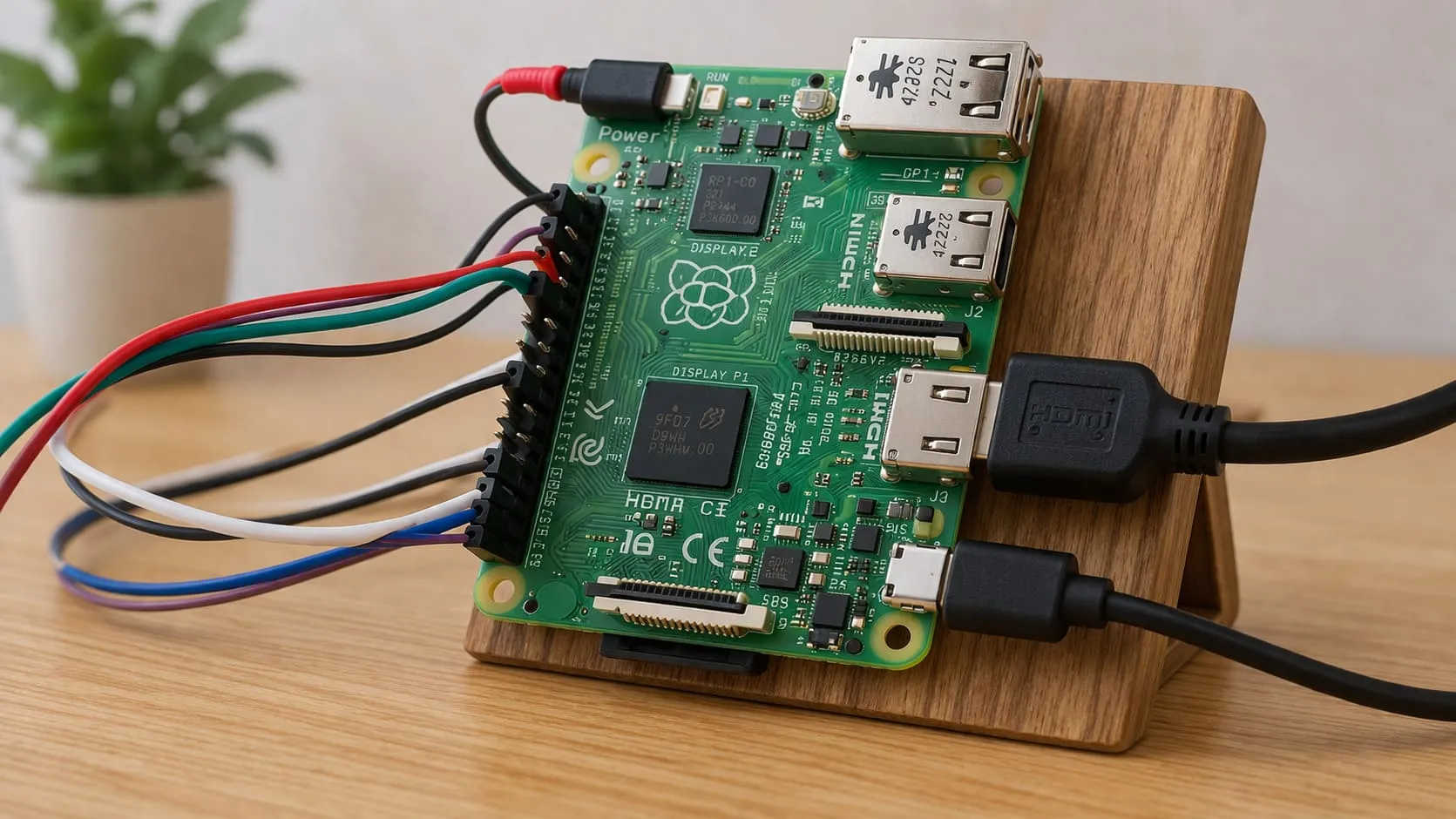
By contrast, the Raspberry Pi is based on a fixed, non-reconfigurable microprocessor, using off-the-shelf hardware.
By comparison, an FPGA is a chip that can erase and reprogram its logic even after being fabricated.
FPGAs allow users to alter the hardware’s purpose by loading new code – an ability that the Raspberry Pi does not have.
Most use Raspberry Pi for software projects, not for hardware design tasks done with FPGAs.
The following comparison outlines the main differences and applications.
What's a Raspberry Pi, Really?
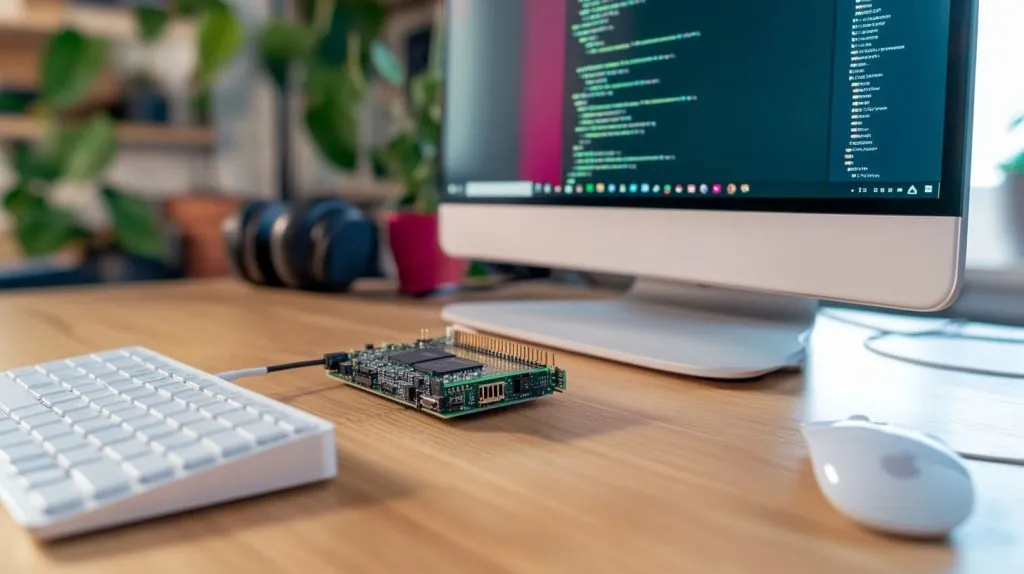
The Raspberry Pi isn’t just a tiny, low-power, full-featured computer. Its reputation is of being very inexpensive and widely available. Such affordability has further cemented its position as the go-to choice for students, hobbyists, and even professionals in maker capitals like San Francisco, where tech projects abound.
We think its design and purpose make it an ideal tool for learning, building, and testing new ideas within the tech and data fields. Additionally, all but the absolutely tiniest models run on Linux-based systems. Raspbian being the most favored operating system, these models are capable of performing all the functions of a normal desktop.
This flexibility, combined with a proven, robust support ecosystem, empowers users to troubleshoot issues and build their talents.
A Mini Computer at Heart
At its most fundamental level, the Raspberry Pi is a complete computer package that you can hold in your hand. It uses the von Neumann architecture, meaning that its memory is not separated into distinct data and program sections. Essential components are a CPU for processing tasks, RAM as temporary memory storage, and various ports such as USB, HDMI, and Ethernet.
You can plug in a keyboard, mouse, and even a full display, so it’s surprisingly easy to fall into using it like any normal computer. The Pi under the hood is plenty powerful enough to dabble in multitasking. Now users can surf the internet, code in Python, and run AI models simultaneously!
Runs an Operating System
While most Raspberry Pis use Linux systems, like Raspbian, it’s possible to use Windows. The OS manages hardware and hosts user applications. Installation or modification of the operating systems is immensely easy.
If you run into a bump, the international Raspberry Pi community has forums and tutorials to assist.
Software Defines Its Magic
Software is what really allows the Raspberry Pi to impress. It encourages programming in Python, Java, C++, and other languages. Users can create applications to read sensors, send data to the cloud, or automate a smart home.
Libraries and tools like escapism are becoming more commonplace to make this simple! These tools are what allow you to easily customize the Pi to your needs.
Great for General Tasks
The Pi can get you by if you’re just web surfing, editing some documents, or playing low-end games. In the Bay Area, the Raspberry Pi is commonly encountered in the context of smart home projects or as a media center.
It’s the go-to for prototyping software, testing IoT concepts, and educating kids on the basics of coding. It’s not ideal for hard real-time or ultra-low-power requirements. Its flexibility and community support are hard to match.
What's an FPGA, Then?
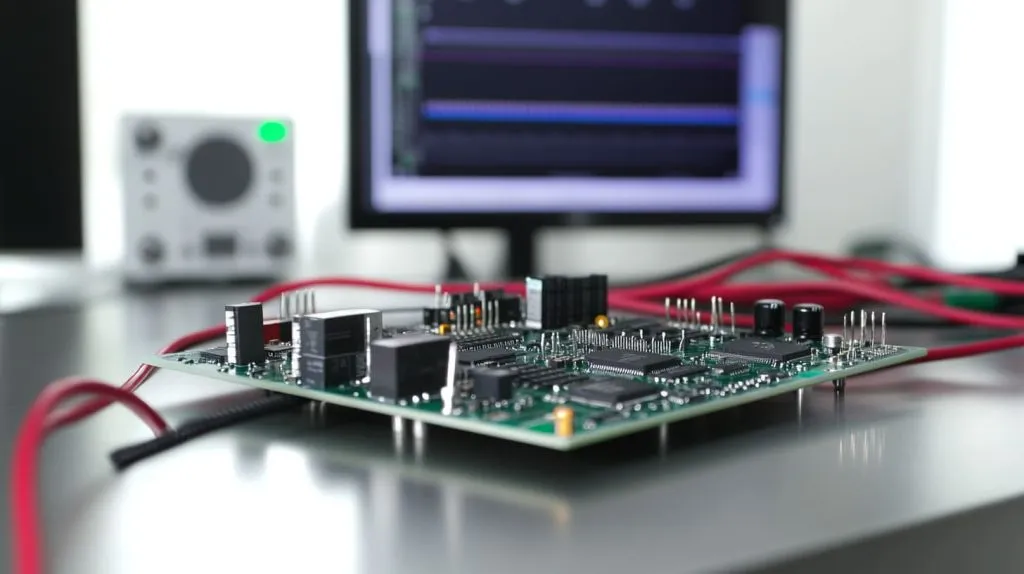
An FPGA, or Field-Programmable Gate Array, is an incredibly flexible chip. It provides a truly exciting ability to configure hardware tasks even after it’s out of the factory door! This is why people commonly use FPGAs—flexibility—you can reconfigure them by loading different designs.
This allows engineers to create detailed custom circuits for specific tasks, such as filtering a signal or processing data in real-time. These days, you can find FPGAs in your telecom gear, in cars, medical devices, and yes, even in stock trading. Everyone loves them for high-throughput applications where traditional CPUs could fall behind.
A Blank Hardware Canvas
Imagine an FPGA as a blank chalkboard. In short, you don’t write code in the traditional sense; you design the fundamental logic required for the task you are working on. Inside, the “fabric” is a similar lattice of interconnected and logical elements.
You can connect them together in a million different ways! Got an innovative design? Load it, test it, modify its function — all in milliseconds. That’s why FPGAs are great for prototyping—even for large projects like self-driving car brains or smart cameras.
Programmed with Logic Circuits
To use an FPGA, you don’t write traditional software. You program them using hardware description languages, like VHDL or Verilog, to configure the logic circuits. This is quite unlike writing a program for a Raspberry Pi.
Not only are these tools often bulky and slow, but they also empower you to design custom circuits tailored specifically to your unique use case. Testing designs with simulation tools before executing them on physical chips is a must.
No OS, Just Pure Hardware
FPGAs, often used in embedded systems, are programmed at a very low hardware level. They operate directly at the hardware level, eliminating any intermediate steps, which is critical for real-time applications and allows zero latency from system overhead.
Built for Specific, Fast Jobs
FPGAs are especially well-suited to tasks such as real-time image processing or signal processing. They can execute lots of operations in parallel—ideal when you have repetitive tasks and require high throughput and low latency.
That’s why labs and factories reach for FPGAs to do such bespoke, quick tasks.
Why Your Pi Isn't an FPGA
So, needless to say, many makers conflate the Raspberry Pi with an FPGA. Both are quite small. Both transform the development and iteration process, and they’re both pervasive in tinkerer and professional tech circles. However, at a fundamental level, they are designed for different purposes and operate in completely different manners.
To get a deeper appreciation for why your Pi isn’t an FPGA, explore its internals. Take a look at the mechanics of them and what they’re designed to do. Each one has unique strengths and limits, defined by the tasks they were designed to perform.
1. Core Architecture: CPU vs. Configurable Logic
The Raspberry Pi's core architecture is based on a CPU. This chip is very similar to the one found in your phone or laptop. It processes instructions serially, one instruction at a time, in lockstep. You really do get a full computer on that little board, complete with USB, HDMI, Ethernet, and more ports.
This allows you to connect monitors, USB keyboards, and mice, and even boot a full-fledged desktop OS such as Linux. Yet it was designed to be a general-purpose device.
An FPGA, or Field Programmable Gate Array, is a whole different animal. It consists of a matrix of logic elements and a network of routing channels. The magic of an FPGA is that you can wire those blocks together in any configuration you choose, and it’s that wiring that creates the functionality of the FPGA.
Rather than executing a program of instructions, it’s more like one giant, specially built parallel circuit. It doesn’t execute code in a procedural fashion like a program; rather, it turns into the needed hardware for whatever task you want to perform.
That drastically alters what they’re capable of doing. A CPU's sequential nature allows it to excel at task switching and working on many jobs at once. Where an FPGA really shines is in its ability to do many different things at the same time. This is doubly the case when those tasks are mundane and rote!
FPGAs are very well suited to spaces such as telecom and video processing. They’re particularly good at tasks where high volumes of data need to be analyzed in real-time!
2. How They Process: Software Instructions vs. Hardware Paths
The Raspberry Pi, for instance, does everything it does by executing software instructions. You might create a program in something like Python or C++, and your CPU will read those instructions in a sequence, one by one. Each instruction is sequentially processed, one at a time.
Just use threads or some other magic, and you too can make it look like everything happens in parallel!
FPGAs don’t process instructions like that either. You configure the FPGA by writing a hardware description. When you execute it, instructions/data just flow through the hardware paths you created. It’s as though you had to design a new machine every time.
This architecture enables FPGAs to achieve extremely low latency and high throughput, as there are no software dependencies in the path.
This contrast is monumental when it comes to processing speed and efficiency. This is where FPGAs truly excel, in tasks where data has to be shuffled around at high speed. They shine in applications such as networking equipment or real-time signal processing, where you need something to occur with near-zero latency!
Raspberry Pi excels when what you need is an inexpensive, compact computer that can run scripts, web servers, or simple robots.
3. Programming Style: Code vs. Hardware Description Languages
Programming the Raspberry Pi is pretty much the same experience as programming any other computer. You load up your favorite IDE, write some code, and execute it. You can program them with high-level languages—Python, Java, C++, even Scratch for the youngest kids.
This lowers the barrier to entry and allows almost anyone to begin tinkering.
FPGAs need something else: hardware description languages, like Verilog or VHDL. With these languages, you don’t specify the steps to the chip; you specify the hardware itself. You’re not designing a web page, you’re not writing a grocery list.
The integrated development environment tools to build and design this can be burdensome, intimidatingly complex, and time-consuming when it comes to testing out changes.
Learning to code for an FPGA is a much more difficult ascent. You need to consider things in terms of circuits as opposed to lines of code. For newcomers or programmers, this is a major obstacle.
4. Flexibility: General Purpose vs. Custom-Tailored Hardware
The Raspberry Pi is designed to be a general-purpose computer. It can be a web server, a media player, or do some light automation work in a laboratory. That’s the beauty of being general-purpose—you go from doing one project to doing the next one without having to change out hardware.
There’s no question that FPGAs are focused on creating the right tool for the job. This means you can customize the hardware to optimize it precisely for your requirements. From decoding complex video streams to prototyping and testing new CPU designs, the applications are innumerable!
This power comes with a price: you usually need more time, more skill, and a clear idea of what you want the hardware to do.
If your project requires something more specific, look to a hardware accelerator for your math-heavy functions. For many applications, an FPGA is the right choice! If your application needs a flexible, low-cost computer, the Pi really does offer unbeatable value.
5. Performance Focus: Versatility vs. Raw Speed/Parallelism
A Raspberry Pi would get a great versatility score, especially when considering its role in embedded systems. It can perform an amazing number of tasks simultaneously—browse the web, write scripts, and interface with sensors. While it may not be the quickest, it’s the most adaptable in various applications.
FPGAs, on the other hand, are architected primarily for speed and parallelism, making them superior for tasks like high-frequency trading or deep learning accelerators. They can crunch numbers or push data much faster than a Pi, particularly when utilizing hardware interfacing to split work into many parallel tasks.
The trade-off is clear: the Pi won’t match the raw speed of an FPGA for custom tasks, but it will handle many jobs out of the box, making it a great choice for IoT projects.
6. Development Approach: Software Iteration vs. Hardware Synthesis
Building for the Pi is a very fast development cycle. Write → Run → debug → run → debug → run … ad infinitum. You can iterate on ideas quickly and immediately observe outcomes. This is ideal for education, rapid prototyping, or time-sensitive projects.
Once you write your hardware description for an FPGA, you need to “synthesize” it, which can take a significant amount of time. Even minor modifications can require an entire rebuild. As one engineer told me, depending on the test, one test could take 25 minutes or more on an x86 box. It can be even longer on a Pi!
Testing is extremely important for both, but the cost of failure is much higher when working with FPGAs. One small mistake could potentially cause the entire design not to work at all.
7. Power and Cost: Different Design Goals
Raspberry Pi's power consumption is higher than a bare FPGA, but it’s still quite efficient for the job. They’ve all got the ports and bells and whistles you would want from a full-fledged computer. Best of all, they’re inexpensive—typically costing under $100 for an entire kit!
FPGAs can be more power efficient, but only for highly custom tasks, because you’re only creating the circuitry you actually need. The chips themselves are usually expensive, and you’ll need additional equipment for programming and testing.
In power-sensitive tasks, such as battery-powered sensors, FPGAs can shed light. That’s not the case for most small projects, where the Pi’s low cost and rich feature set are likely to win out.
When to Grab a Raspberry Pi
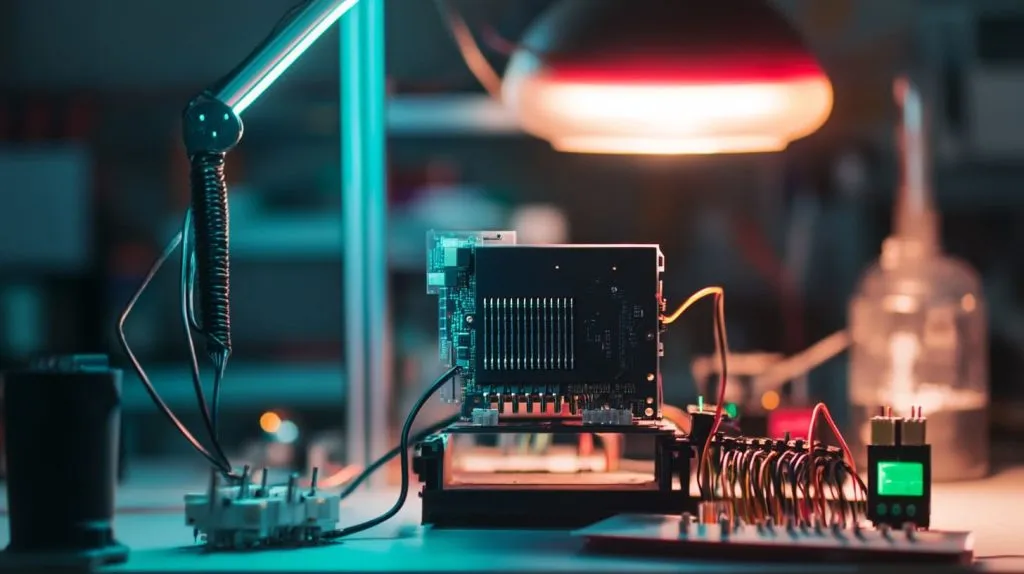
The Raspberry Pi quickly became the mainstay option for almost every project requirement, especially in embedded systems. It really shines when a small, low-cost, flexible computing board is needed, making it an ideal choice for various IoT projects. Its unique combination of affordability and connectivity makes it a great, flexible choice for developers.
It provides a great learning environment for education, but also convenience for real-world development! It’s rather limited in the types of scenarios it can address, primarily those needing a whole operating system with a user interface. Beyond that, it’s great for rapidly prototyping software and then moving to more dedicated hardware.
We’ve explored a lot of projects with the Raspberry Pi, many of which are highlighted in the sections below.
Learning Programming Basics
Raspberry Pi has become a go-to resource for introducing novices to the basics of programming, whether it’s with Python or shell scripting. The extensive support community and step-by-step tutorials help beginners quickly get up and running.
Its desktop interface is straightforward and familiar, meaning beginners aren’t intimidated and overwhelmed by the idea of coding. Projects such as blinking LEDs, web servers, or basic games introduce you to these concepts through engaging, interactive projects that let you learn by doing.
Web Servers & Media Centers
A lot of people run small web servers on the Pi or use them to create media centers that stream media to their TVs. Using open-source tools such as Apache or Kodi, getting these services going is a snap.
Given the Pi’s small footprint and minimal power consumption, it’s well-suited for home entertainment or light hosting requirements.
Projects Needing an OS
For tasks needing an operating system, such as running databases, managing files, or supporting multiple users, the Pi provides a full Linux environment. This is great for projects that require access to existing software libraries, package managers, or graphical user interfaces.
Such projects include home automation dashboards.
Quick Software Prototypes
The Pi’s quick boot-up time and immediate access to a development environment allow for rapid-fire iteration of ideas, especially in FPGA projects. Additionally, there are many proof-of-concept tools and open-source FPGA simulators like Icarus Verilog that run well on it for early testing.
User Interface Needs
When a project requires a display or user input, Raspberry Pi offers HDMI output. Additionally, it now supports USB connections for keyboards and mice.
That flexibility makes it a great fit for interactive kiosks, dashboards, and other projects where user experience is key.
When an FPGA Is Your Hero
FPGAs, or field-programmable gate arrays, occupy a fascinating and special place on the tech landscape. They are the first weapon of choice when it comes to custom hardware. Look to them when you need real-time deterministic control, high-speed signal processing, or other efforts requiring minimal latency!
FPGAs are unique in that you can rewire their hundreds of thousands of logic gates using code, allowing you to customize them to each project’s specific requirements. Businesses deploy them to telecommunications, financial services, aerospace,e and biomedical industries, where high performance and precise control are critical.
Custom Digital Logic Design
FPGAs allow you to implement completely custom digital logic on the chip in hardware, in addition to software execution. You specify your desired circuit using a hardware description language like VHDL or Verilog HDL, and the FPGA chip then plays back your designed circuit.
This opens up a lot of new possibilities for creating alternative paths for data or integrating improved security, right on-chip. For instance, you could use FPGAs to create a custom video encoder or a secure data transmission protocol. It’s difficult to replicate this custom configuration using off-the-shelf boards or microcontrollers.
Ultra-Low Latency Tasks
Some applications, such as financial trading algorithms and mobile cell-tower handoffs, require immediate responses with no latency whatsoever. This is where FPGAs really shine, because they process tasks the moment data arrives—no delay while waiting for a software loop to iterate.
In telecom, this means crystal clear calls and speedy data. In finance, that translates to faster trades. You achieve this velocity by optimizing your hardware implementation, in addition to your software implementation.
High-Speed Signal Processing
FPGAs are very efficient at processing high-speed signals from sensors, cameras or radios. They filter and process huge amounts of data simultaneously, at real-time speeds.
Whether it’s for medical scans, radar, or a wireless base station, this is critical to improving performance and reducing power. Their parallel paths ensure signals are processed quickly, with reduced delay.
Parallel Processing Power
FPGAs parallelize hundreds of tasks concurrently. This increases processing speed for applications such as machine vision or crunching numbers in scientific laboratories.
While microcontrollers complete tasks sequentially, one operation after the other, FPGAs have the ability to divide operations and complete them faster.
Interfacing Unique Hardware
Now, FPGAs communicate with just about everything—legacy and cutting-edge alike—through proprietary interfaces and standards. That makes them useful in lab or factory settings where equipment is not uniform.
You can prototype and wire up unique sensors, motors, or test tools without waiting for commercially available boards to catch up.
Common Misunderstandings Debunked
In tech communities, especially in cities like San Francisco, many people often confuse the capabilities of a Raspberry Pi and an FPGA when discussing project ideas on social media. While both platforms are small, cheap, and widely embraced by the DIY community, their roles and strengths differ significantly. Understanding these differences is crucial for anyone considering FPGA development or utilizing a Raspberry Pi for their embedded systems projects.
Programmable Means Different Things
What many don’t realize is that “programmable” means something entirely different when it comes to both. With a Raspberry Pi, you’re writing code that runs on its CPU, whether that’s in Python, C++, etc. Programmable means different things.
Programmable software is more flexible than hardware. On FPGAs, you typically use hardware description languages (HDLs) such as VHDL or Verilog to configure the functionality of the hardware. That opens up many possibilities, but mainly it means you’re not limited to just changing the software code.
This creates an unfortunate misunderstanding when perspective users try to program an FPGA like they would a Pi. Installation of a basic web server on a Pi literally takes a few minutes. In comparison, designing a custom processor on an FPGA can take several weeks.
Both Small, But Not Twins
Side by side, there’s little to differentiate a Pi from an FPGA board. Both are small enough to fit on a desk and connect easily with plug-in breadboards or sensors. A Pi is different because it runs a full operating system and behaves like a small computer.
An FPGA, however, is much more like a blank sheet of paper for circuits. A Pi is the basis for projects such as home servers and media centers. FPGAs excel at things like digital signal processing, custom timers, and emulating old video game consoles.
The "Embedded" Overlap
Both Pi and FPGAs find their way into embedded systems. The Pi is appropriate for intelligent kiosks or data loggers, but not for user interfaces and complex logic. FPGAs, by contrast, are designed for hardware tasks such as accelerating encryption or processing high bandwidth sensor data.
Often, the two are in concert. As in robotics, where the Pi is processing vision and the FPGA is controlling motors in real time.
Thinking One Replaces Other
This is a common misconception – that one can always substitute for the other. Some boards are a combination of the two, such as those with ARM CPUs and FPGAs next to each other.
For instance, in industrial controllers, a Pi may manage overall state, but an FPGA provides quick, real-time reaction. Hybrid projects, like open-source game consoles, use the Pi for menus and networking, while the FPGA runs the actual game logic.
My View: Different Tools, Different Jobs
Raspberry Pi vs. FPGA As we can see, both Raspberry Pi and FPGA have established strong niches in today’s technology landscape. These platforms are different not only in what they do but how they operate. Understanding their strengths can make all the difference in how a project develops. Choosing the appropriate tool for the job translates into faster, less disruptive builds and outcomes tailored to the actual need.
Pi: The Friendly All-Rounder
Raspberry Pi’s best-selling point is as a generalist. It’s an OS that runs full operating systems, it manages high-level languages, and it is made for people who want to get started quickly. Schools and hobbyists in equal measure rely on it for education, smart homes, and personal servers.
If you want to connect a few sensors to something, develop a Python script, or build your own smart mirror, Pi is your friendly all-rounder. Its low cost and large community make solutions easy to come by when you run into problems.
FPGA: The Specialized Powerhouse
FPGAs perform best in areas where custom hardware and speed are of the highest value. Unlike Pi, they use hardware description languages such as Verilog to sculpt silicon. This enables designers to create applications for data centers, telecom, and robotic applications.
If you need custom data paths, low latency, or a lot of real-time control, an FPGA is unbeatable on a project like that. Large companies deploy them to do high-frequency trading or encode video in real time.
Choosing Wisely Saves Headaches
Getting the chosen tool wrong can delay a project by years or doom it to failure. Each tool has its limits—Pi might not be fast enough for real-time jobs, FPGA can be too much power for simple tasks.
Consider project requirements—compute, memory, and I/O—before making your selection. Consider what you hope to get out of it and what time commitment you’re able to provide.
Embrace Their Unique Strengths
The strongest outcomes are achieved by leaning into each tool’s sharpest edge. Other teams combine Pi’s user-friendly software with FPGA’s programmable hardware. This cocktail fuels autonomous vehicles, smart traffic cameras, and factory floor industrial controls.
The best projects mix the two approaches.
Learning Curves: Pi’s Gentler Start
Pi is open to everyone, and we welcome you to join us. Comprehensive guides, reusable code samples, and community forums make it easy to get started. FPGA requires a bigger time investment—getting up to speed on hardware logic isn’t something you can do overnight.
Learn with small steps—begin with basic logic gates and work your way up. Each of these tools provides a different route to learning, but the journey is definitely easier with Pi.
Pi and FPGA: Better Together?
Merging the capabilities of Raspberry Pi and FPGA in a single project unlocks the potential for smarter, more adaptable, and robust solutions. Each platform has its strengths to offer.
Raspberry Pi provides a straightforward method of managing complex multitasking, networking, and higher-level software logic. FPGA is especially useful in high-speed parallel processing and low-latency jobs. This mix lets teams get the best of both worlds—simple setup and control from the Pi, plus raw speed and custom logic from the FPGA.
In cities like San Francisco, where technology is moving quickly and project requirements are changing rapidly, that’s not always realistic. When properly combined, the two can significantly reduce time-to-market and improve overall reliability!
Combining Software and Hardware
In short, the Pi typically does the software side in practice—running the operating system, user interface, and communication with the cloud. FPGA chips take on the hardware work: crunching numbers in parallel, handling real-time signals, or processing heavy data streams.
Take an IoT edge device, for instance. The Pi could read local sensor data, manage the network stack, and forward data to the cloud. The FPGA is a special-purpose chip that takes care of signal processing/encryption at a high speed.
This division helps keep the project simple enough to manage, yet powerful enough in its performance. Even the most entry-level, such as a “blinking light” project, illustrates how the software and hardware can function together as one.
Pi Manages, FPGA Accelerates
Hybrid systems take advantage of each board’s strengths. The Pi manages all control and interface—imagine touchscreens, network, or web dashboards. The FPGA does the heavy lifting: image filtering, audio decoding, or real-time analytics.
This ensures response times remain low and the overall user experience is seamless. In a real-time video application, for example, the Pi would be responsible for live-rendering the user interface. At the same time, the FPGA can handle video frames in microseconds.
This configuration has become ubiquitous in labs and startups around the Bay Area.
Hybrid Systems for Complex Tasks
When it comes to complex computational tasks, hybrid systems are the clear winners. In both finance and healthcare, professionals depend on quick math for risk modeling and ECG signal processing.
They need real-time feedback to inform decisions in real time. The combination of the Pi and FPGA together means you don’t lose ease of use for speed. Many projects involve the Pi running Python scripts or web applications, and the FPGA performing high-speed number crunching tasks.
This is beneficial when scaling up, as you are able to replace or improve individual components based on your needs.
Example Project Synergies
Creative pairing of the Pi and FPGA has produced compelling projects in San Francisco and far beyond. One example is a smart camera system: the Pi runs user software, logs data, and sends alerts, while the FPGA does live video filtering with almost no lag.
Another is a crypto wallet: the Pi manages the interface and user logic, and the FPGA stores keys and handles encryption for better security. Lessons learned from these initial builds emphasize the need to select the appropriate jobs for each respective board.
This method is faster, safer, and less expensive than going with a completely custom solution.
Conclusion
A Raspberry Pi and an FPGA are two completely different animals. A Pi operates under an operating system and utilizes a traditional CPU. That’s what it’s great for: things like word processing, coding, web servers, and small smart home projects! An FPGA, on the other hand, allows you to create your own custom logic completely from the ground up. People from the Bay Area to Shenzhen use Pis for prototyping in nerdy home labs. At the same time, FPGAs are growing in importance within chip design and robotics labs. Each of them, however, shines in very different ways. Combining the two provides exciting new opportunities to create, tinker, and explore. Have an FPGA project you’re considering, or just want to learn more? Leave your remarks or inquiries in the comments—continue the conversation with us.